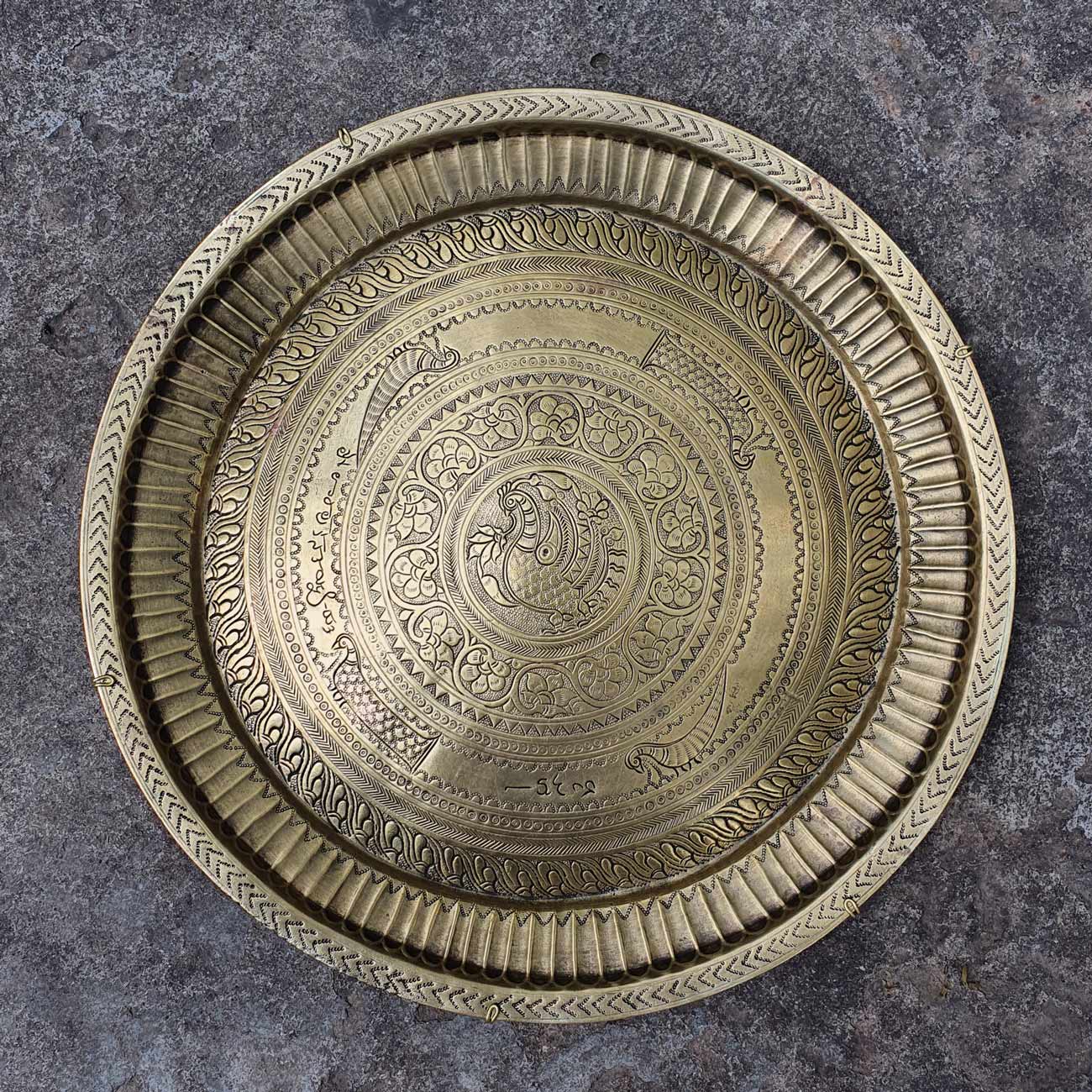
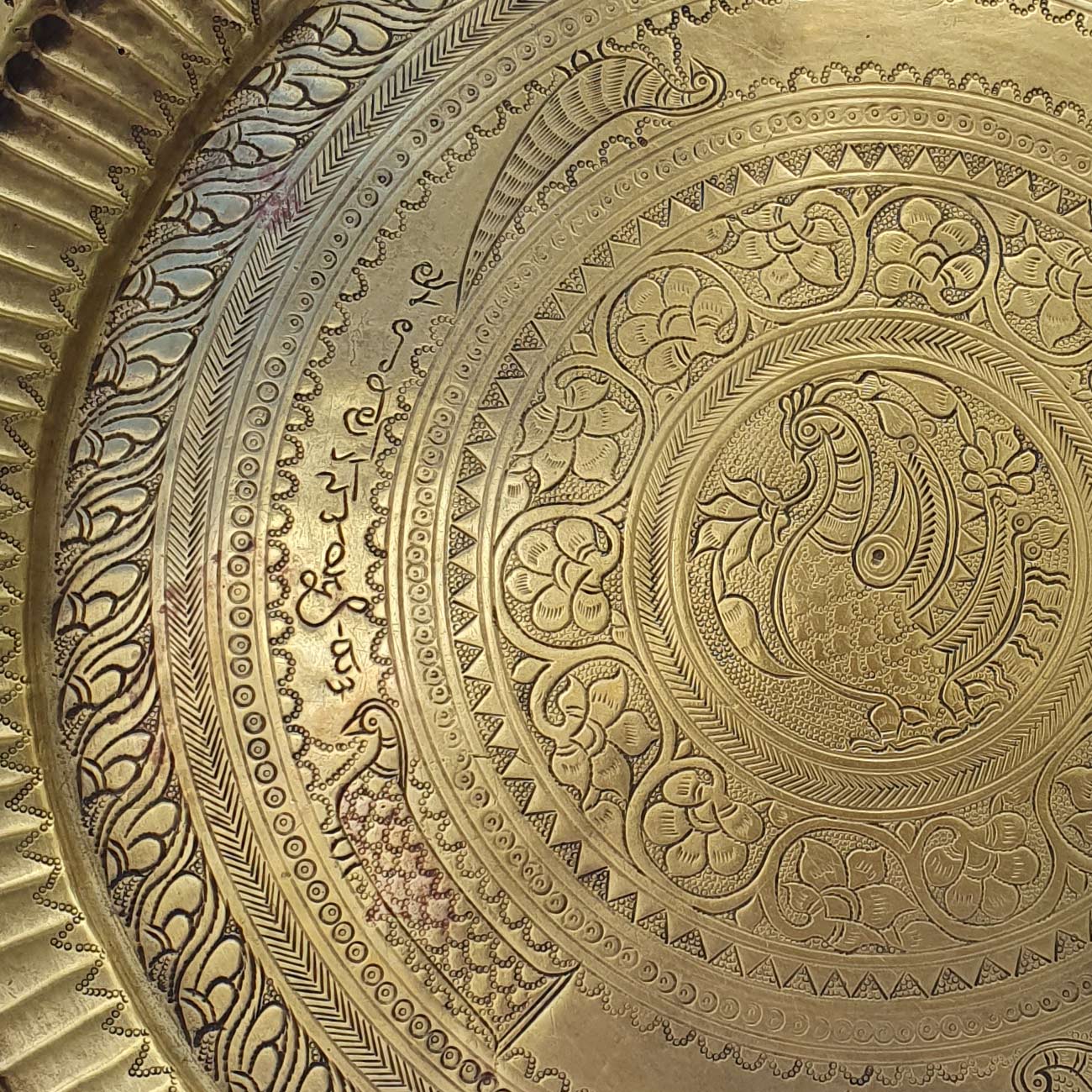
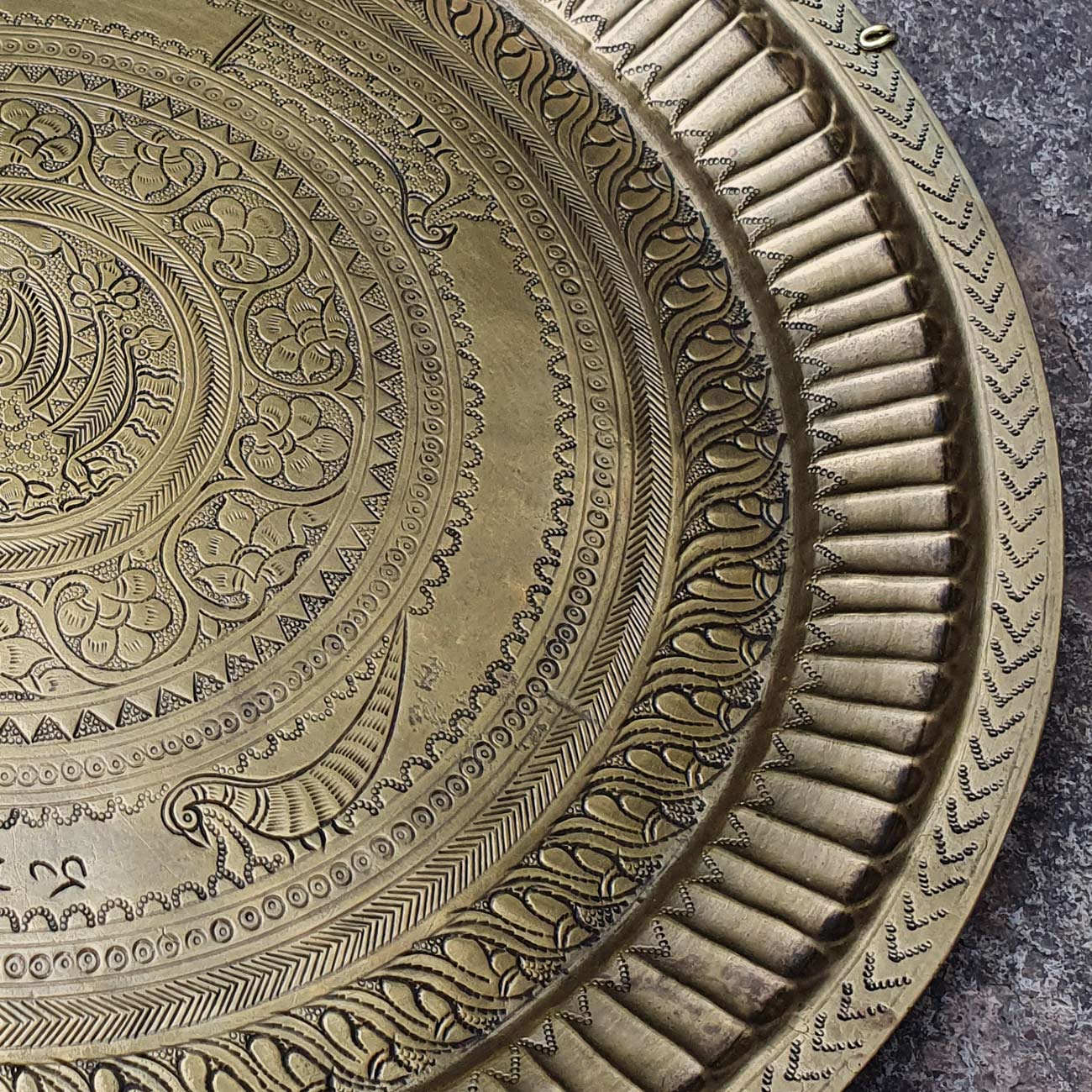
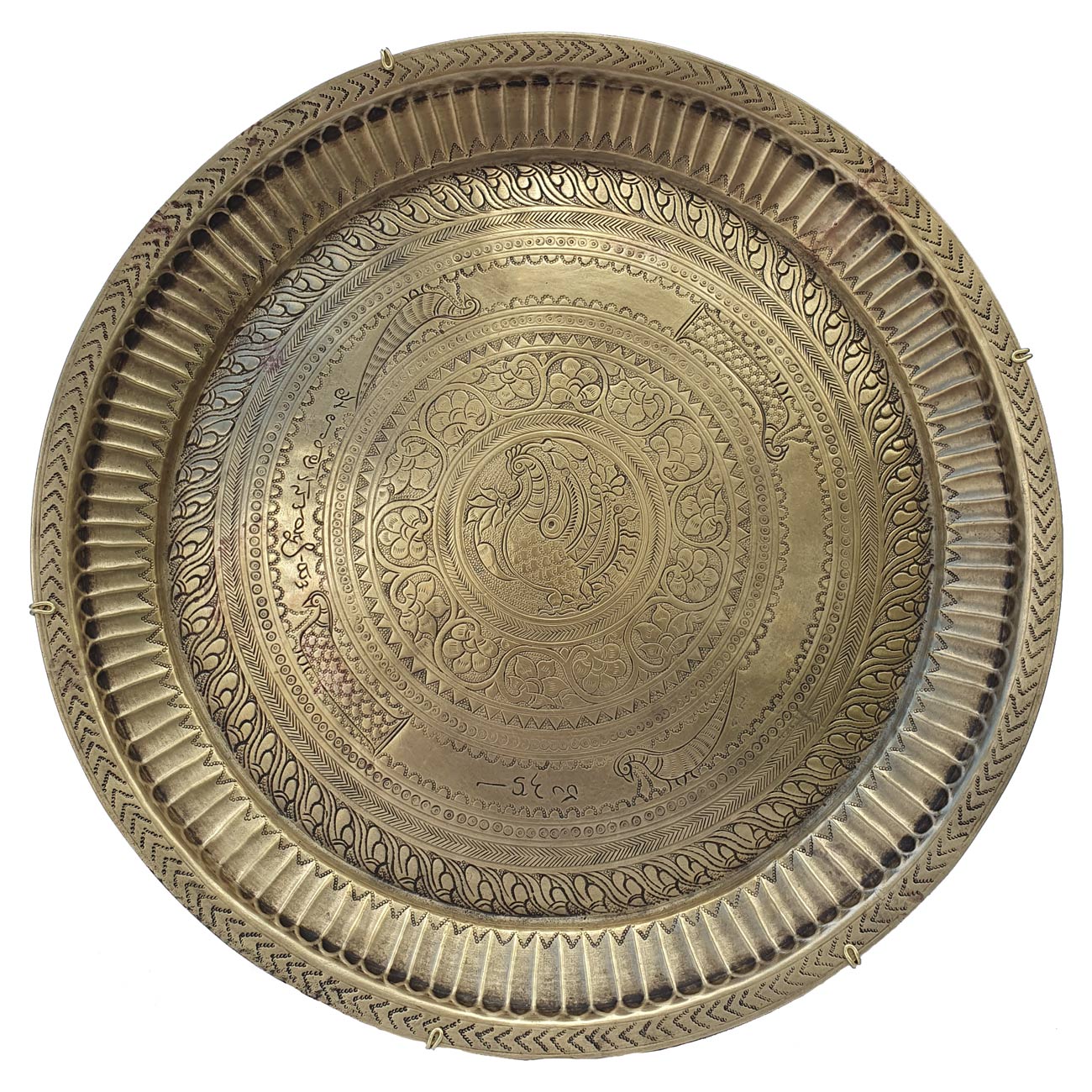
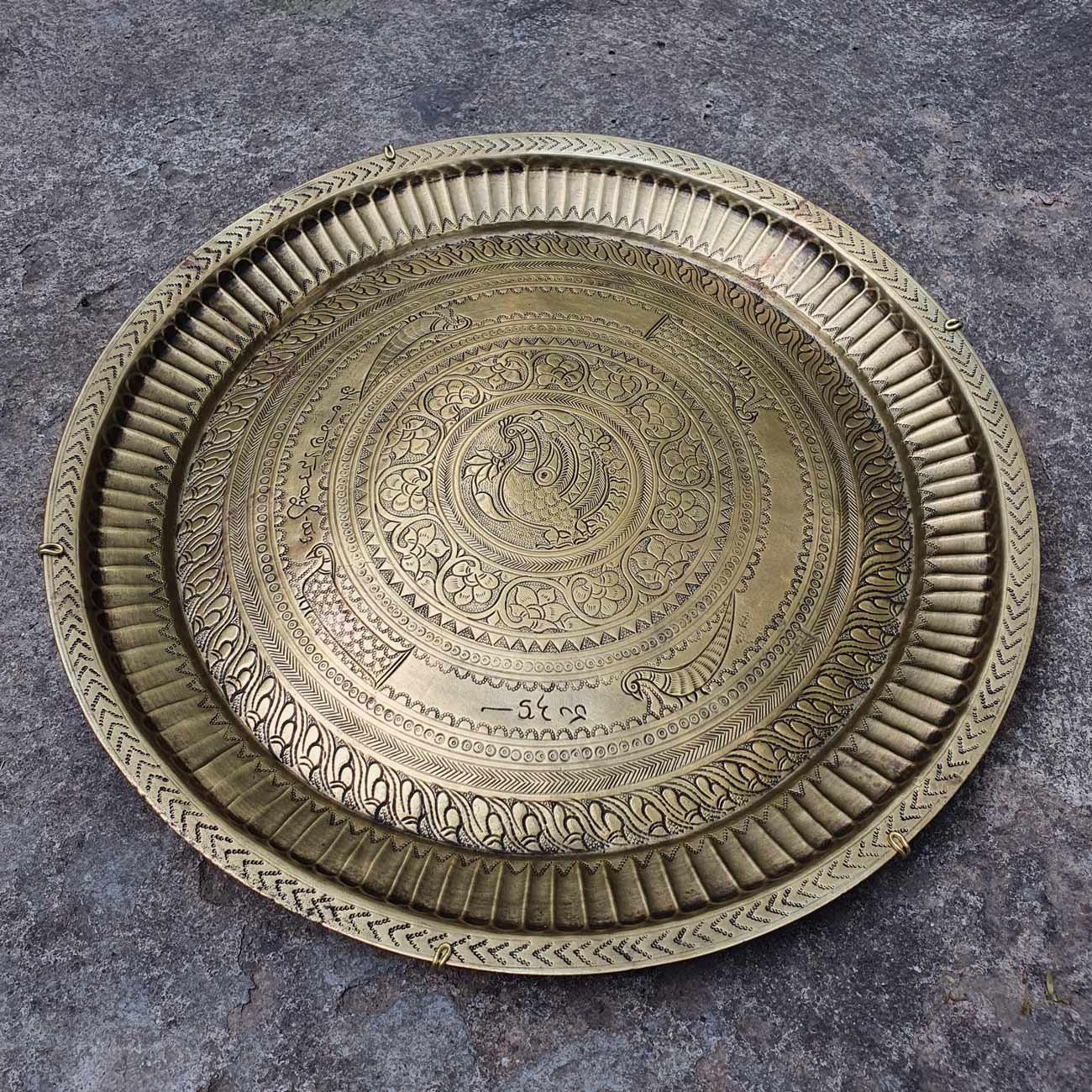
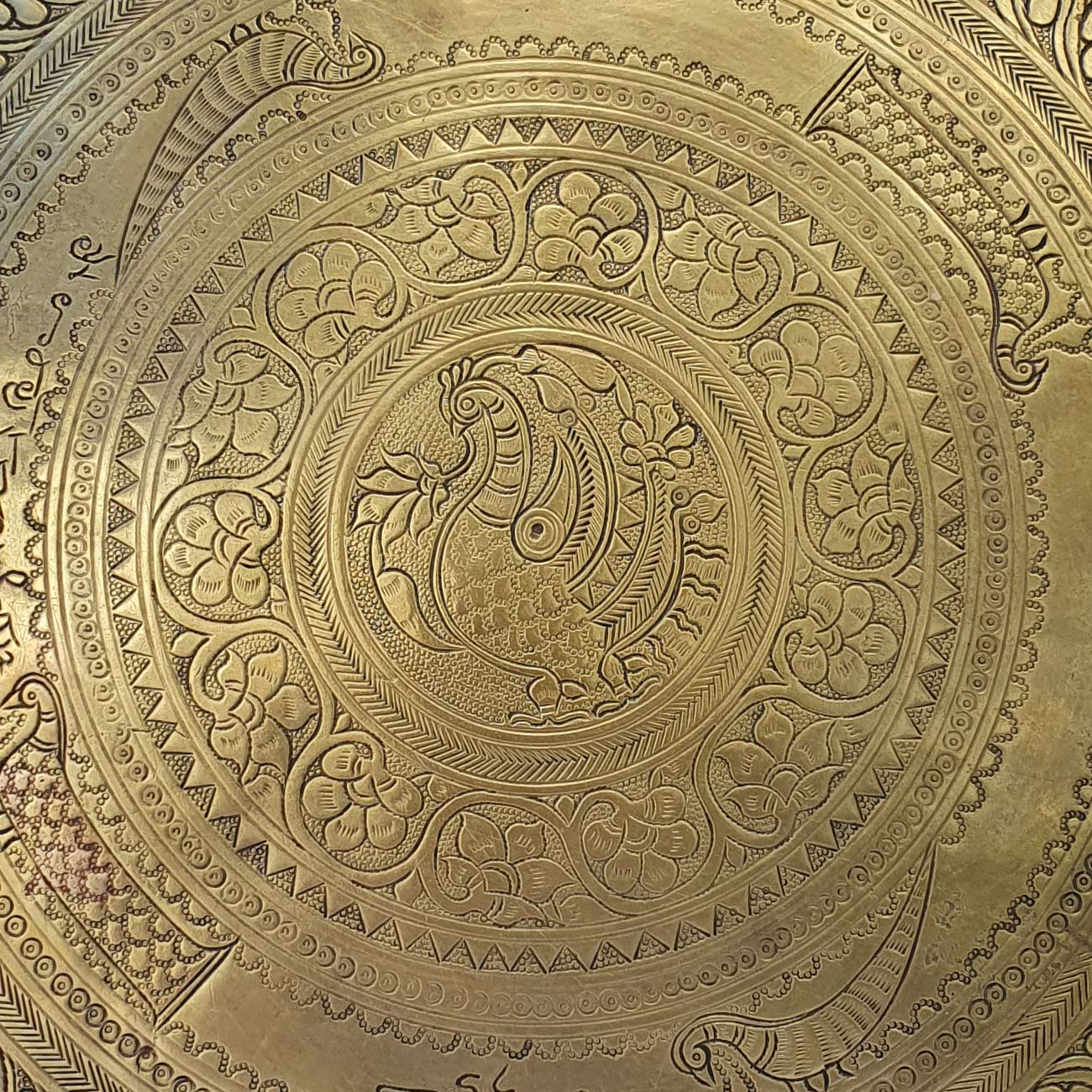
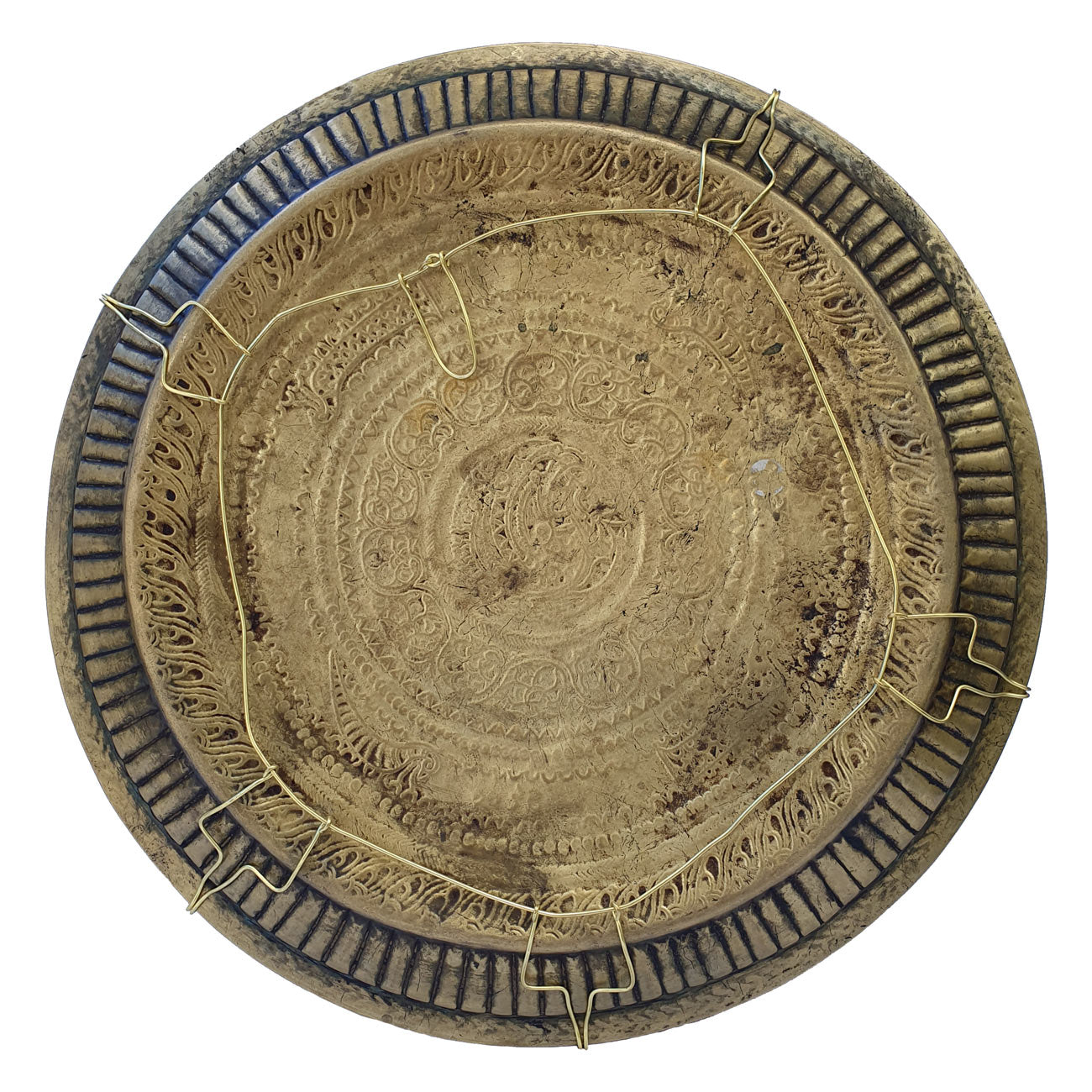
This brass thali or platter is from the Deccan region, and is made using the techniques of repousse, chasing and engraving. Highly stylized, it has a peacock depicted in the centre. In the concentric floral and plain bands that surround this, are two peacocks and two peahens. Engraved along this same band is a previous owner or donor’s name ‘Polrao Kanakaiya’, written in Telugu (Deccan). The outer border, fluted with geometric patterns on the rim, is characteristic of a South Indian style, but the other decorations are more Mughal, showing Indo-Saracenic influences.
This thali would probably have been used to serve food such as sweet meats or fruit, or as a tray for a hookah or a water ewer (jug) at elaborate Deccan feasts for kings and nobility. Or perhaps ewers would have been used to pour scented water into the plate, for guest to wash their hands. Such feasts are well documented in Mughal literature and art.
This thali would probably have been used to serve food such as sweet meats or fruit, or as a tray for a hookah or a water ewer (jug) at elaborate Deccan feasts for kings and nobility. Or perhaps ewers would have been used to pour scented water into the plate, for guest to wash their hands. Such feasts are well documented in Mughal literature and art.
Delivery
You may also like
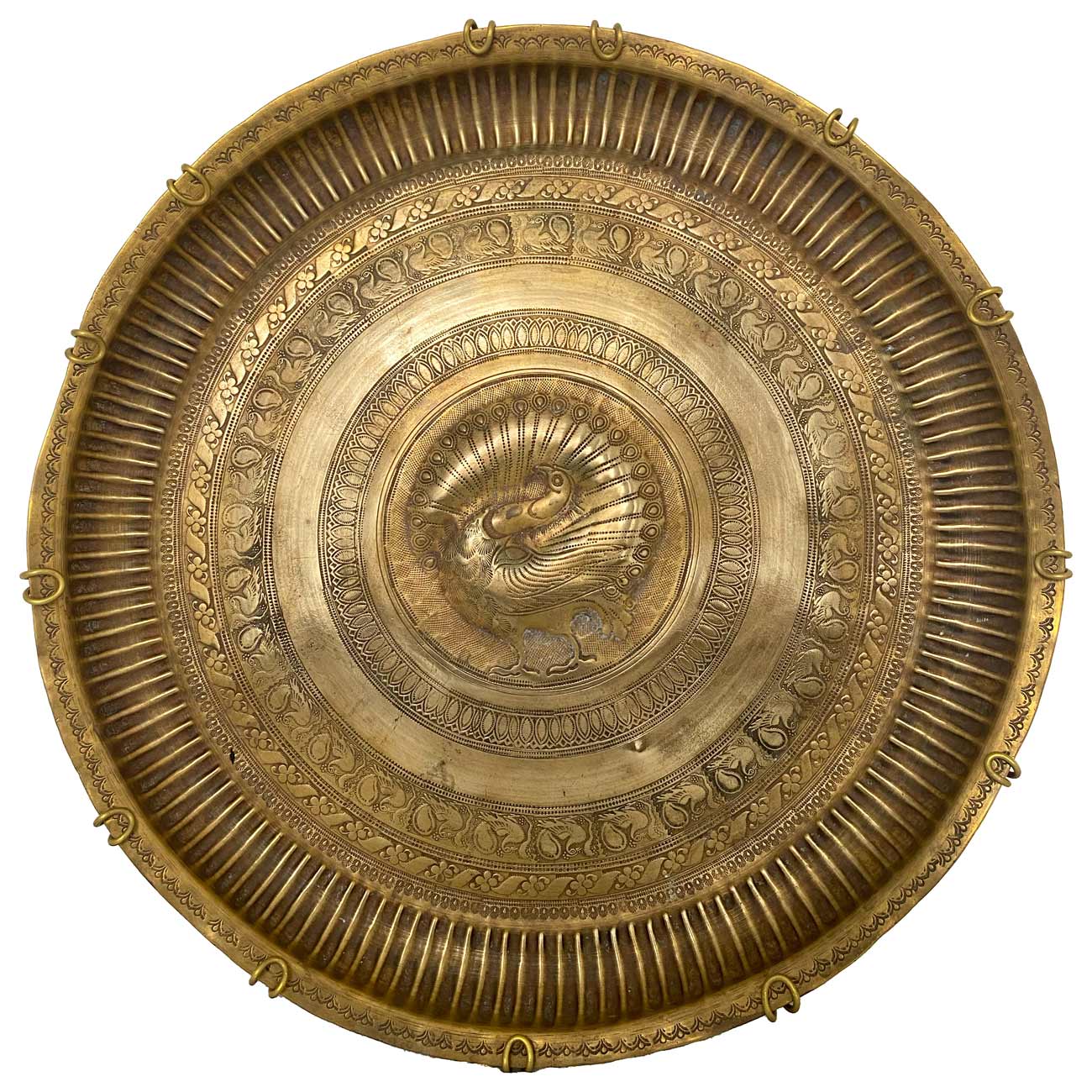
Thali with Peacock - 02
Artisera
₹50,400
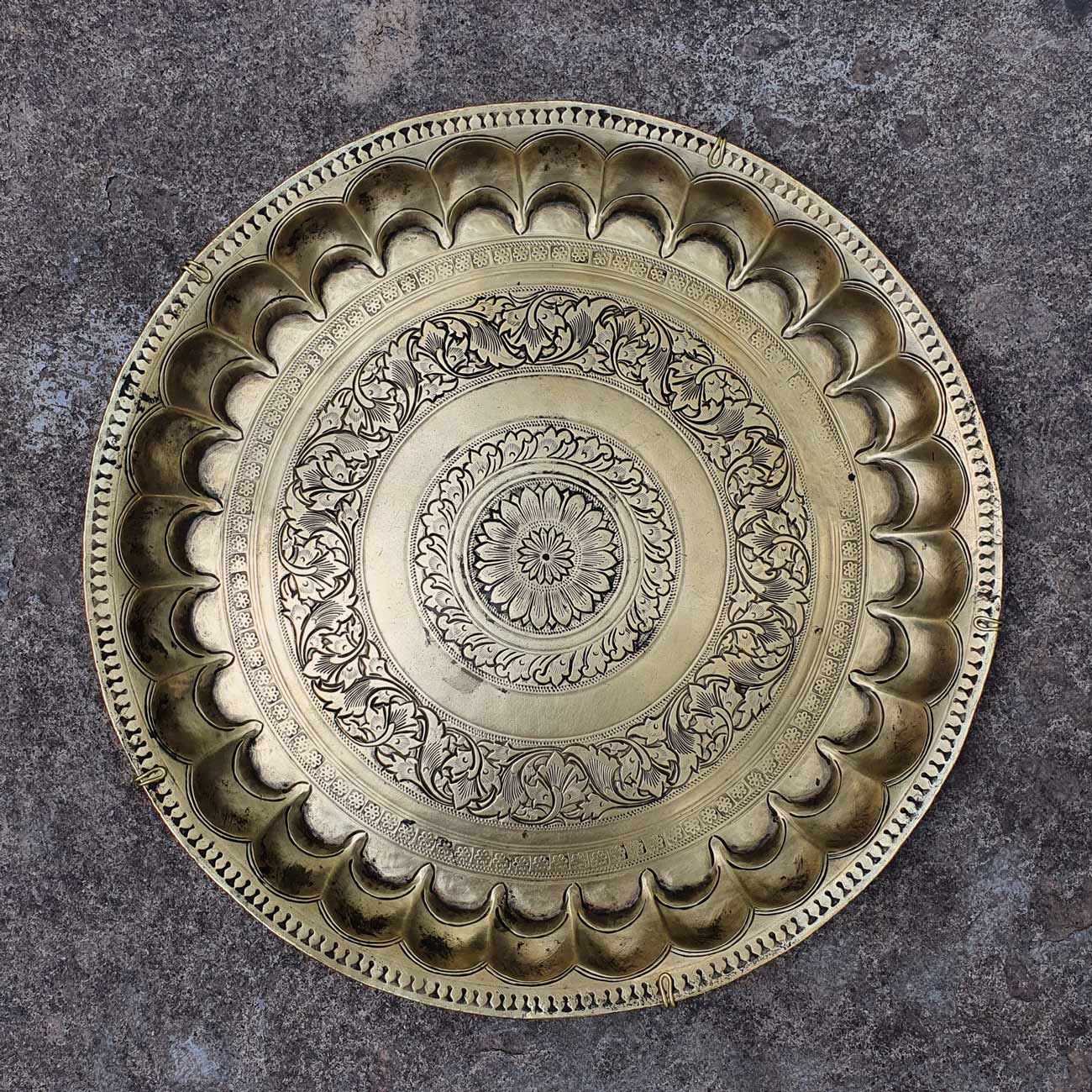
Floral Thali - 03
Artisera
₹44,800
out of stock
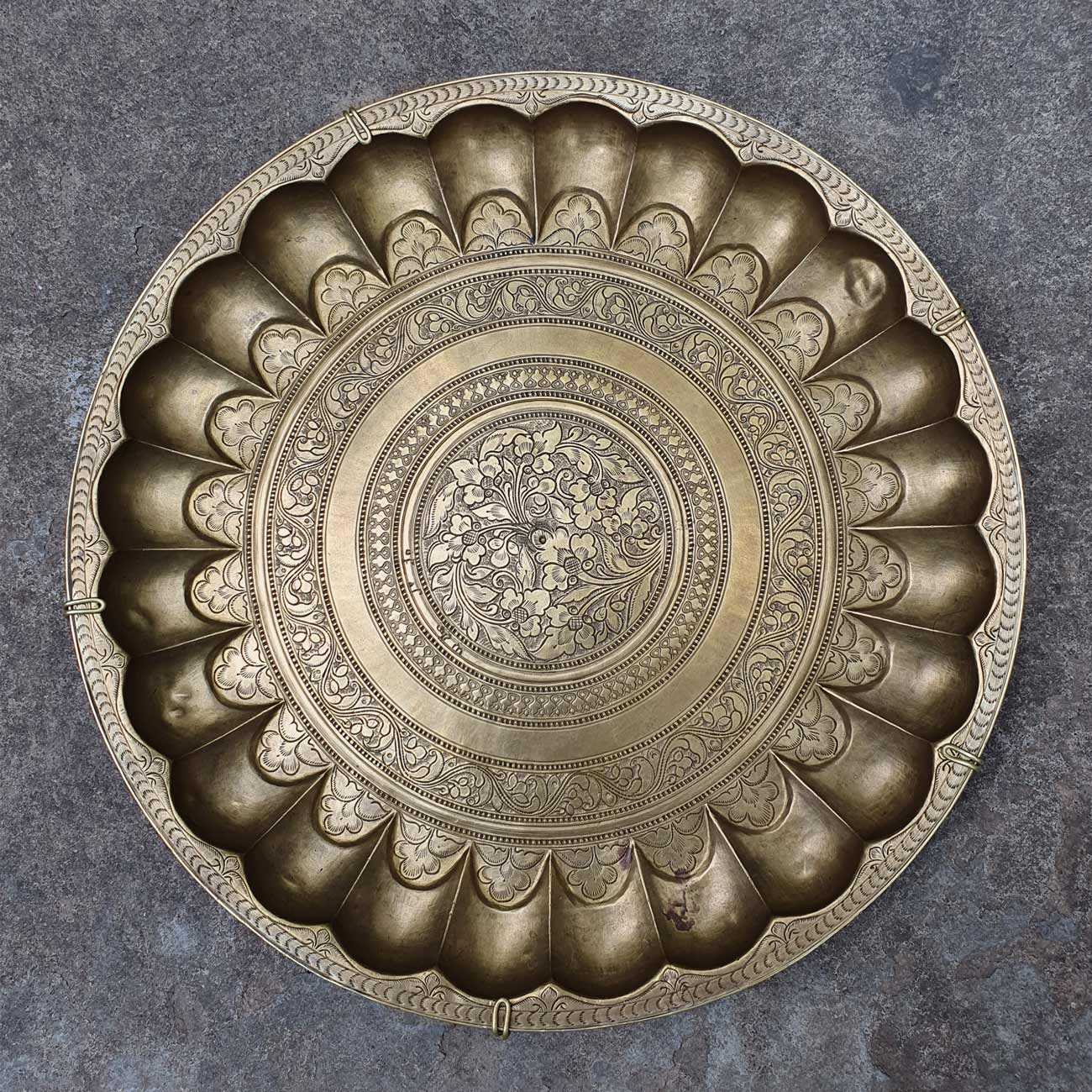
Floral Thali - 04
Artisera
₹69,440
out of stock
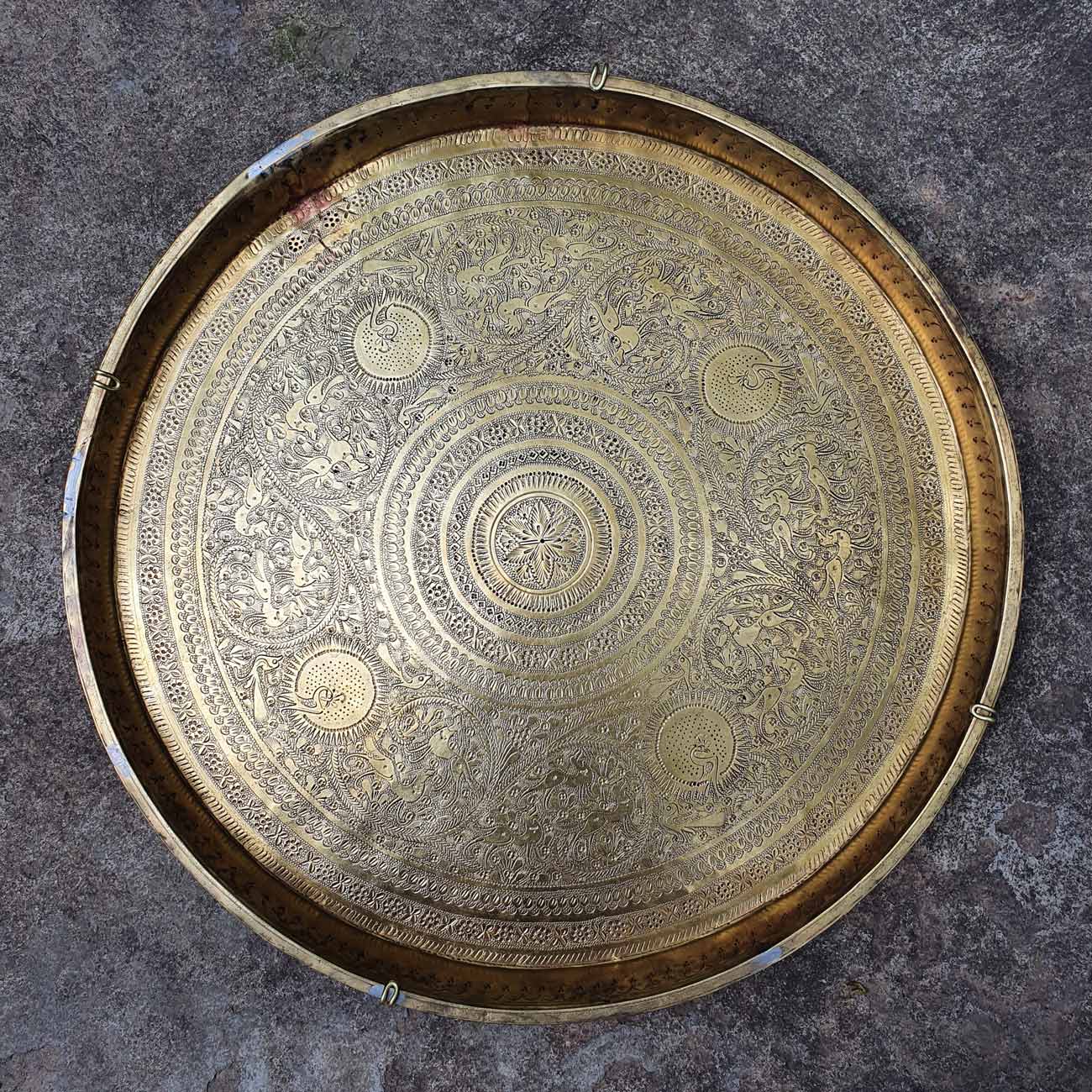
Floral Thali with Peacocks, Hunting Dogs and Deer
Artisera
₹54,880
out of stock
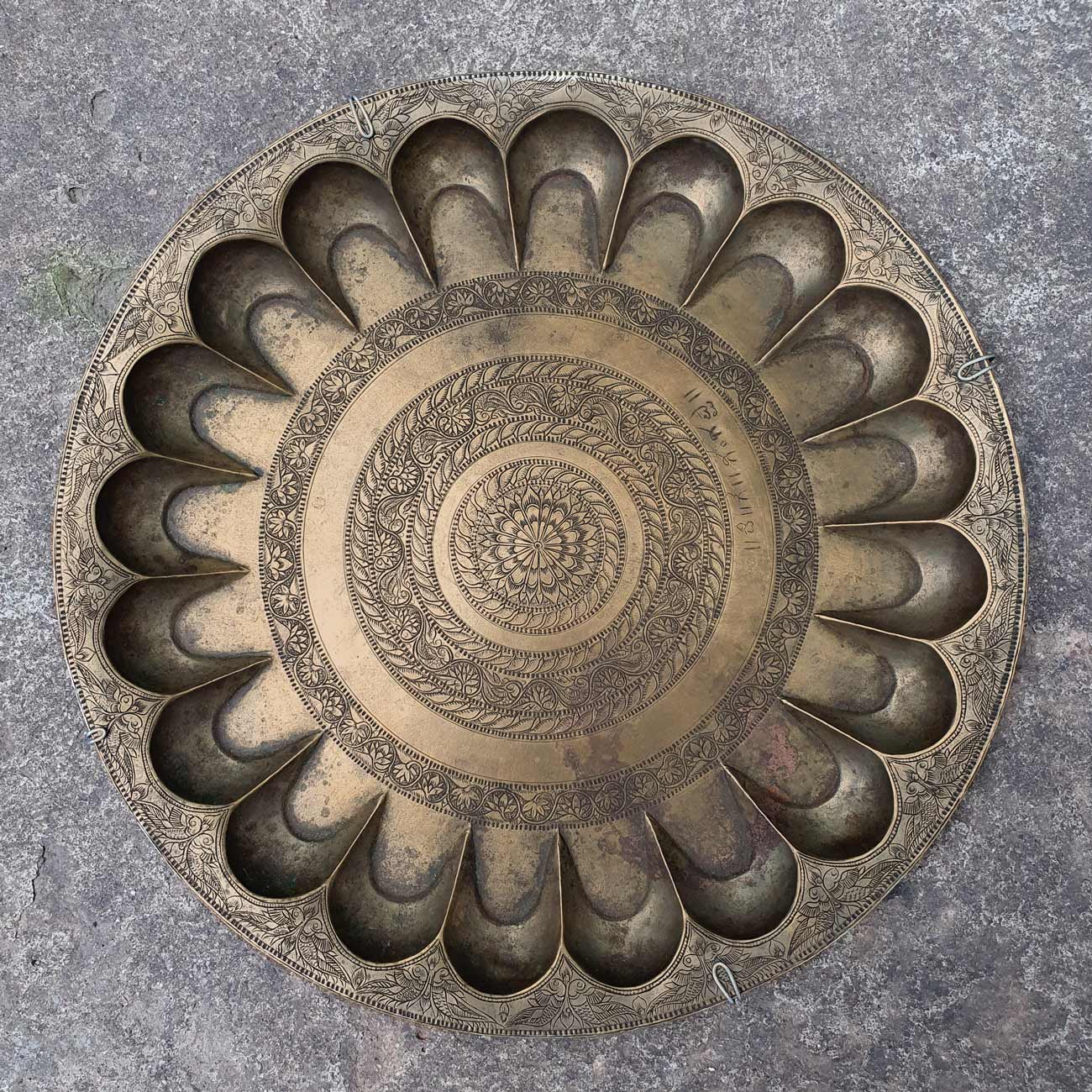
Floral Thali - 02
Artisera
₹43,680
out of stock
Floral Thali - 01
Artisera
₹43,680
out of stock
Thali with Parrots
Artisera
₹42,560
out of stock
Floral Thali on Three Legs
Artisera
₹16,240
out of stock