Ganesh On Lotus (Ganesha's Omnipresence)
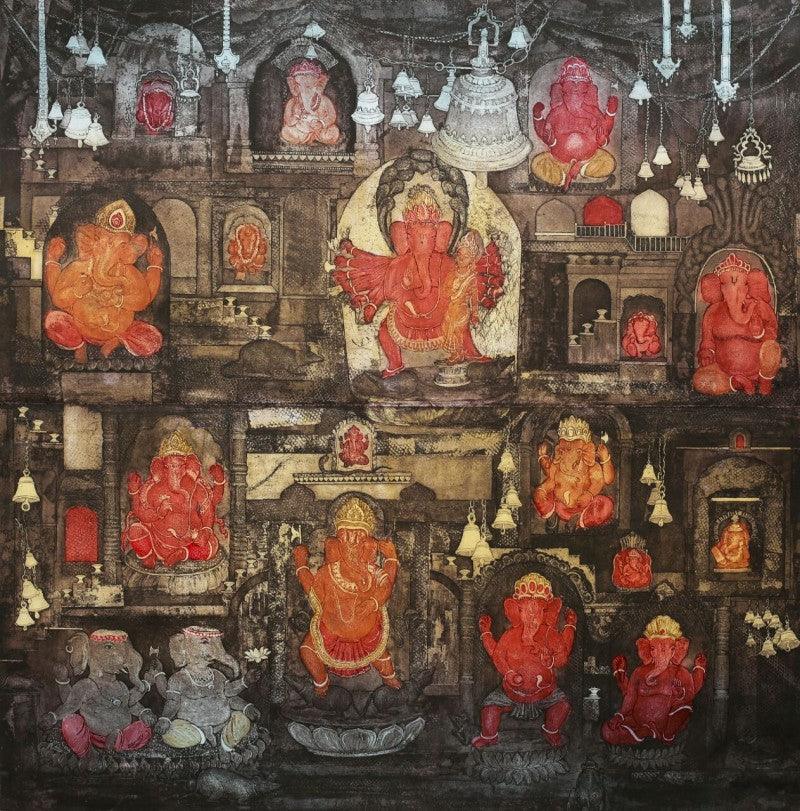
This layered temple interior unfolds like a visual litany, where multiple incarnations of Ganesha glow in earthen reds against a soot-dark architecture, turning devotion into a rhythm of repeated presence. The composition is built as a dense architectural grid—arches, ledges, and sanctums stacking like memory chambers—while hanging lamps and bells stitch the space into a single ceremonial breath. Light feels less like illumination than revelation: each figure emerges as an ember within shadow, suggesting that the sacred is not singular but distributed, encountered in many thresholds at once. Beneath the ornate stillness lies a narrative of guardianship and passage, as if every niche offers both refuge and a reminder that removal of obstacles is a continuous, communal act.
Delivery
You may also like