

Time Worn (A Room of One's Own)
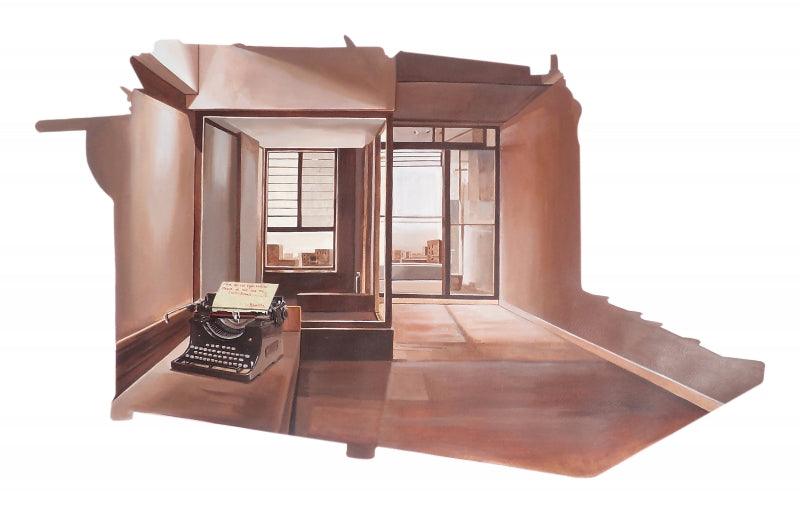
This interior scene stages absence as its true protagonist: a solitary typewriter anchors the foreground while the room’s architecture opens in successive frames toward a distant, bleached city. Warm sepia washes and long, measured shadows turn sunlight into a kind of quiet pressure, stretching time across the bare floor like an unspoken sentence. The composition’s rectilinear partitions—windows, doorways, and panes—suggest both refuge and confinement, as if the act of writing were suspended between private memory and an outside world that remains tantalizingly out of reach. In the hush of these emptied planes, the typewriter reads as a relic of human voice—present, yet waiting—inviting the viewer to imagine the message that never quite arrives.
Delivery
You may also like