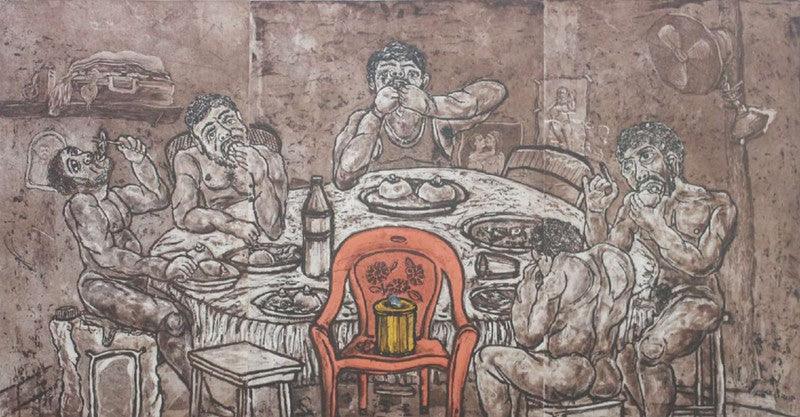
Lust Supper 1 (The Silent Supper)
₹55,000
● In stock · ★ 5.0 (9)checking live price…
Size
42x72Type
OriginalMaterial
PaperRendered in a restrained, dust-laden palette, the scene compresses bodies, tableware, and walls into a cramped theater of appetite where survival feels both communal and isolating. The lone burst of orange in the empty chair becomes a quiet protagonist—an absence turned beacon—suggesting someone missing, excluded, or already consumed by the room’s relentless cycles. Rough, sketch-like contours and smeared tonal transitions deny any polished comfort, making the act of eating read as ritual and burden rather than pleasure. In this compressed space, nourishment and neglect coexist, and the viewer is left to weigh whether the gathering signifies solidarity or a bleak choreography of endurance.
Delivery
You may also like
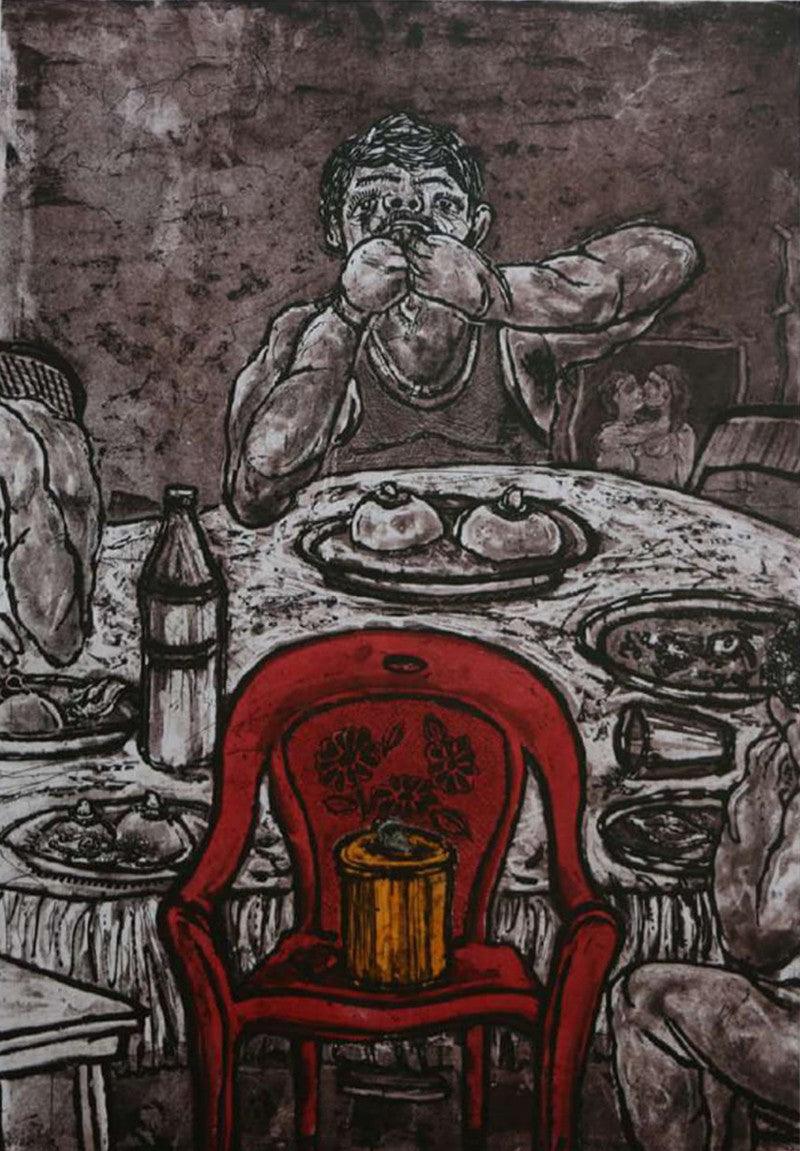
Lust Supper 2 (The Unseen Feast)
Artzolo
₹10,000
★ 5.0 (6)
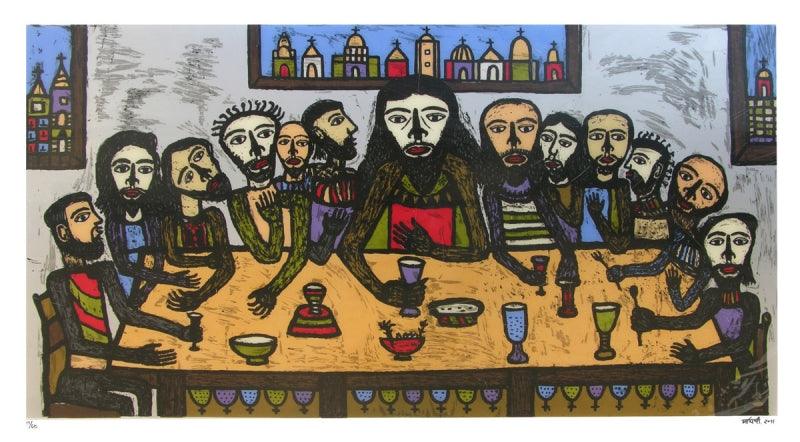
Last Supper (The Last Supper)
Artzolo
₹175,000
★ 5.0 (15)
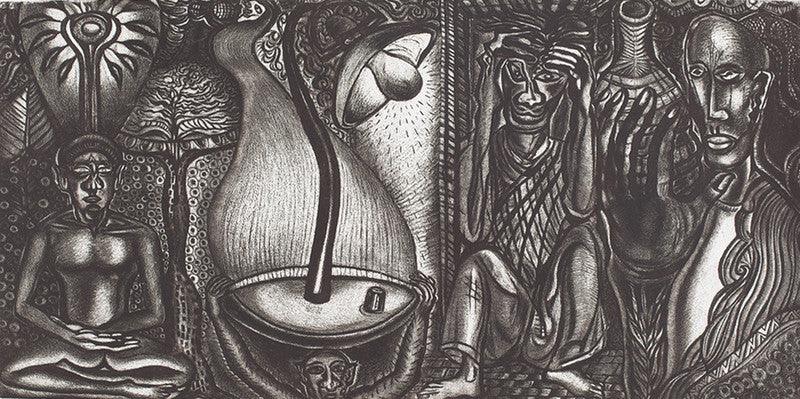
His Magical World 6 (Nocturne)
Artzolo
₹80,000
★ 4.0 (15)
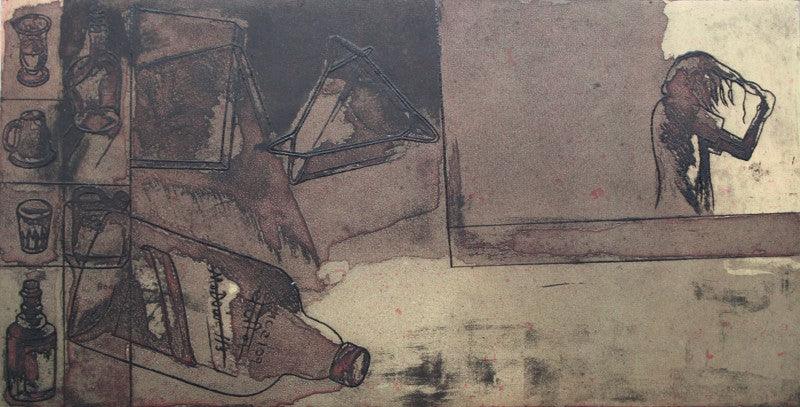
Untitled 3 (Abstract with Figure and Objects)
Artzolo
₹36,000
★ 5.0 (10)
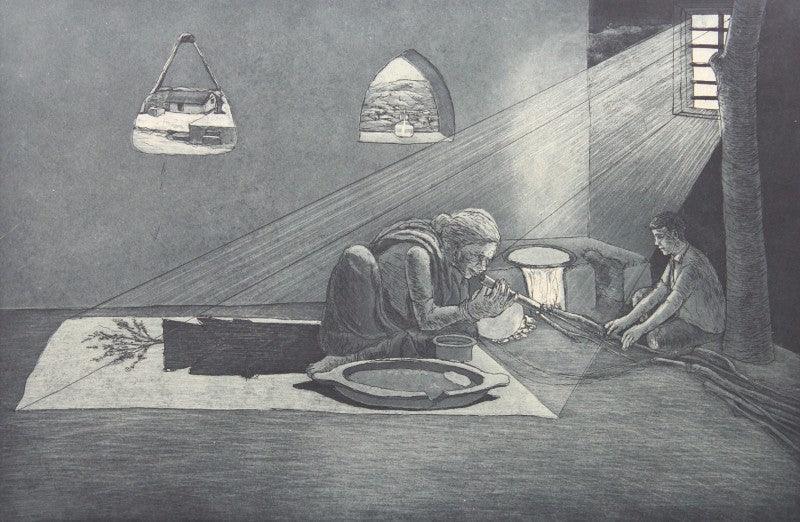
Burn (Old Man and Boy)
Artzolo
₹32,000
★ 5.0 (14)
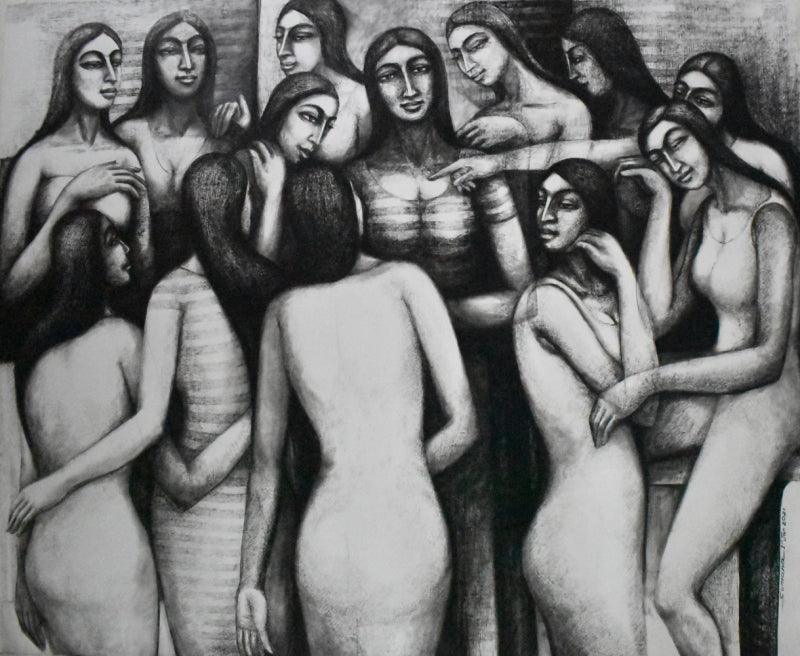
Last Supper
Artzolo
₹450,000
★ 5.0 (5)
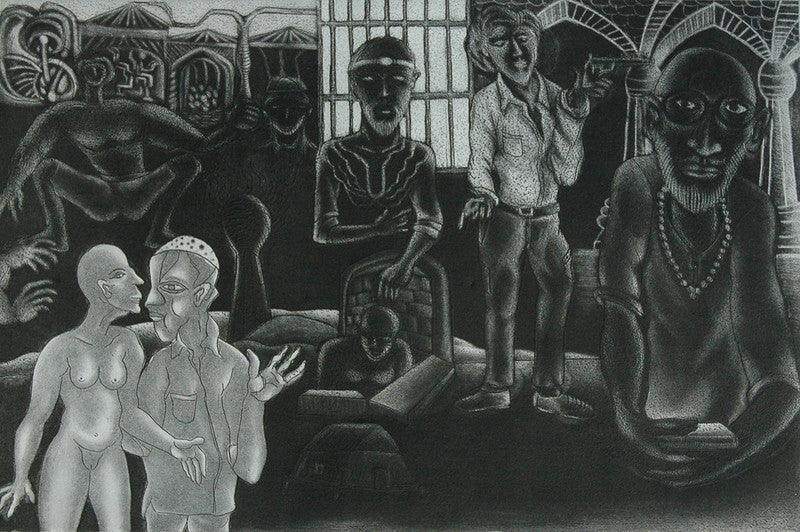
Reflection Of Desire 2 (City Life)
Artzolo
₹40,000
★ 4.0 (5)
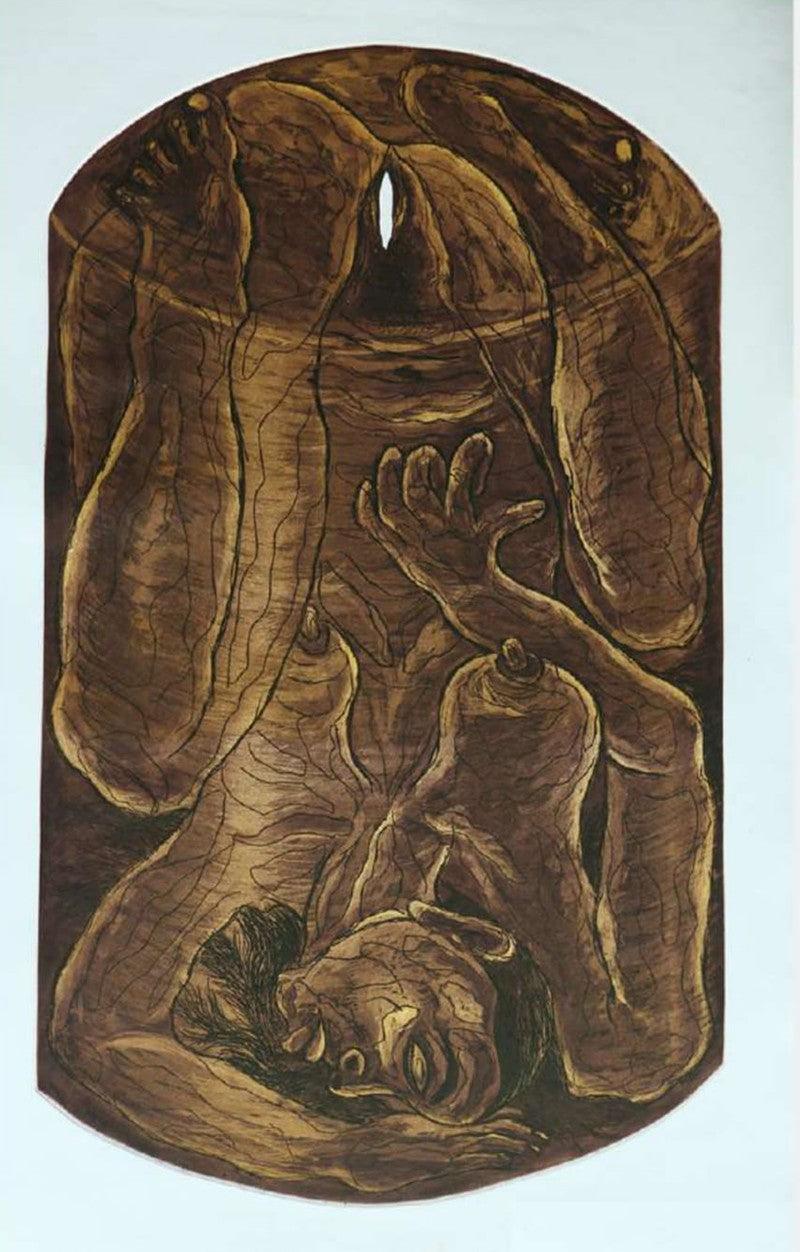
Sexbank (Earthly Repose)
Artzolo
₹15,000
★ 4.0 (13)