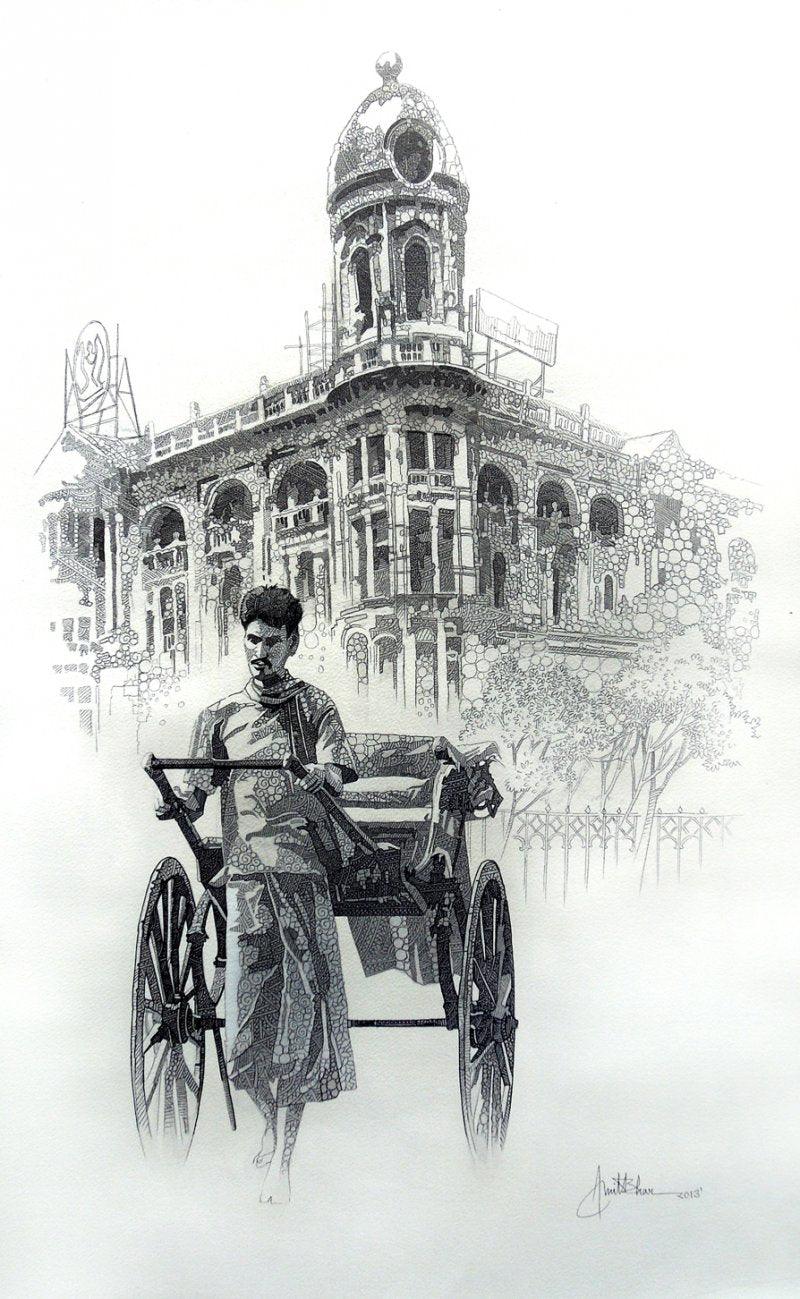
City Of Kolkata 1
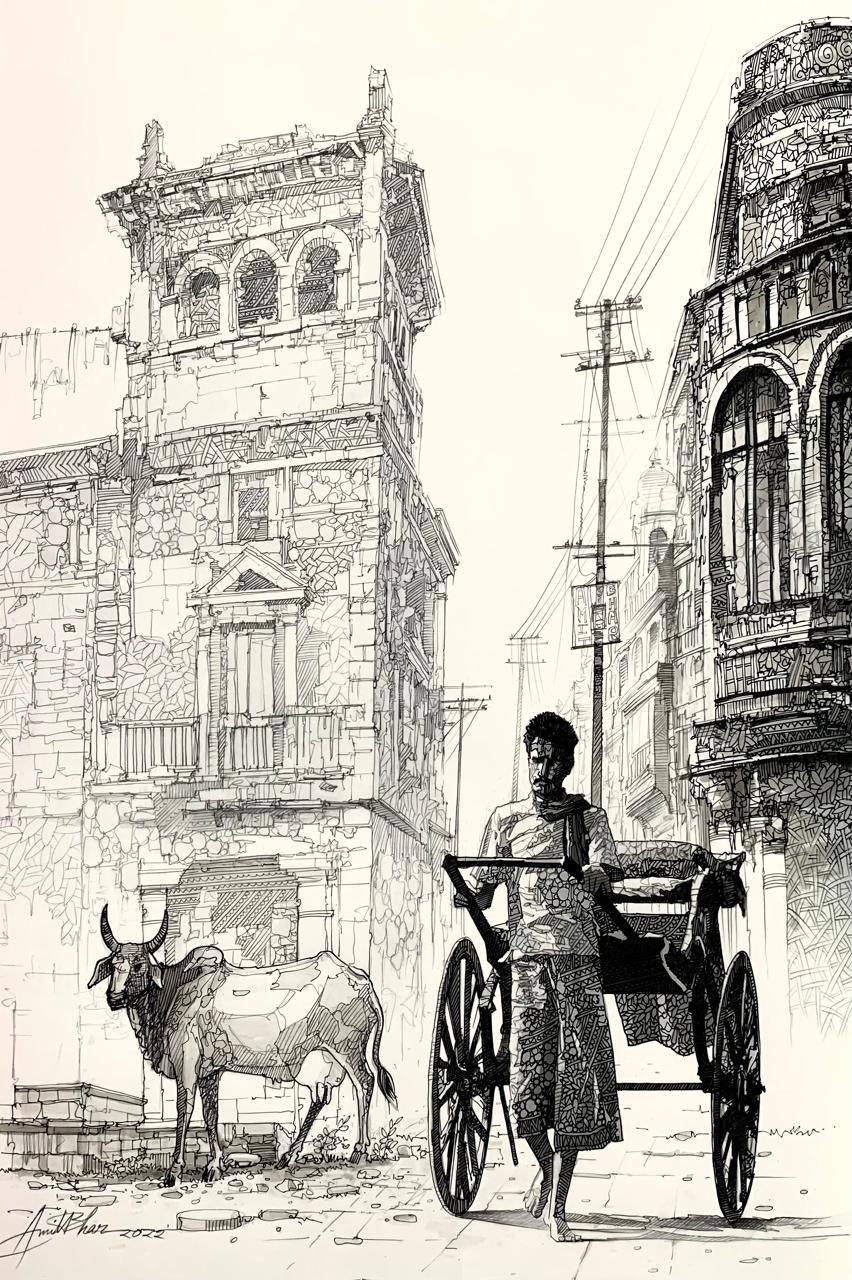
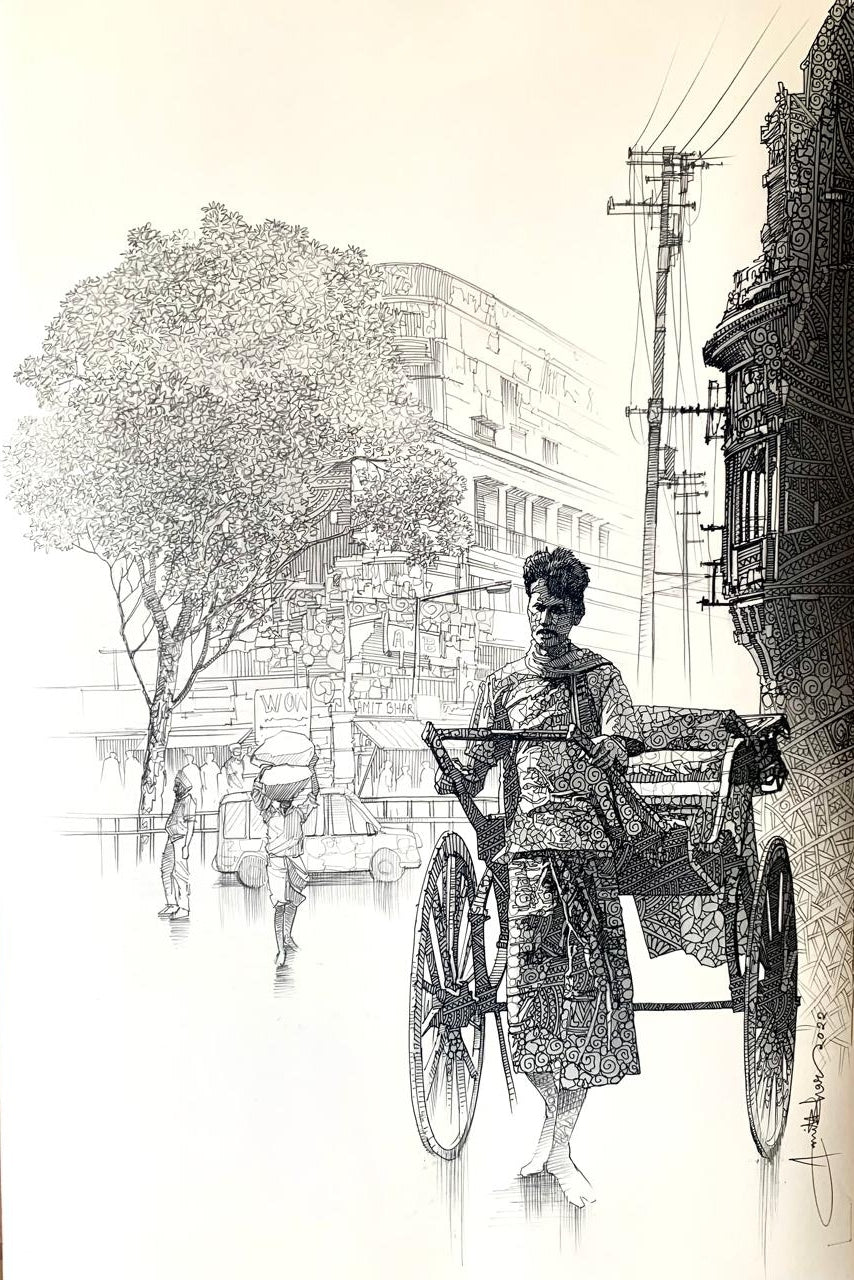
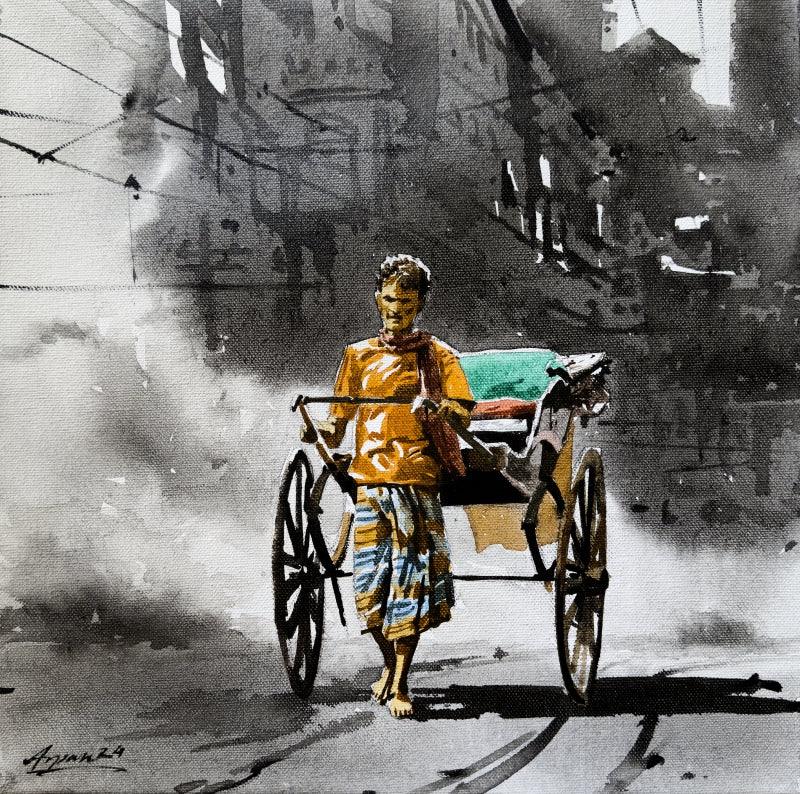
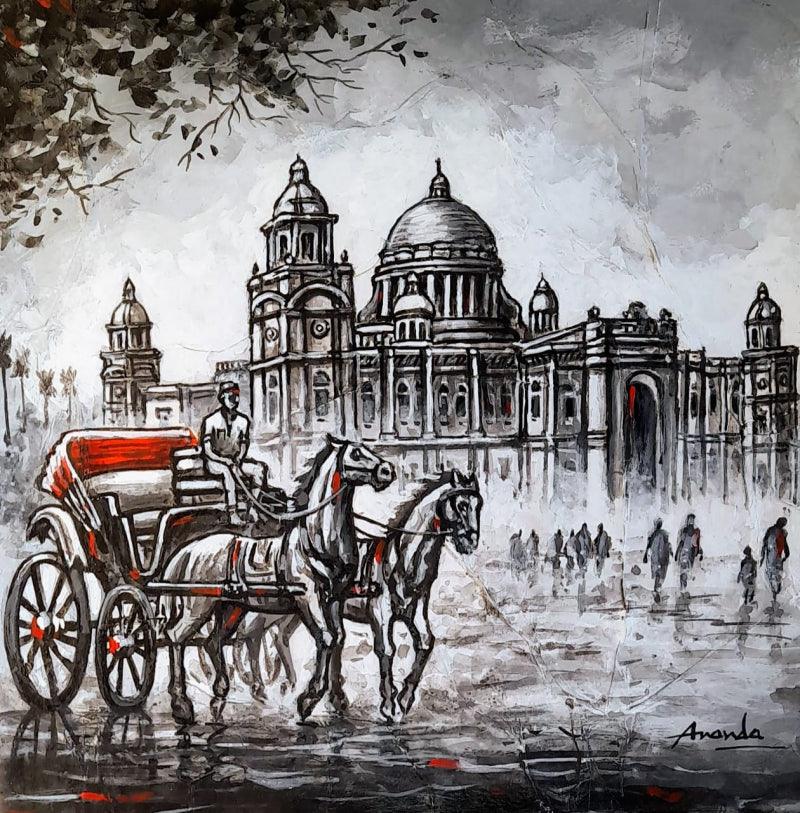
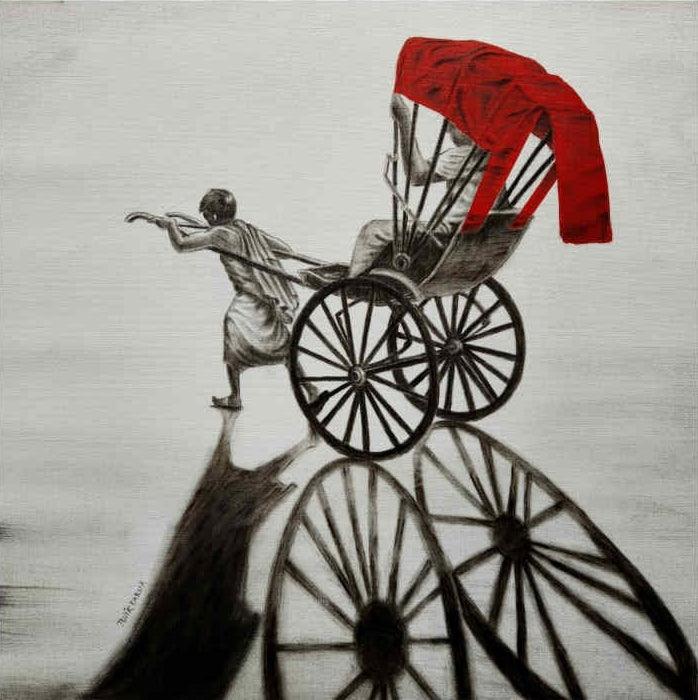
Rendered in meticulous monochrome, the work stages an encounter between human scale and civic monumentality: a lone rickshaw puller stands before an ornate, time-worn façade whose domed crown feels like a memory refusing to fade. The stippled textures and lattice of inked marks dissolve architecture into atmosphere, suggesting history as something porous—half built, half eroded—while the rickshaw’s sharp wheels and handles anchor the scene in lived labor. Light is implied rather than shown, rising through the whites of the paper as a quiet moral illumination, elevating the everyday figure into a custodian of the city’s layered past. In this tension between grandeur and grit, the drawing becomes a tender meditation on endurance, dignity, and the silent choreography of urban inheritance.
Delivery
You may also like