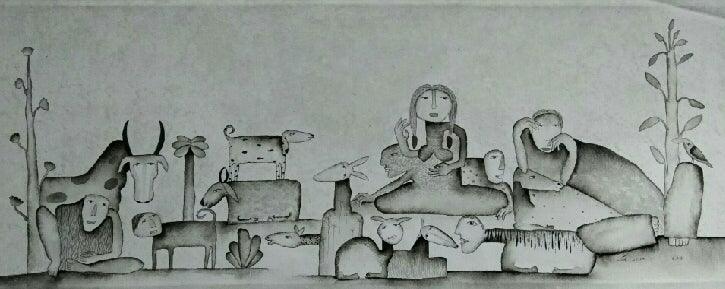
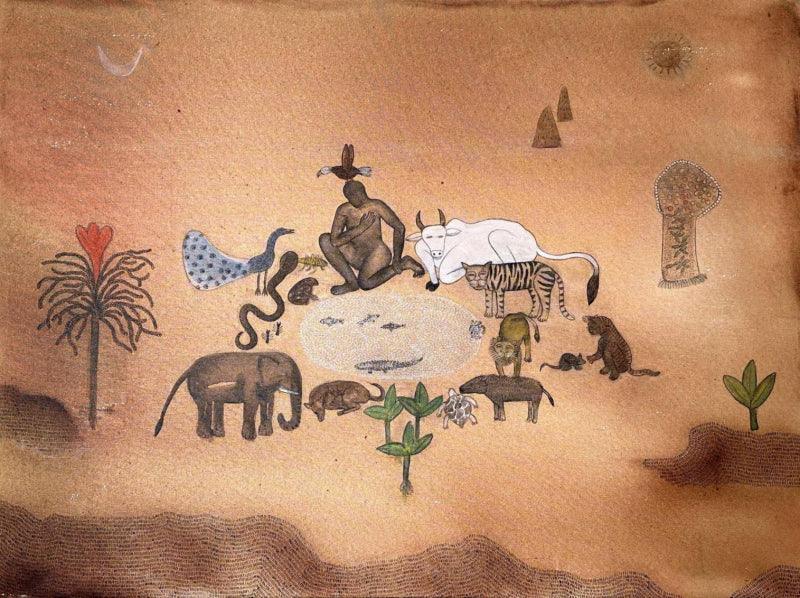
Friends (Peaceful Coexistence)
₹20,000
Out of stock · ★ 4.0 (10)checking live price…
Size
12x31Type
OriginalMaterial
CanvasRendered in a restrained, silvery monochrome, the scene reads like a quiet folktale remembered rather than observed—figures, animals, and humble vessels arranged in a low frieze that slows time into contemplation. The simplified bodies and mask-like faces flatten individuality into archetype, suggesting a communal life where care, labor, and rest share the same visual weight. A soft, even light erases drama in favor of intimacy, allowing the negative space between forms to become a kind of breath—an interdependence that binds human and animal presence into one domestic ecology. What emerges is a tender ambiguity: a pastoral haven that also feels staged, as if the artist is asking how memory edits hardship into harmony.
Delivery
You may also like
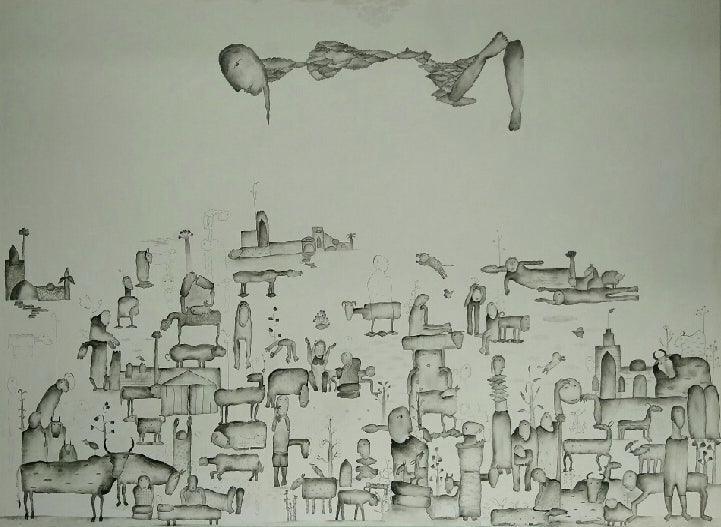
Dreamland (The Dreamer's Domain)
Artzolo
₹0
★ 4.0 (15)
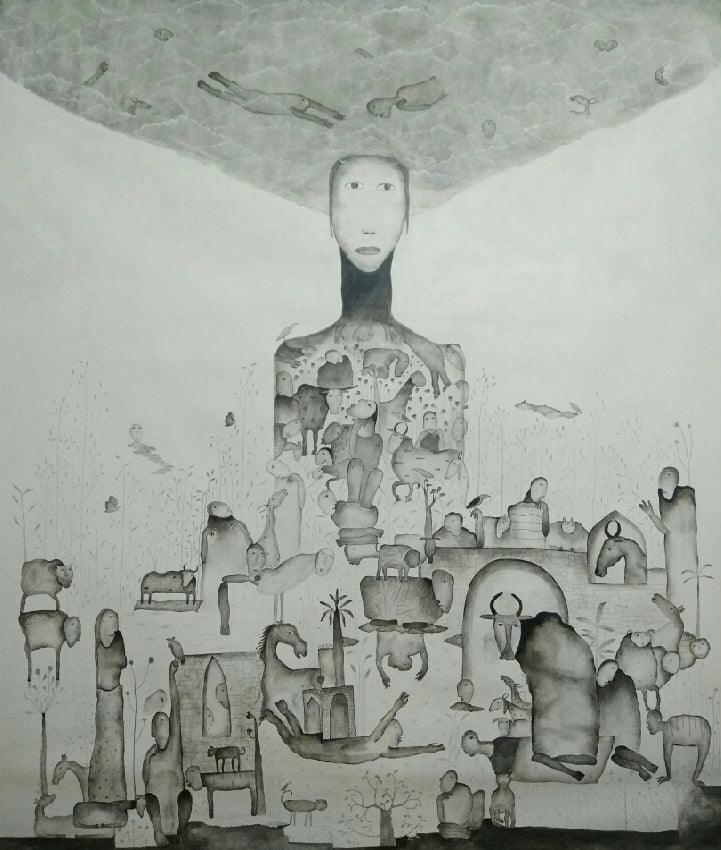
Me And My Dreamland (The Wellspring of Life)
Artzolo
₹0
★ 4.0 (11)
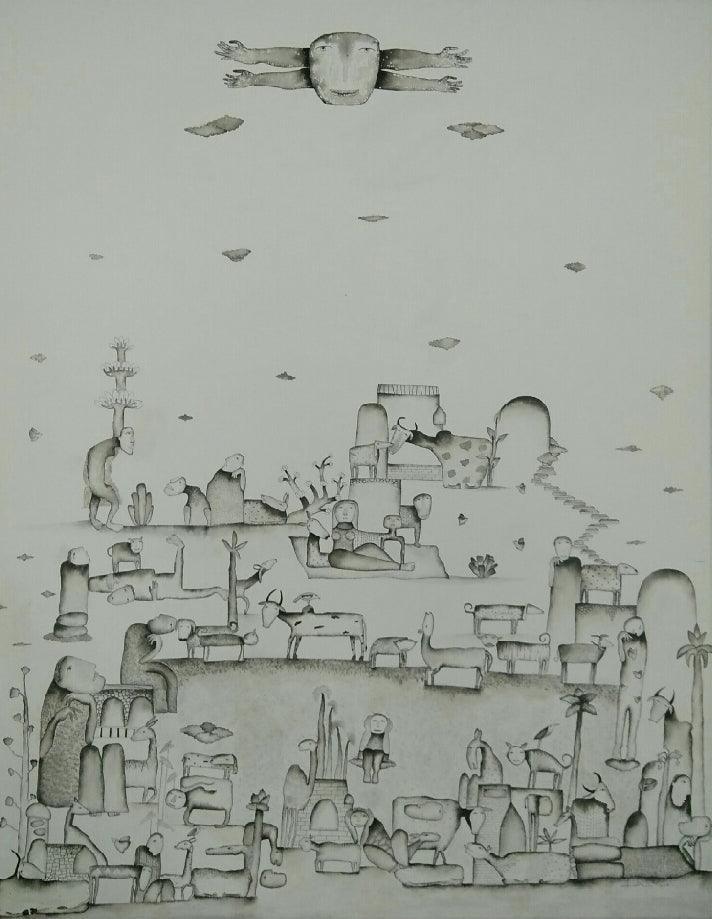
Sunshine (The Arrival)
Artzolo
₹900,000
out of stock
★ 4.0 (6)
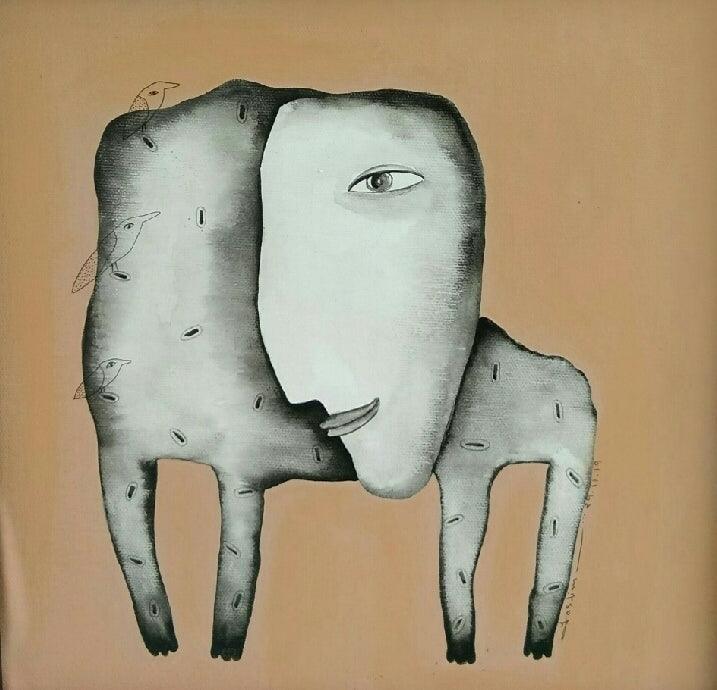
Untitled 3 (The Dreamer and the Birds)
Artzolo
₹10,000
out of stock
★ 5.0 (12)
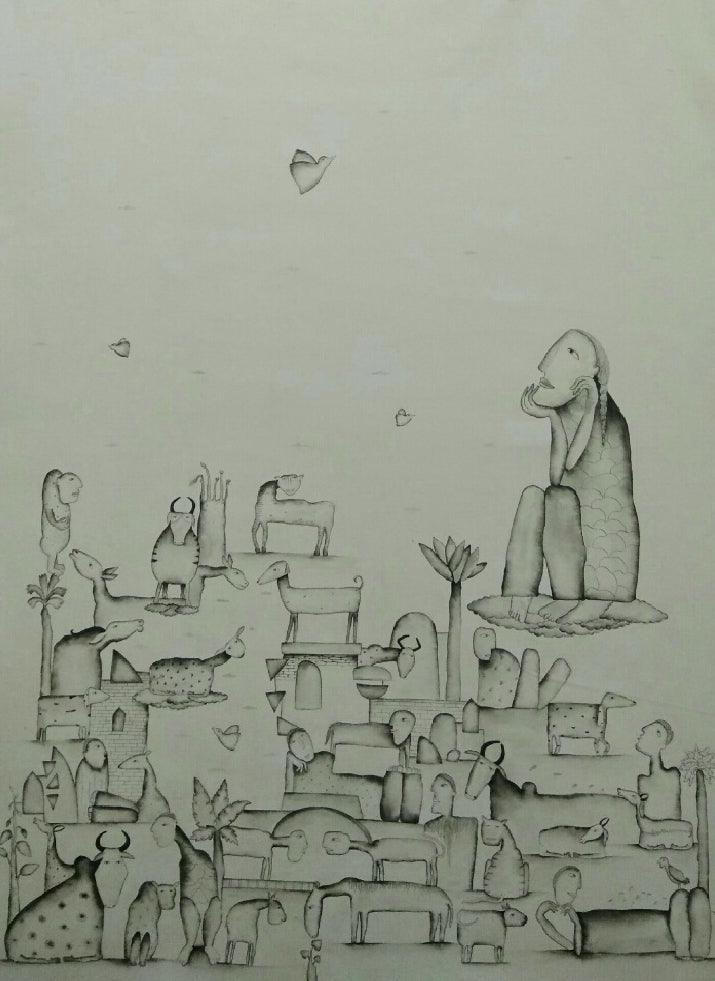
Udaan 2 (A World in Motion)
Artzolo
₹70,000
out of stock
★ 4.0 (10)
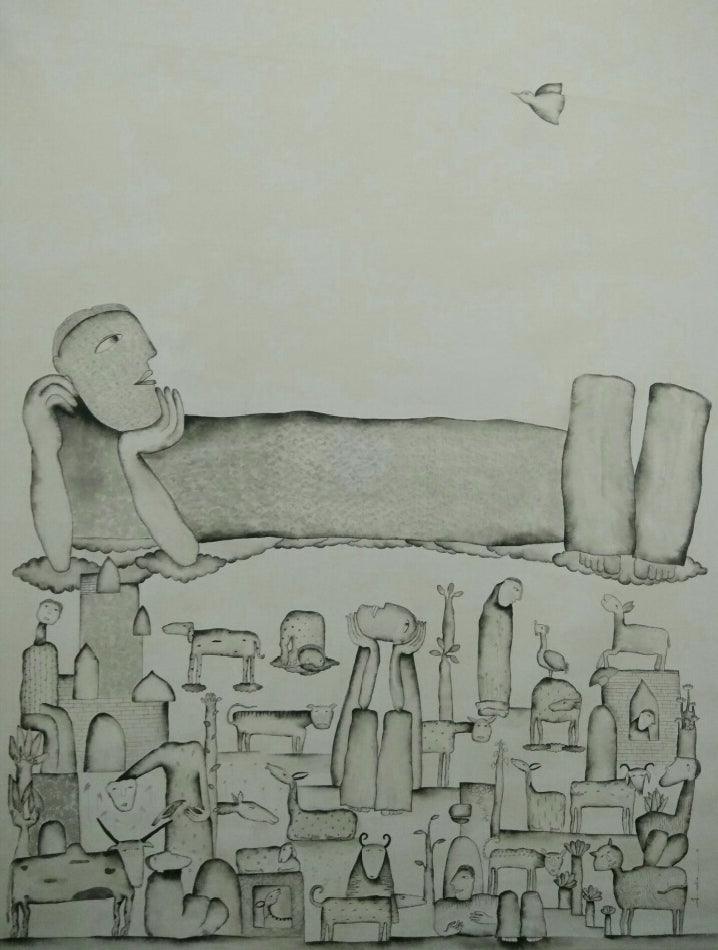
Udaan 4 (Above the Fray)
Artzolo
₹80,000
out of stock
★ 4.0 (11)
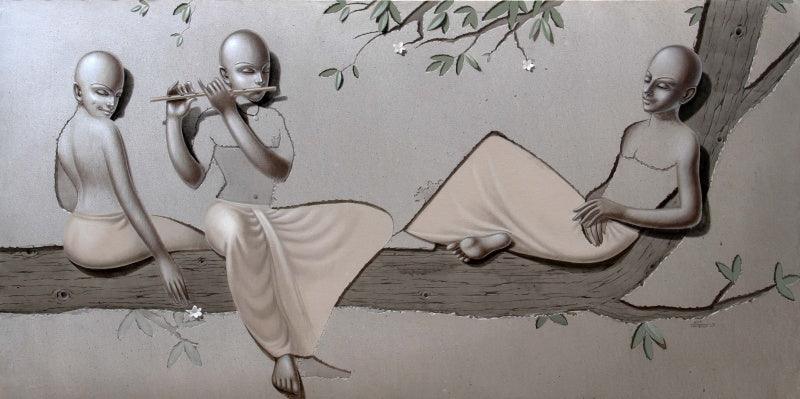
Untitled 2
Artzolo
₹0
out of stock
★ 5.0 (6)
Love (Cosmic Harmony)
Artzolo
₹90,000