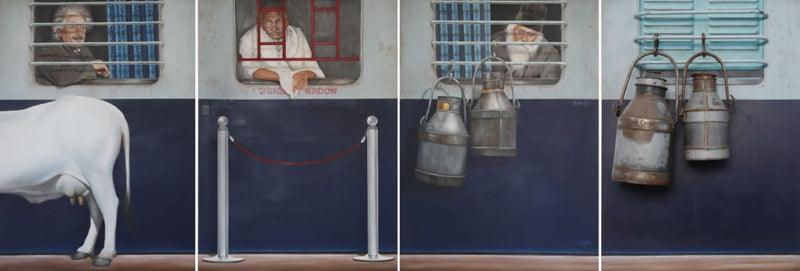
Journey Of Legends
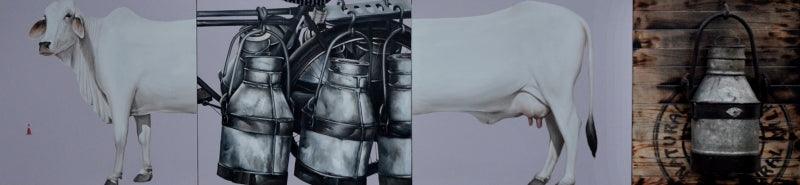
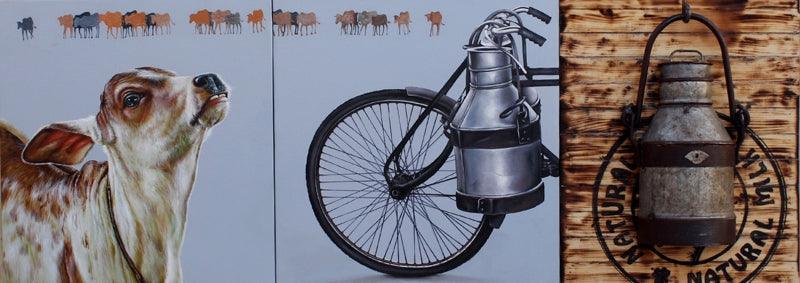
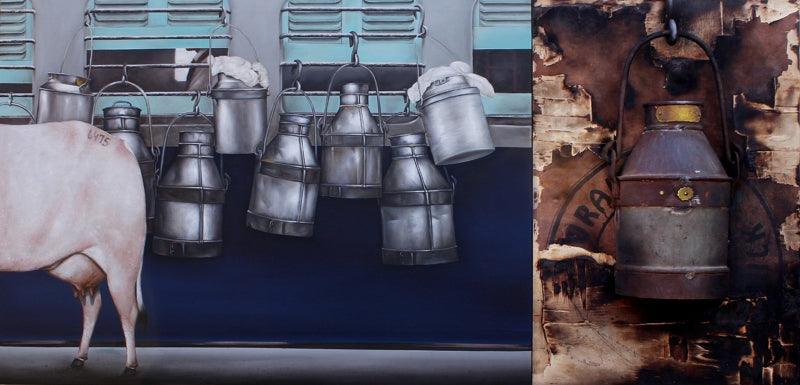
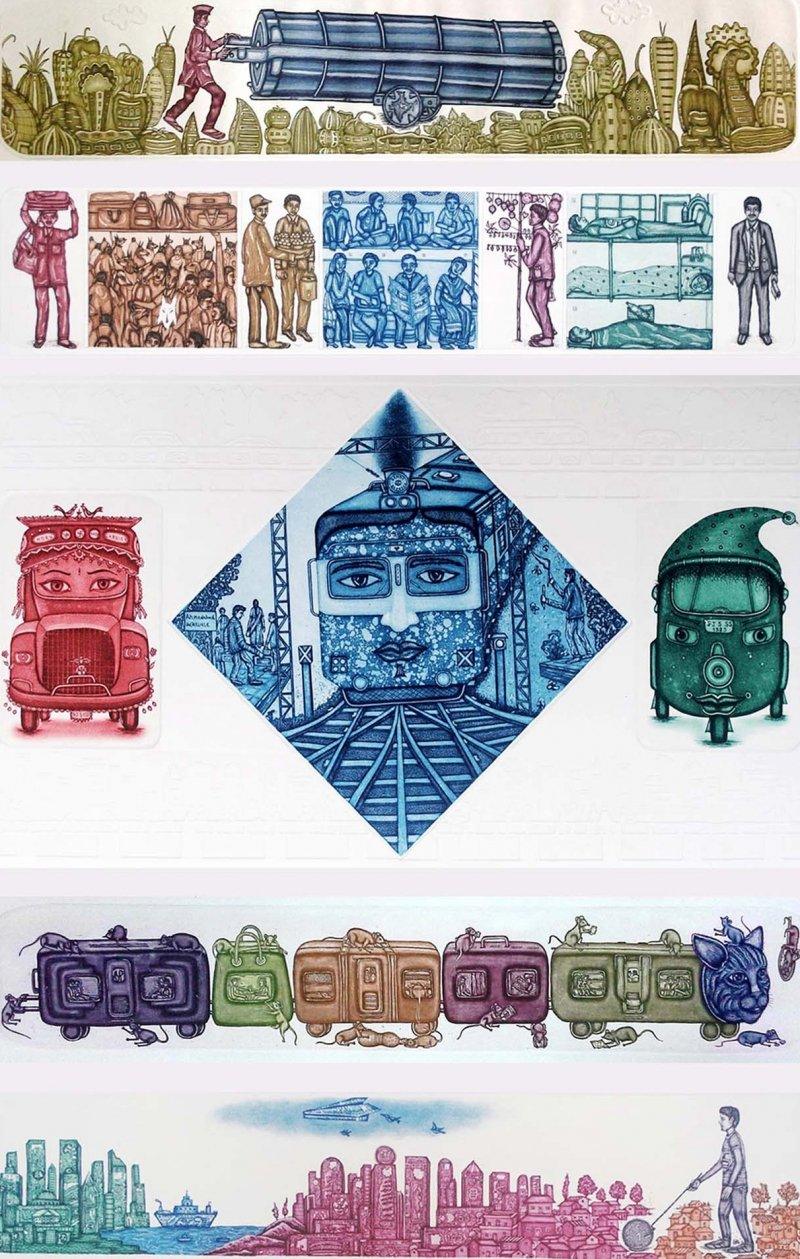
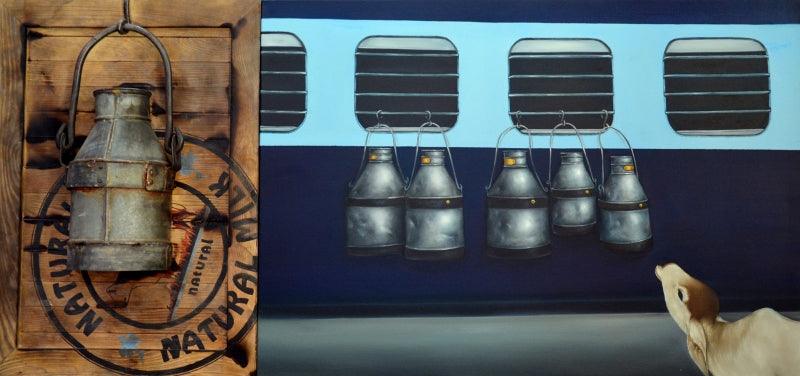
Arranged like a triptych of interrupted narratives, the work pares daily life down to fragments—an animal’s flank exiting the frame, a roped-off threshold, weathered milk cans, and faces pressed behind iron bars—so that absence becomes the dominant presence. The cool slate-blue ground quiets the scene into a kind of institutional dusk, while the repeated grids of windows and railings insist on separation: between interior and street, desire and access, witness and participation. Each object reads as both utilitarian and emblematic, suggesting how routine labor and domestic tokens can turn into symbols of containment, as if the city’s ordinary architecture is also a psychological architecture. What lingers is a tension between tenderness and restraint—the human gaze searching outward, the world offered in pieces, and the viewer made to assemble meaning from what is deliberately withheld.
Delivery
You may also like