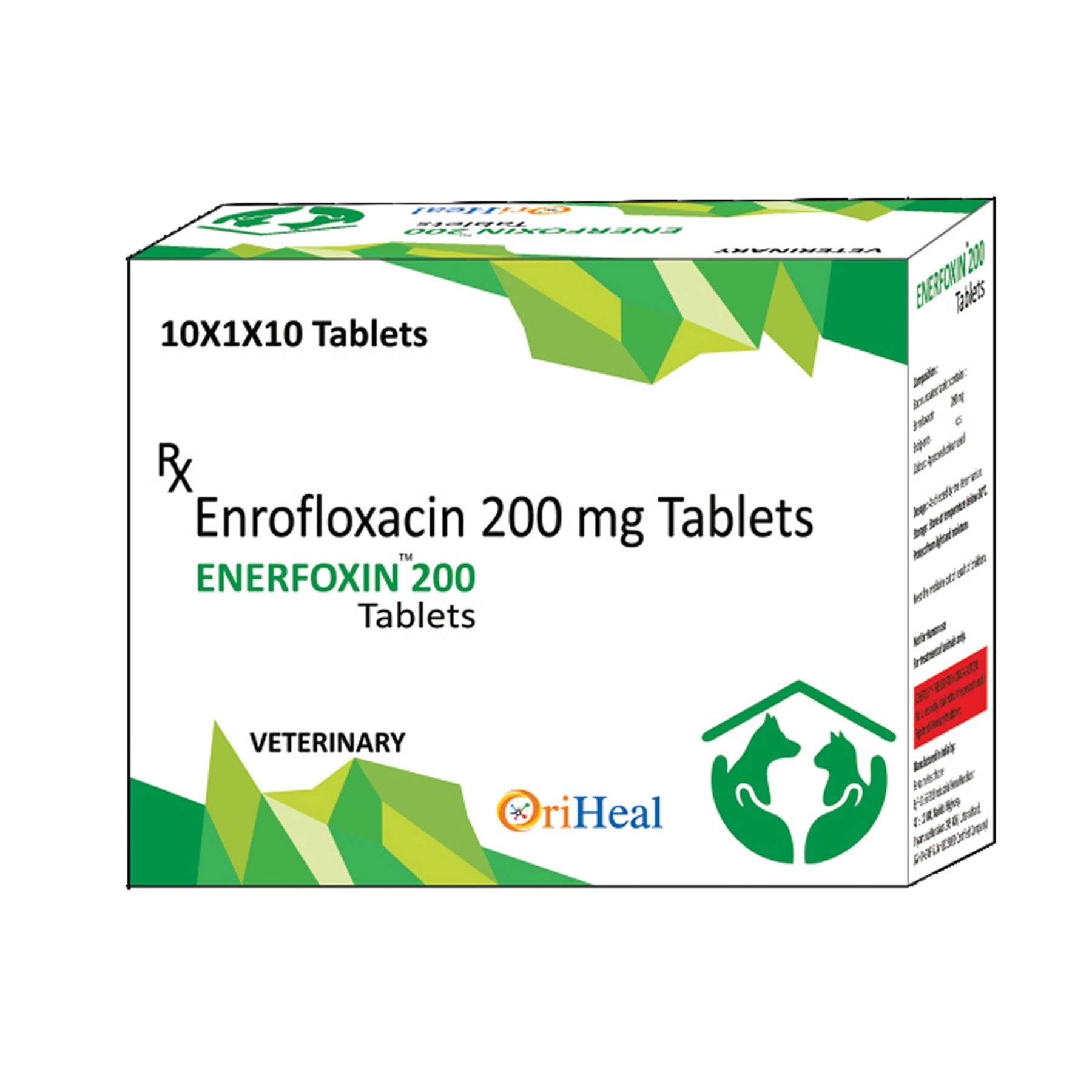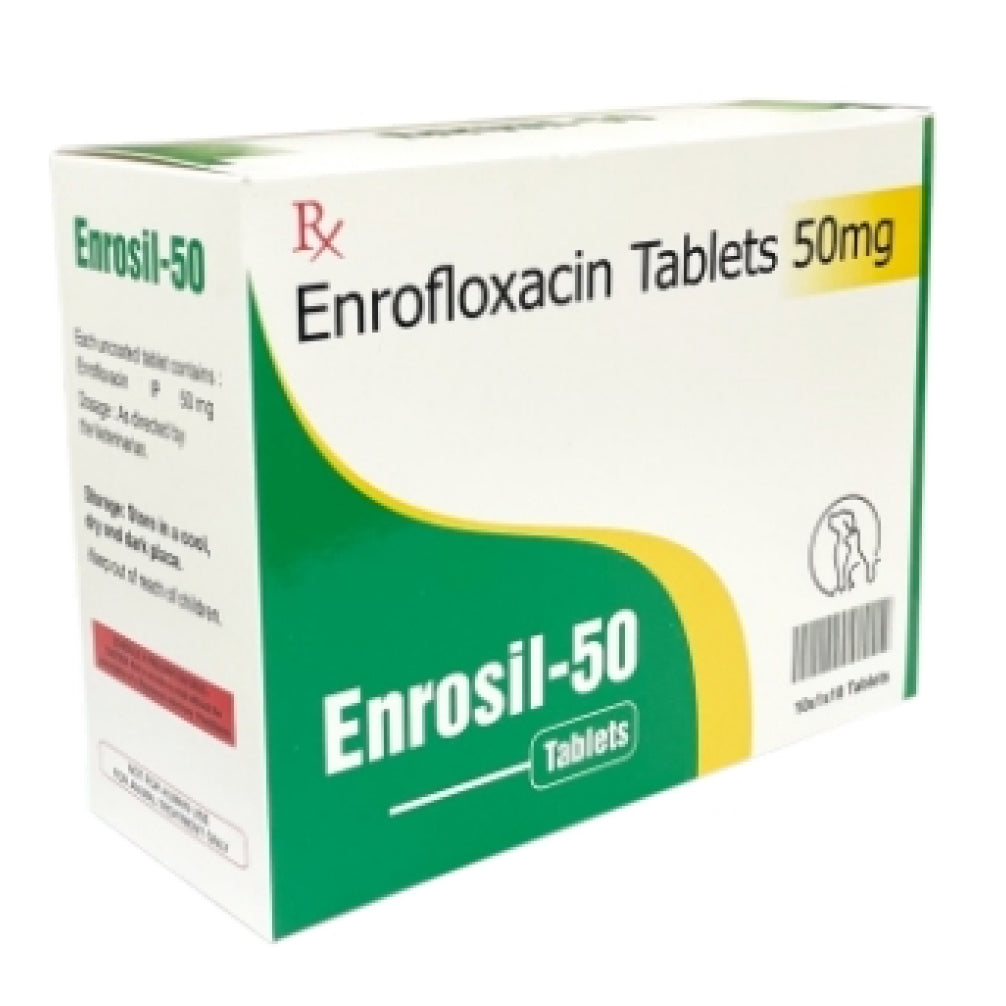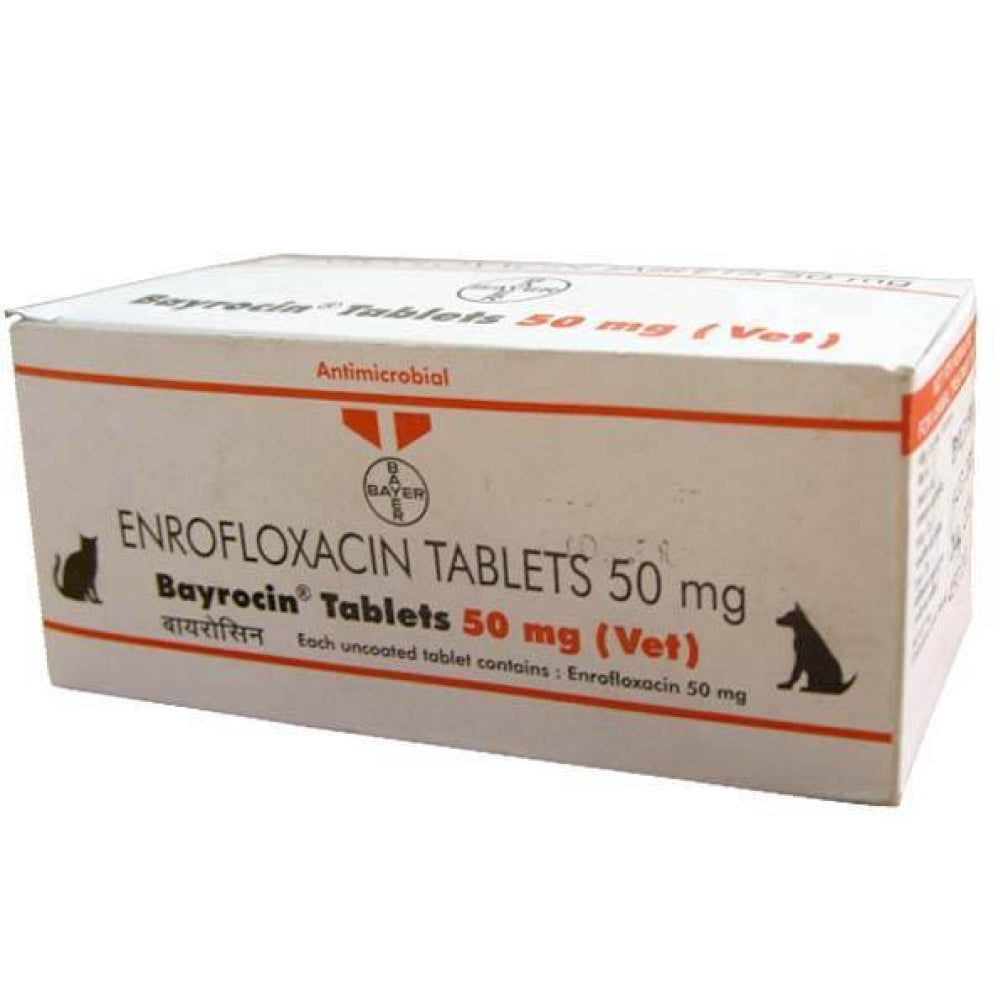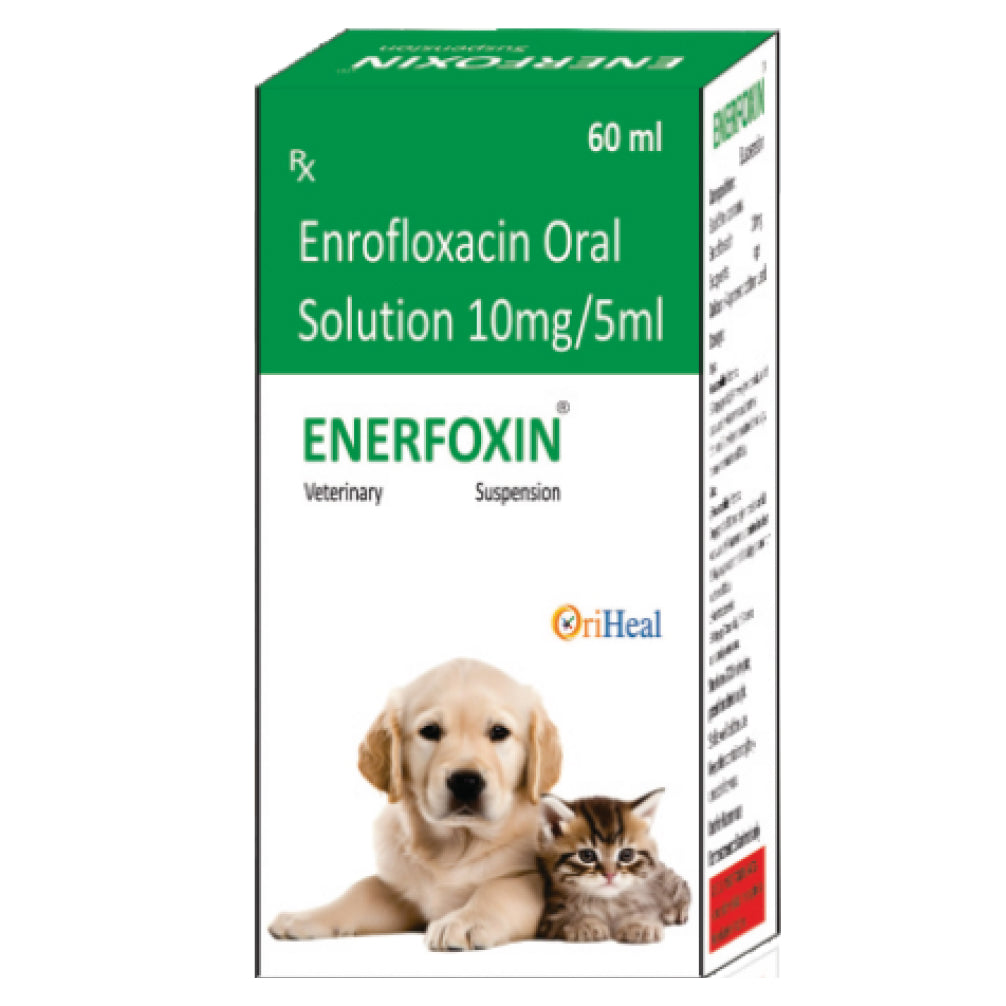
Oriheal Enerfoxin (Enrofloxacin) Oral solution for Dogs and Cats
Oriheal Enerfoxin Enrofloxacin Oral Solution for Dogs and Cats - Broad-Spectrum Antibiotic Treatment, Without the Pilling Battle
Getting a tablet into a sick pet is genuinely one of the more demoralising experiences of pet parenthood. You wrap it in cheese. They eat the cheese and leave the tablet. You hide it in food. They eat around it. You try to place it directly on the tongue. They spit it out and look at you like you've done something unforgivable. And they're already unwell - which makes the whole experience harder on both of you than it needs to be.
The Oriheal Enerfoxin Oral Solution exists for exactly this situation. It delivers the same clinical-strength Enrofloxacin antibiotic - a broad-spectrum fluoroquinolone prescribed for bacterial infections of the skin, respiratory tract, urinary tract, and gastrointestinal system - in a liquid format that mixes directly into food, measures accurately with a syringe, and gets into your pet without drama or wasted doses.
Manufactured and marketed by Oriheal, 2842, Sant Nagar Road, Ranibagh, New Delhi - 110034. Available in a 60 ml bottle at ₹150.
Each ml of solution contains: Enrofloxacin IP - 50 mg (5% w/v).
This is a prescription medication. Use only under veterinary supervision.
What Are the Uses and Benefits of Oriheal Enerfoxin Oral Solution?
- Enrofloxacin is a fluoroquinolone-class broad-spectrum antibiotic - one of the most important classes of antibiotics in veterinary medicine for treating infections caused by a wide range of gram-positive and gram-negative bacteria. Here's what Enerfoxin is prescribed for:
- Skin and soft tissue infections - including pyoderma (bacterial skin infection), wounds, abscesses, and infected surgical sites where susceptible bacteria have been identified. Enrofloxacin is particularly effective against skin infections caused by Staphylococcus and Pseudomonas - two of the most common bacterial culprits in canine skin disease. For more on identifying and managing skin infections in dogs, the blog on how to spot and treat skin infections in dogs is a helpful reference.
- Respiratory tract infections - including pneumonia and bronchitis caused by susceptible bacteria in dogs and cats.
- Urinary tract infections (UTIs) - Enrofloxacin is well-distributed in the urinary tract and is one of the most commonly prescribed first-line antibiotics for bacterial cystitis in dogs, given its excellent penetration into urinary tissue.
- Gastrointestinal infections caused by susceptible bacteria - including salmonellosis and other bacterial gut infections.
- Reproductive tract infections in both dogs and cats.
- The oral solution format makes compliance - actually getting the full dose into your pet - dramatically more reliable than tablet-based alternatives. Here's why that matters:
- No more pilling stress: The solution mixes directly into wet food, a licky treat, or a small portion of broth - no hiding, no wrapping in cheese, no discovering a rejected tablet on the floor after you've walked away.
- Flexible administration: Given by syringe directly into the side of the mouth, or mixed into food - whichever your pet tolerates better. Either way, the full dose goes in.
- Precise, weight-based dosing: At 50 mg/ml, the solution allows you to measure fractions of a millilitre accurately for cats, toy breed dogs, and any pet where splitting a tablet is impossible without compromising the dose.
- Faster absorption: Liquid solutions don't require the disintegration and dissolution step that compressed tablets need before absorption begins - the active ingredient reaches the bloodstream more quickly, getting treatment underway faster.
- For a comprehensive guide on when antibiotics are appropriate for pets and what to expect during an antibiotic course, the blog on antibiotics for dogs and cats - a pet parent's complete guide is an essential read.
What Are the Possible Side Effects?
- Enrofloxacin is generally well-tolerated by dogs at the correct prescribed dose. Serious side effects are uncommon. Here's what to be aware of:
- Gastrointestinal effects - vomiting, loose stools, and reduced appetite - are the most commonly reported side effects. These are typically mild and resolve on their own, and are less likely when the solution is given with a small amount of food rather than on an empty stomach.
- Cartilage damage in young, growing dogs - this is the most important species and age-specific safety concern for dogs. Enrofloxacin should not be used in dogs still in their growth phase: dogs under 12 months of age for small to medium breeds, and under 18 months for large and giant breeds. At these ages, fluoroquinolone antibiotics can cause damage to developing cartilage in joints.
- Retinal toxicity in cats - this is the single most critical safety warning for feline use, and every cat parent whose pet is prescribed this medication must know it. In cats, enrofloxacin can cause acute retinal degeneration - resulting in sudden, dilated pupils and blindness - particularly at doses above 5 mg/kg per day. The standard recommended dose for cats is 5 mg/kg once daily and must never be exceeded. If your cat develops unusually large, dilated pupils at any point during treatment, stop the medication immediately and contact your vet without delay. This effect is dose-dependent, which is exactly why the precise dosing accuracy of a liquid format is particularly important in cats. Cats with kidney disease are at elevated risk.
- Photosensitivity - increased sensitivity to sunlight has been reported. Avoid prolonged direct sun exposure during the course of treatment.
- Rare side effects include elevated liver enzymes, lethargy, ataxia (unsteady walking), anxious behaviour, and seizures - particularly in pets with pre-existing seizure disorders.
- Drug interactions: do not give multivitamins, calcium supplements, iron supplements, antacids, dairy products, or laxatives within 2 hours of giving Enerfoxin - these reduce absorption. Sucralfate (a stomach ulcer medication) should be given at least 2 hours apart from this solution.
Vet Tip - Dr Nithya Priyadarshini, MVSc (6+ years)
"The biggest compliance advantage of an oral solution like Enerfoxin over tablets is that it removes the single most common reason antibiotic courses fail - the pet spitting out the tablet without the owner realising. A missed or partially absorbed dose doesn't just mean a day without treatment; it means the bacteria continue multiplying and can start developing resistance to the antibiotic. For cats especially, the precision of a liquid format is non-negotiable given the narrow safe dosing window - 5 mg/kg per day is the maximum, and that needs to be measured accurately every single time. I always recommend measuring the solution with a calibrated oral syringe rather than estimating, and giving it into the side of the mouth rather than mixed into food if possible, to ensure the full dose is swallowed."
How Should You Give Enerfoxin Oral Solution to Your Pet?
- Shake the bottle before each use. Measure the dose using a calibrated oral syringe - do not estimate. Give directly into the side of the mouth using the syringe for the most reliable dosing, or mix into a small portion of food your pet will eat completely.
- Do not mix into dairy products or food containing calcium - calcium reduces enrofloxacin absorption. Do not give within 2 hours of antacids, multivitamins, or iron or zinc supplements.
- Dosing is entirely as prescribed by your vet. General veterinary dosing guidance for reference:
| Patient | Dose | Frequency | Duration |
|---|---|---|---|
| Dogs | 5 mg/kg body weight | Once daily | 3-5 days for GI, UTI, respiratory. Up to 4 weeks for skin/pyoderma |
| Cats | 5 mg/kg body weight - do not exceed | Once daily | As short as clinically possible |
- Since the solution contains 50 mg Enrofloxacin per ml: a 10 kg dog needs 1 ml once daily. A 5 kg cat needs 0.5 ml once daily. Your vet will confirm the exact volume based on your pet's weight - always follow their specific instructions.
- Complete the full course even if your pet appears to have recovered before it ends. Stopping early allows surviving bacteria to rebound, often more resistant than before.
How Does Enerfoxin Oral Solution Work?
- Enrofloxacin belongs to the fluoroquinolone class of antibiotics. It is bactericidal - meaning it kills bacteria rather than simply stopping them from multiplying.
- It works by inhibiting two bacterial enzymes - DNA gyrase and topoisomerase IV - that are essential for bacterial DNA replication and repair. Without these enzymes functioning properly, bacteria cannot copy their DNA, cannot divide, and cannot repair damage to their DNA. The result is rapid bacterial cell death, typically within 20-30 minutes of sufficient drug exposure.
- Enrofloxacin's bactericidal action is concentration-dependent - meaning higher peak concentrations produce faster, more complete bacterial kill. This is why it's given once daily at the full dose rather than in smaller divided doses throughout the day.
- The oral liquid solution format is particularly valuable for concentration-dependent antibiotics because it ensures the full dose is absorbed rapidly and consistently - achieving the peak plasma concentration needed for maximum bactericidal effect. Tablet formulations that are partially absorbed, chewed incompletely, or rejected entirely fail to achieve this peak, reducing effectiveness and increasing the risk of treatment failure.
- After absorption, Enrofloxacin distributes broadly throughout body tissues - reaching effective concentrations in skin, lung, kidney, urinary tract, gut, and reproductive tissue, making it effective against infections in all of these locations.
What Safety Advice Should You Know Before Using Enerfoxin Oral Solution?
- Prescription medication only. Never self-prescribe or use a previous prescription for a new or different infection without a fresh vet assessment.
- Do not use in dogs under 12 months of age (small and medium breeds) or under 18 months (large and giant breeds) - risk of cartilage damage in growing joints.
- For cats: the maximum safe dose is 5 mg/kg once daily. Do not exceed this under any circumstances. Monitor your cat for dilated pupils during the entire course - this is the first visible sign of retinal toxicity. If you see it, stop immediately and contact your vet. Cats with kidney disease are at particularly elevated risk and should be assessed by a vet before use.
- Do not use in pets with a known history of seizures without explicit vet guidance - fluoroquinolones can lower the seizure threshold.
- Do not use in pets with known kidney disease without dose adjustment and vet oversight.
- Do not use in pregnant or lactating animals without your vet's explicit guidance.
- Do not combine with other antibiotics, theophylline (an airway dilator), or cyclosporine without vet guidance - drug interactions exist with all three.
- Do not give within 2 hours of antacids, calcium, iron, zinc supplements, dairy products, or sucralfate.
- Store below 25°C away from direct sunlight. Keep the bottle tightly closed. Keep out of reach of children.
What Should You Do If You Miss a Dose?
- Give the missed dose as soon as you remember - unless the next scheduled dose is very close, in which case skip the missed one and continue from there. Never give a double dose.
- Given that Enrofloxacin is a once-daily antibiotic, consistency at the same time each day is important for maintaining steady drug levels. Set a daily alarm the moment you start the course. Missing doses creates the exact conditions - intermittent sub-therapeutic antibiotic exposure - that contribute to antibiotic resistance development.
- If you miss multiple doses, contact your vet before resuming - they may reassess the course or switch to a different antibiotic depending on how much of the course remains.
What Are All the Substitutes for Oriheal Enerfoxin Oral Solution?
If Enerfoxin is unavailable or your vet recommends an alternative, here are other enrofloxacin-based options available on Supertails. All require a valid veterinary prescription:
| Product | Active Ingredient | Format | Notes |
|---|---|---|---|
| Savavet Ataxin Enrofloxacin Tablet for Dogs & Cats | Enrofloxacin | Tablet | Meaty-flavoured tablet, same drug |
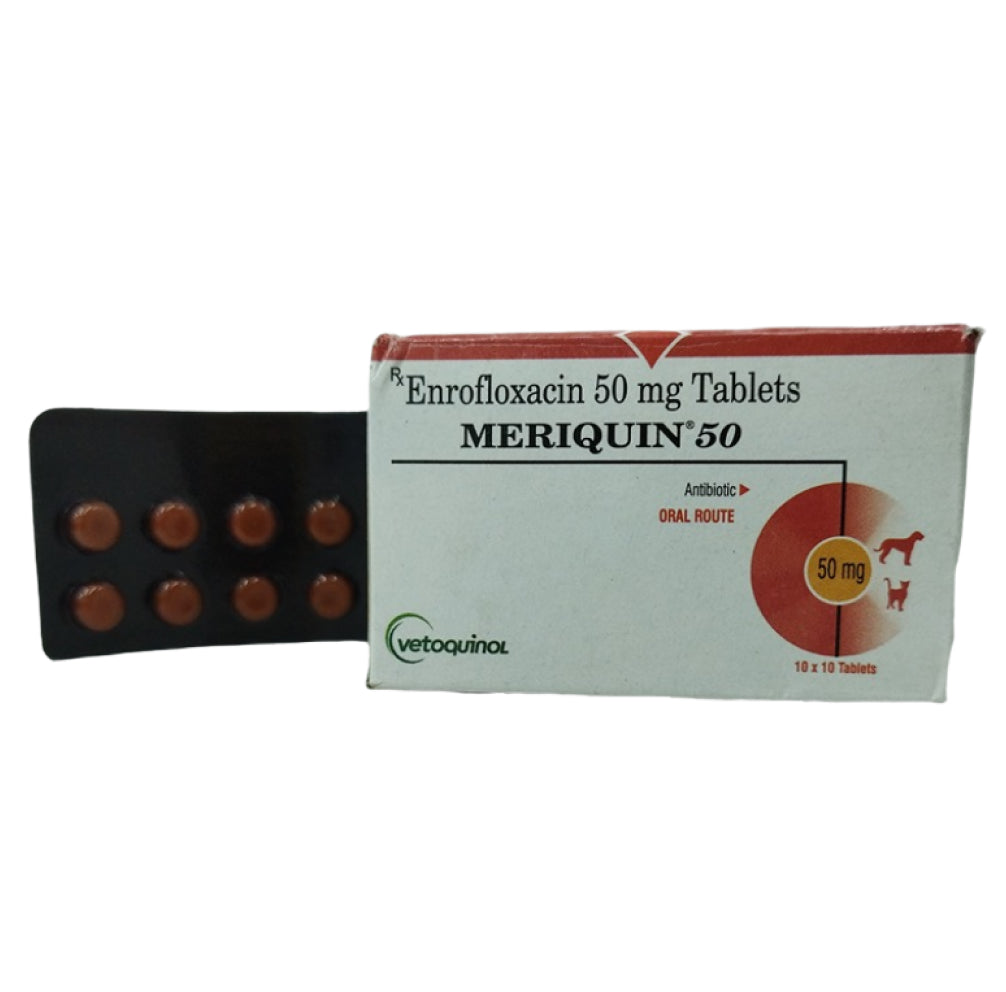
| Vetoquinol Meriquin 50mg Enrofloxacin Tablet for Dogs & Cats | Enrofloxacin 50 mg | Tablet | Vetoquinol brand, lower dose tablet |
| Vetoquinol Meriquin 150mg Enrofloxacin Tablet for Dogs & Cats | Enrofloxacin 150 mg | Tablet | Higher dose tablet for larger dogs |
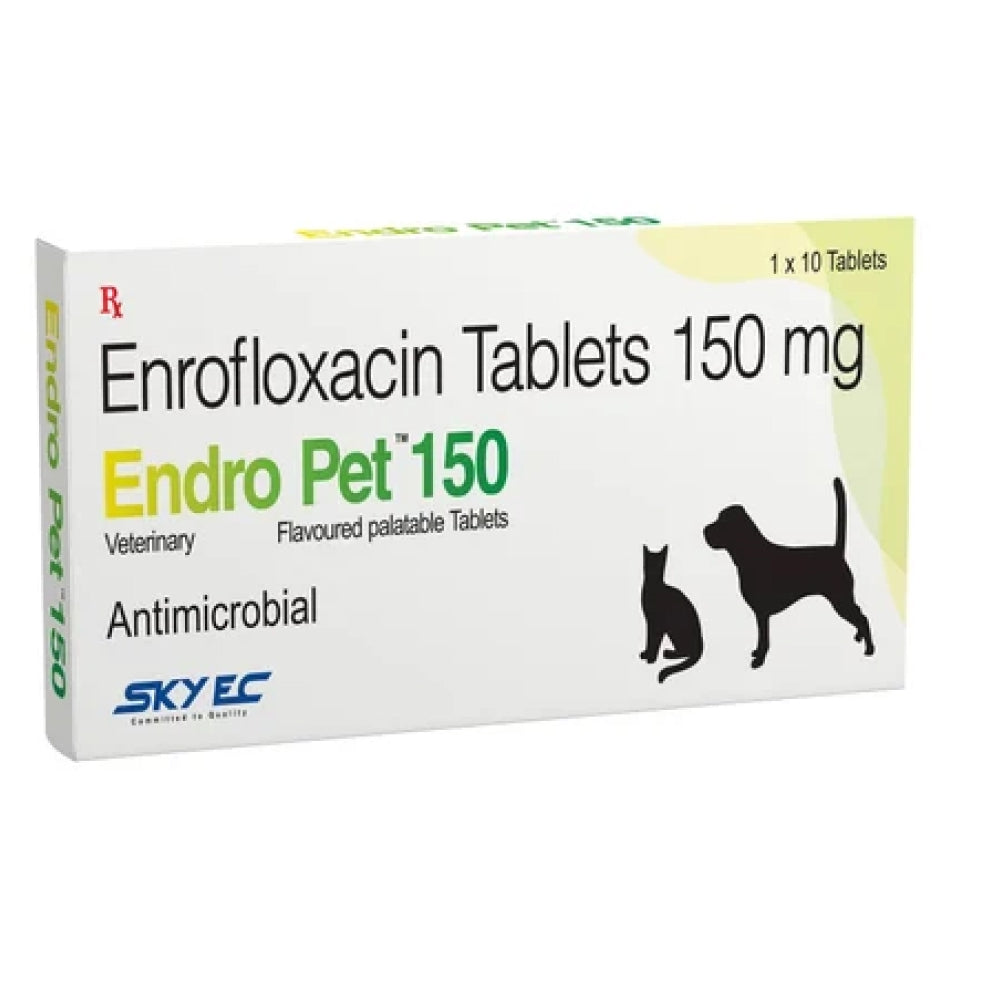
| Skyec Endro Pet 150mg Tablet for Dogs & Cats | Enrofloxacin 150 mg | Tablet | Broad-spectrum tablet |
| Vetina Verocin 150mg Enrofloxacin Tablet for Dogs & Cats | Enrofloxacin 150 mg | Tablet | Tablet format, larger breeds |
What Are Some Quick Tips for Using Enerfoxin Oral Solution Effectively?
- Always use a calibrated oral syringe for measuring - not a household spoon. For cats, where the maximum safe dose is tightly defined at 5 mg/kg, measurement precision is not optional. A 0.1 ml error on a 0.5 ml dose is a 20% dosing error. Use a syringe marked in 0.1 ml increments.
- Give on an empty stomach where possible for best absorption - but if your pet shows nausea or vomiting, give the subsequent doses with a small amount of food (not dairy). Do not mix into calcium-containing foods.
- Check your cat's pupils before giving each dose - literally take a moment to look at your cat's eyes before administering every dose. If the pupils appear unusually large or dilated, stop and contact your vet immediately. This takes two seconds and can prevent permanent vision loss.
- Complete the full course. Enrofloxacin is a concentration-dependent antibiotic - it needs the full treatment duration to completely eliminate the bacterial population, not just reduce it to a level where symptoms disappear. Stopping when your pet feels better is one of the most common reasons bacterial infections recur and become harder to treat.
- Store the bottle away from direct light. Enrofloxacin is light-sensitive - prolonged exposure to direct sunlight can degrade the active ingredient. A cupboard or drawer is the right storage location.
What Do Vets Also Recommend?
- The full antibiotics and antifungals for dogs collection and antibiotics and antifungals for cats collection bring together all prescription antibiotic and antifungal options - oral, topical, and injectable alternatives your vet may consider for your pet.
- For skin infections being treated with Enerfoxin alongside a topical protocol, the wound care medicines collection has antiseptic sprays, wound care creams, and skin recovery products to complement systemic antibiotic treatment.
- After completing an antibiotic course, the probiotics for dogs and cats collection has gut microbiome support supplements that many vets recommend to restore healthy gut bacteria that the antibiotic has disrupted.
- The dog health and wellness and cat health and wellness collections have liver support and immune recovery supplements for pets coming off longer antibiotic courses - worth discussing with your vet.
- And if you need a vet to confirm the right antibiotic choice, dose, or course duration for your pet - Supertails' online vet consultation service is available whenever you need it.
Disclaimer: Supertails' sole intention is to ensure that its consumers get information that is expert-reviewed, accurate, and trustworthy. However, the information contained herein should NOT be used as a substitute for the advice of a qualified physician. The information provided here is for informational purposes only. This may not cover everything about particular health conditions, lab tests, medicines, all possible side effects, drug interactions, warnings, alerts, etc. Please consult your doctor and discuss all your queries related to any disease or medicine. We intend to support, not replace, the doctor-patient relationship.
Treat the Infection. Skip the Pilling Battle.
Your pet is already unwell. The last thing either of you need is a daily struggle to get medication into them. The Oriheal Enerfoxin Oral Solution gives you a clinical-strength Enrofloxacin antibiotic in a format that actually works for real life - measured precisely, mixed into food or given by syringe, with zero tablet rejection and no wasted doses.
60 ml. 50 mg Enrofloxacin per ml. ₹150. Shop Oriheal Enerfoxin Enrofloxacin Oral Solution for Dogs and Cats on Supertails - with a valid veterinary prescription, delivered to your door.
FAQs
What is Oriheal Enerfoxin Oral Solution used for in dogs and cats?
Enerfoxin is a broad-spectrum fluoroquinolone antibiotic oral solution containing Enrofloxacin 50 mg/ml. It is prescribed for bacterial infections of the skin, urinary tract, respiratory tract, gastrointestinal tract, and reproductive tract in dogs and cats. The liquid format allows accurate weight-based dosing with a syringe, making it particularly suitable for cats, small dogs, and any pet that rejects tablets.
Is enrofloxacin safe for cats?
At the correctly prescribed dose of 5 mg/kg once daily, enrofloxacin can be used in cats - but with strict caution. In cats, doses above 5 mg/kg per day can cause retinal toxicity, leading to sudden, irreversible blindness. Never exceed the prescribed dose. Monitor your cat's pupils during the entire course - unusually dilated pupils are the first warning sign and warrant immediate cessation and vet contact. Cats with kidney disease face elevated risk.
Why is a liquid antibiotic better than a tablet for my pet?
Oral solutions offer three practical advantages over tablets: they mix into food or are given by syringe, eliminating the risk of tablet rejection; they allow precise weight-based dosing to fractions of a millilitre - critical for cats and small dogs; and they are absorbed faster since they don't need to dissolve in the stomach first. For sick or tablet-averse pets, compliance with the full antibiotic course is significantly more reliable in liquid form than tablet form.
Can I mix Enerfoxin with my pet's food?
Yes - but avoid mixing into dairy products, calcium-rich foods, or food containing iron or zinc supplements, as these reduce enrofloxacin absorption significantly. Mix into a small portion of plain wet food, broth, or a licky treat your pet will consume completely. Giving by oral syringe directly into the side of the mouth is the most reliable method if your pet might leave some food behind.
How quickly does enrofloxacin start working?
Enrofloxacin begins working within 1-2 hours of administration - it is rapidly absorbed from the gut into the bloodstream. However, visible clinical improvement (reduced symptoms, improved energy and appetite) typically takes 2-4 days of consistent once-daily dosing to become apparent. Do not stop the course early because your pet appears better - the full course is needed to completely eliminate the bacterial infection, not just reduce it to a sub-symptomatic level.
What should I do if my cat's pupils look dilated after starting Enerfoxin?
Stop the medication immediately and contact your vet or seek emergency veterinary care without delay. Dilated pupils in a cat receiving enrofloxacin are the first sign of retinal toxicity - a condition that can lead to permanent blindness. Do not wait to see if the pupils return to normal size. Early intervention gives the best chance of limiting permanent damage. This is not a wait-and-see situation.
Delivery
You may also like