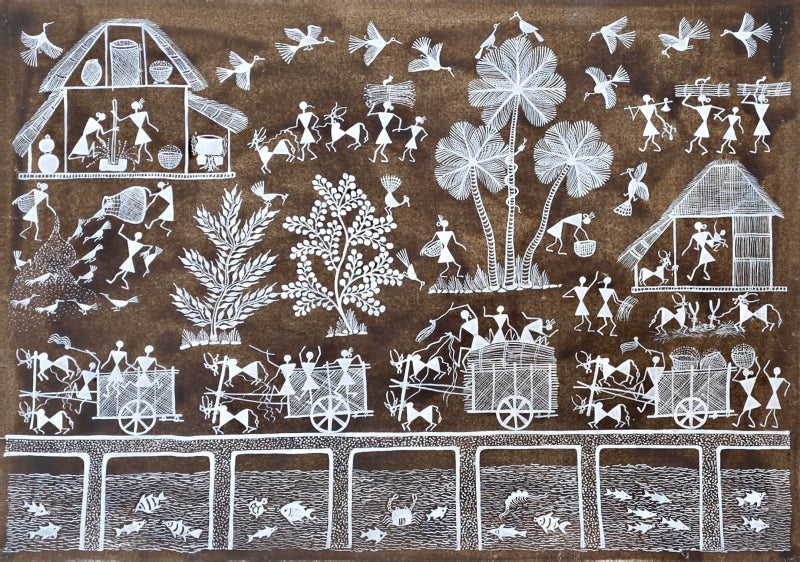
Warli Art 75
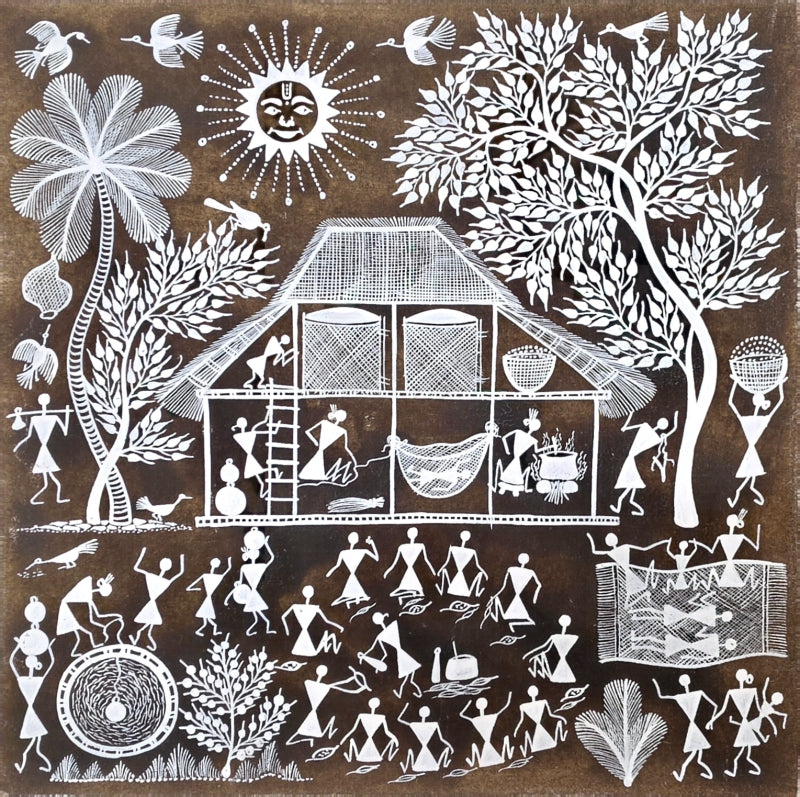
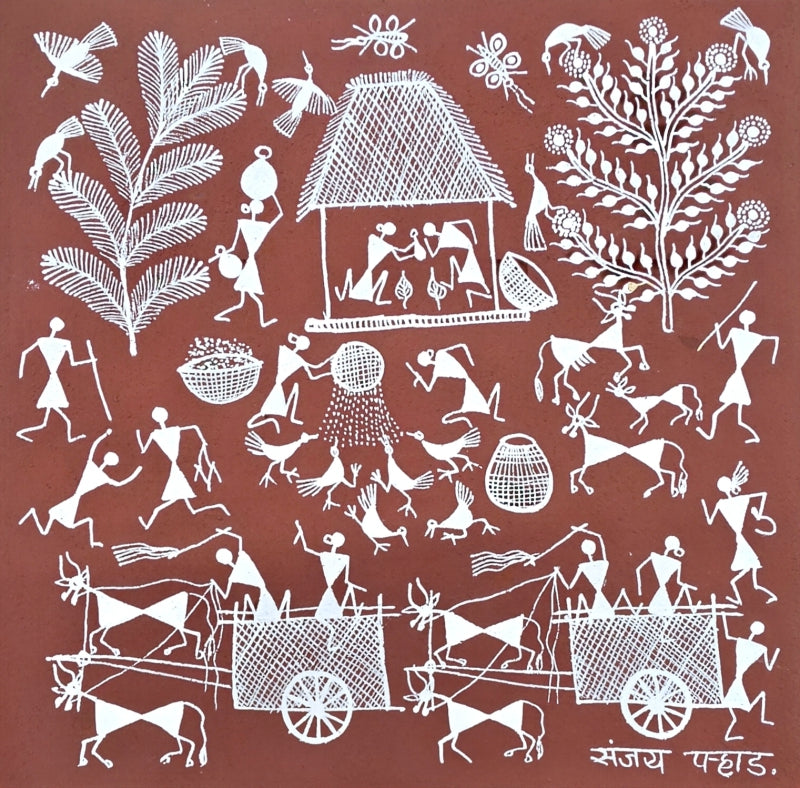
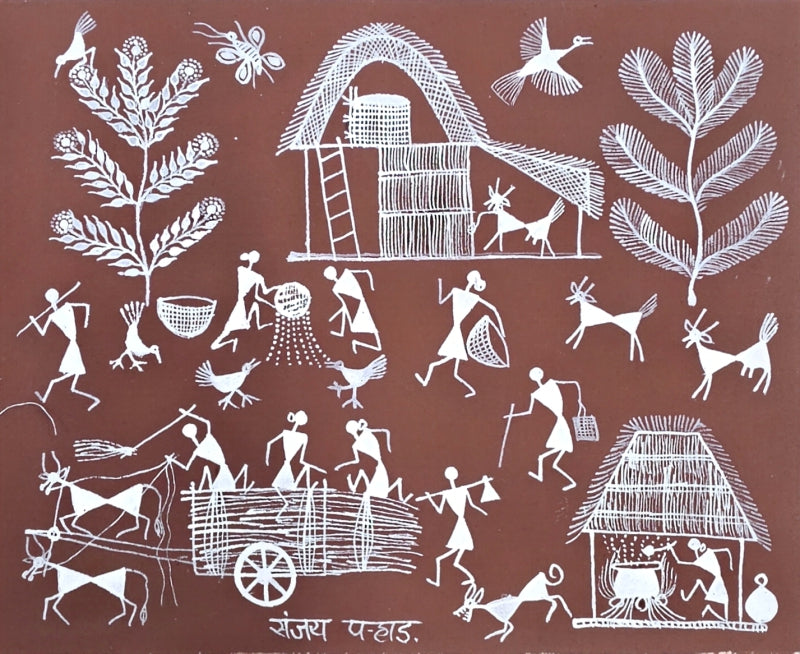
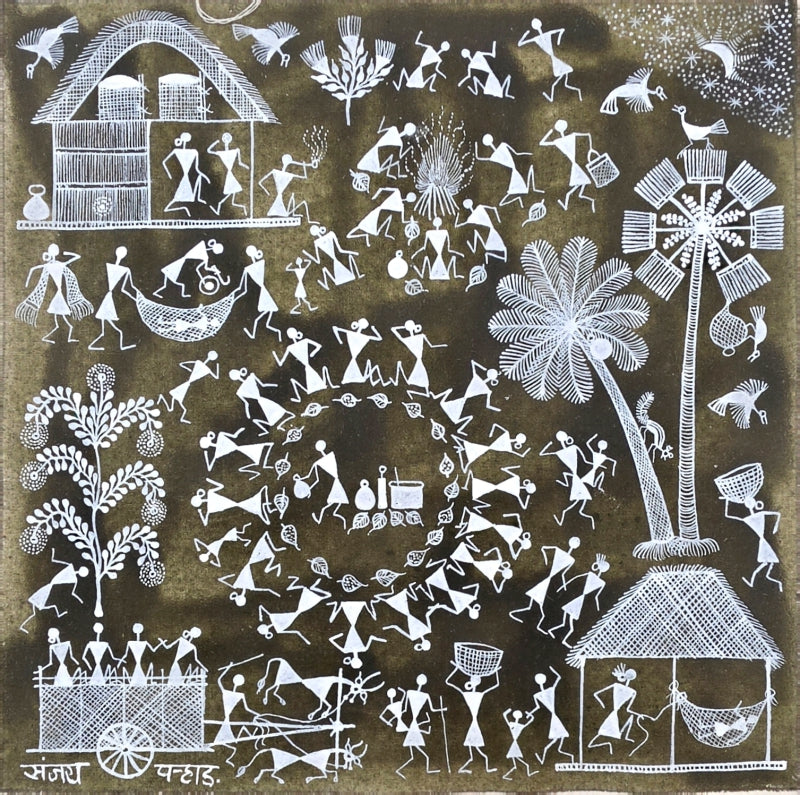
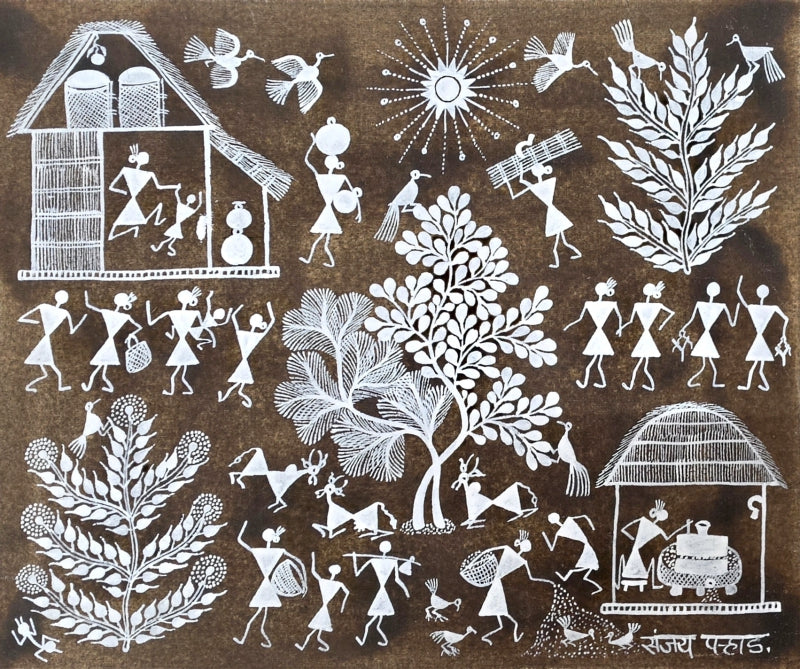
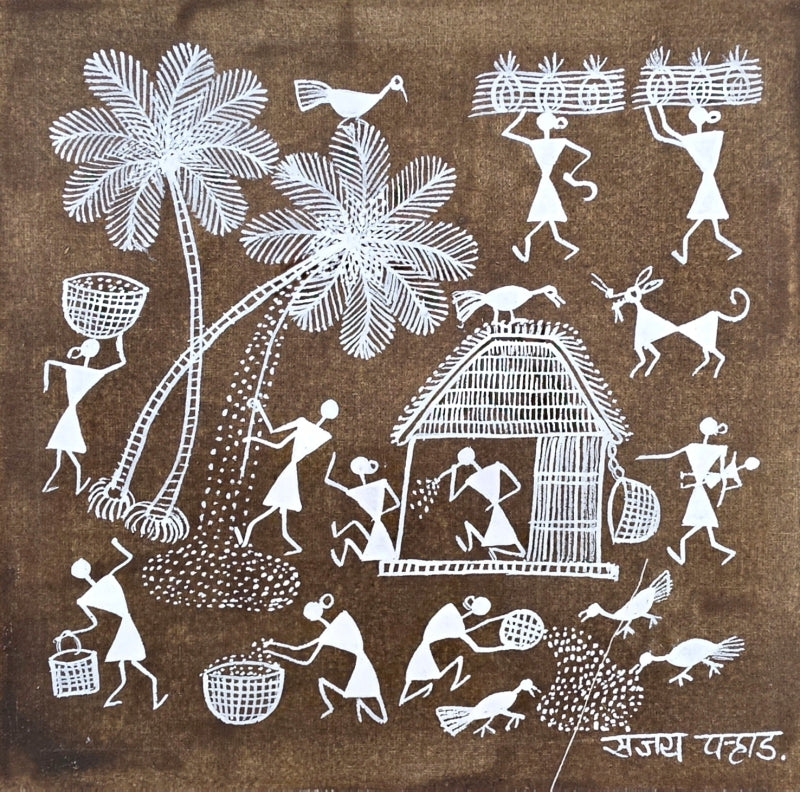
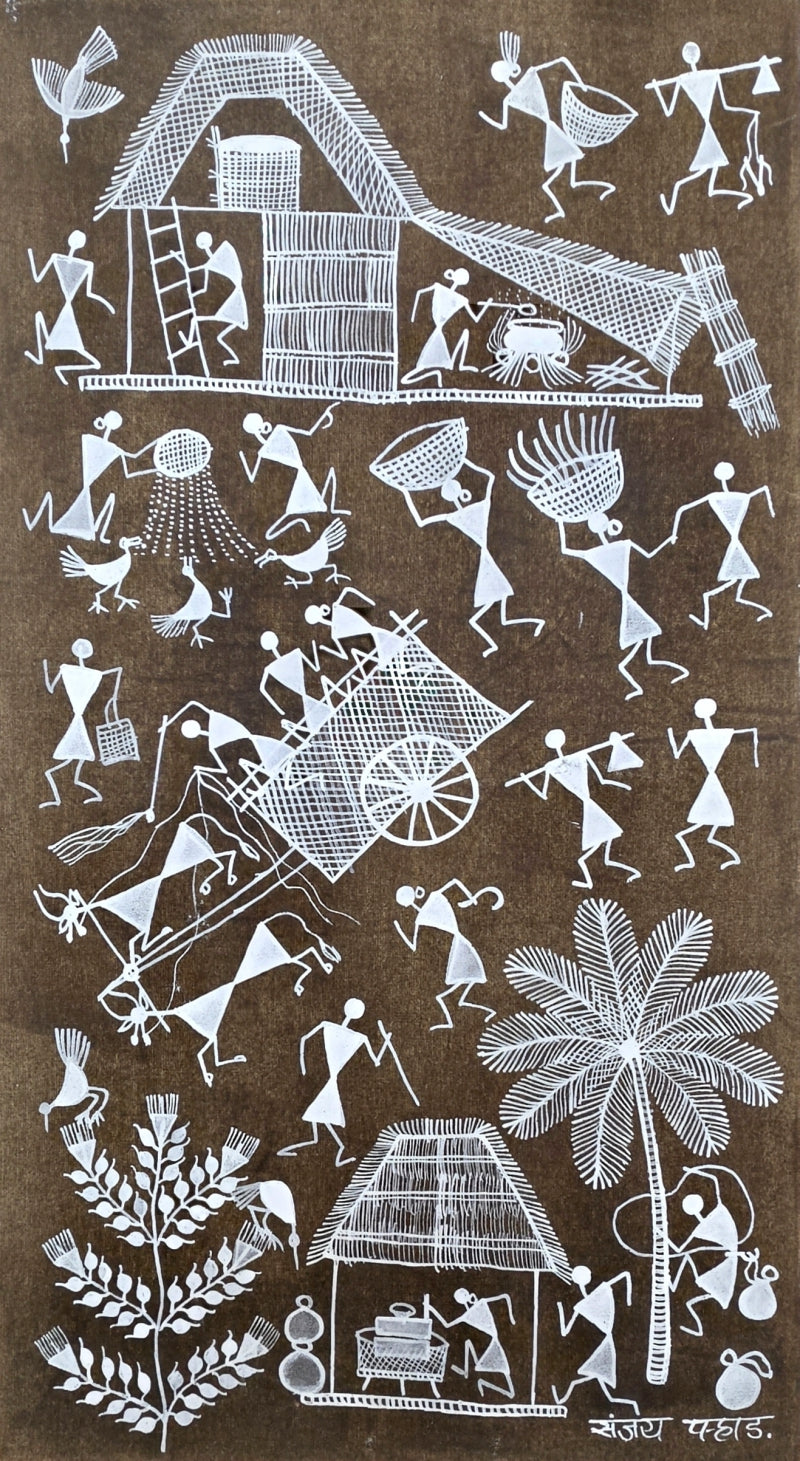
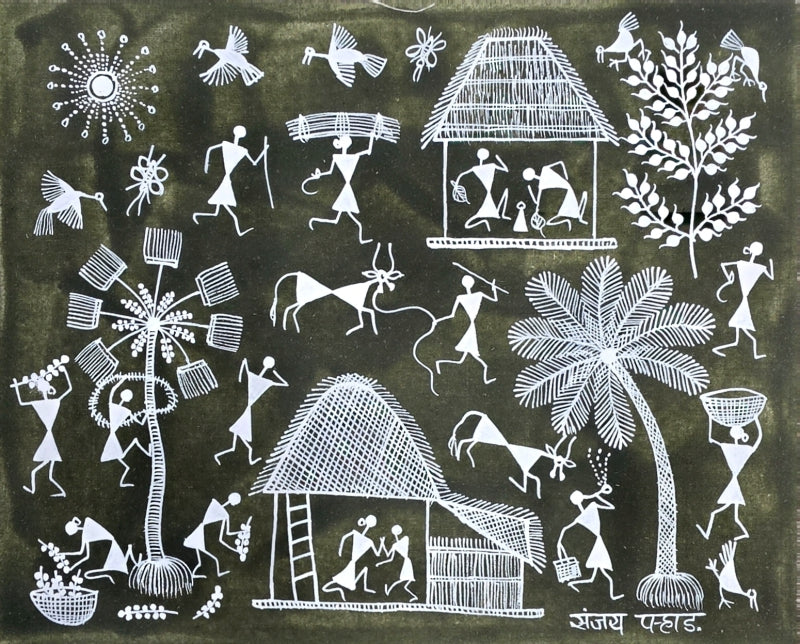
Rendered in a spare white line against an earthen ground, the scene unfolds like a communal chant—houses, palms, carts, birds, and dancing figures arranged in a frieze that turns everyday labor into ceremony. The flattened space refuses hierarchy: harvest, procession, and play share the same visual dignity, suggesting a worldview where survival and celebration are inseparable. Repetition of motifs—wheels, clustered bodies, and rhythmic bird-flight—creates a pulse of movement across the surface, while the river at the base anchors the narrative as both sustenance and passage. Beneath the work’s folk clarity lies a deeper proposition: that identity is made collectively, drawn not through portraits but through the shared rituals that bind a village to its land and seasons.