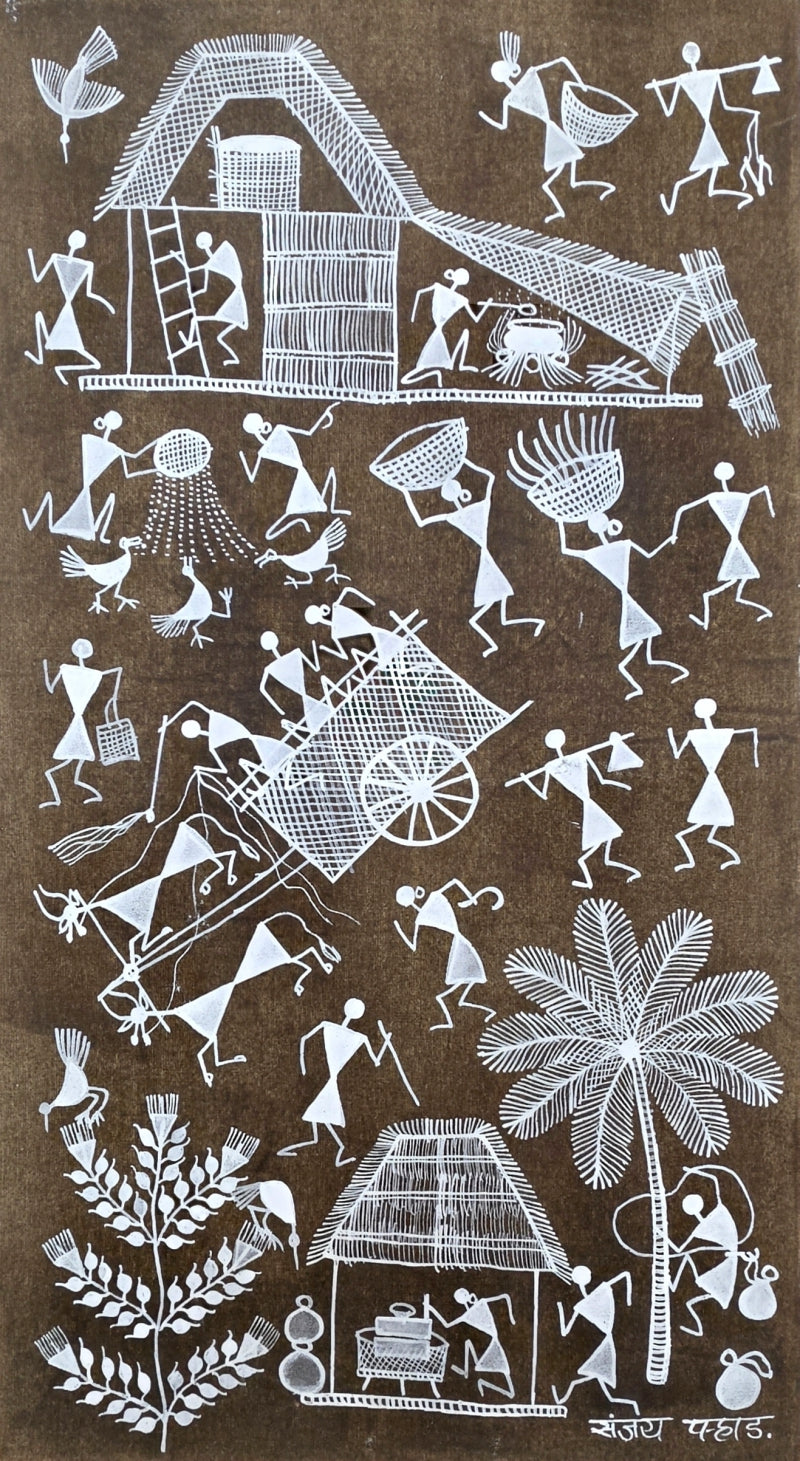
Warli Art 70
₹9,000
● In stockchecking live price…
Size
20x11Type
OriginalMaterial
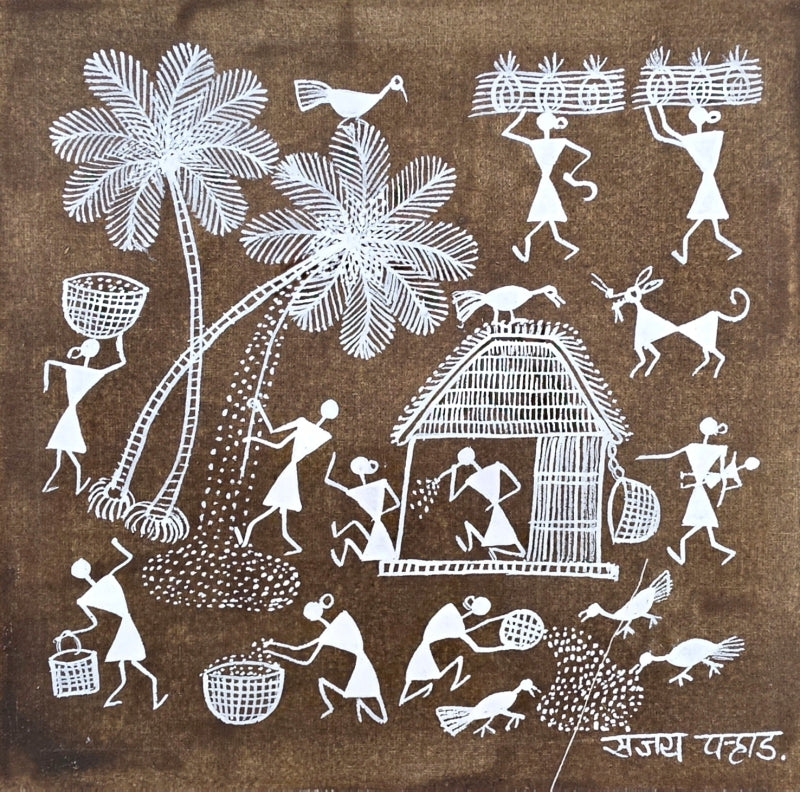
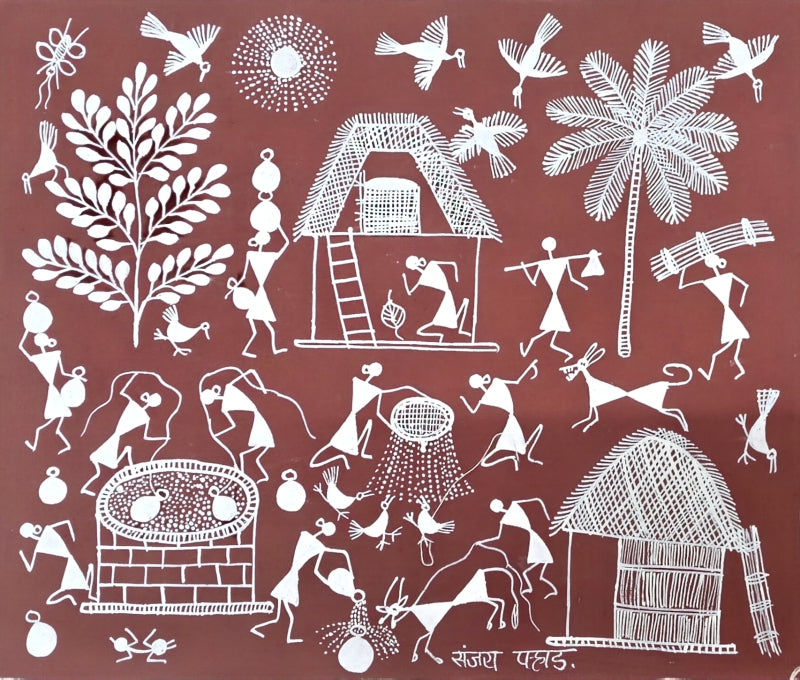
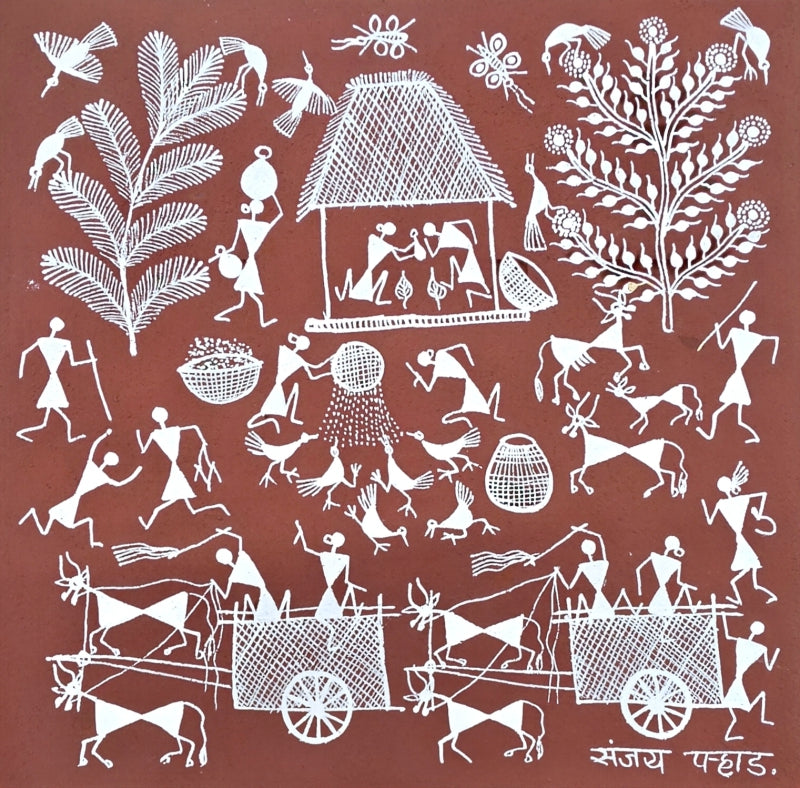
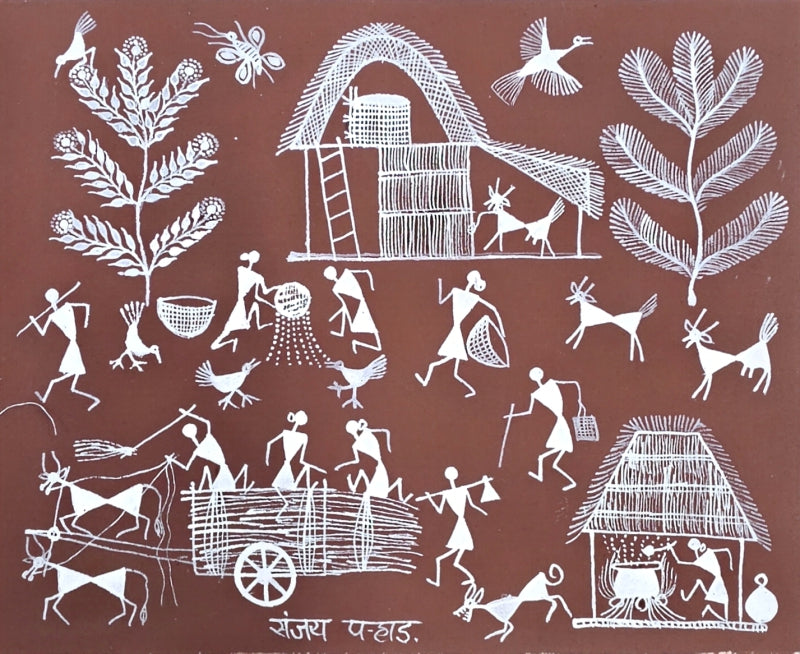
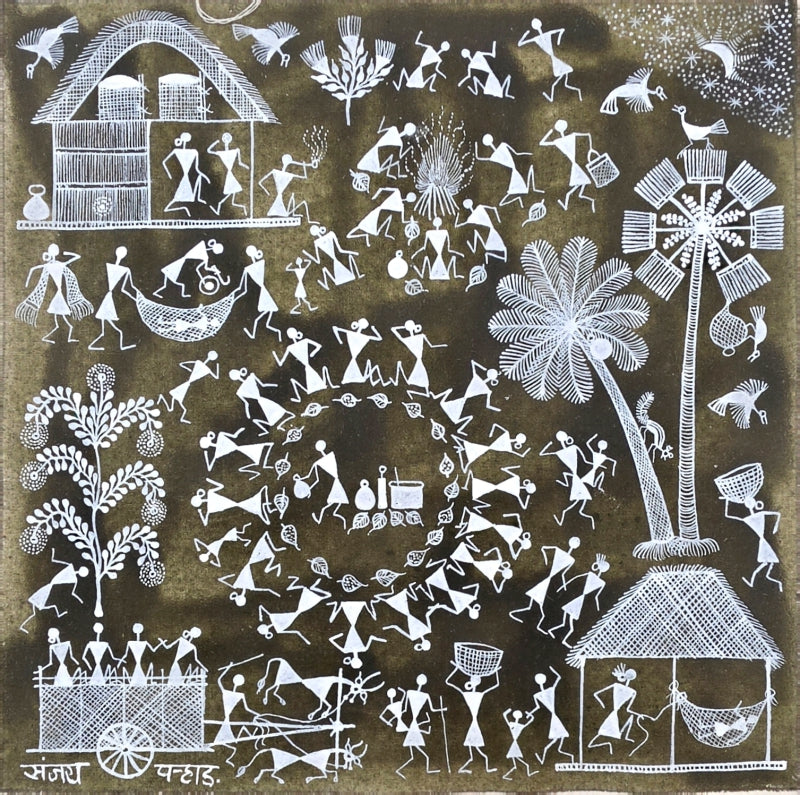
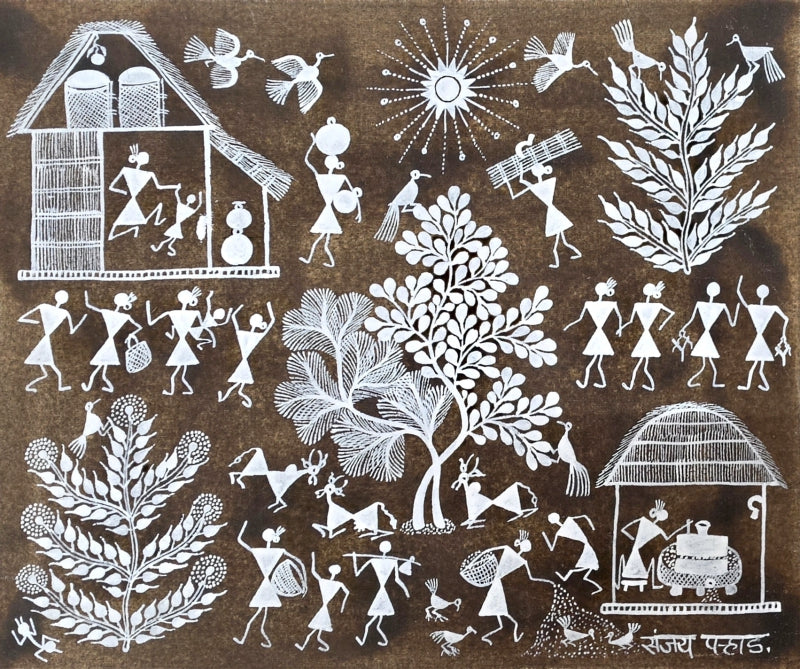
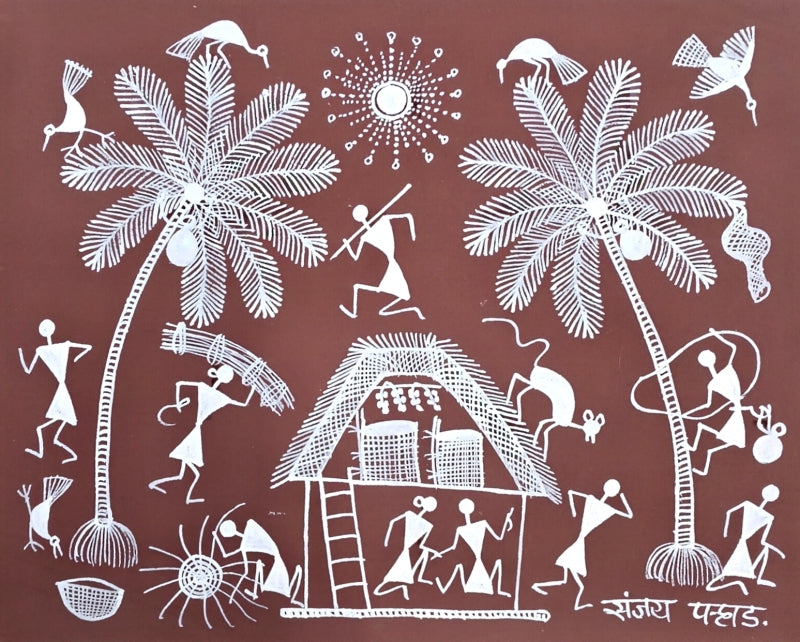
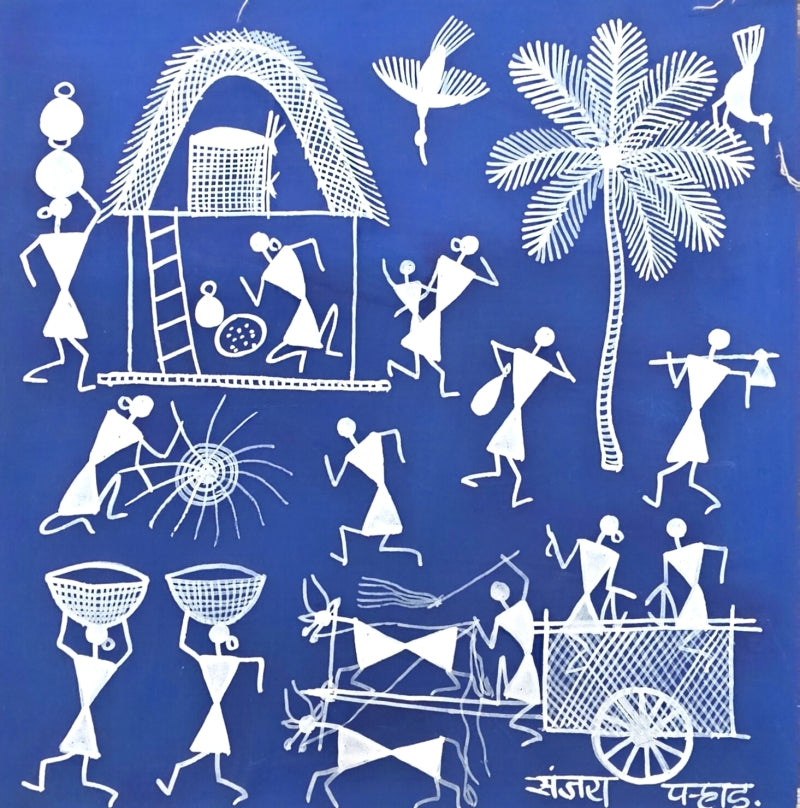
ClothRendered in stark white against an earthen ground, this work unfolds like a living glyph—figures, animals, and tools braided into a single continuum of labor and song. The clipped geometry of bodies and the rhythmic hatchings of roof, wheel, and baskets turn daily work into pattern, suggesting that survival is not merely activity but a shared choreography. Space is flattened into a communal stage where huts, palms, and carts anchor the eye, while the repeated gestures of carrying, tending, and moving imply an inherited knowledge circulating through the village like breath. Beneath its apparent simplicity, the piece becomes an homage to collective resilience: a visual ledger in which every mark records both necessity and quiet celebration.