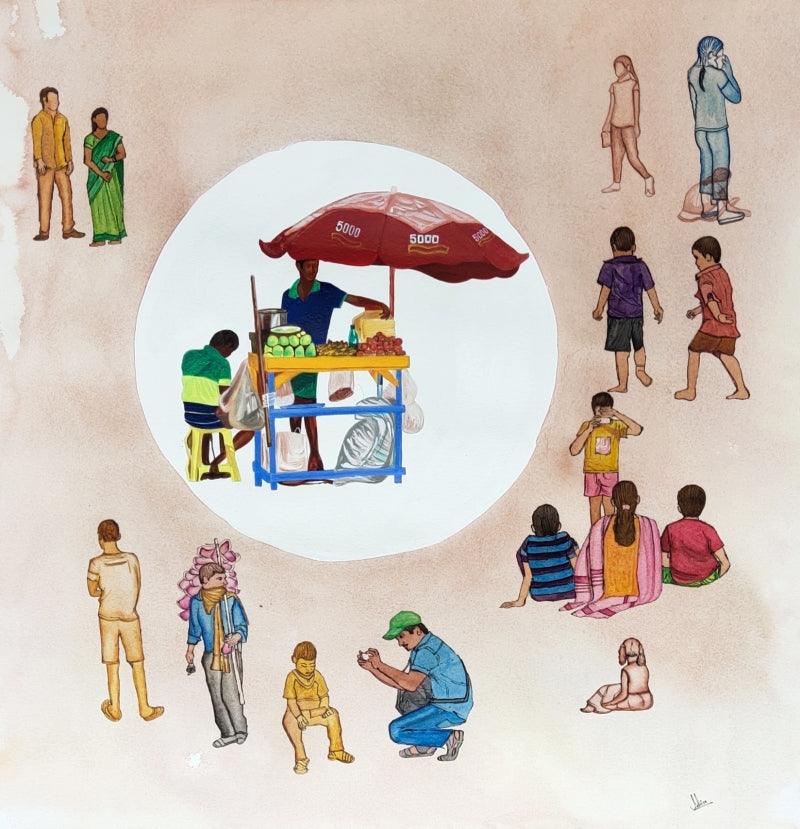
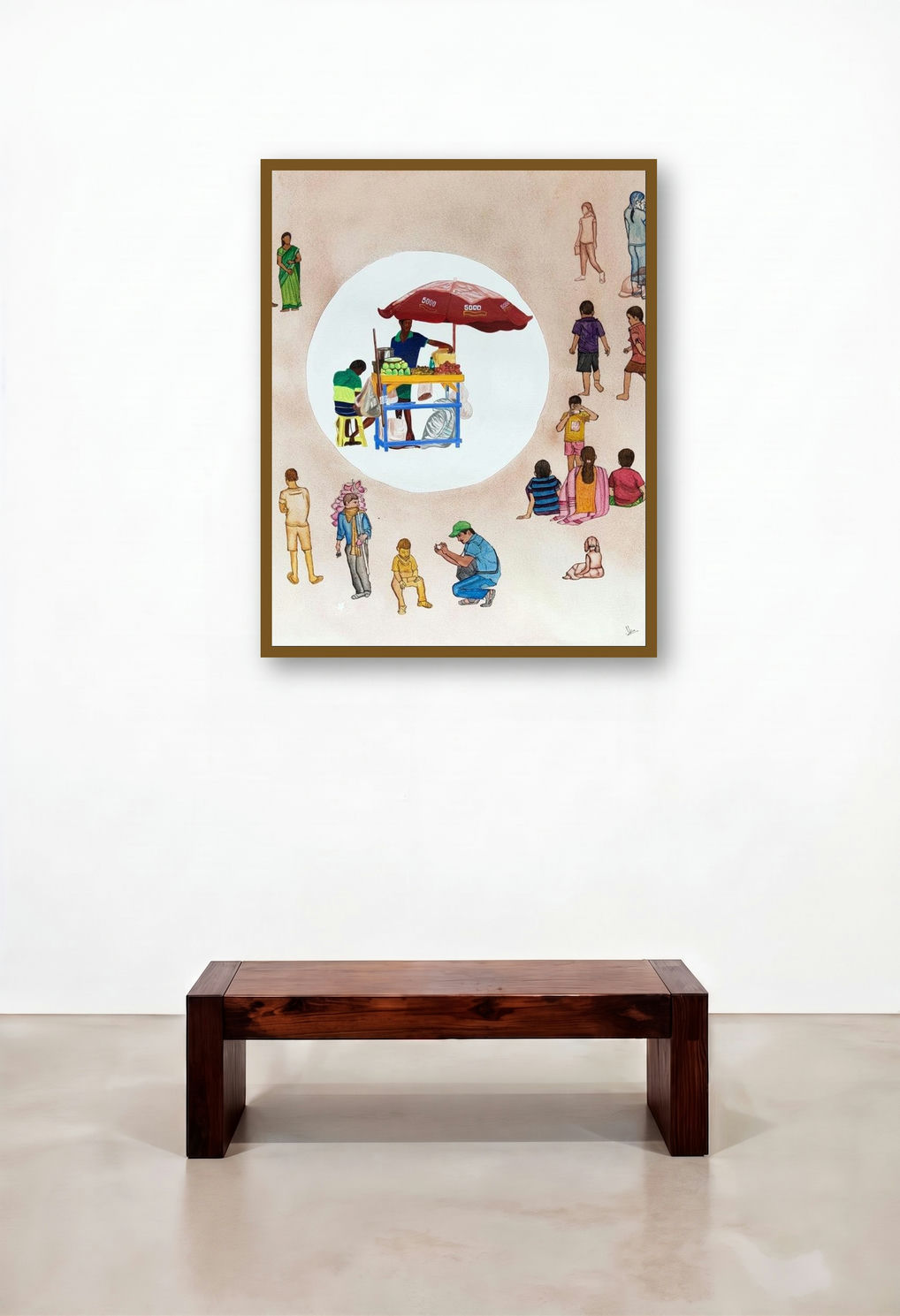
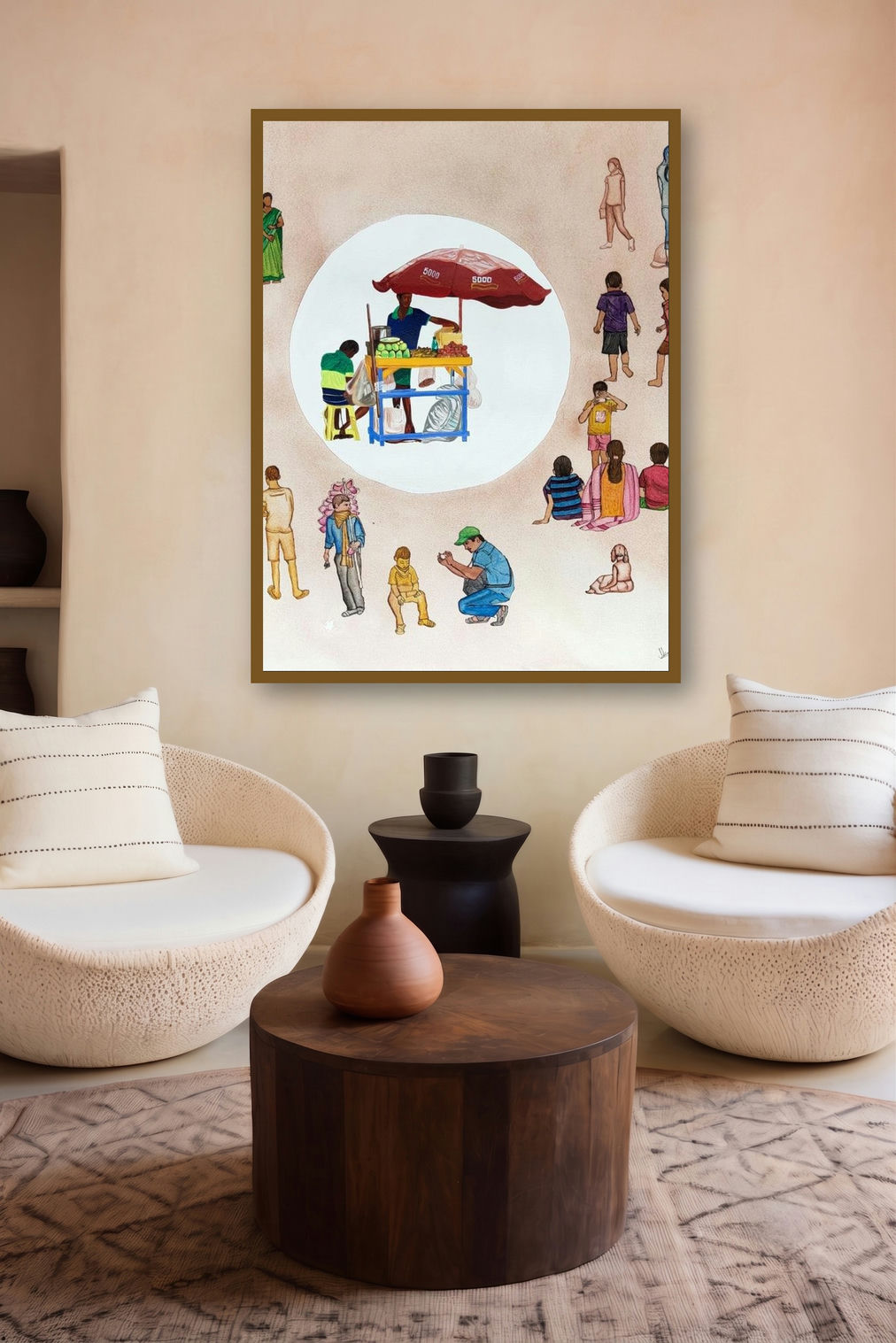
Untitled 3 (The Five Thousand Rupee Note)
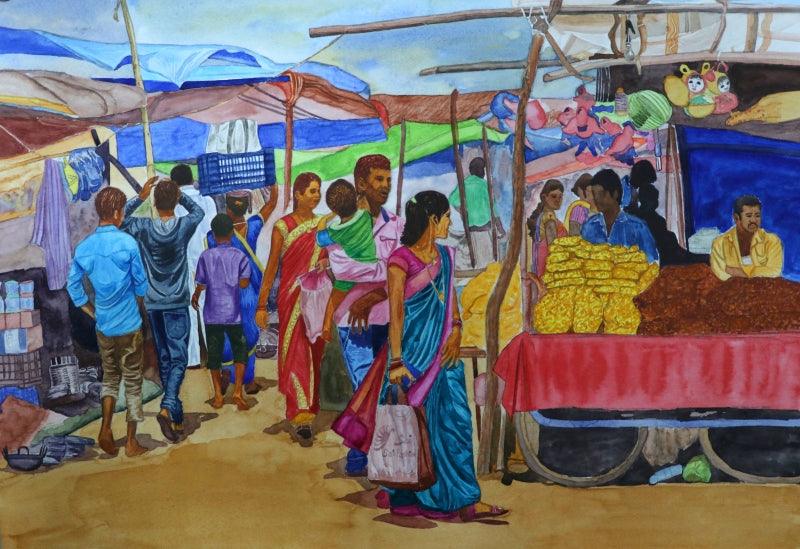
A humble street vendor’s cart, encircled like a memory held under glass, becomes the painting’s quiet epicenter—its reds and primary blues glowing with the dignity of labor amid a soft, sandy expanse. Around this nucleus, figures drift at the margins like satellites of everyday life: families, children, solitary onlookers—each rendered with tender specificity yet separated by generous negative space that turns public bustle into contemplative distance. The circular void reads as a lens of attention and empathy, suggesting how a city’s true vitality often resides in overlooked, transactional intimacies—fruit, shade, and brief human exchange. In this gentle choreography, the work proposes community not as crowding, but as dispersed proximity, where small acts of survival and care radiate outward.
Delivery
You may also like