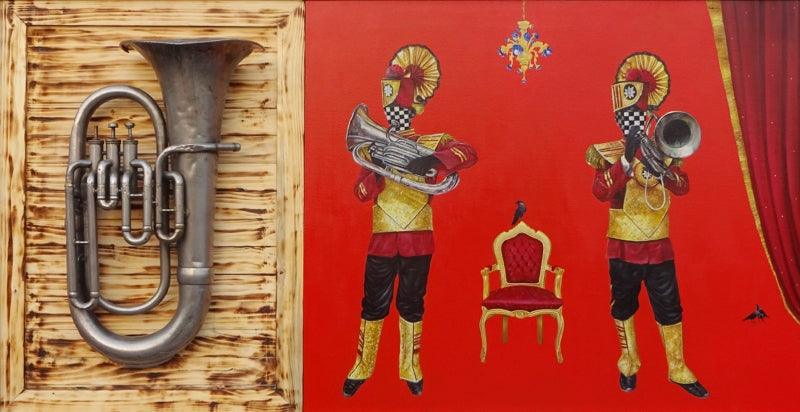
Untitled 1
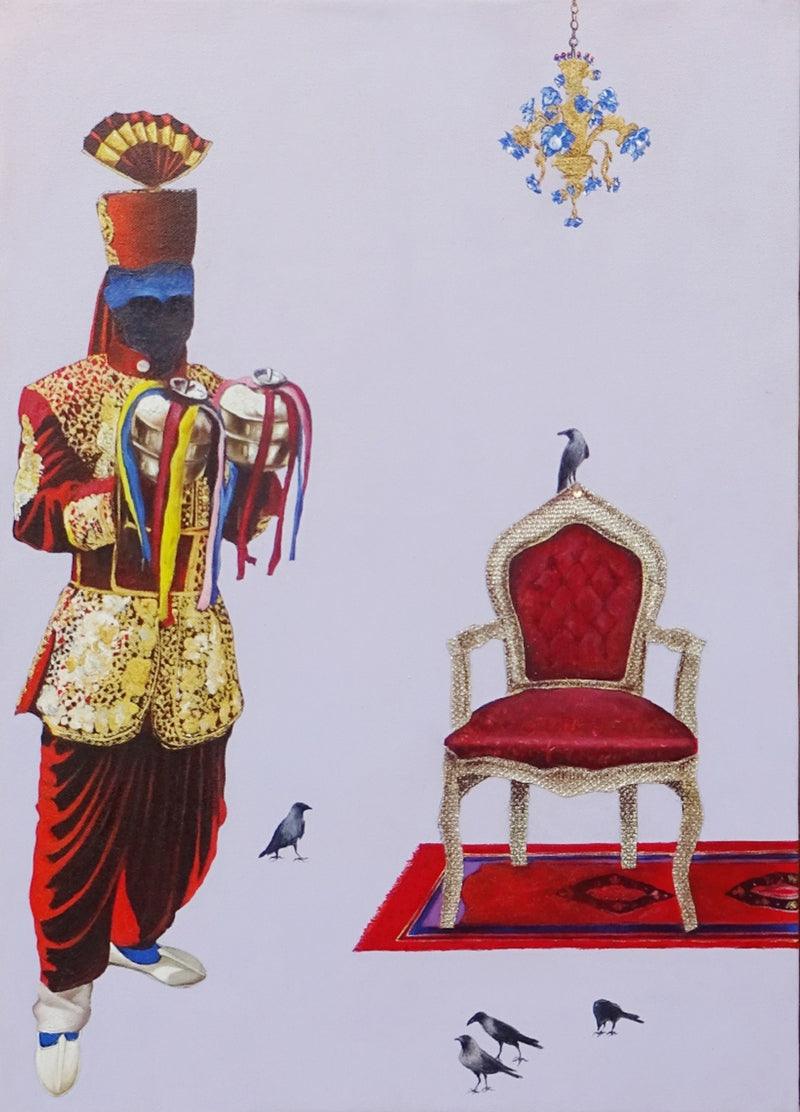
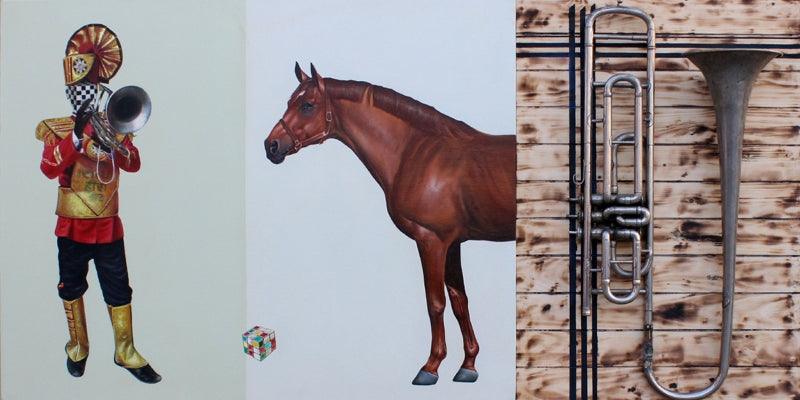
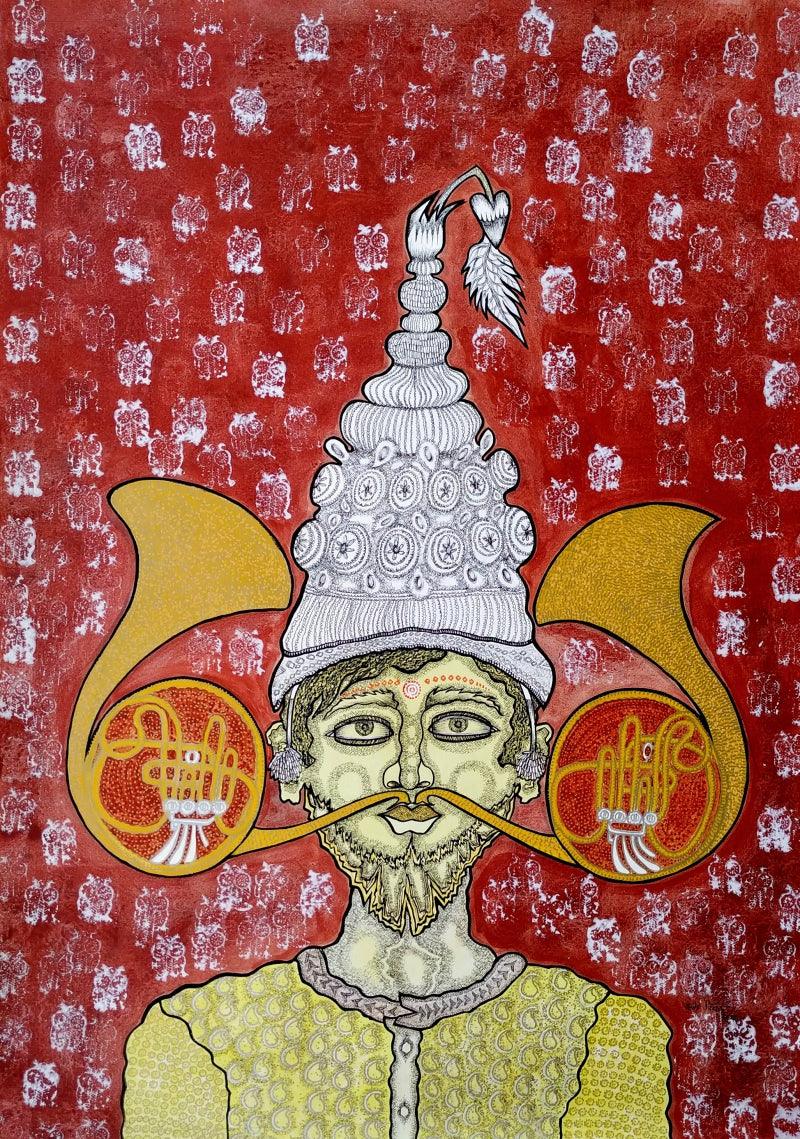
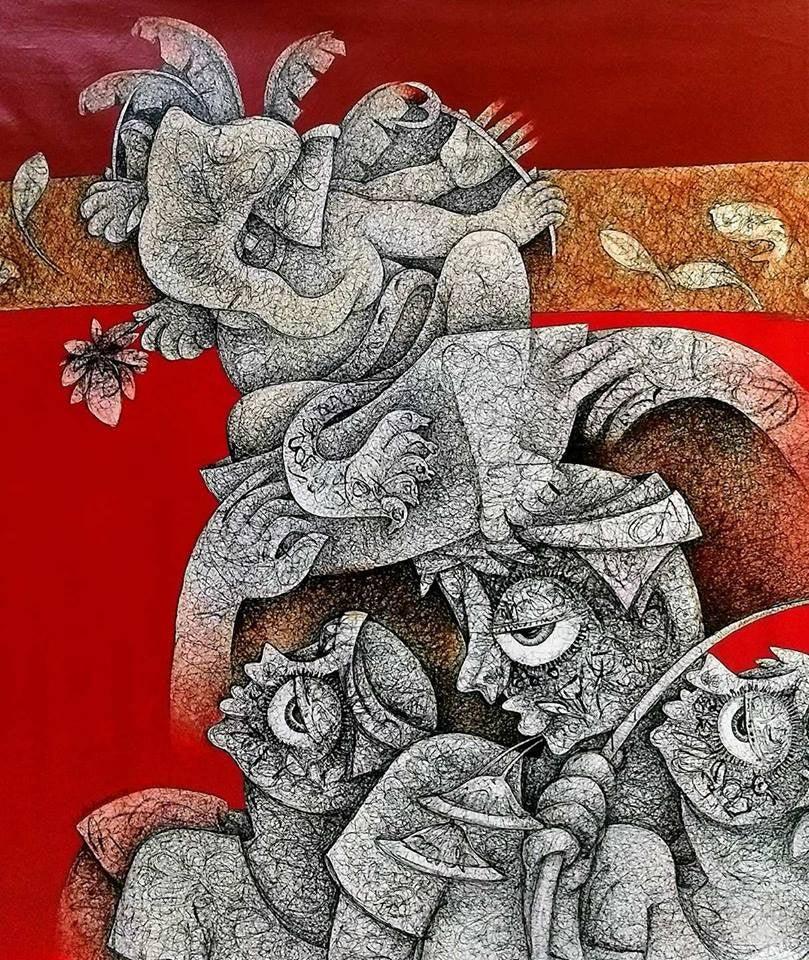
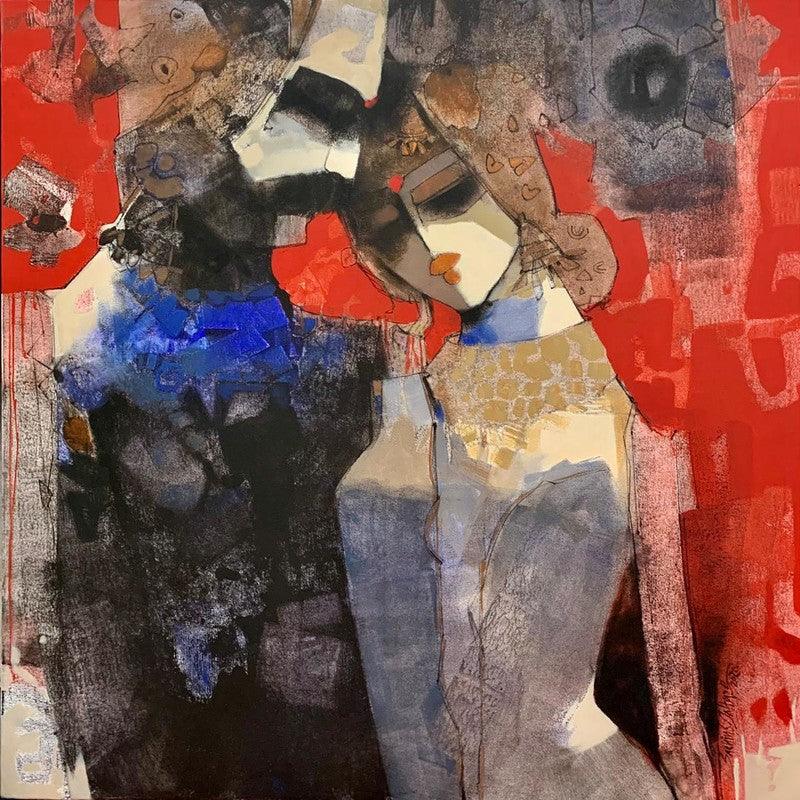
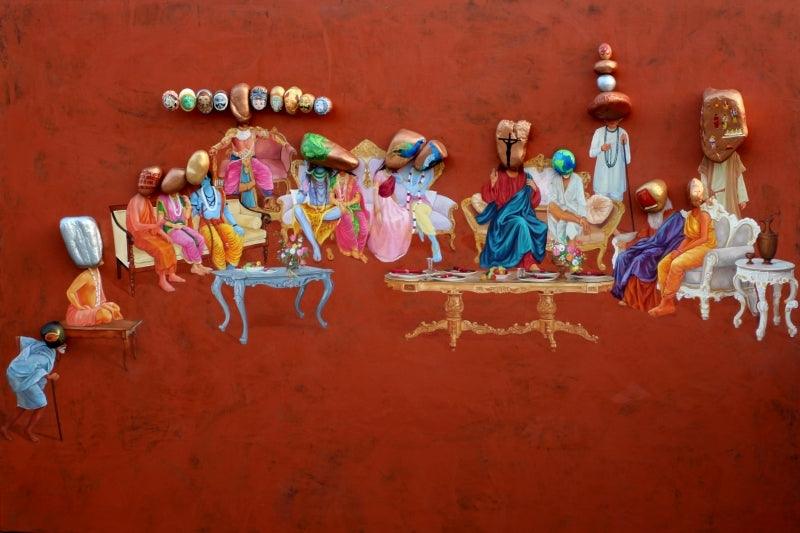
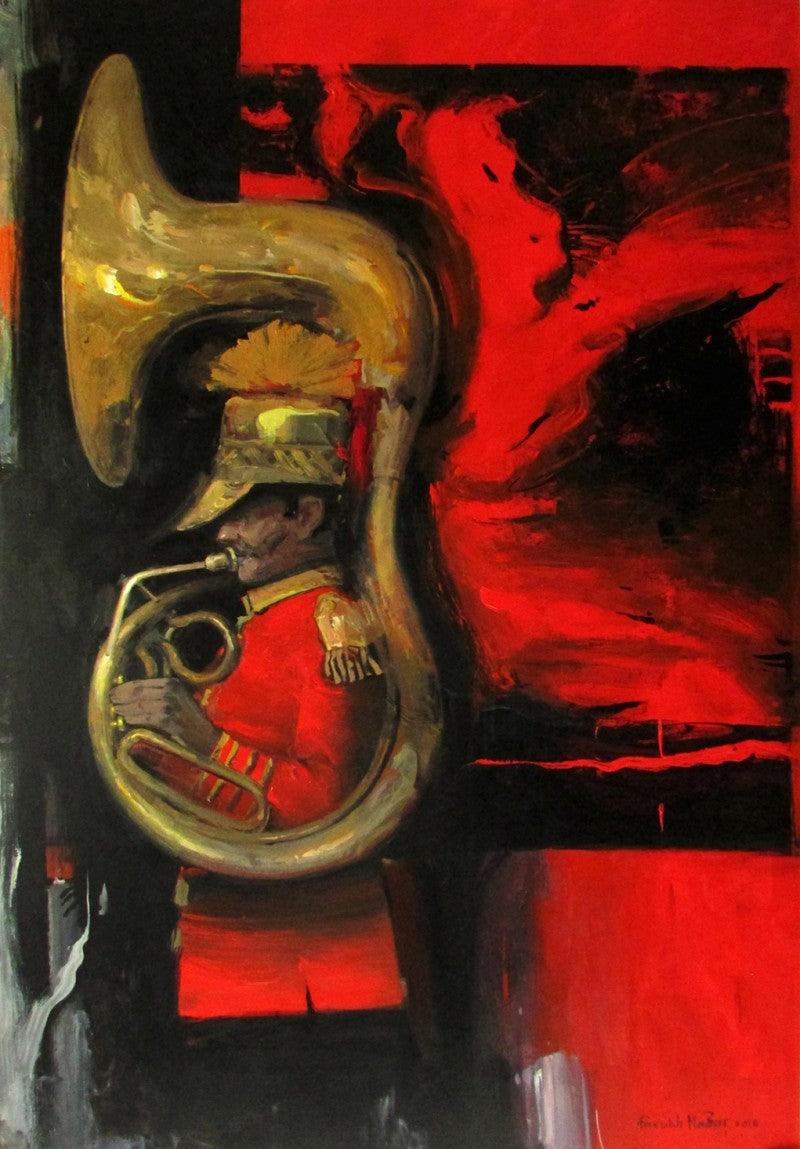
Set against a saturated, theatrical red, two ceremonial musicians stand like sentries of sound, their faces rendered as patterned masks that turn performance into ritual and identity into costume. The composition balances symmetry with a sly disruption—the vacant throne between them becomes the true protagonist, a seat of power awaiting presence while music, implied rather than heard, circulates as its proxy. At the left, the enlarged, weathered tuba reads like an artifact pinned to time, its cool metallic gravity countering the velvet stage of the central scene and suggesting that spectacle is always anchored by material labor. Small ornamental details—chandelier, curtain, tiny intruding creatures—quietly fracture the pageantry, hinting at fragility beneath the pomp and the uneasy intimacy between authority and entertainment.
Delivery
You may also like