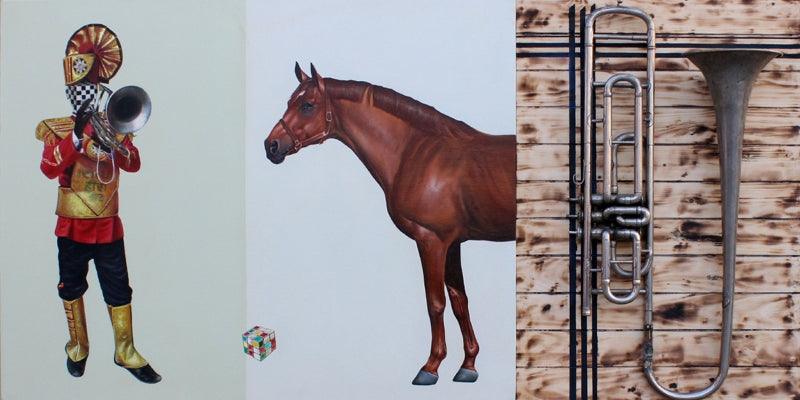
King On The Way
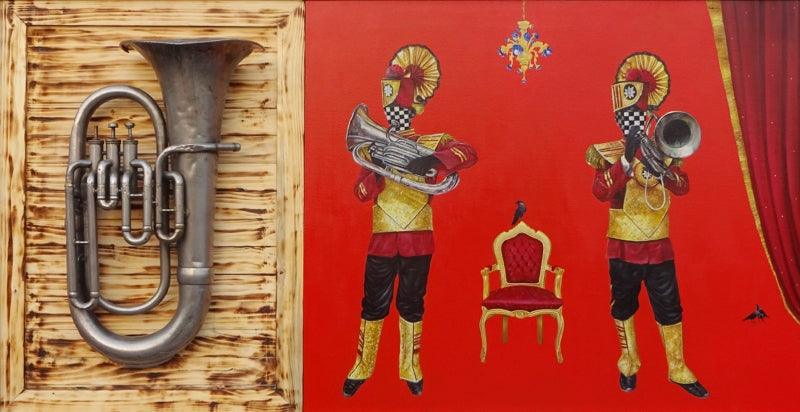
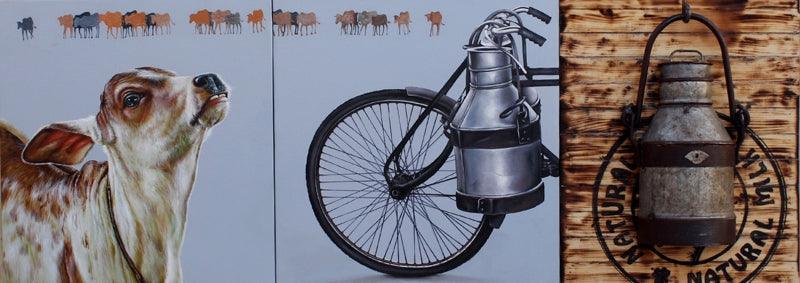
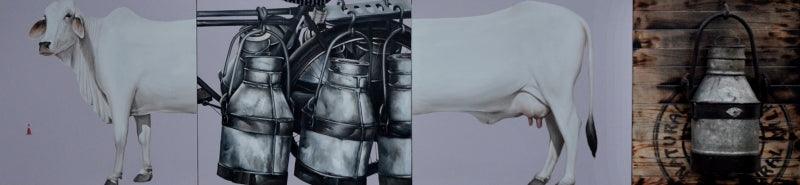
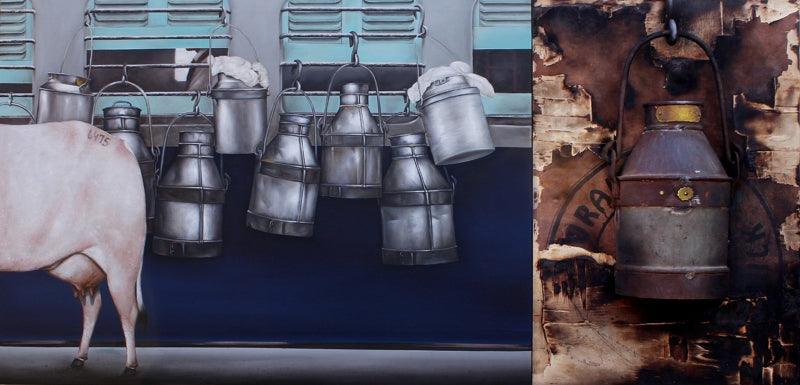
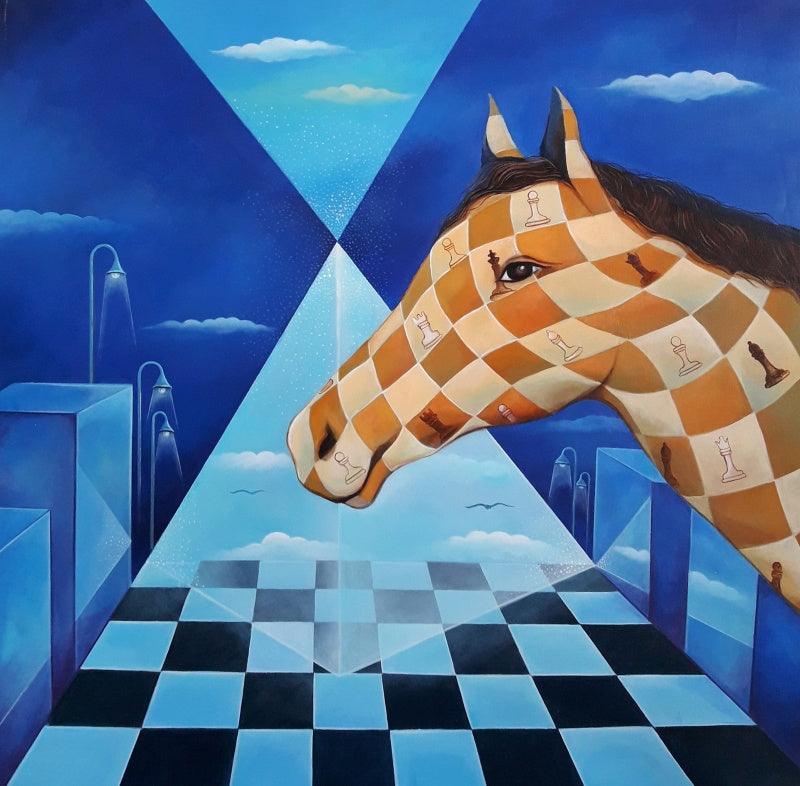
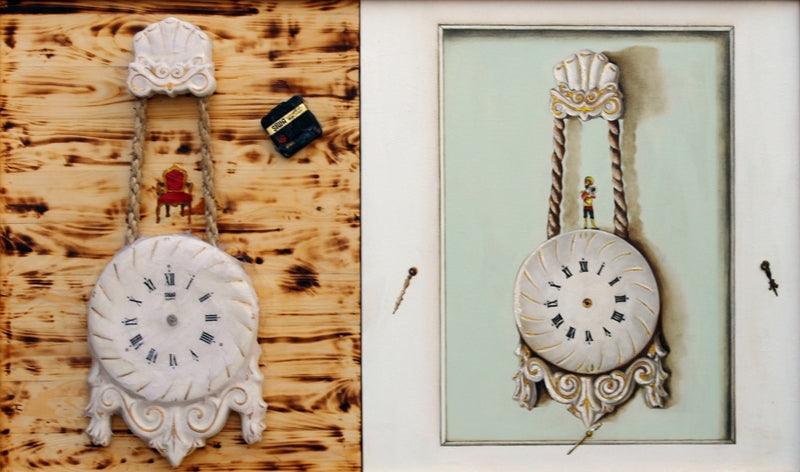
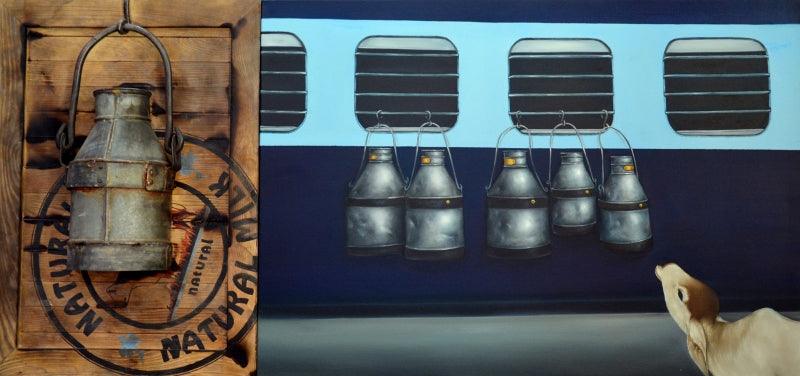
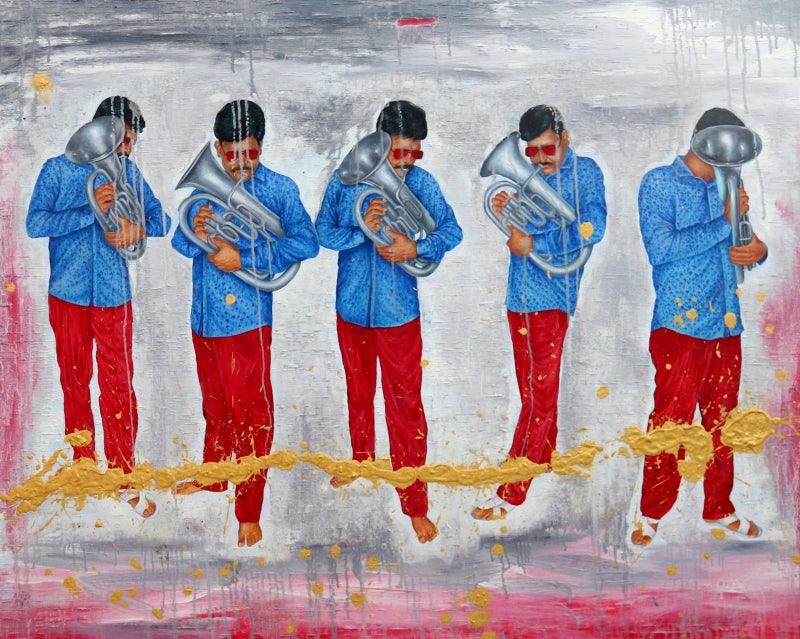
Set within a triptych-like field of shifting grounds, the work stages an uncanny encounter between spectacle, nature, and industrial residue: a masked brass player offers a silent fanfare to a horse rendered with sculptural calm, while the right panel’s weathered wood and tubular instrument read like a relic of labor and ceremony. The pristine negative space around the horse becomes a kind of suspended breath, amplifying its vulnerability and autonomy against the ornamental bravado of the uniformed figure. A small geometric cube, poised almost as an afterthought, destabilizes the scene—an emblem of constructed order that hints at play, control, and the artificial systems that choreograph both performance and domestication. The composition’s crisp realism and abrupt juxtapositions turn the ordinary into allegory, suggesting that identity, freedom, and tradition are all carefully staged acts.
Delivery
You may also like