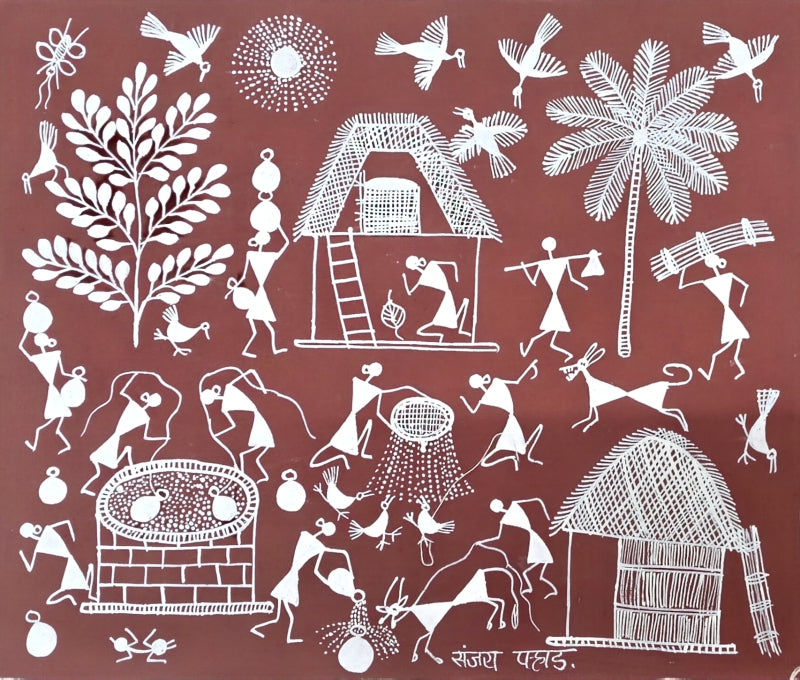
Warli Art 71
₹6,000
● In stockchecking live price…
Size
10x12Type
OriginalMaterial
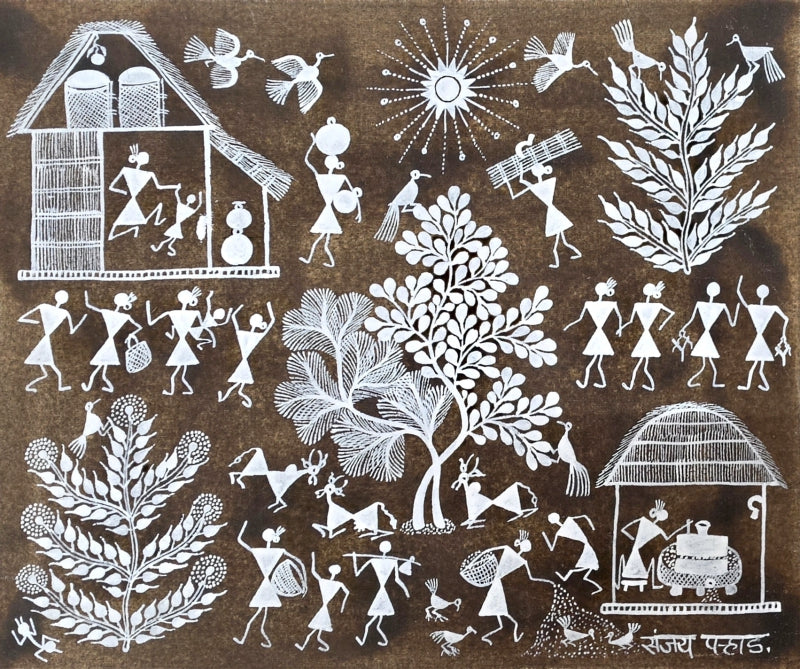
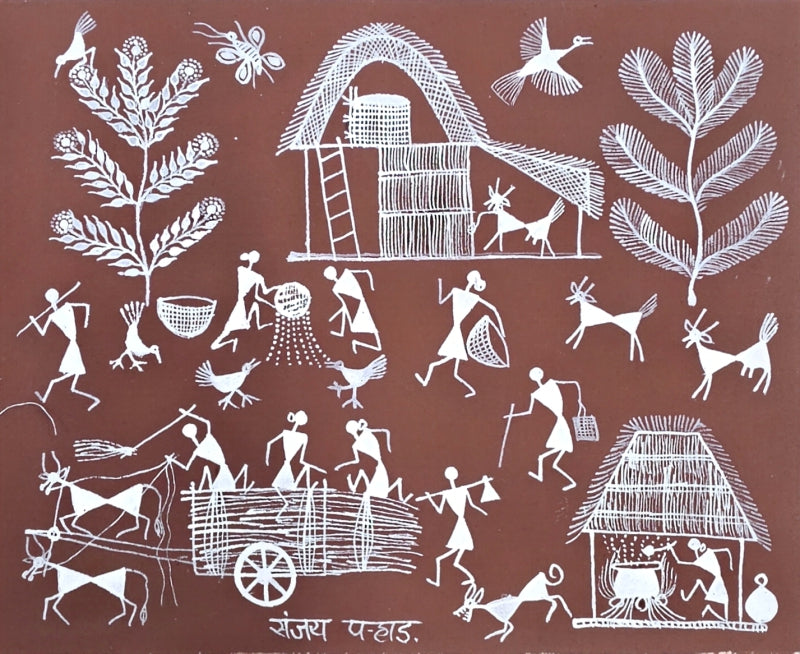
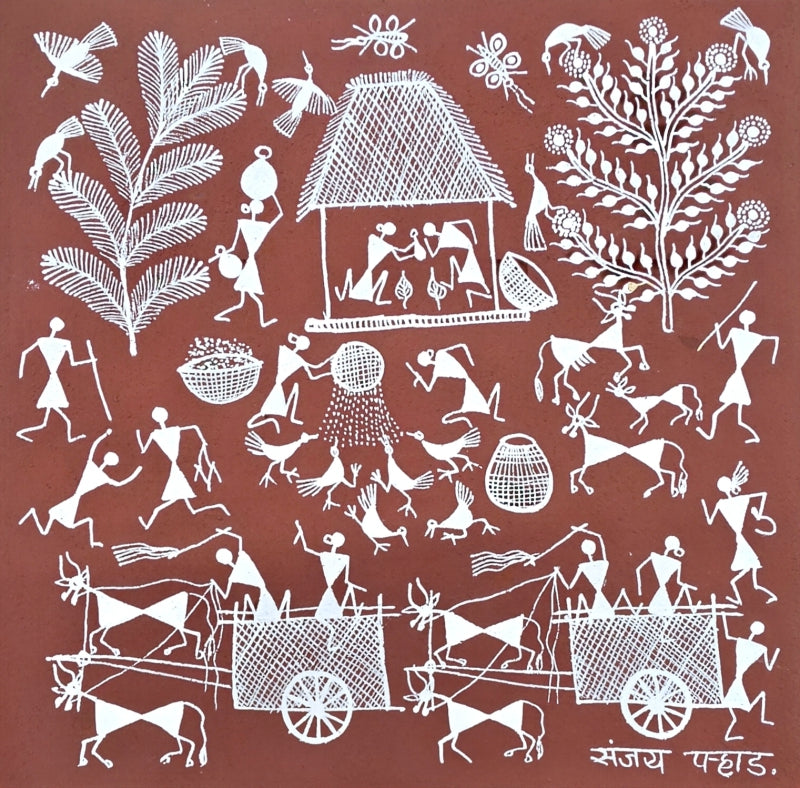
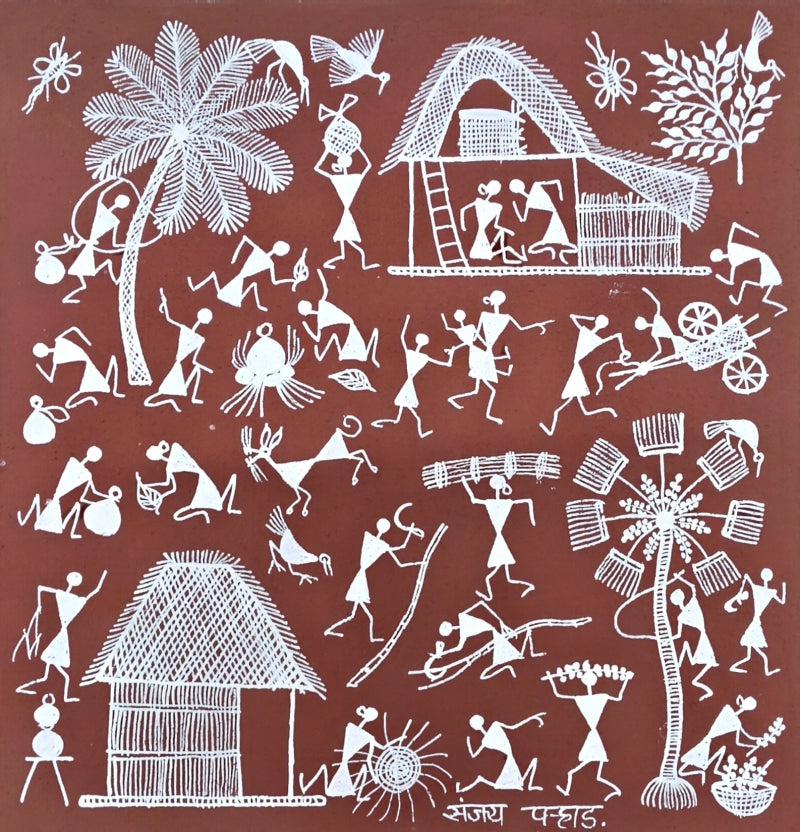
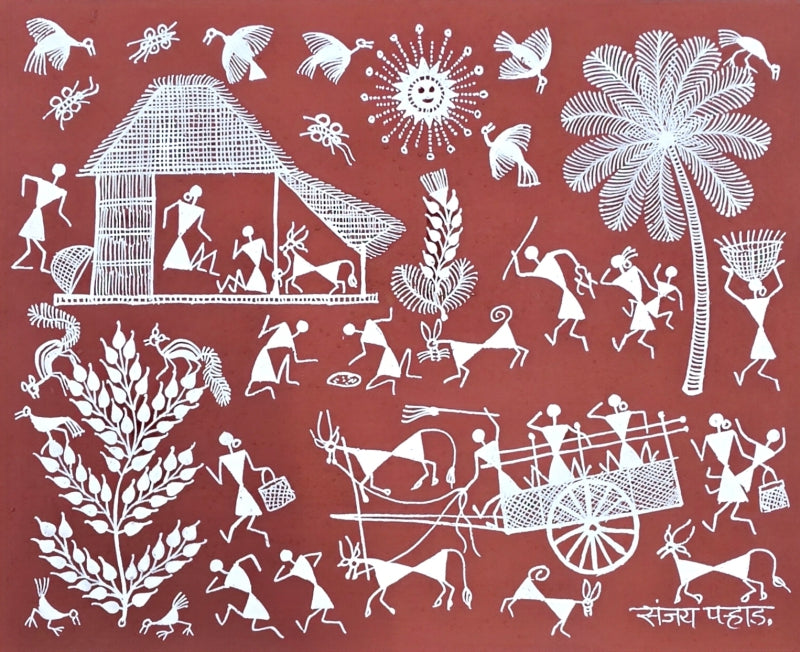
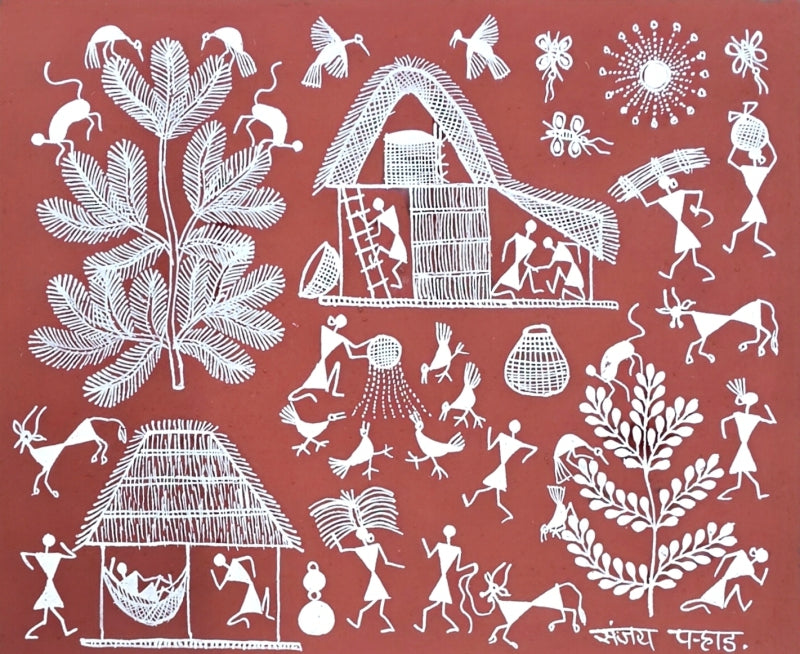
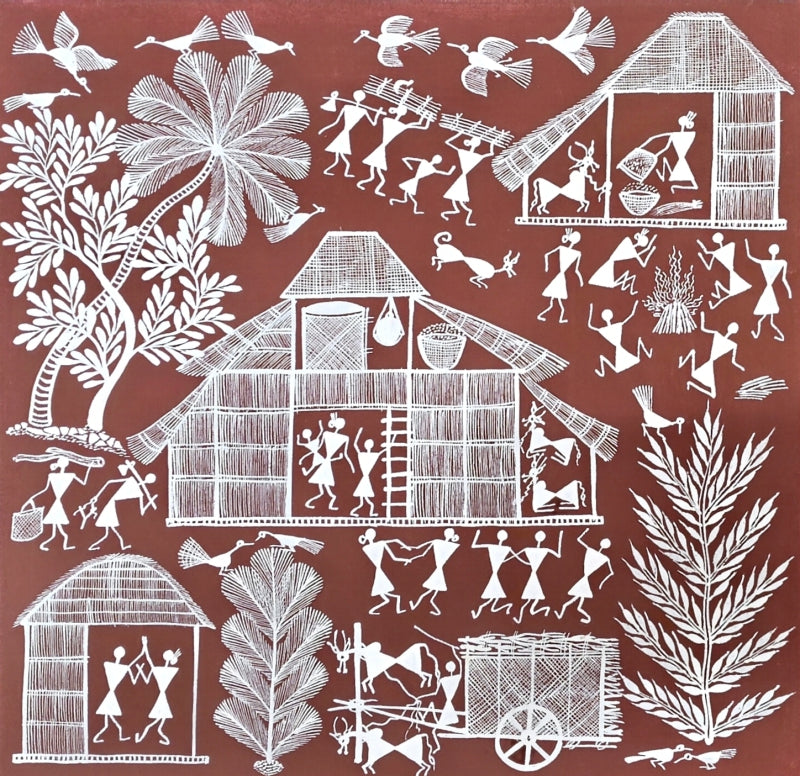
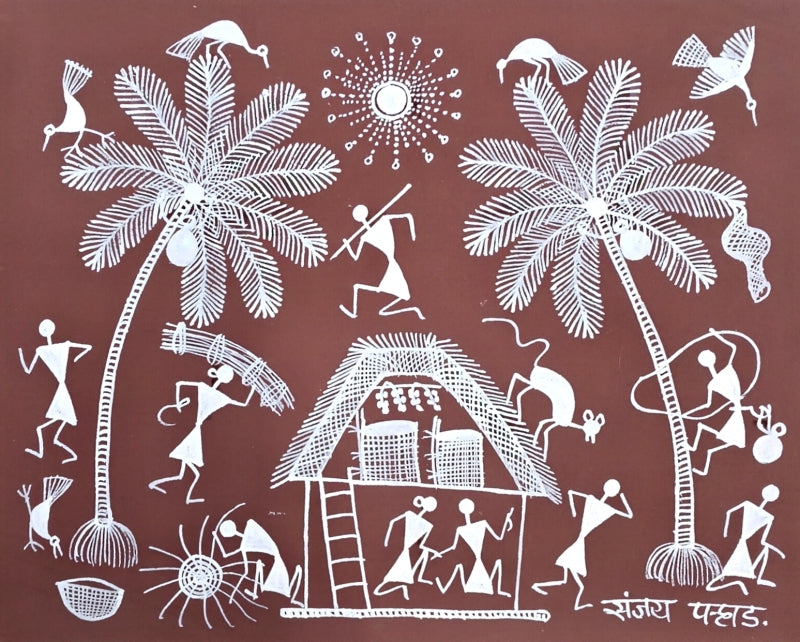
ClothSet against an earthen red ground, the crisp white figures unfold like a lived memory—ritual, labor, and celebration braided into a single village breath. The composition moves in a circular rhythm around hut, tree, and well, where birds and tools become equal protagonists, turning daily survival into a kind of communal choreography. Its deliberate flatness and emblematic marks refuse illusion in favor of closeness, suggesting a worldview where nature, home, and the body share one continuous line of belonging. In this quiet abundance of gestures, the scene reads less as anecdote than as a symbolic map of interdependence—each act a stitch holding the community together.