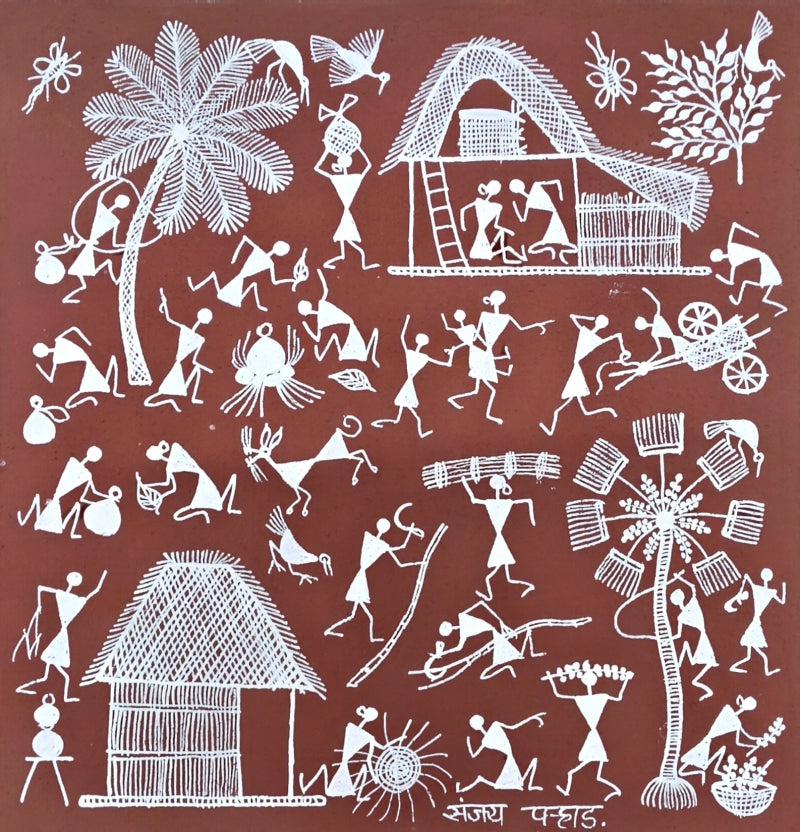
Warli Art 58
₹5,000
● In stockchecking live price…
Size
9x9Type
OriginalMaterial
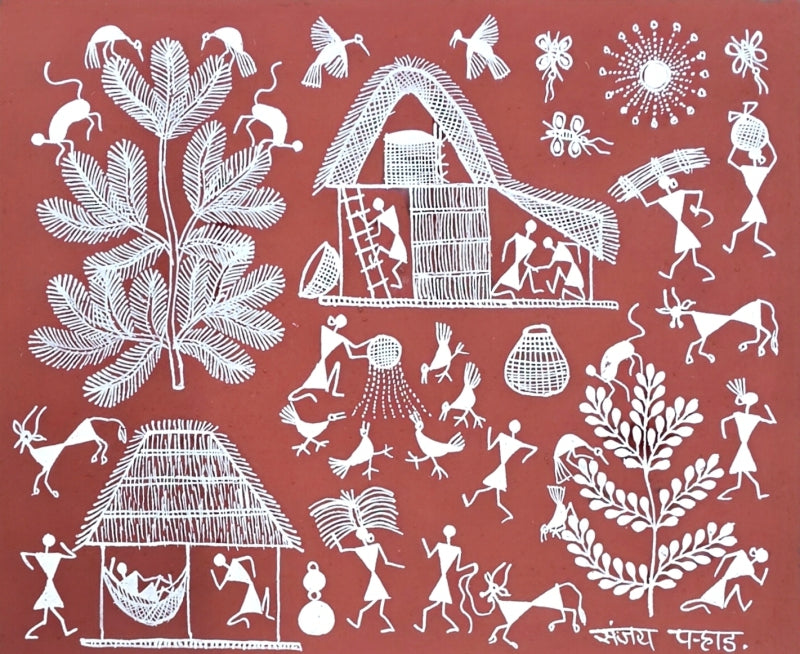
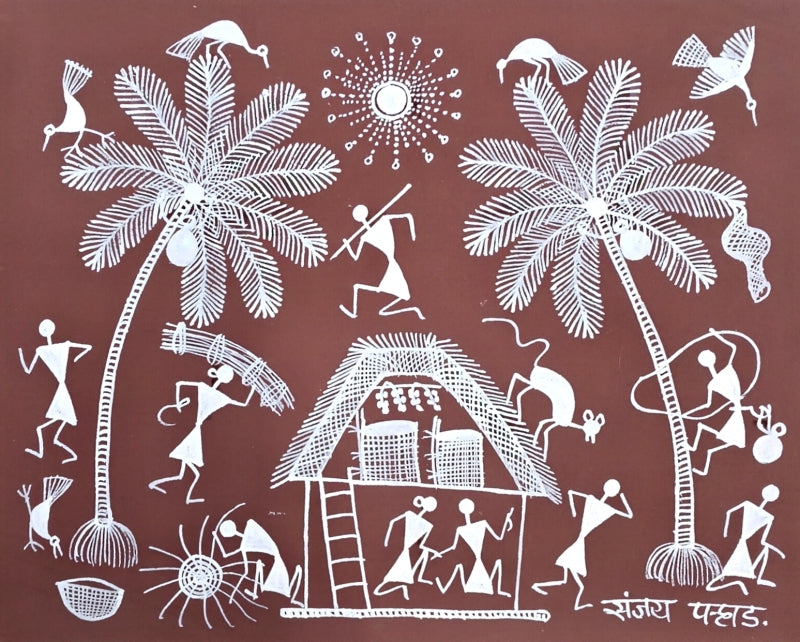
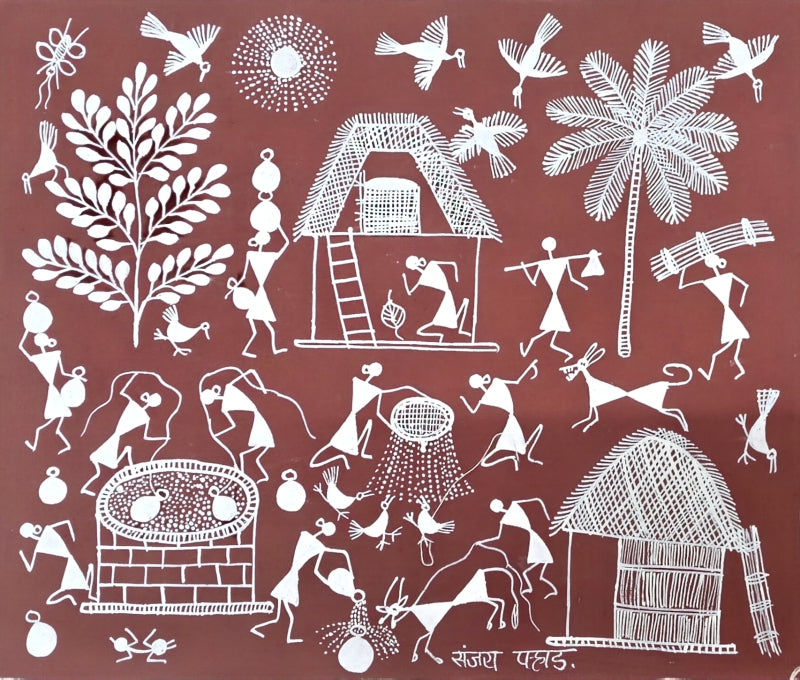
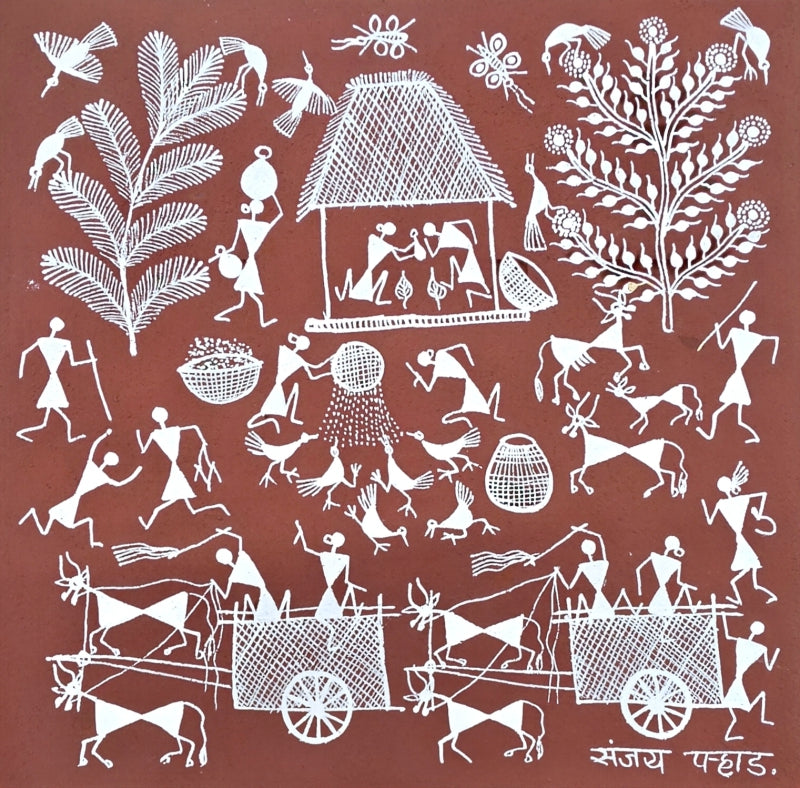
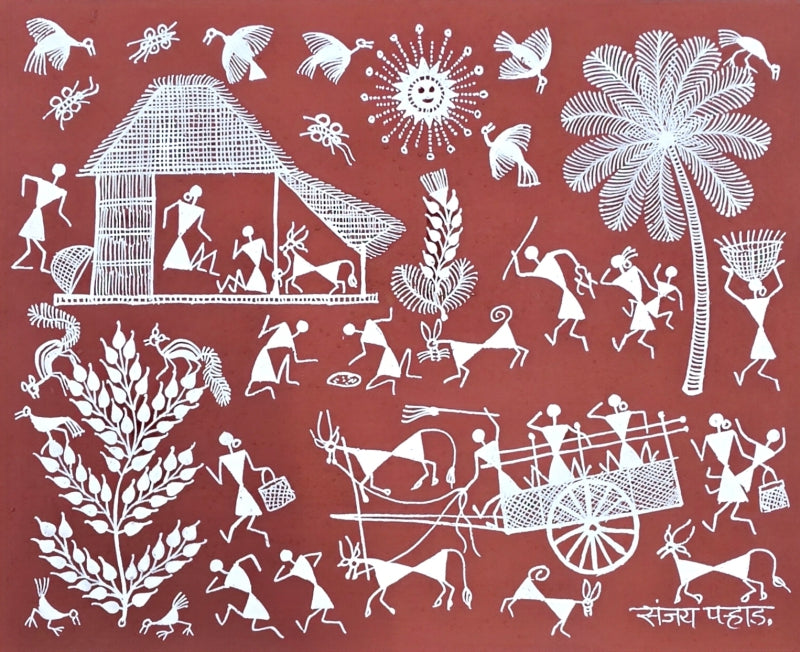
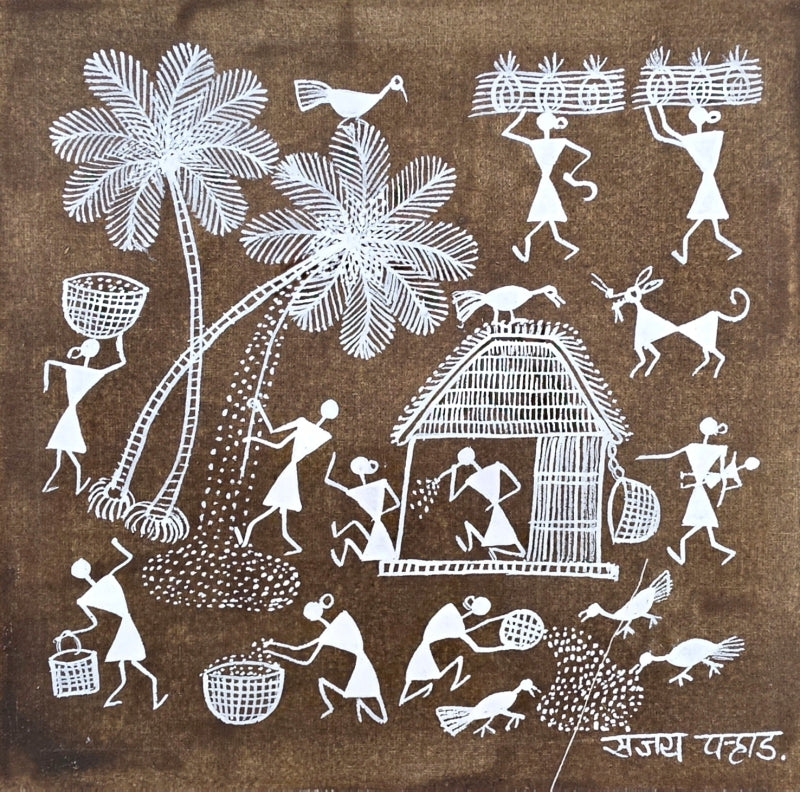
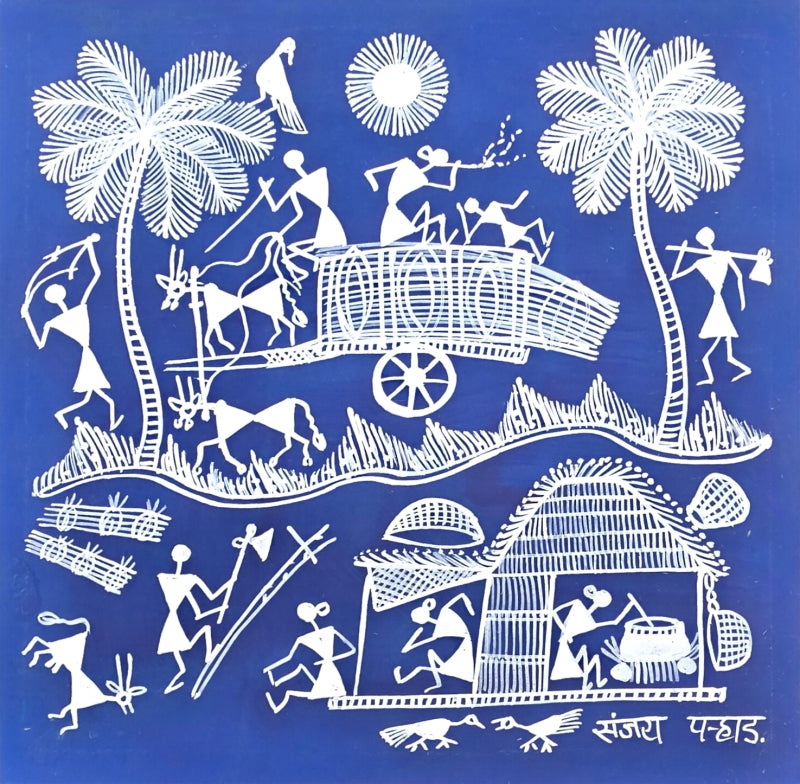
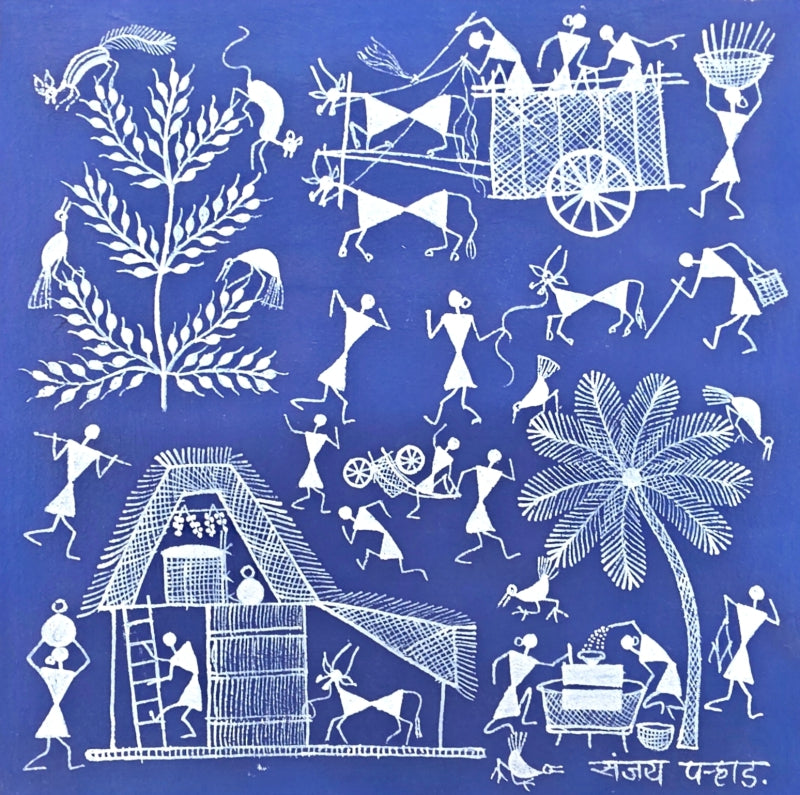
ClothRendered in the spare, luminous vocabulary of white line against earthen red, the scene unfolds like a communal memory—figures, huts, palms, and tools braided into a single rhythm of labor and celebration. The composition resists hierarchy: gestures repeat and ricochet across the surface, turning daily work—carrying water, tending crops, moving in dance—into a patterned choreography where the village becomes a living organism. Flatness is not simplicity here but a deliberate ethic of equality, as every mark holds the same visual weight and the same dignity. In this stitched-together panorama, the humble becomes ceremonial, suggesting that survival itself is a shared art sustained by interdependence and song.