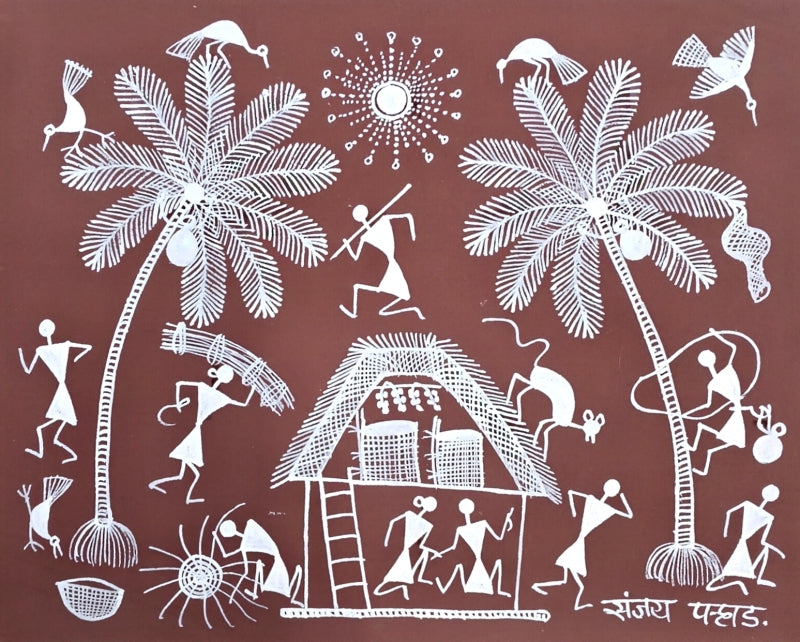
Warli Art 69
₹6,000
● In stockchecking live price…
Size
8x10Type
OriginalMaterial
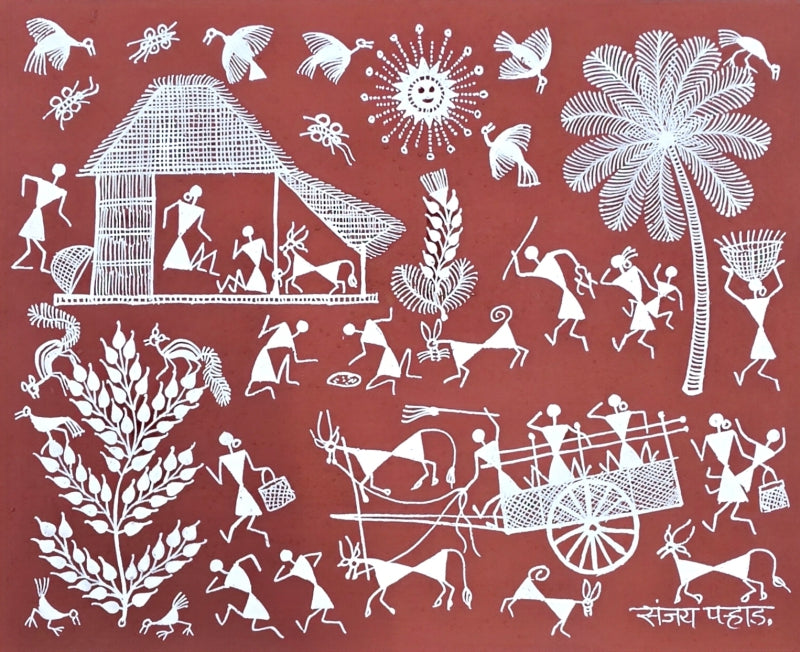
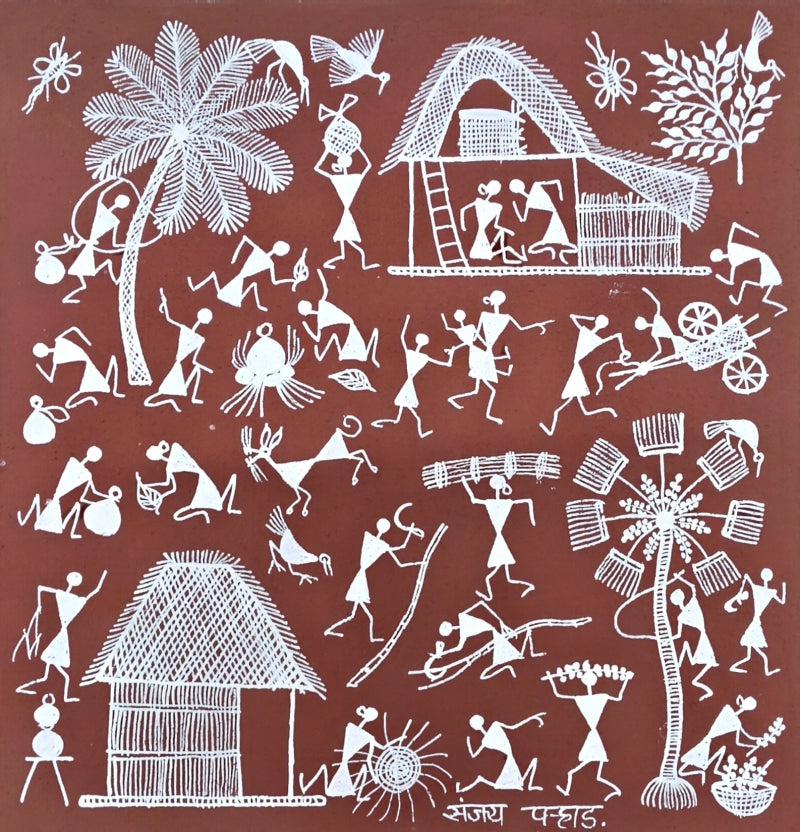
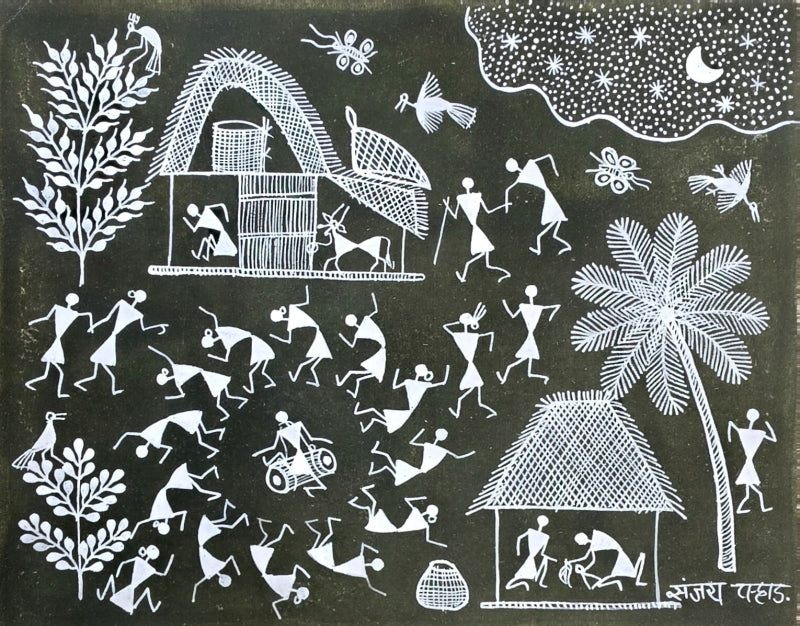
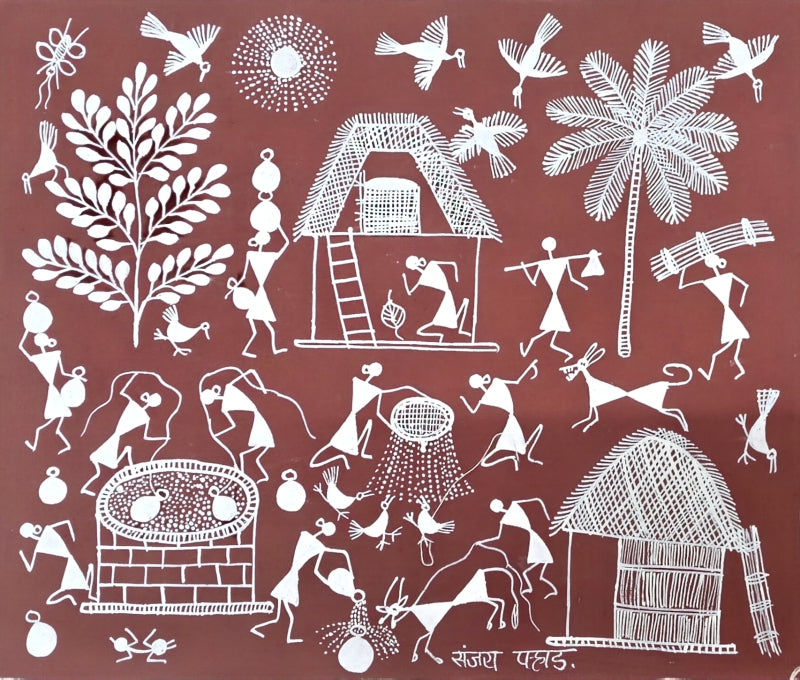
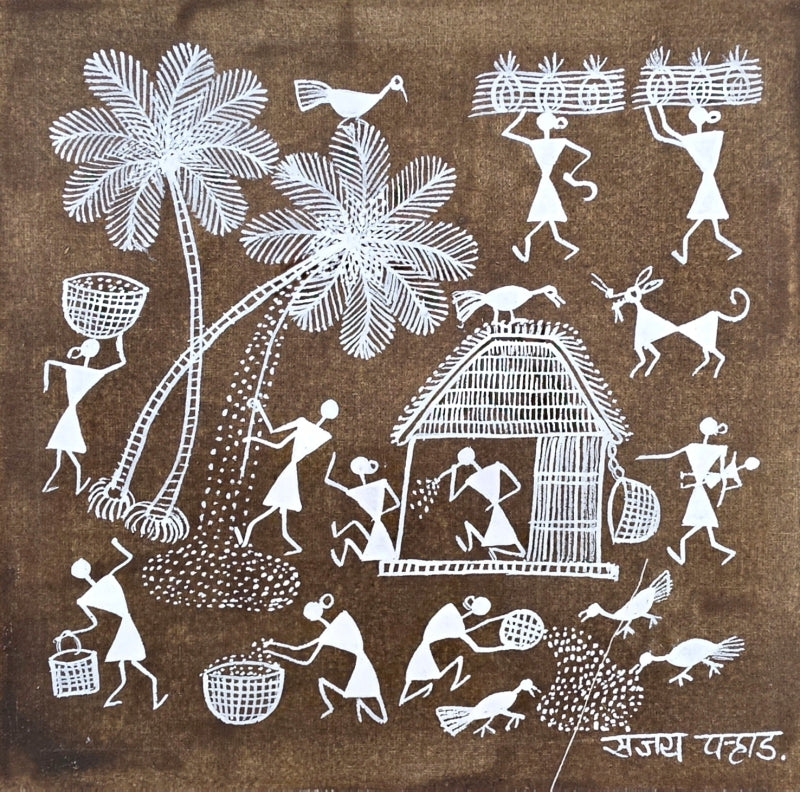
ClothRendered in the stark economy of white against an earthen ground, the scene reads like a living memory—figures reduced to essential gestures that nonetheless pulse with music, labor, and communal rhythm. Twin palms anchor the composition as protective columns, while the hut becomes a quiet nucleus around which dancing bodies, tools, and instruments orbit in a celebratory spiral. The sun’s radiating emblem and repeating linear marks turn everyday village life into a cosmology, suggesting that sustenance and ritual are not separate acts but one continuous choreography. In this distilled narrative space, individuality dissolves into collective vitality, elevating the ordinary into a shared myth of belonging.