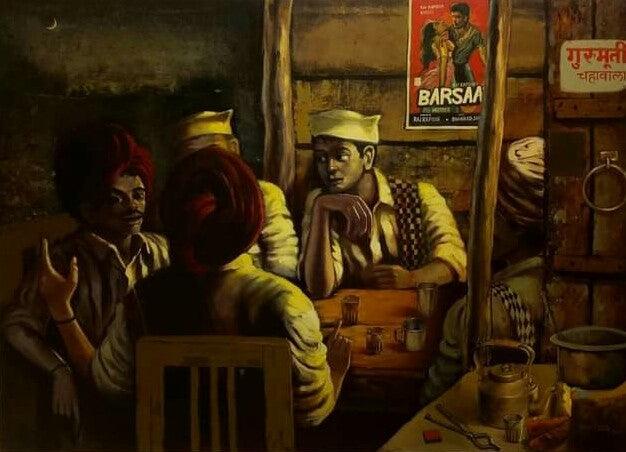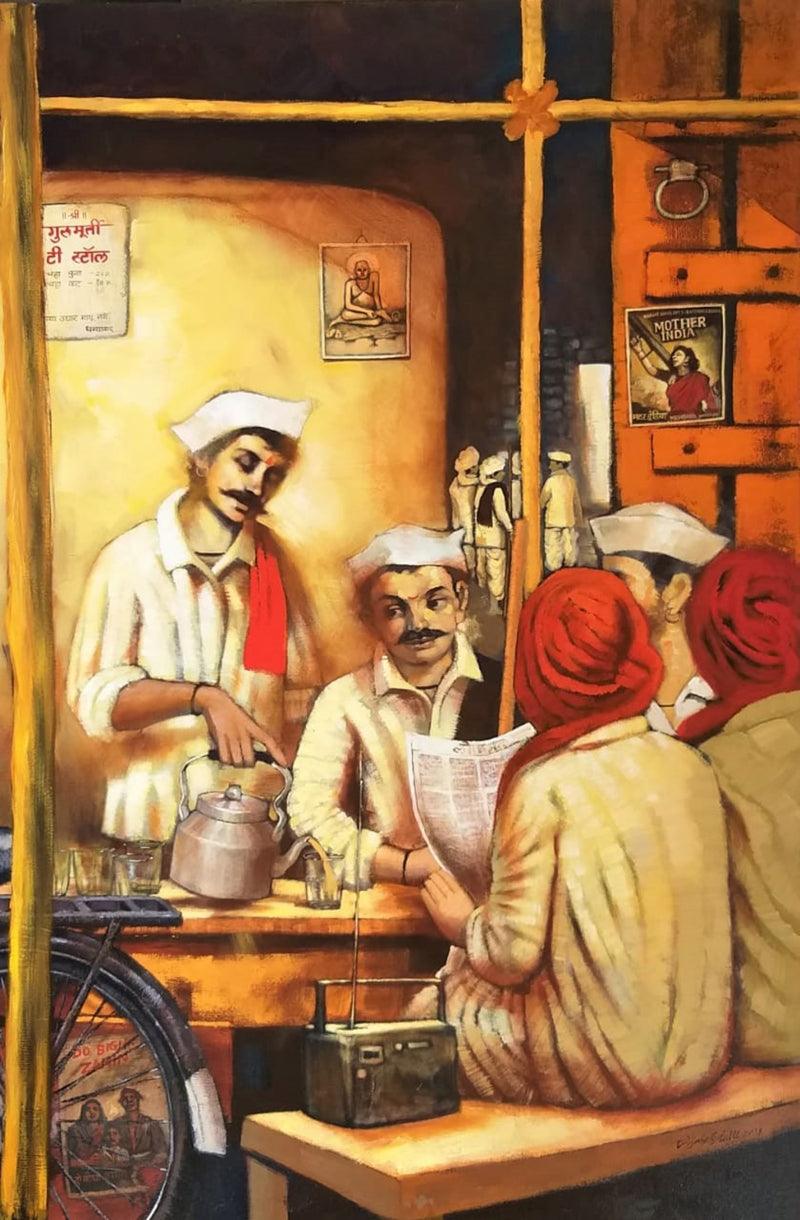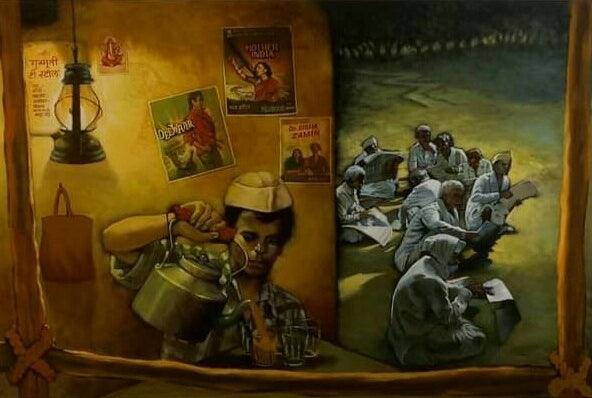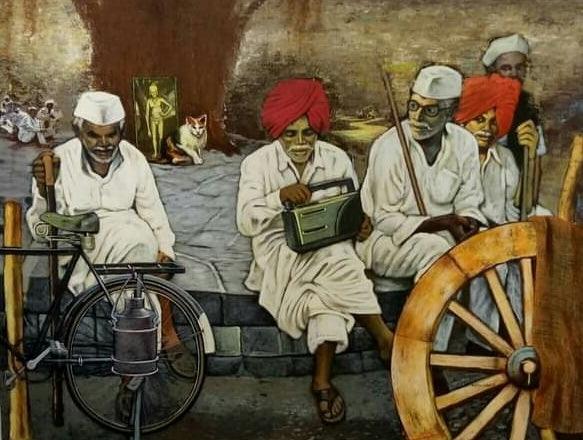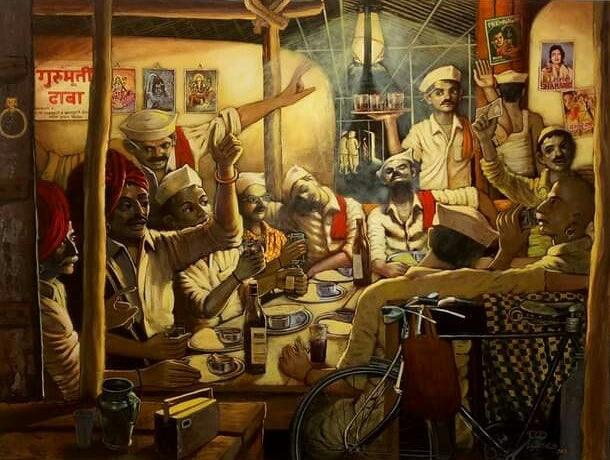
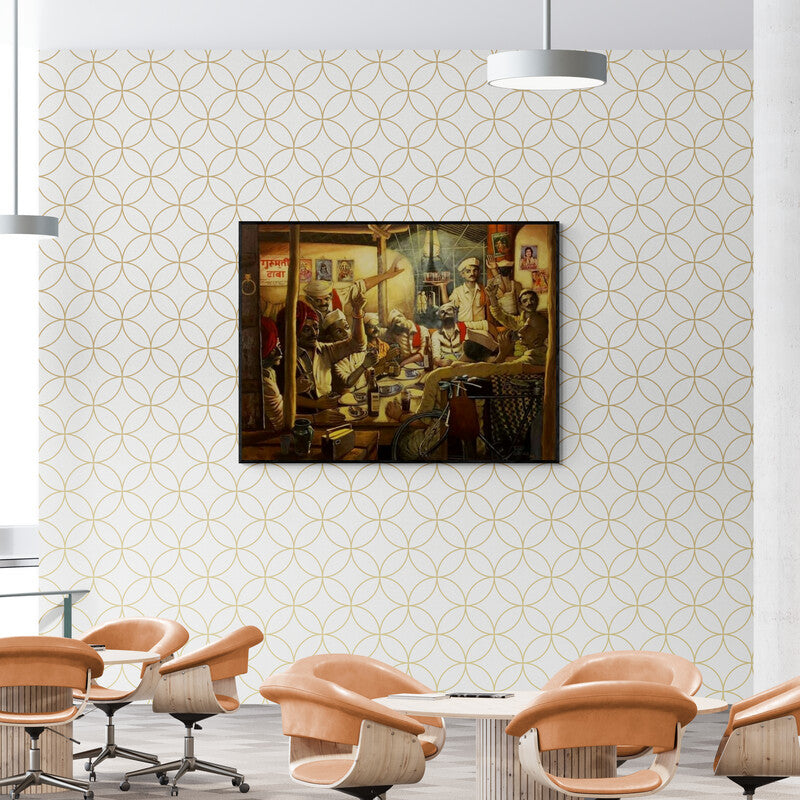
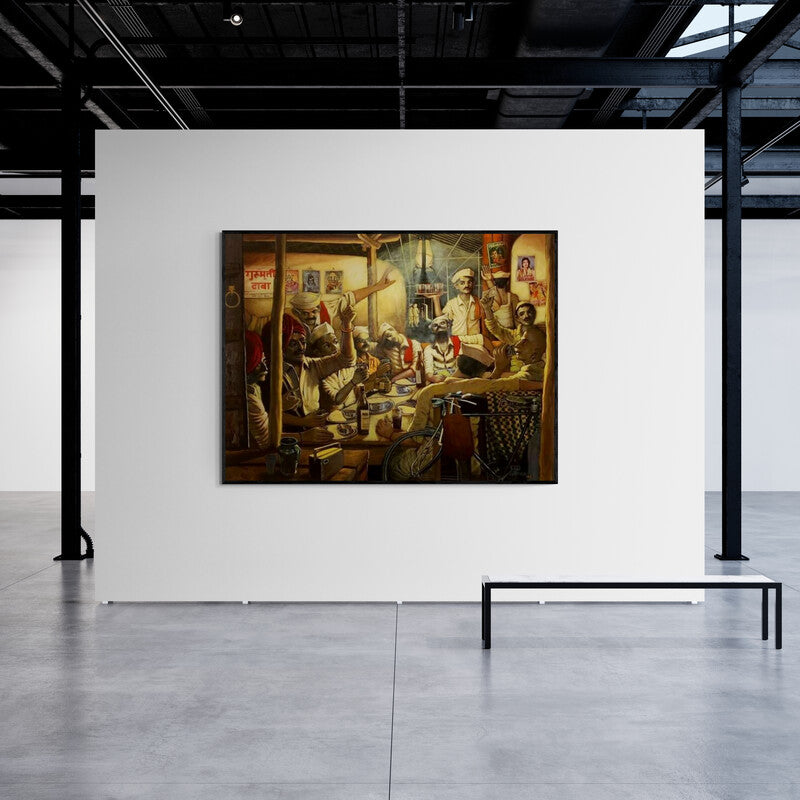
Gurumurti Dhaba (A Lively Tea Stall)
The painting stages a crowded tea-house as a theatre of fellowship, where raised arms, tilted heads, and clinking glasses choreograph a communal rhythm that feels at once celebratory and conspiratorial. Warm ochres and tobacco browns bathe the room in a nostalgic glow, while the lantern’s hard light carves faces into distinct characters—each caught between speech, song, and listening—so the space becomes a living archive of ordinary lives. Posters, utensils, and the bicycle compress the foreground into a tactile still-life of labor and leisure, suggesting how public gathering places hold memory, rumor, and resilience as tightly as they hold smoke. Beneath the conviviality runs a quiet poignancy: intimacy here is improvised, temporary, and precious, assembled nightly from shared breath and small rituals.
Delivery
You may also like