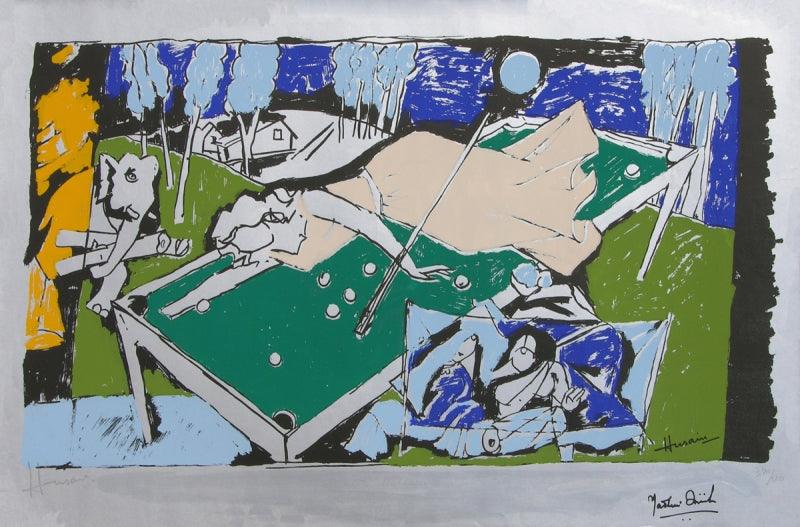
Yeh Kaun Sa Modh Hai Umar Ka 5 (The Game)
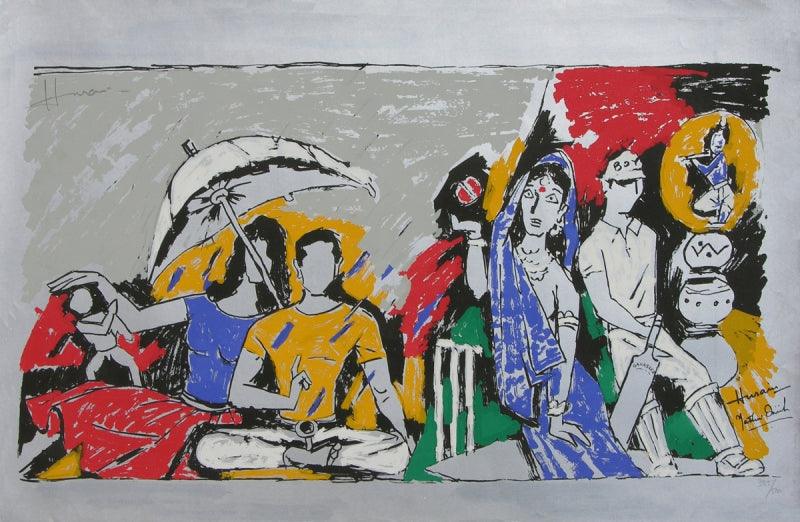
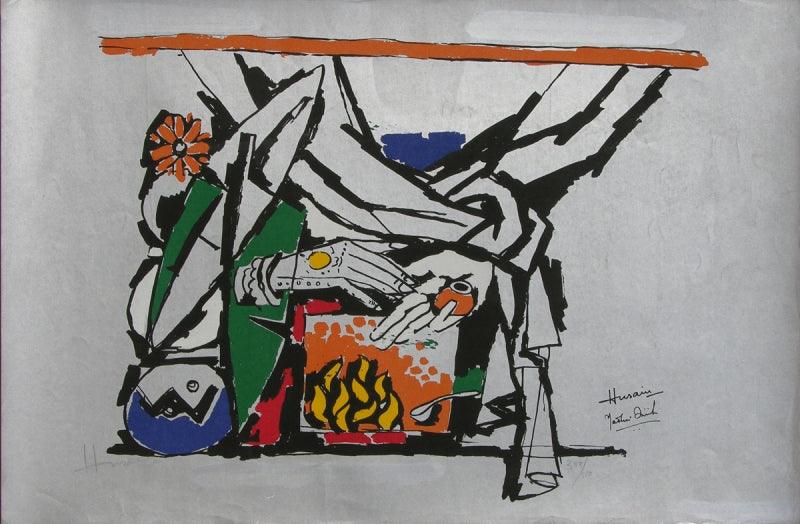
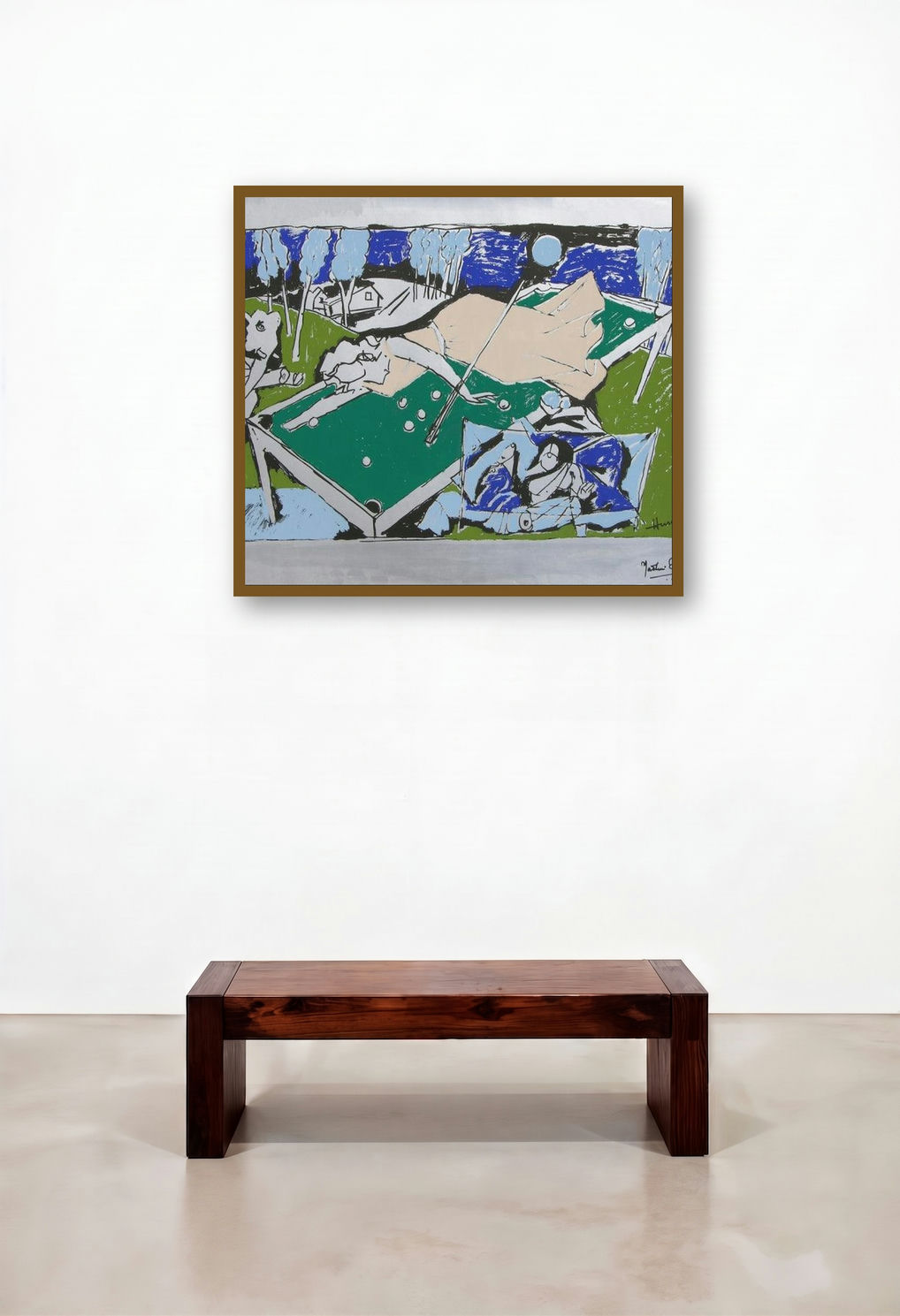
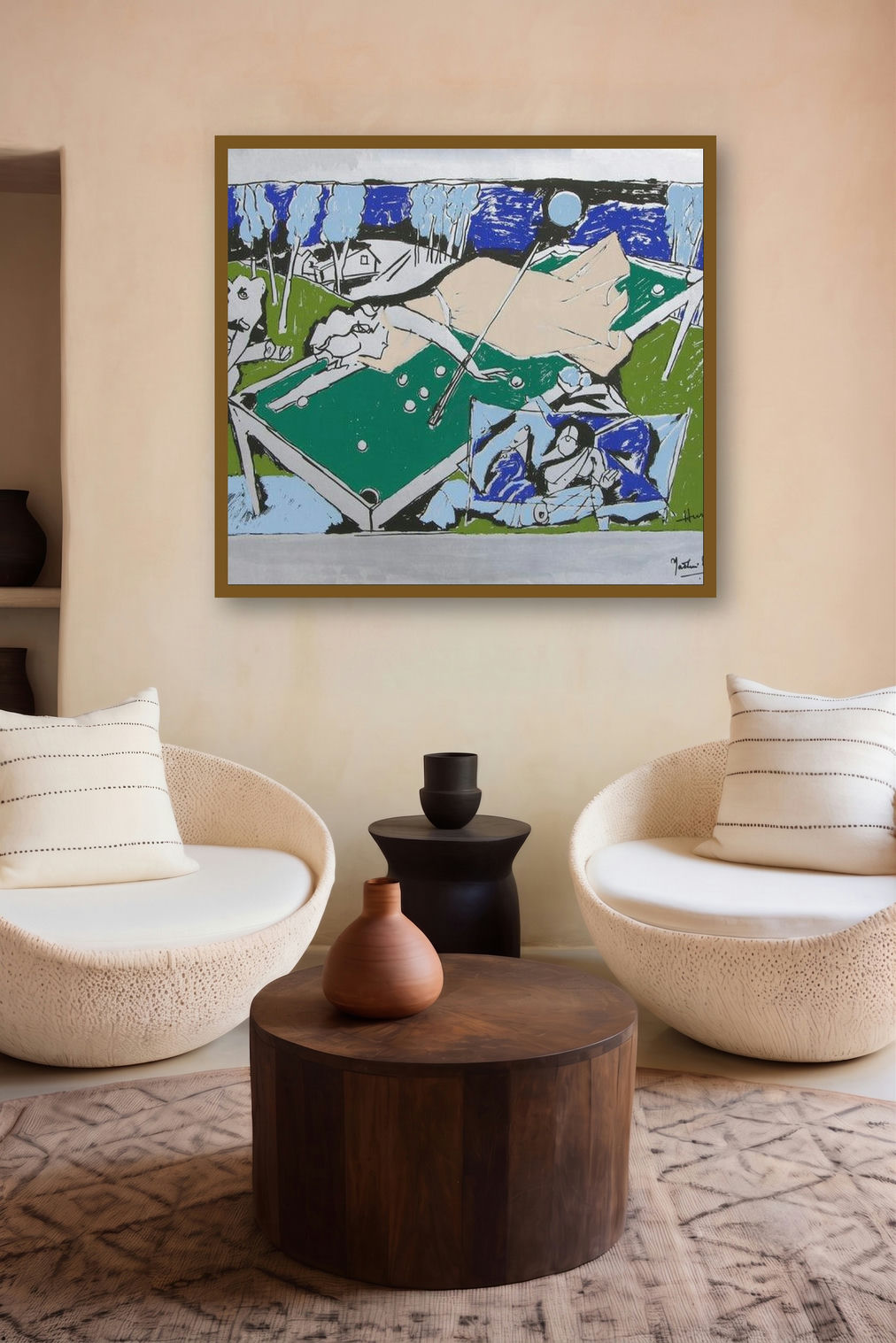
This scene stages leisure as a fragile theatre: a billiard table, scattered balls, and a taut cue become the central geometry around which bodies recline and drift, as if play has slipped into reverie. Broad planes of green and nocturnal blue are cut by assertive black contours, flattening space into a collage-like memory where interior and exterior mingle—trees and rooftops hovering like half-recalled witnesses. The pale canopy, pitched at a precarious angle, reads as both shelter and veil, suggesting how pleasure is always shadowed by transience and the quiet threat of collapse. In its simplified figures and sharpened diagonals, the work holds a tender tension between camaraderie and solitude, inviting the viewer to read the game as an allegory of chance, desire, and the choreography of time.
Delivery
You may also like