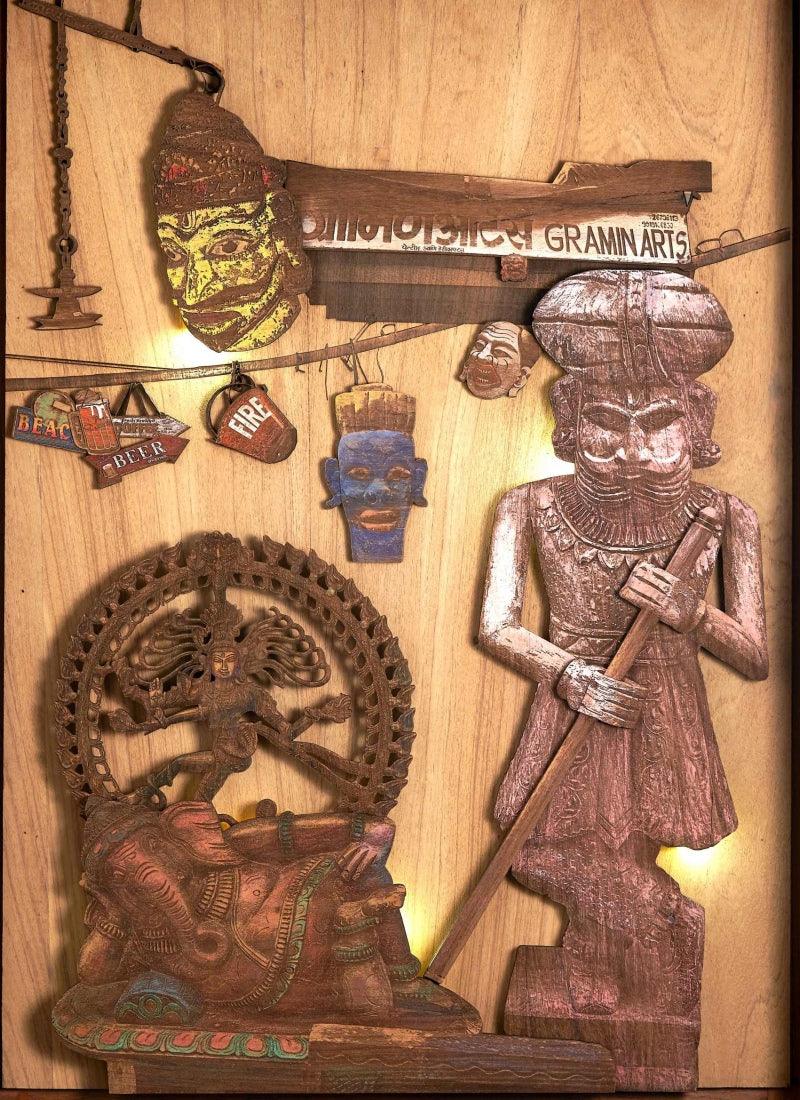
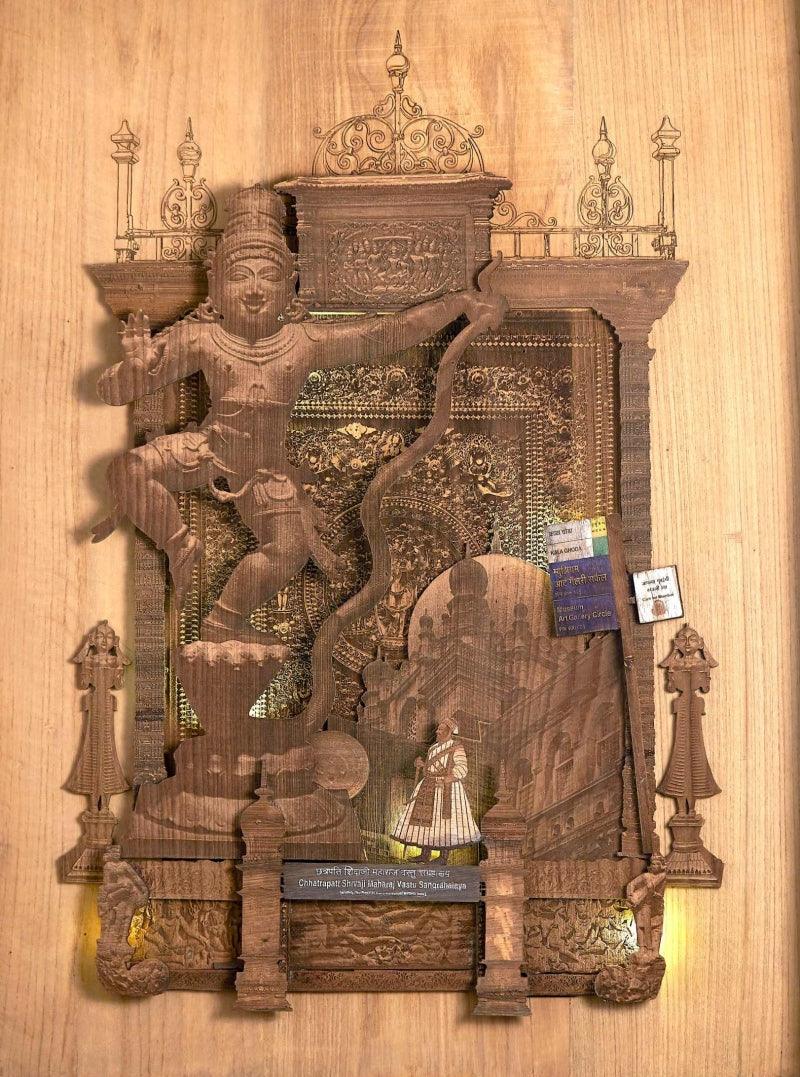
Court Of Gods And Kings (Rustic Indian Art)
₹360,000
● In stock · ★ 4.0 (5)checking live price…
Size
37x28x4Type
OriginalMaterial
Teak WoodArranged like an intimate cabinet of vernacular memory, the carved masks, deity relief, and sentinel-like figure read as fragments of a living archive—objects that carry devotion, labor, and theater in the same breath. Warm light washes across weathered wood and burnished pigments, coaxing relief from the grain so each surface becomes a small geography of touch and time. The composition oscillates between the sacred and the everyday—signage and trinkets brushing against ritual iconography—suggesting how tradition survives not as a museum certainty but as a practiced, handled continuity. In this layered assemblage, identity feels both performed and protected, as if the masks are less disguises than vessels for inherited voices.
Delivery
You may also like
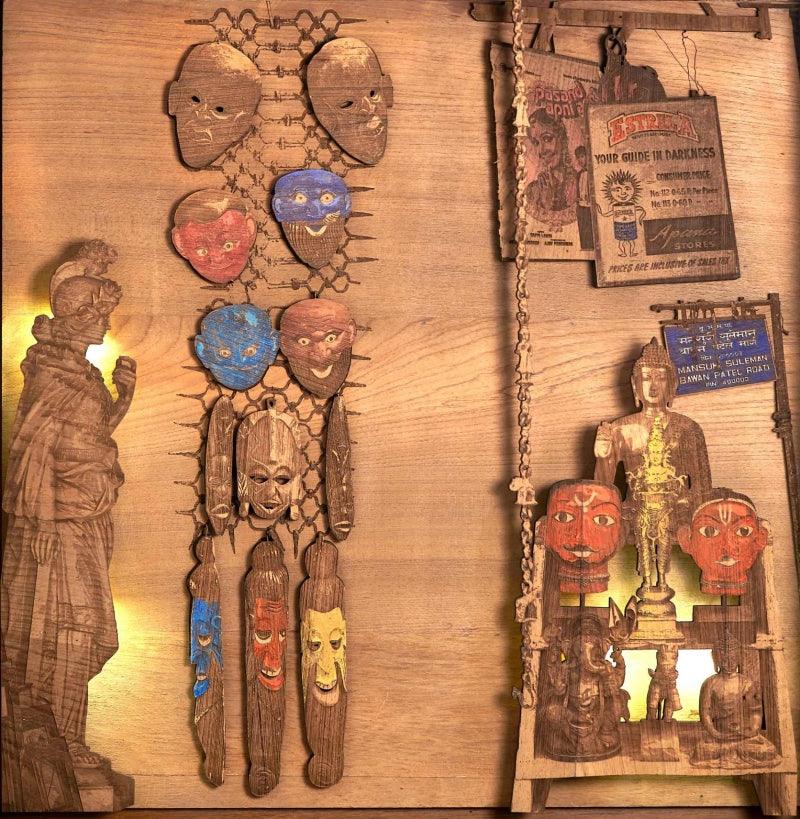
Unmasked (Masks and Figures)
Artzolo
₹300,000
★ 4.0 (9)
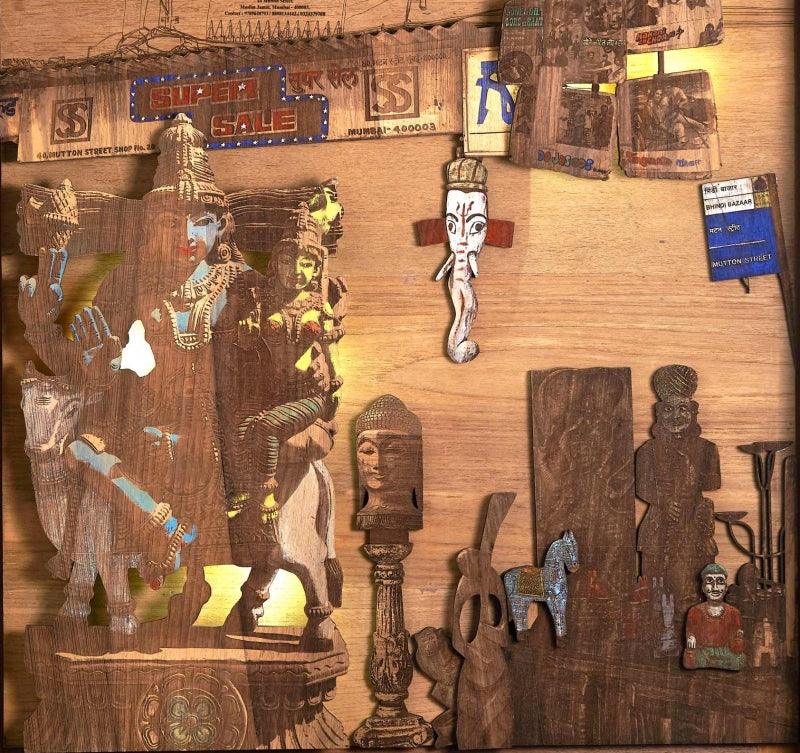
Golden Age (Mumbai Street Scene)
Artzolo
₹200,000
★ 4.0 (8)
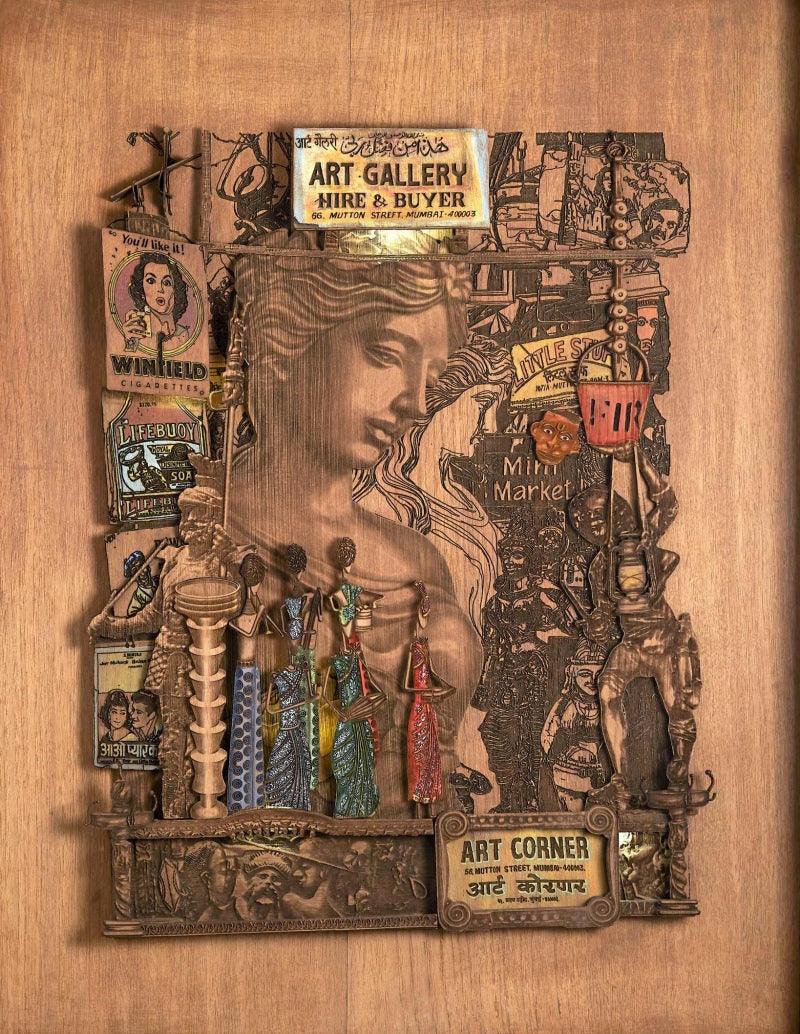
Emperor Of Odds And Ends (Art Gallery Collage)
Artzolo
₹500,000
★ 5.0 (10)
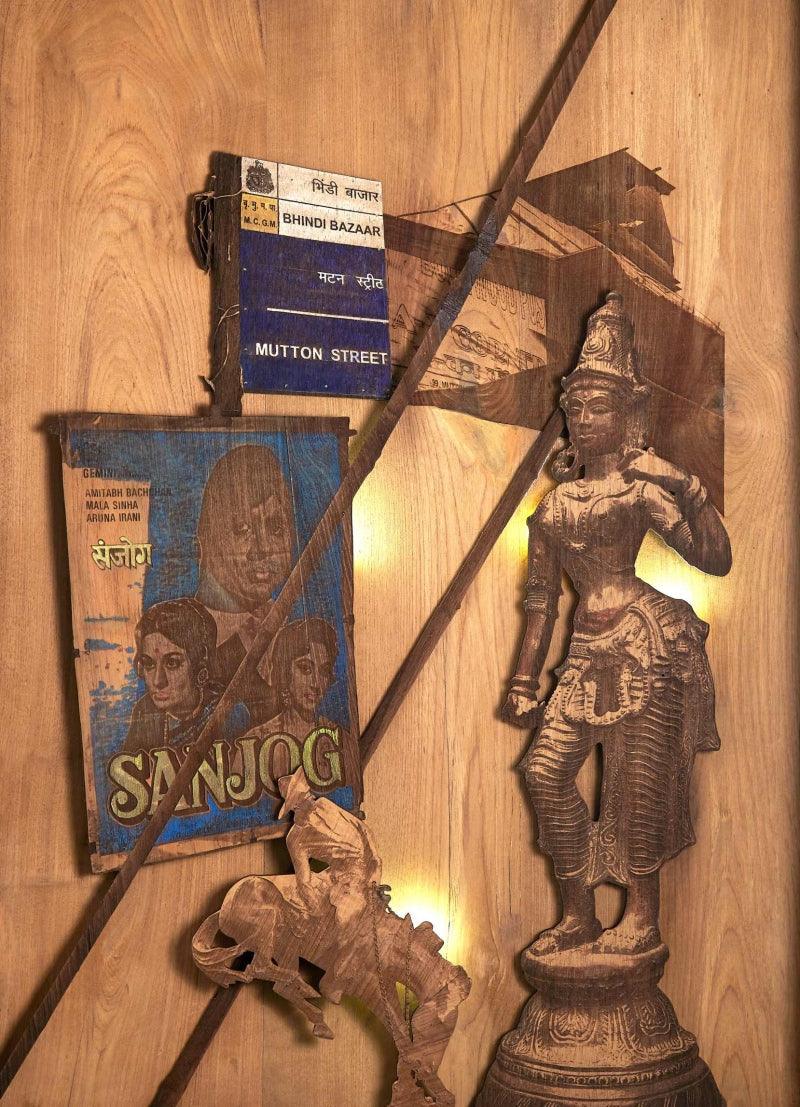
East Meets West (Bhindi Bazaar Scene)
Artzolo
₹350,000
★ 4.0 (5)
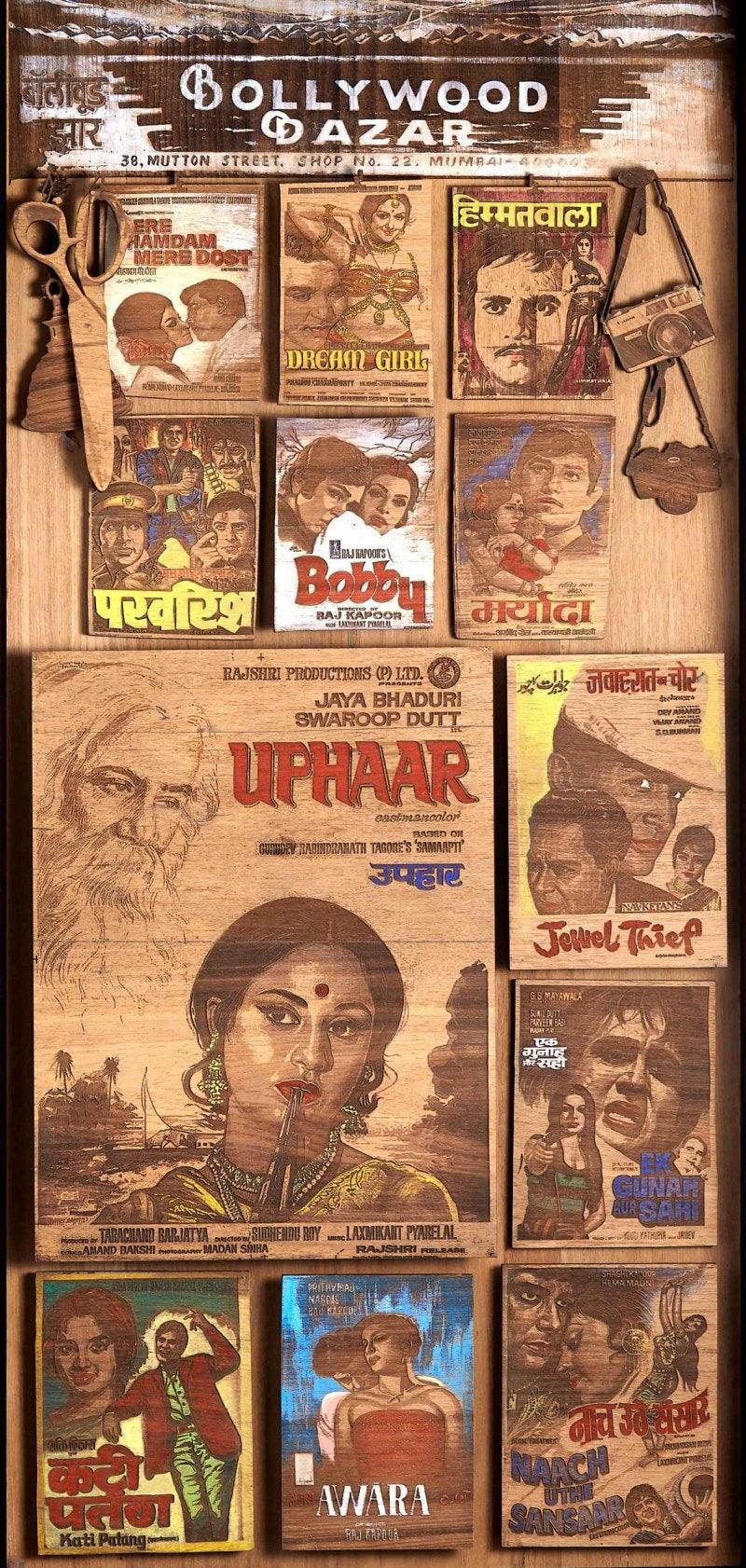
Bollywood Dreams (Bollywood Bazaar)
Artzolo
₹300,000
★ 5.0 (6)
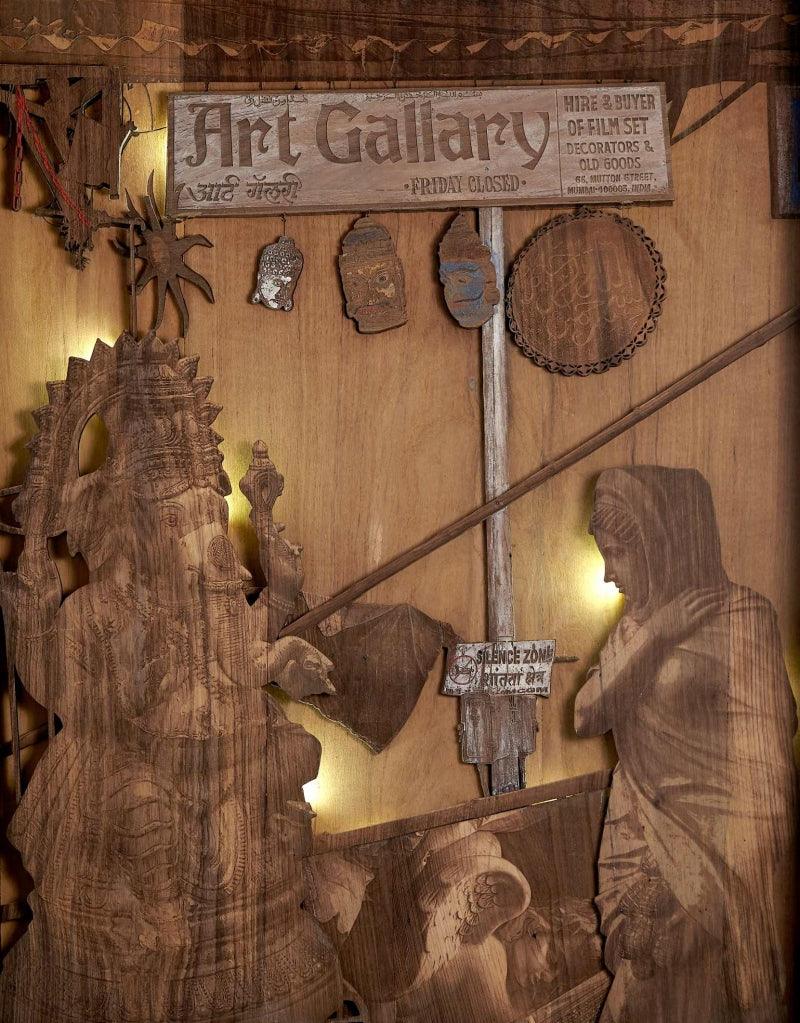
Quiet Chaos (Mumbai Street Scene)
Artzolo
₹355,000
★ 5.0 (10)
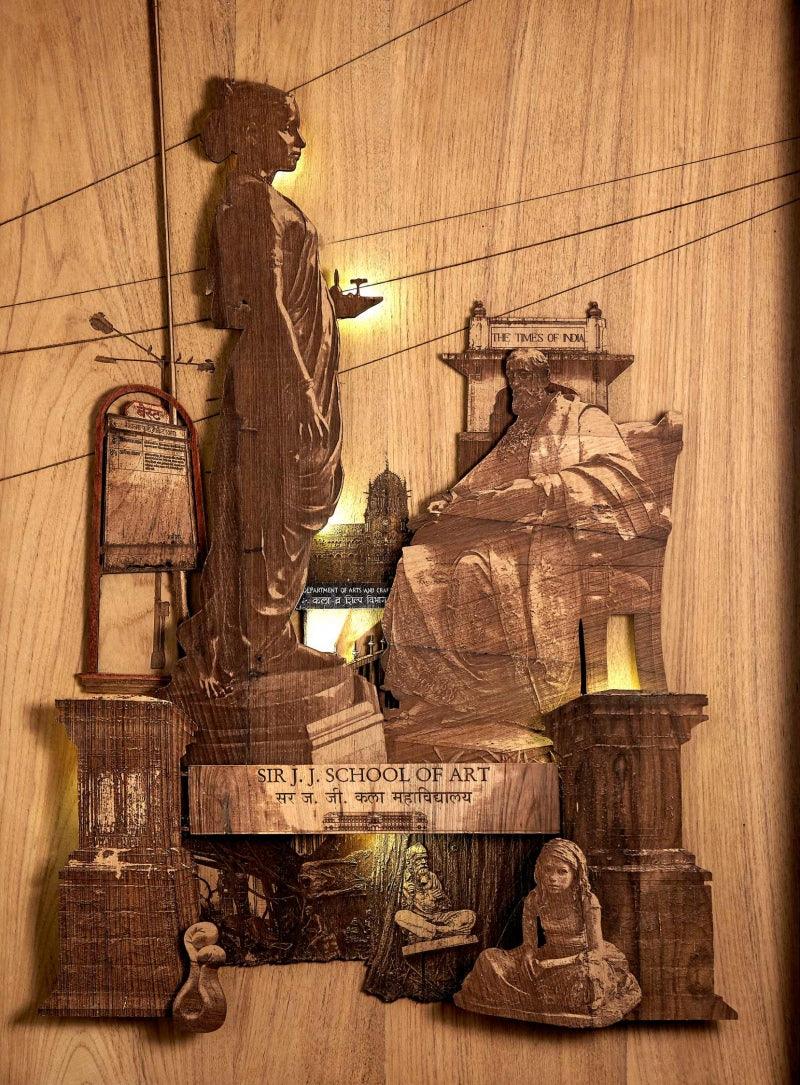
Love Affair With Color (Sir J.J. School of Art Montage)
Artzolo
₹435,000
★ 5.0 (9)
The Prince Bounty (Chhatrapati Shivaji Maharaj Vastu Sangrahalaya)
Artzolo
₹530,000
★ 5.0 (6)