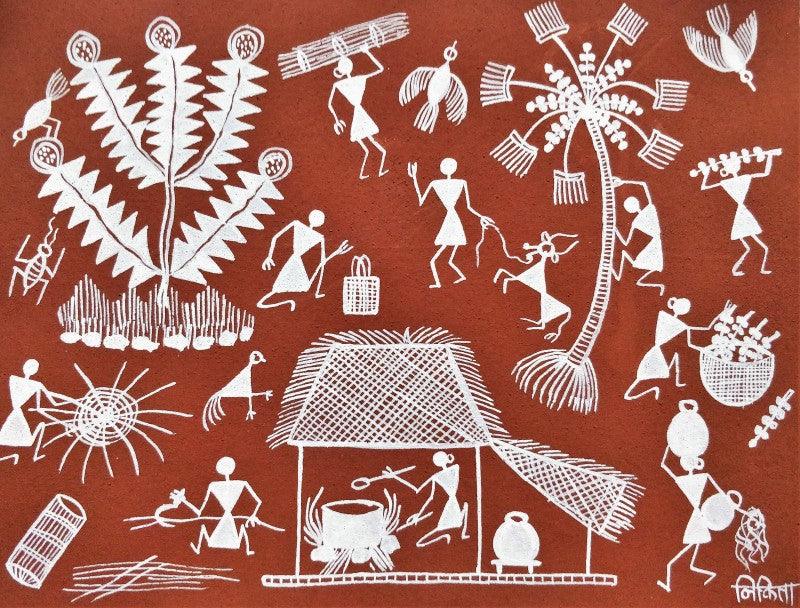
Warli Art 16 (Village Life)
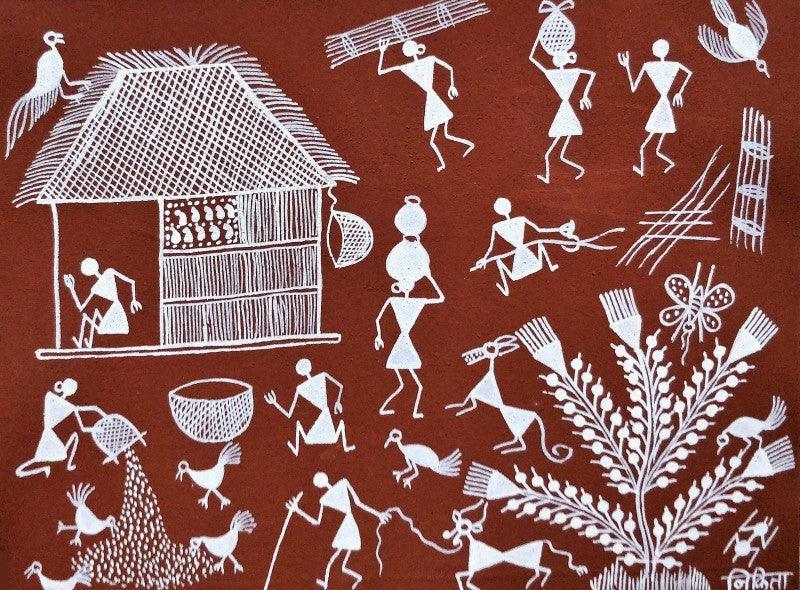
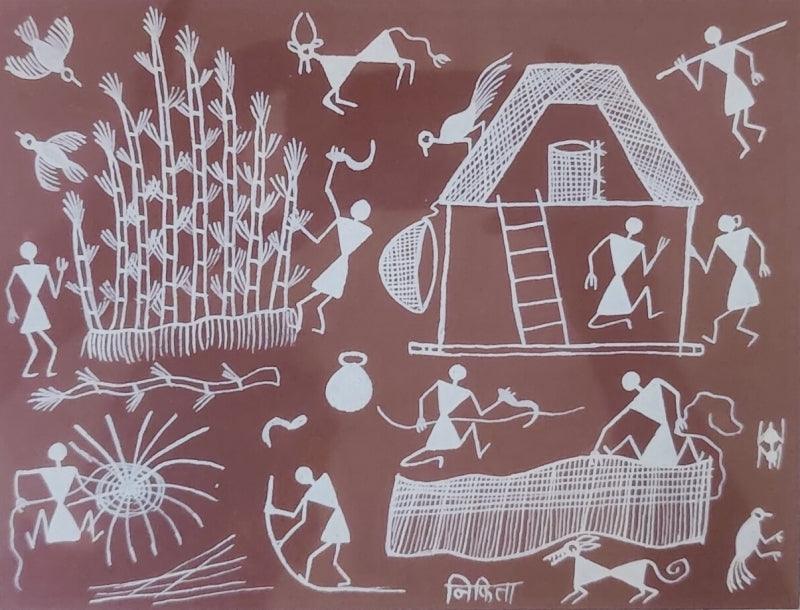
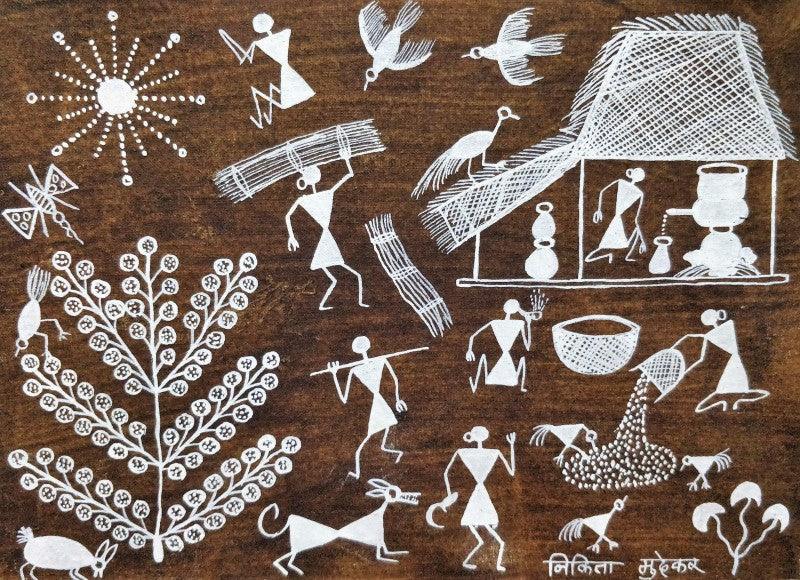
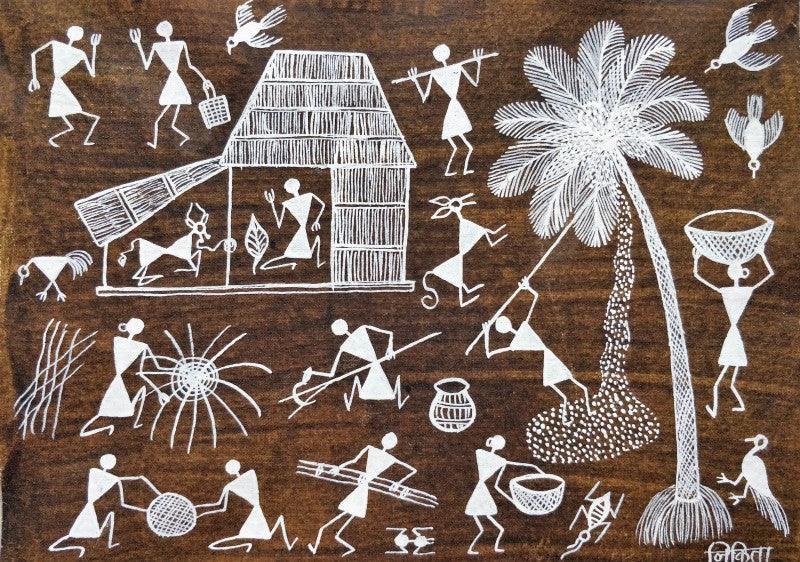
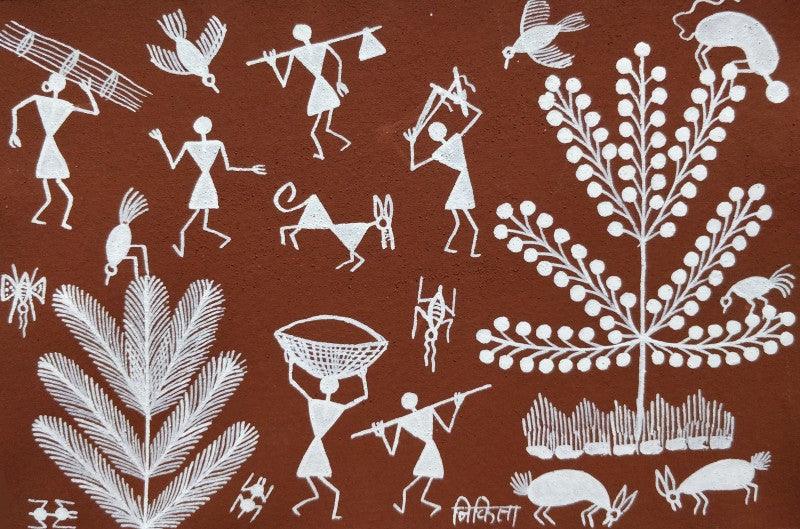
Rendered in stark white against an earthen red ground, the work reads like a communal memory—figures, tools, animals, and plants reduced to essential signs that still pulse with lived specificity. The composition disperses activity across the surface in a circular rhythm, allowing daily labor—gathering, carrying, cooking—to become a choreography that binds the village to its landscape. Its deliberate flatness and repeated linear textures turn huts, trees, and baskets into a shared visual language, suggesting that survival here is not solitary effort but an inherited, collective ceremony. What emerges is a quiet epic: the dignity of work and the continuity of tradition inscribed as pattern, where every gesture is both immediate and ancestral.
Delivery
You may also like