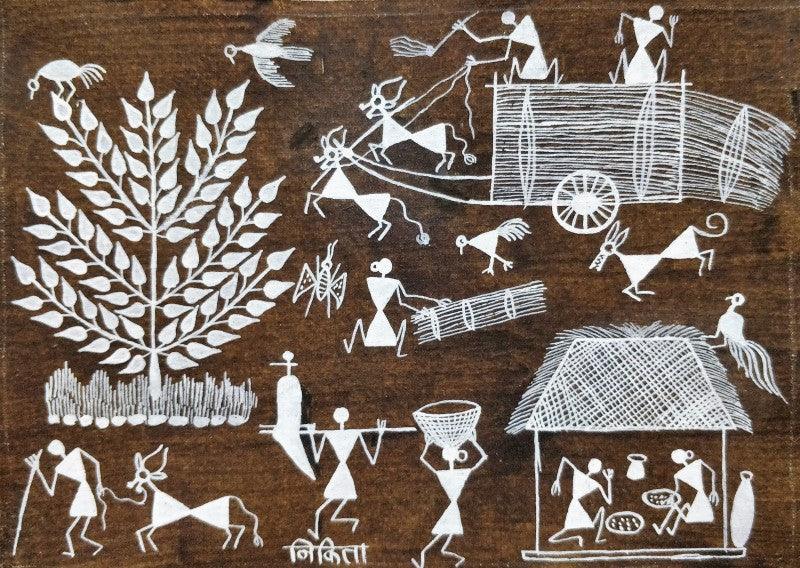
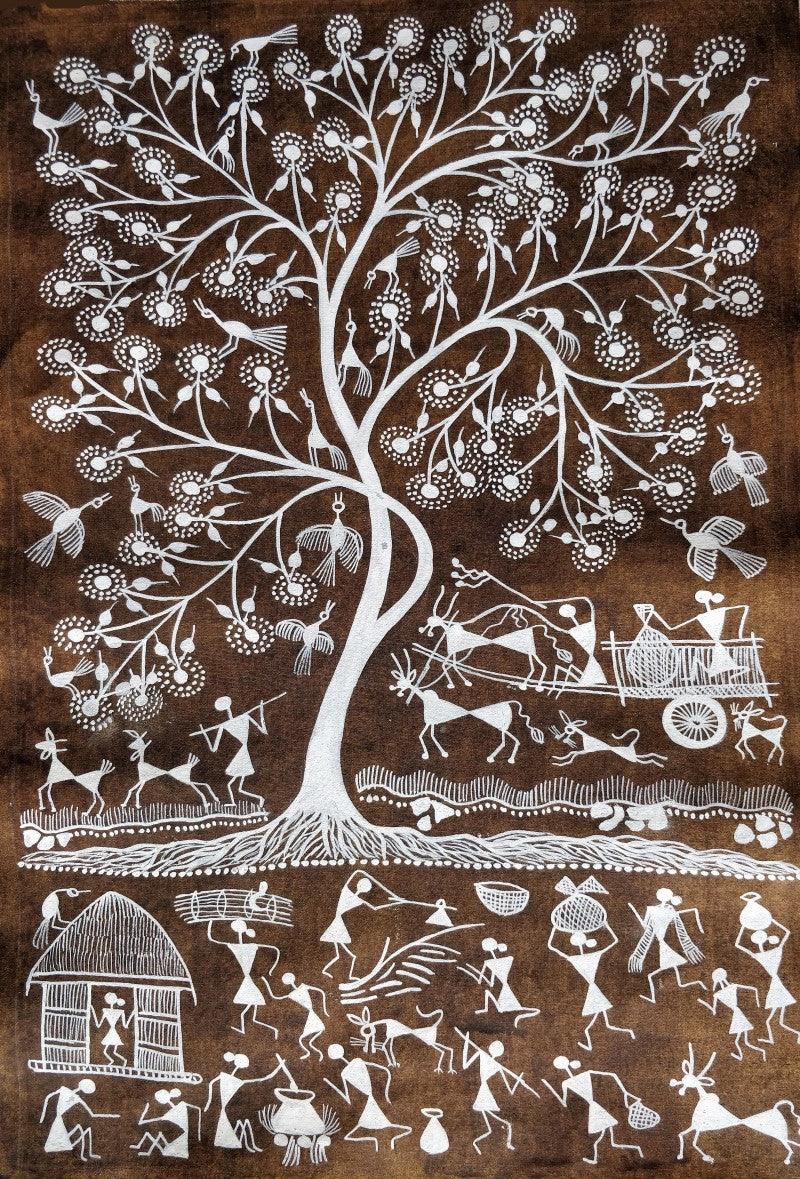
Warli Art 18 (Tree of Life)
₹6,500
Out of stock · ★ 5.0 (12)checking live price…
Size
7x10Type
OriginalMaterial
ClothRendered in spare white line against an earthen ground, this scene reads like a remembered song—each figure reduced to an essential gesture, yet charged with communal rhythm and purpose. The composition moves from the anchoring abundance of the tree on the left toward the animated right, where cart, animals, and clustered bodies create a circulating economy of labor, travel, and ritual exchange. Its deliberate flatness and emblematic scale collapse distance and time, allowing harvest, procession, and domestic gathering to coexist as one continuous cycle. In this syntax of symbols, everyday village life becomes mythic: sustenance, movement, and belonging are shown not as separate events, but as a single, shared breath.
Delivery
You may also like
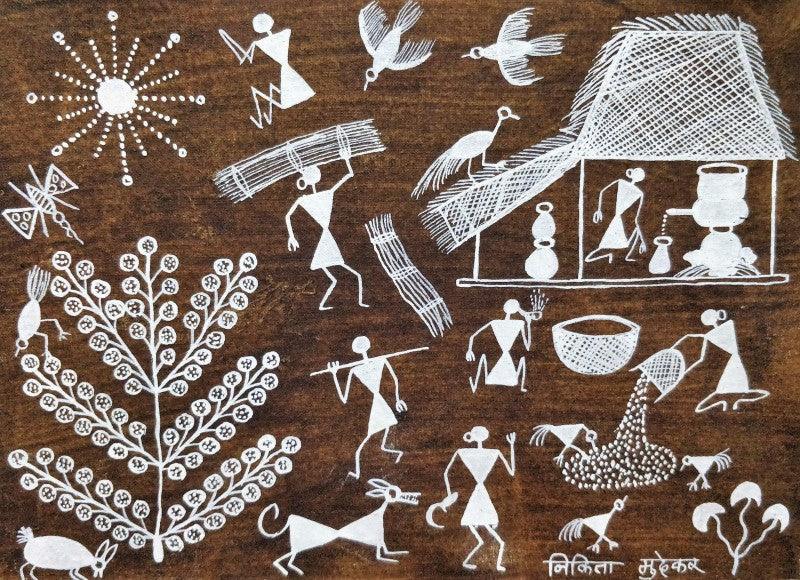
Warli Art 23 (Life in the Village)
Artzolo
₹6,500
out of stock
★ 5.0 (10)
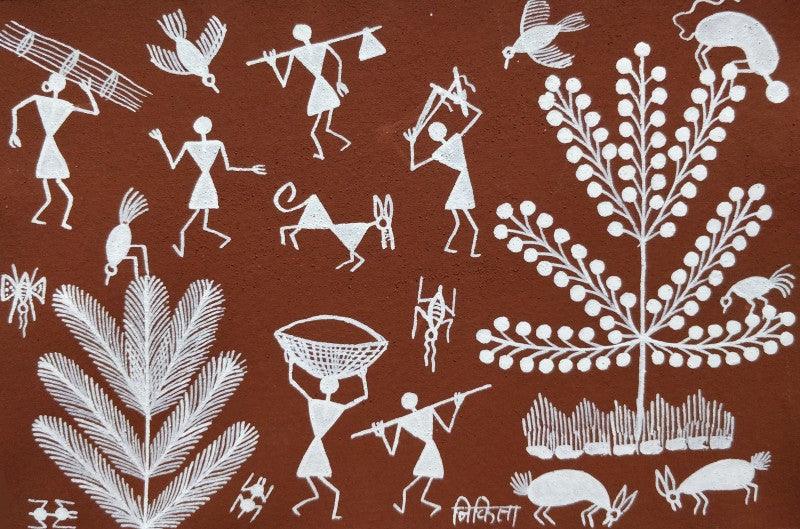
Warli Art 22 (Harmony of Life)
Artzolo
₹6,500
★ 4.0 (12)
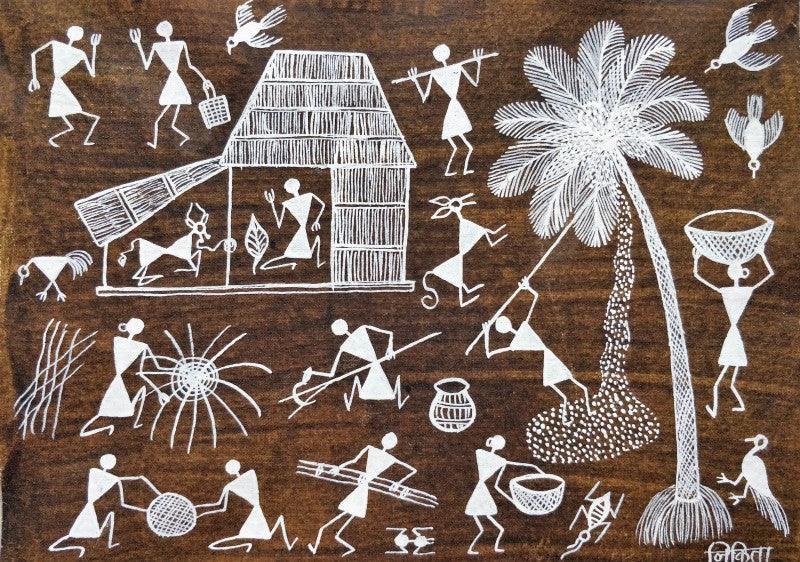
Warli Art 19 (A Day in the Village)
Artzolo
₹6,500
★ 4.0 (15)
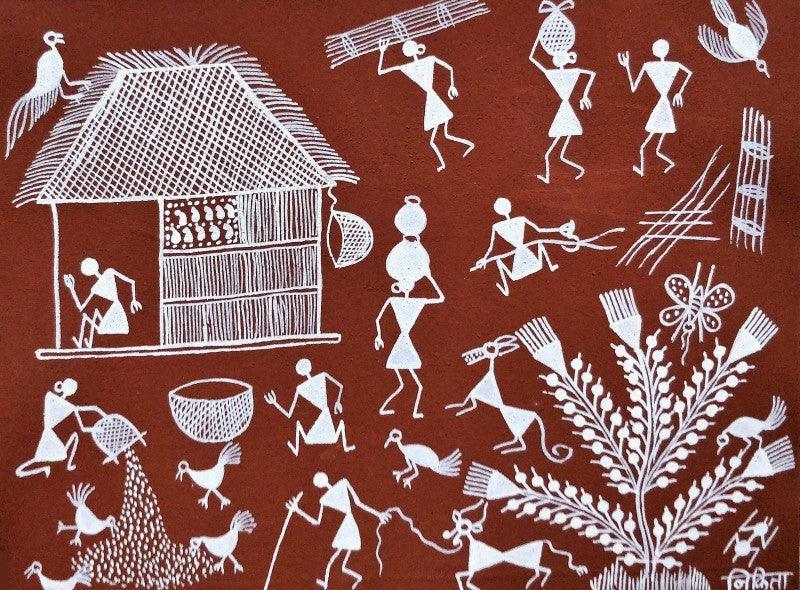
Warli Art 21 (Village Life)
Artzolo
₹6,500
out of stock
★ 4.0 (10)
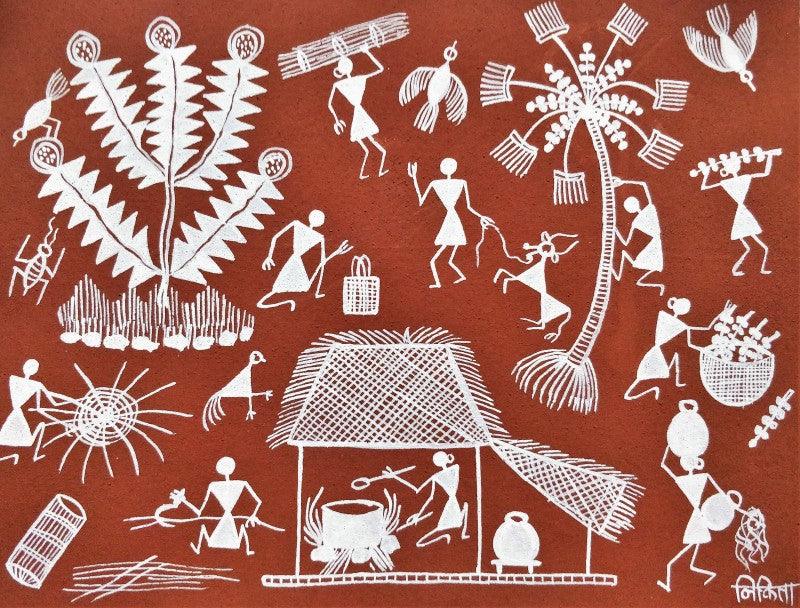
Warli Art 16 (Village Life)
Artzolo
₹6,500
★ 5.0 (11)
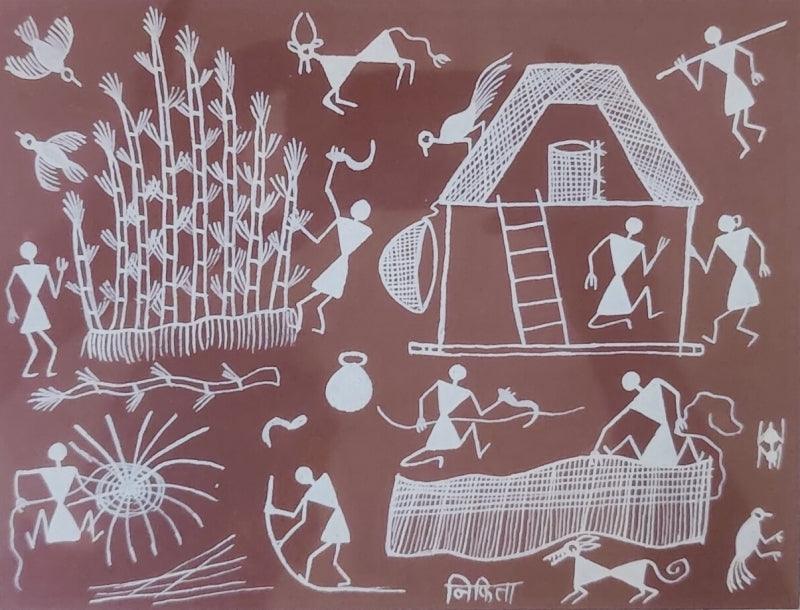
Warli Art 31 (Village Life)
Artzolo
₹6,500
★ 4.0 (12)
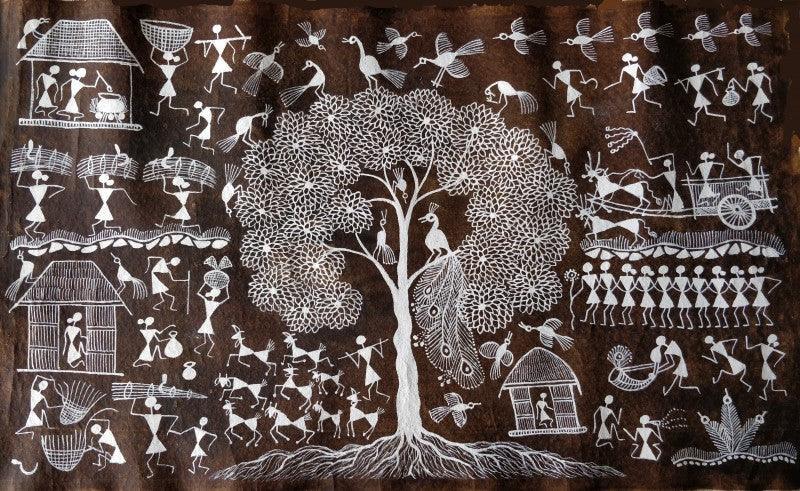
Warli Art 25
Artzolo
₹9,000
out of stock
★ 5.0 (15)
Warli Art 26 (Tree of Life)
Artzolo
₹18,000
out of stock
★ 4.0 (7)