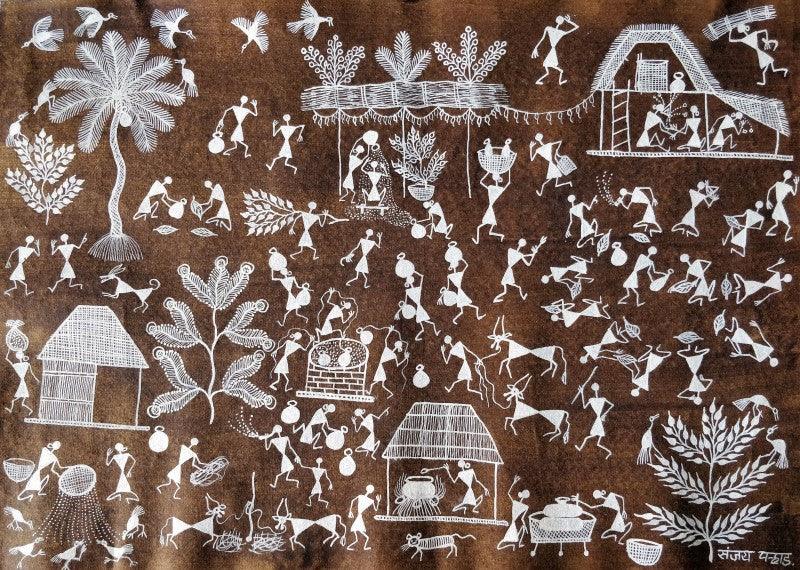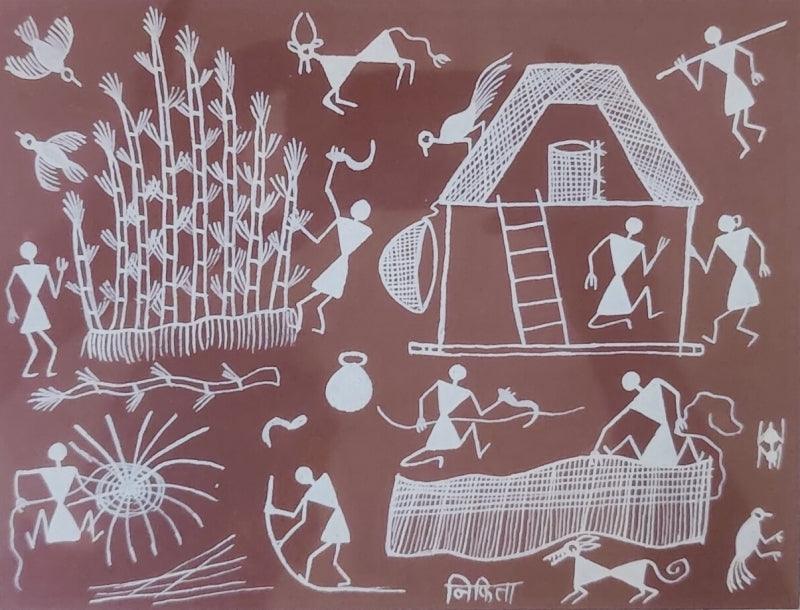
Warli Art 31 (Village Life)
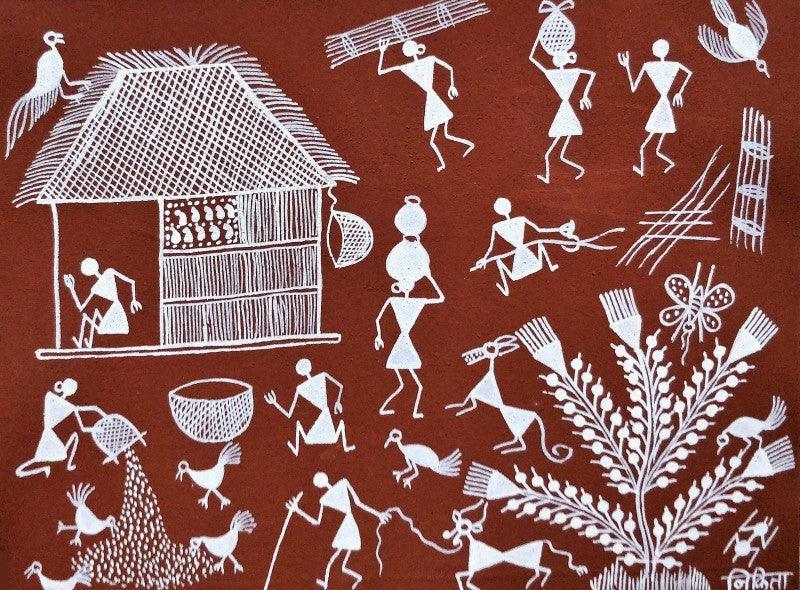
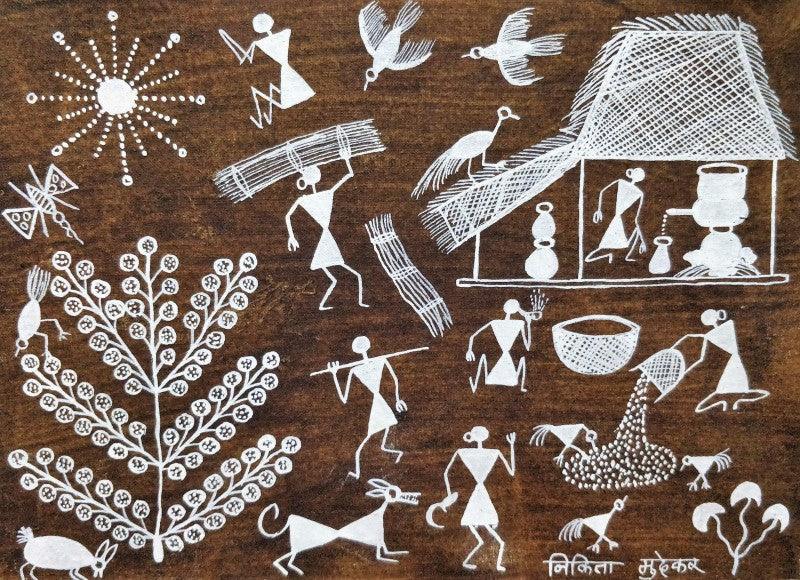
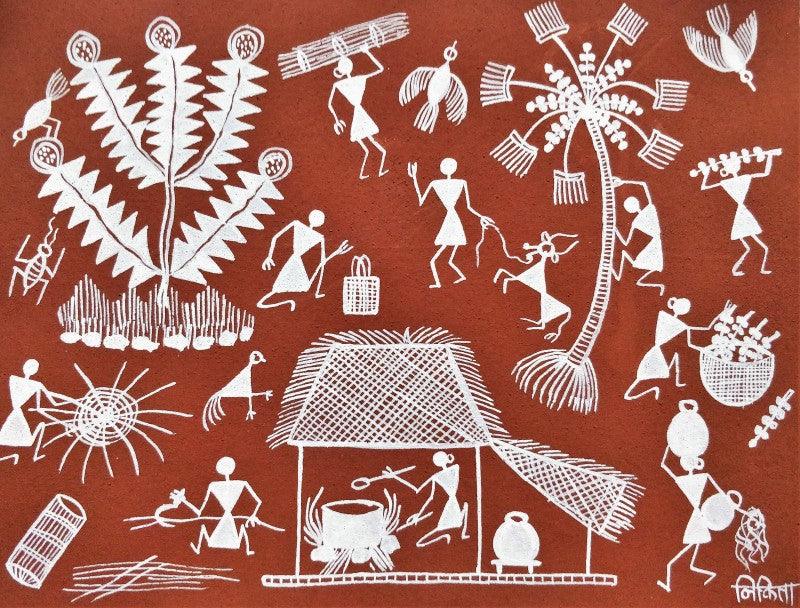
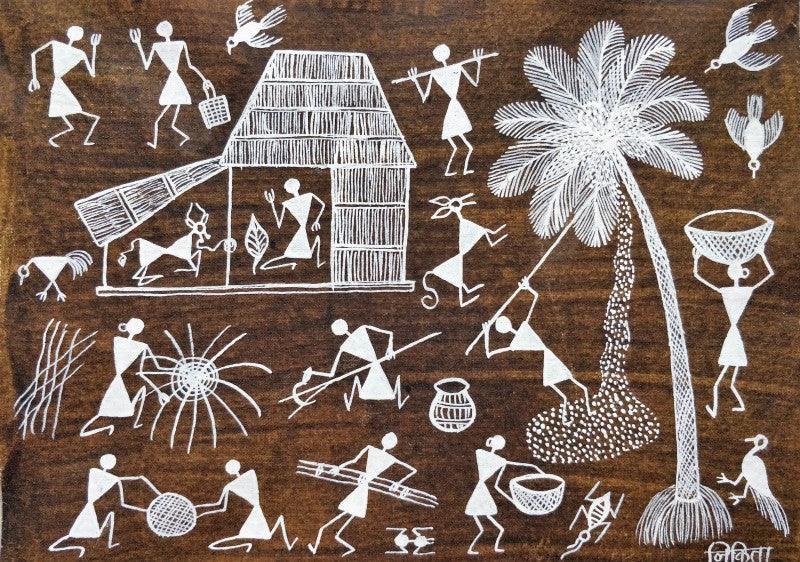
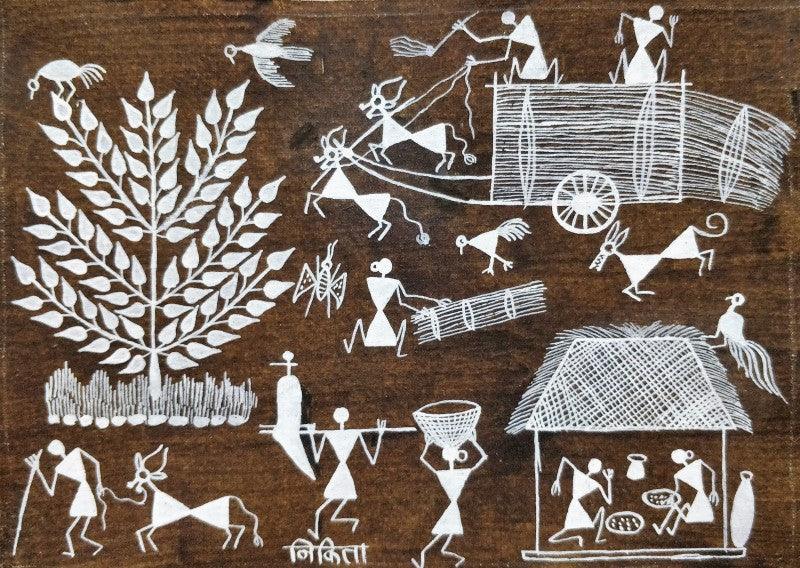
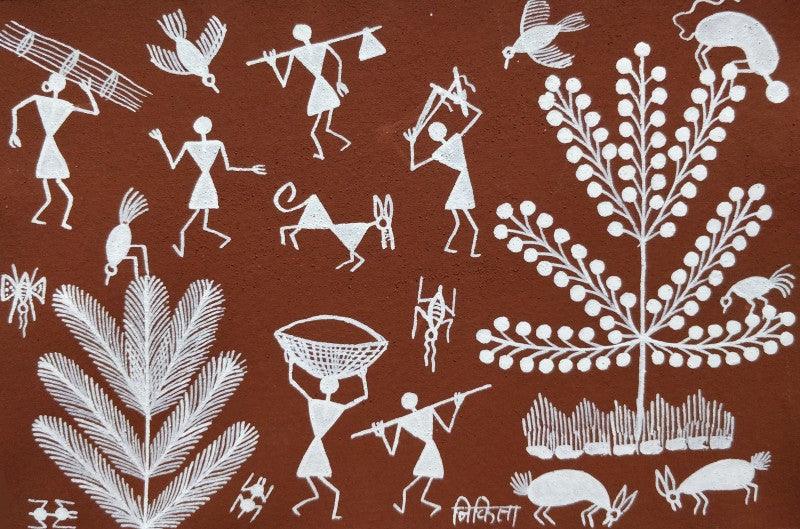
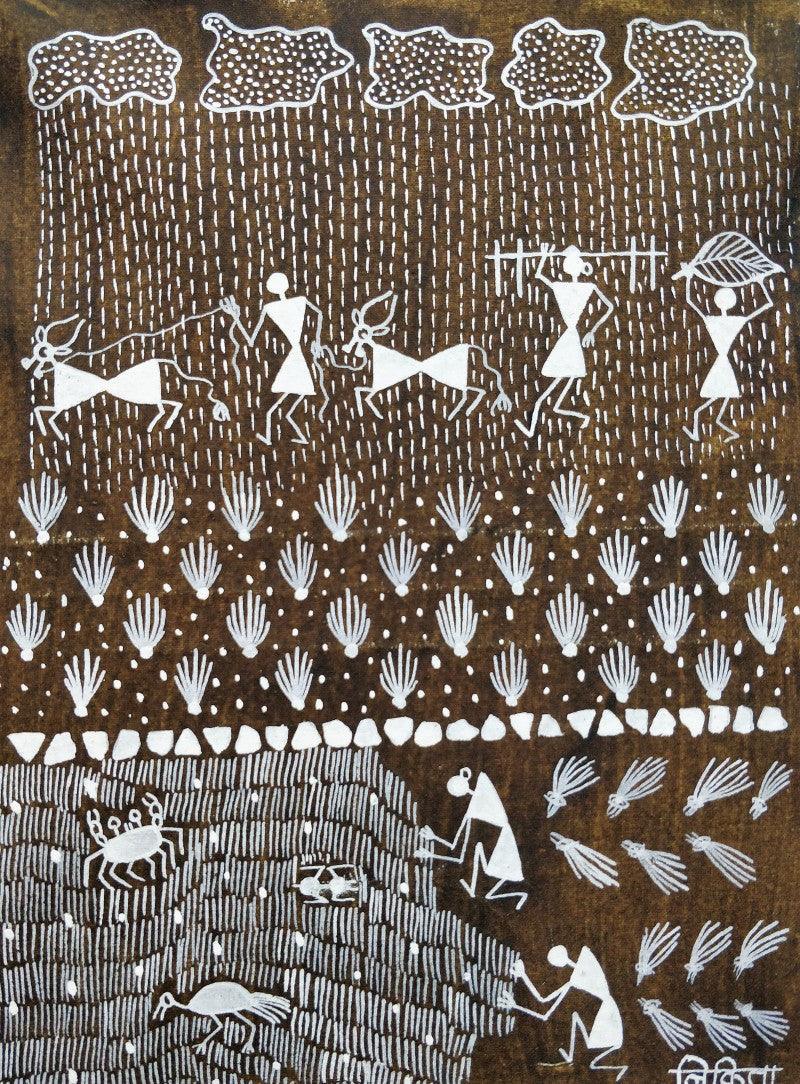
Rendered in crisp white lines against an earthen ground, this village tableau unfolds like a living memory—each spare, declarative figure becoming a glyph of labor, play, and belonging. The composition balances communal activity around the hut and field with open breathing spaces, so that movement reads not as chaos but as an intimate rhythm, a choreography of everyday survival. Its refusal of depth and modeling turns the scene into symbolic truth rather than documentary fact, elevating harvesting, carrying, and tending into rituals that bind people, animals, and shelter into one continuous cycle. The warmth of the ochre-brown field holds the narratives together, suggesting the land itself as both stage and ancestor, quietly authoring the community’s gestures.
Delivery
You may also like