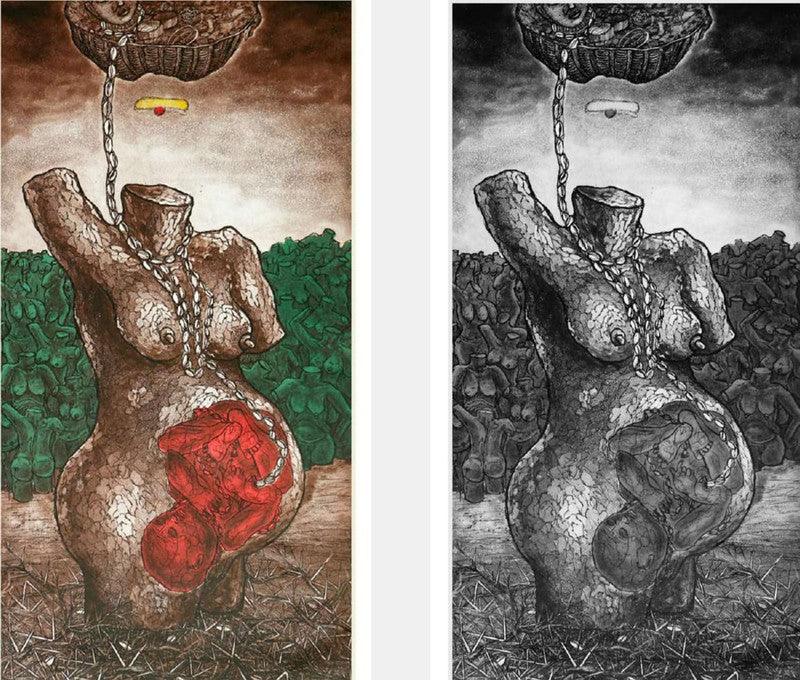
Tradition (Weight of Humanity)
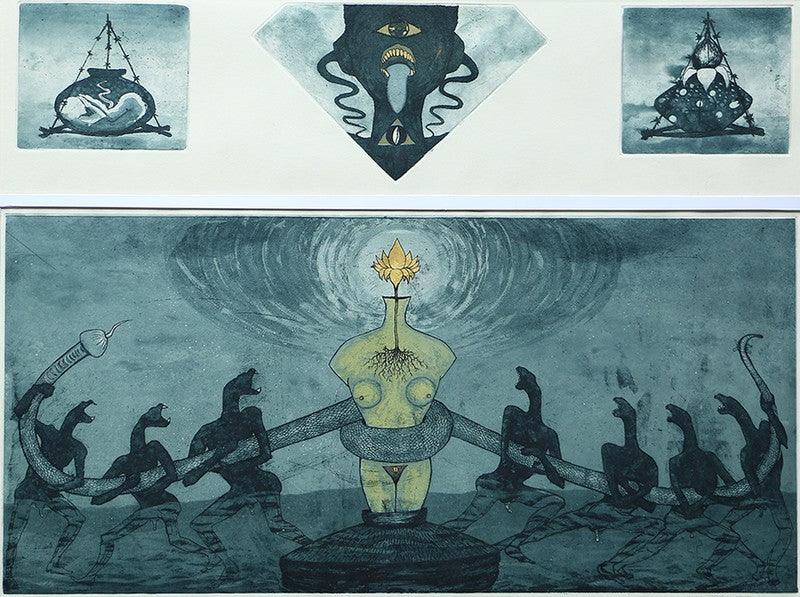
A headless, stone-bodied Venus stands like a relic of fertility turned indictment, her torso cinched by a rope that rises to a suspended basket—an absurd mechanism of “provision” that reads as both offering and restraint. The composition hinges on a visceral rupture: in the color version, the womb glows in saturated red like an exposed altar, while the monochrome counterpart cools the same cavity into forensic evidence, shifting the work from empathy to diagnosis. Against the crowded, muffled field behind her, the figure’s monumental isolation suggests how the intimate—pregnancy, agency, embodiment—becomes a public spectacle, regulated by unseen hands above. Light is used not to console but to excavate, turning the body into contested terrain where nurture and control occupy the same scarred surface.
Delivery
You may also like