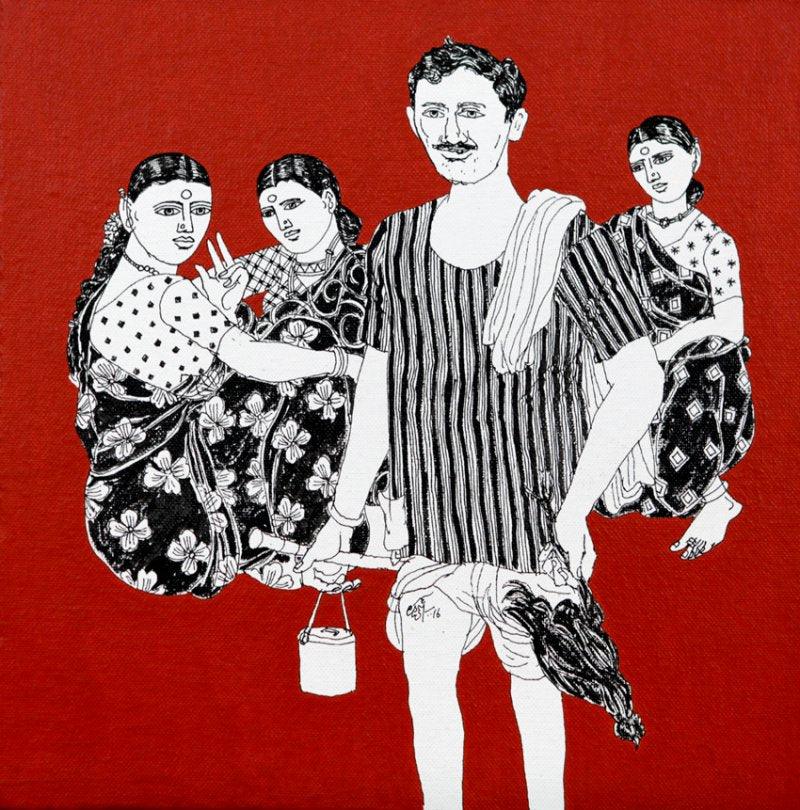
Song Of Village 14
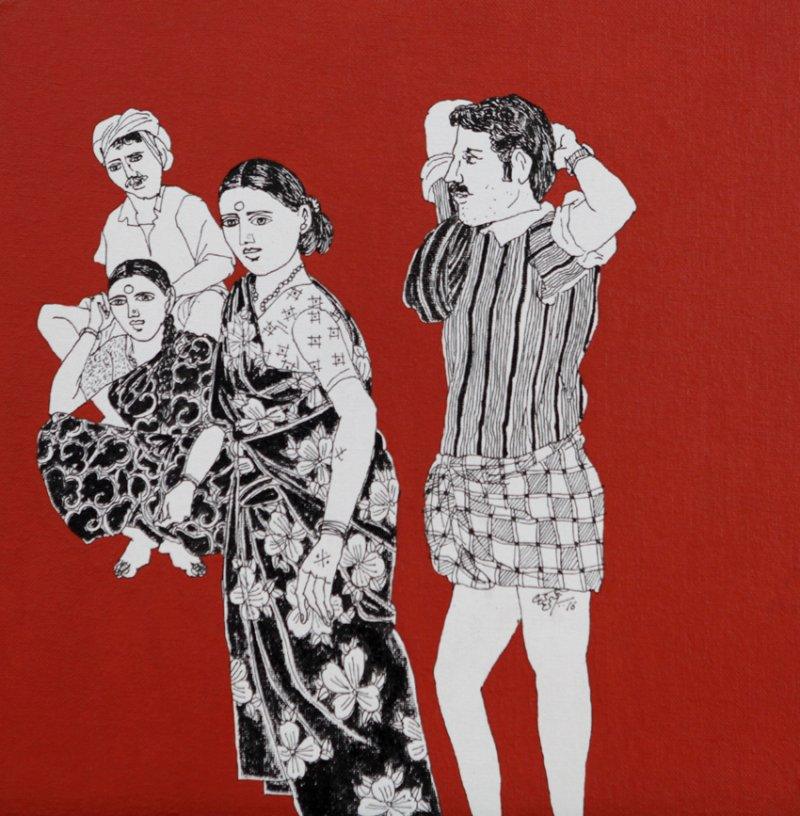
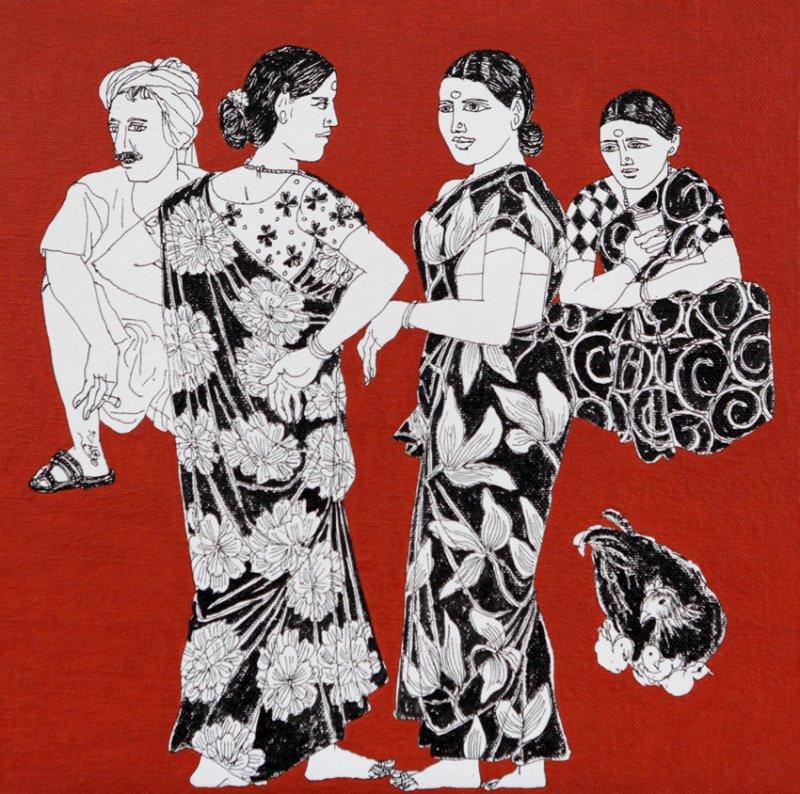
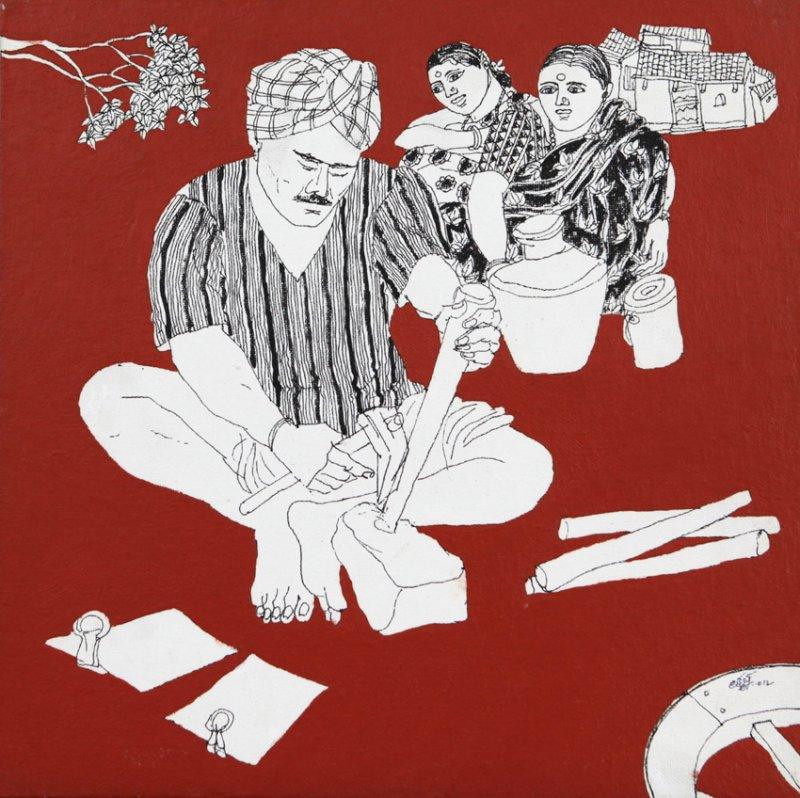
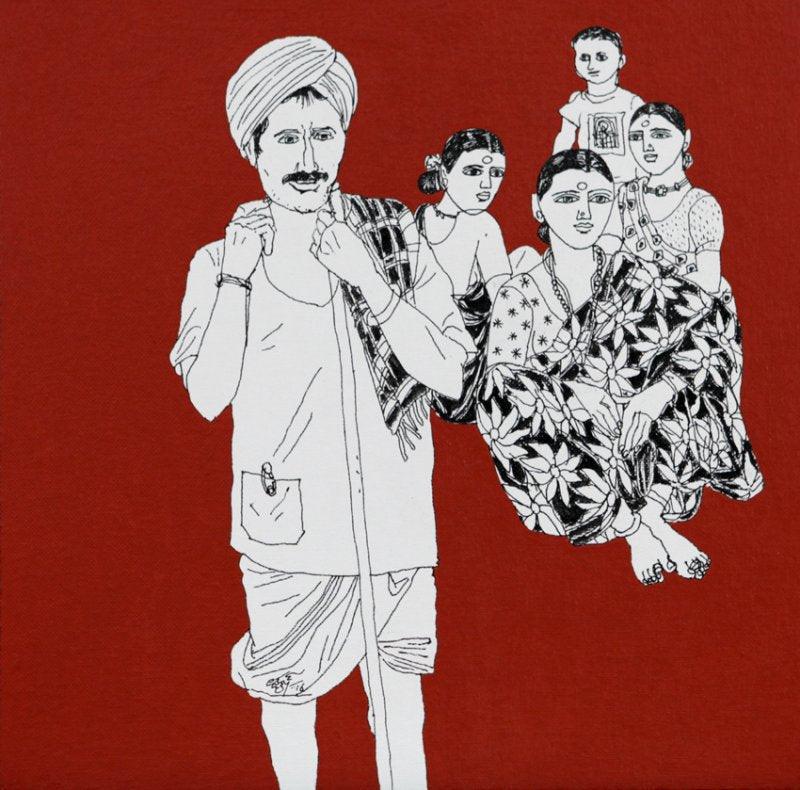
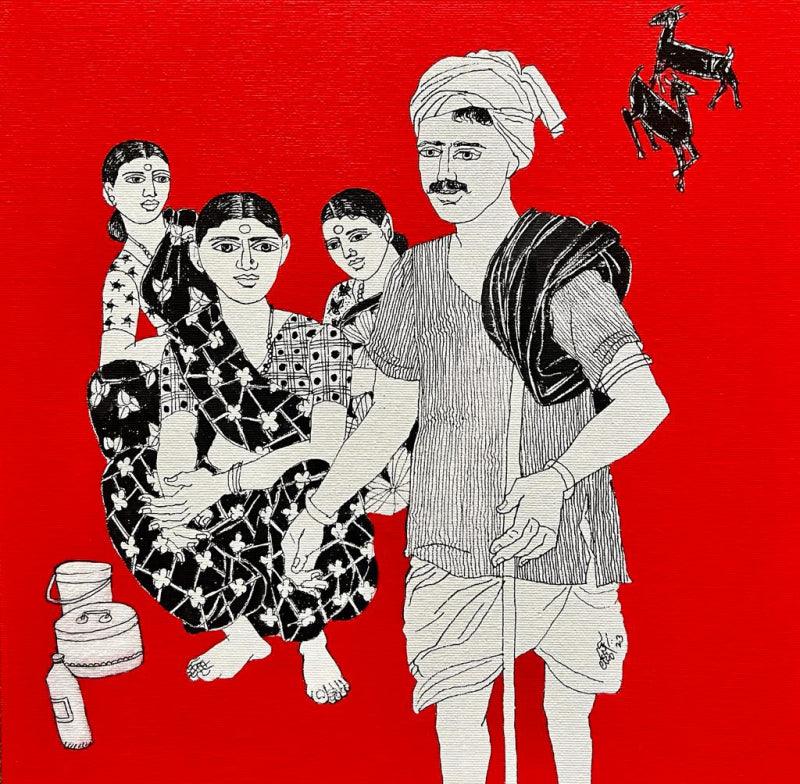
Set against a field of insistent red, the figures emerge in stark black-and-white as if lifted from memory into a theatre of social roles—ornamented women hovering at the margins while the central man, calmly forward-facing, anchors the scene with an air of inherited authority. The graphic linearity flattens depth and heightens scrutiny, turning textiles, jewelry, and gestures into coded language about decorum, desire, and the quiet negotiations of domestic power. Below, the dangling bucket and the limp bird introduce a jarring counterweight: labor and loss rendered as everyday objects, implying that tenderness and violence can coexist in the same household rhythm. The work reads as both portrait and parable, where intimacy is staged, and tradition—beautifully patterned—casts a long, shadowless weight.
Delivery
You may also like