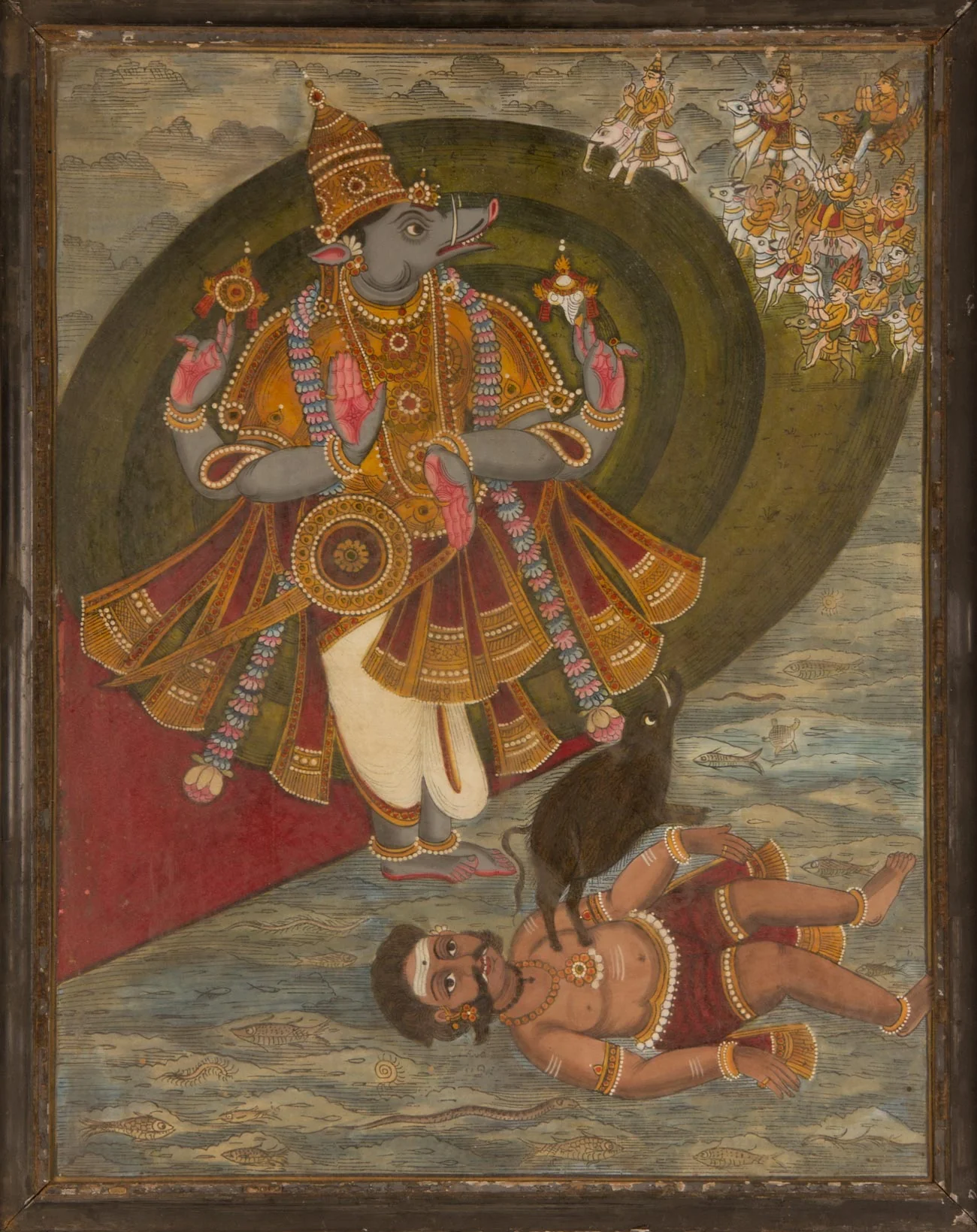
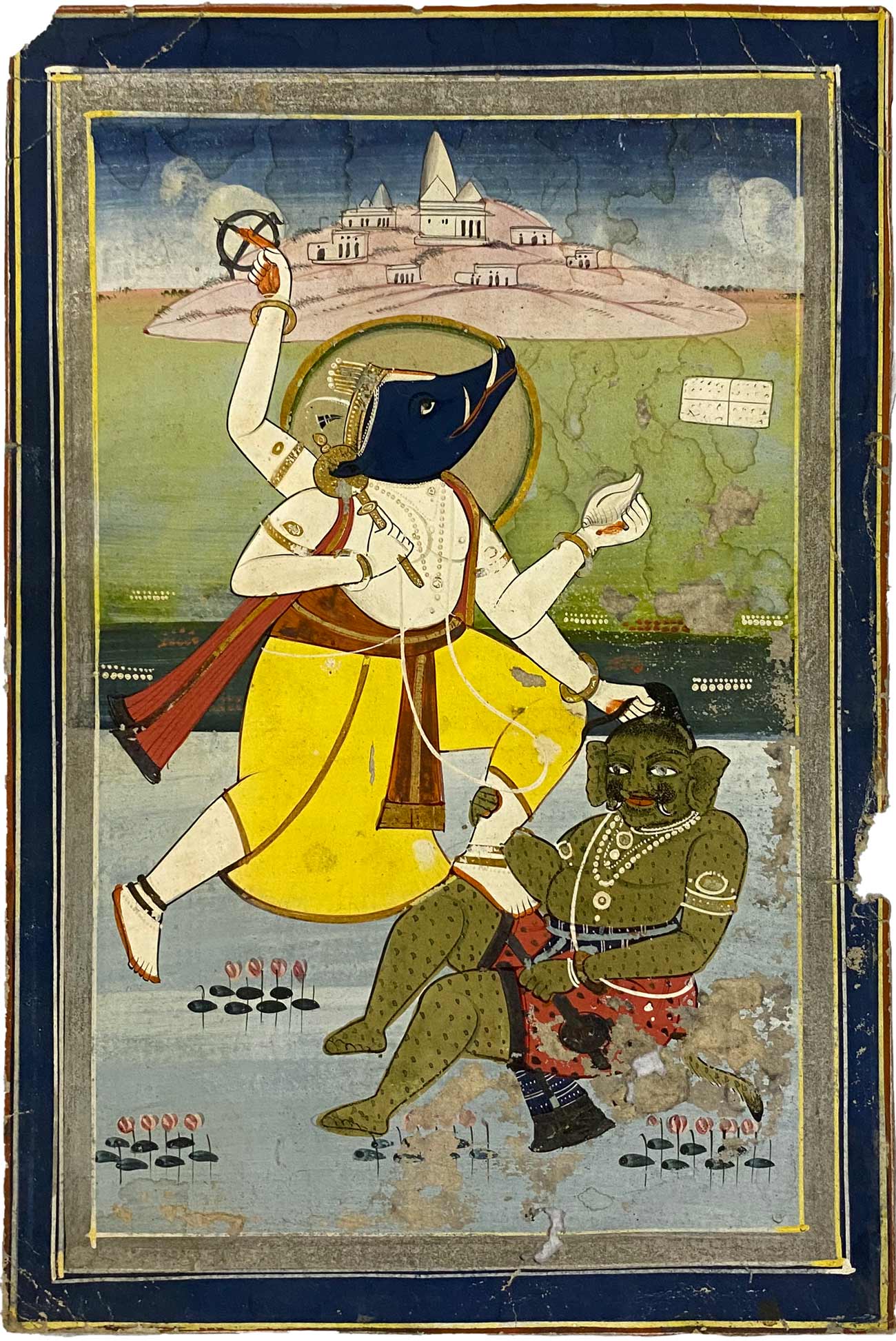
Mysore Painting is a classical South Indian style of painting, that is similar to Tanjore painting. While its origin dates back to the late 16th century, the art form really flourished under the patronage of Maharaja Krishnaraja Wodiyar III in the 18th-19th centuries. Mysore paintings are characterized by delicate lines, intricate brush strokes, graceful delineation of figures and the use of lustrous gold leaf. They typically depict Hindu gods and goddesses, or elaborate scenes from Indian mythology.
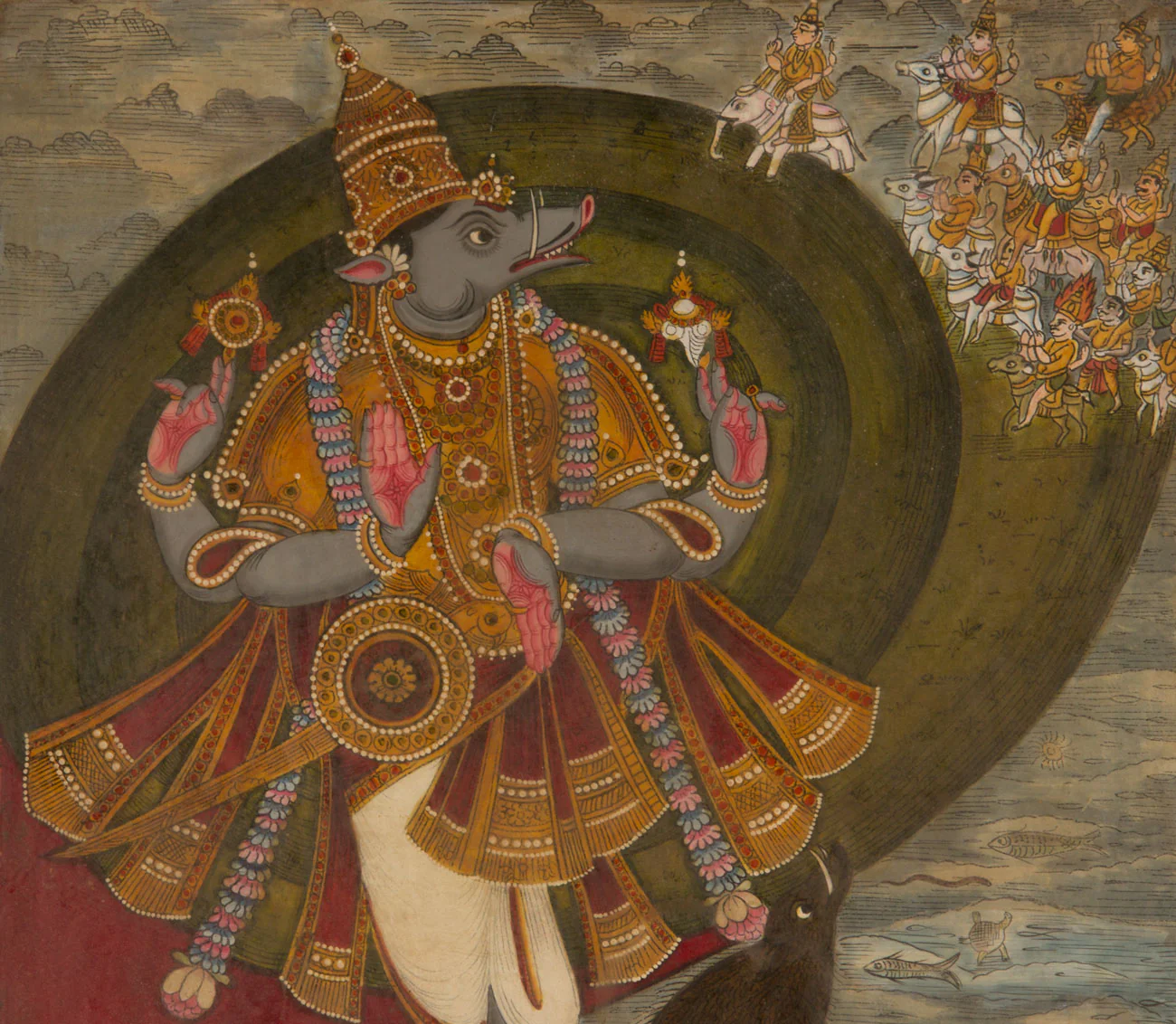
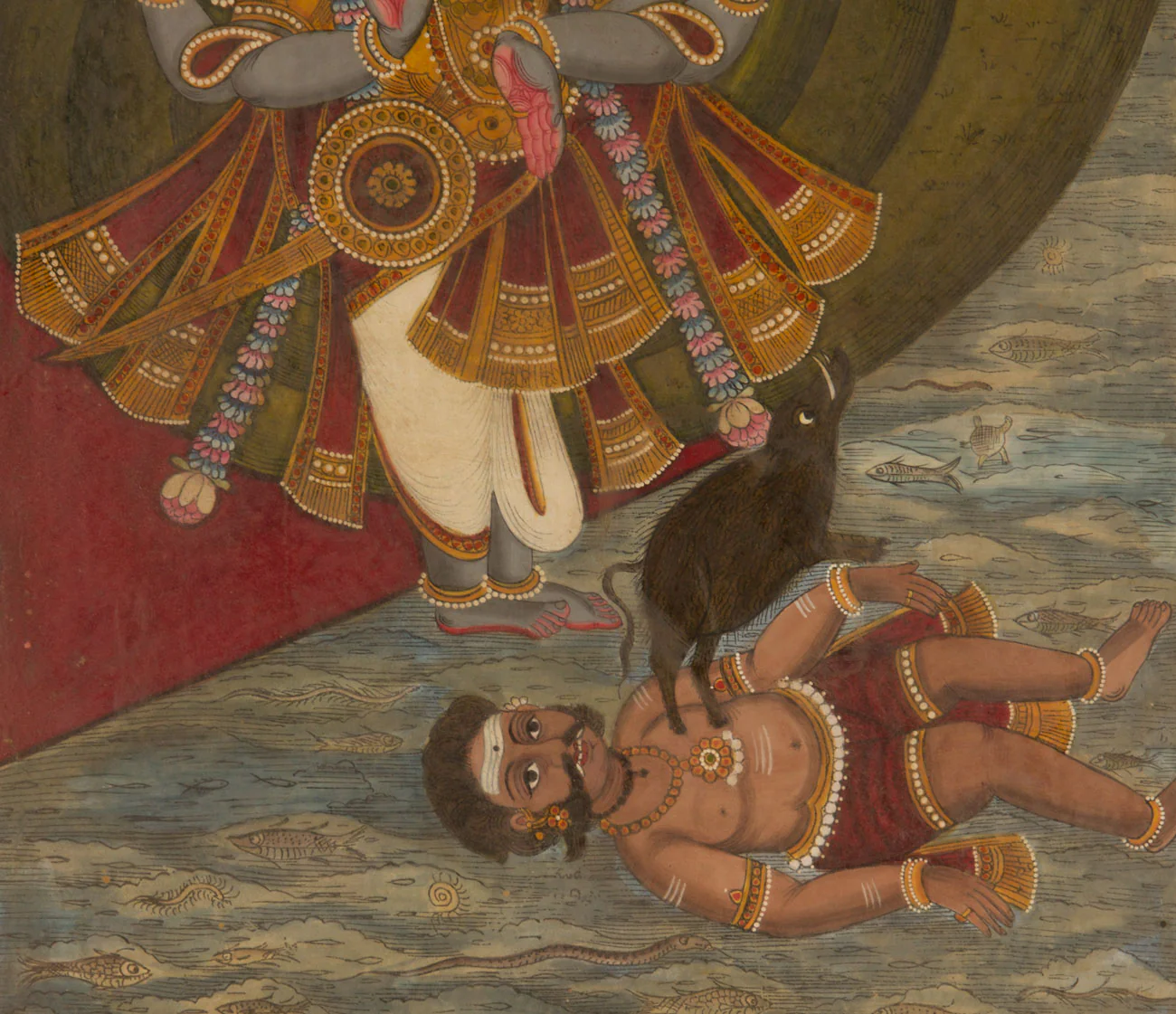
This old Mysore painting depicts Varaha or Varaham, an avatar of the Hindu God Vishnu in the form of a boar, who is listed third in the Dashavatara, the ten principal avatars of Vishnu. He takes the form of a boar to save Bhudevi, or mother earth, from the demon Hiranyaksha. In this painting, Varaha is depicted in an anthropomorphic form, with a boar's head and human body.
This old Mysore painting depicts Varaha or Varaham, an avatar of the Hindu God Vishnu in the form of a boar, who is listed third in the Dashavatara, the ten principal avatars of Vishnu. He takes the form of a boar to save Bhudevi, or mother earth, from the demon Hiranyaksha. In this painting, Varaha is depicted in an anthropomorphic form, with a boar's head and human body.
You may also like
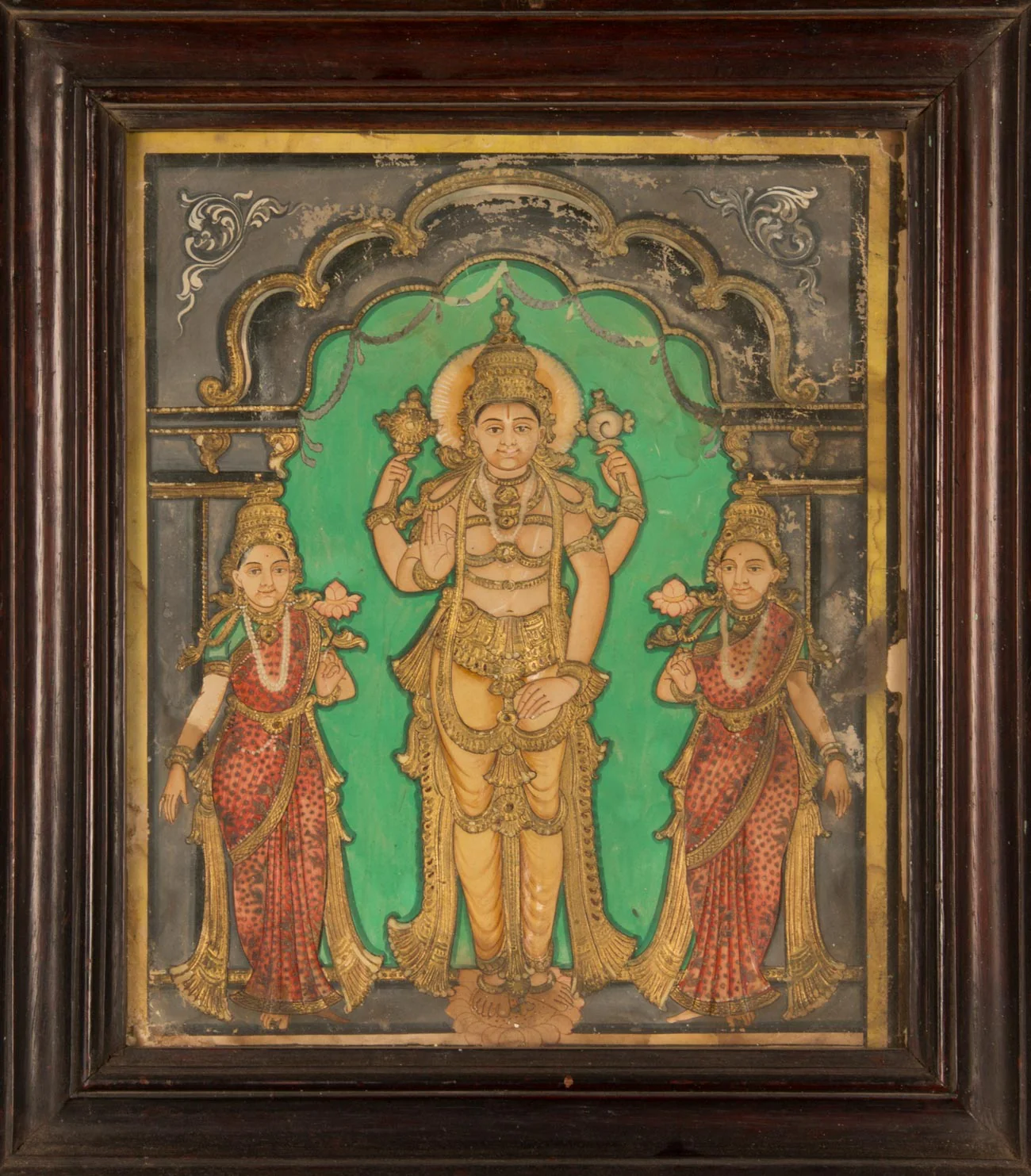
Vishnu with Sridevi and Bhudevi
Artisera
₹2,000,000
out of stock
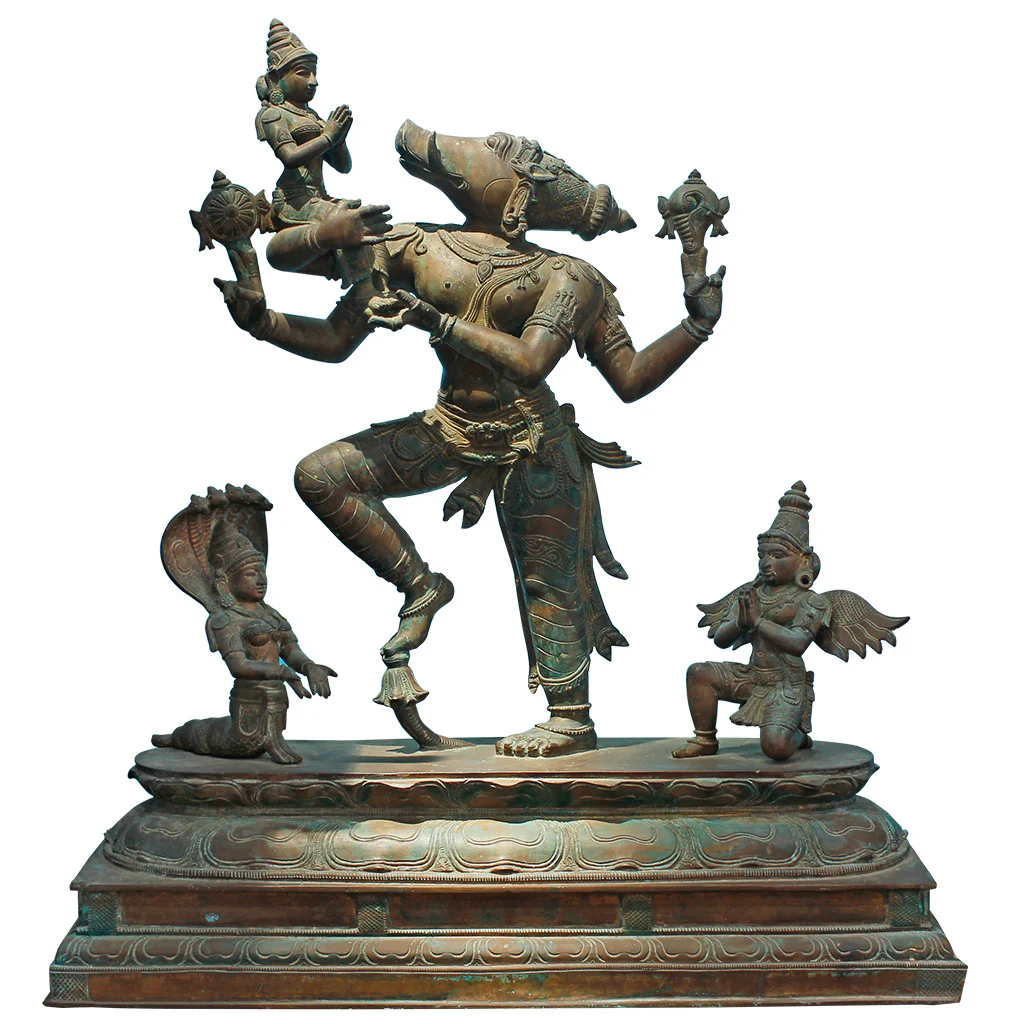
Varaham
Artisera
₹2,000,000
out of stock
Varamahalakshmi
Artisera
₹72,800
out of stock
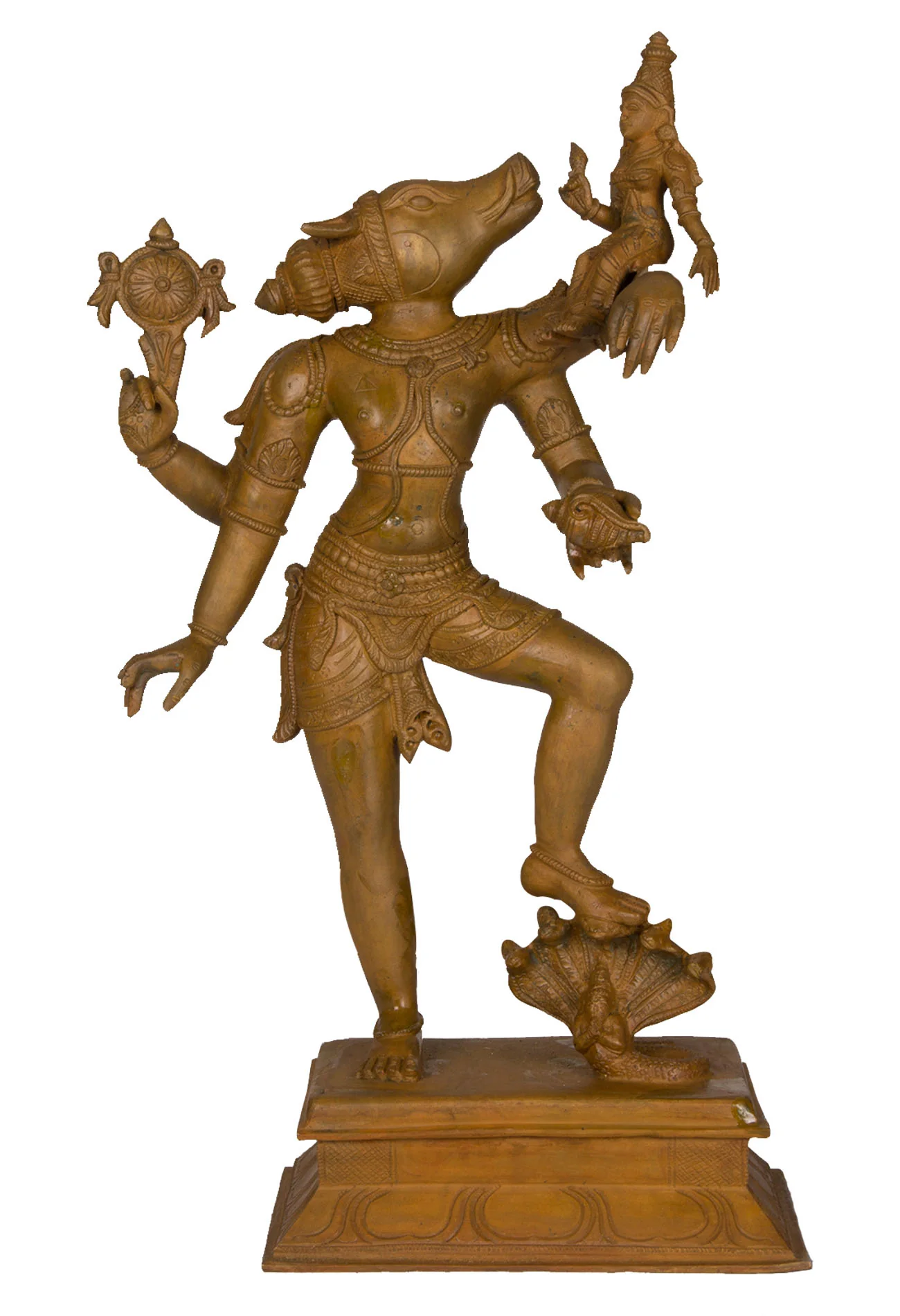
Varaham
Artisera
₹0
out of stock
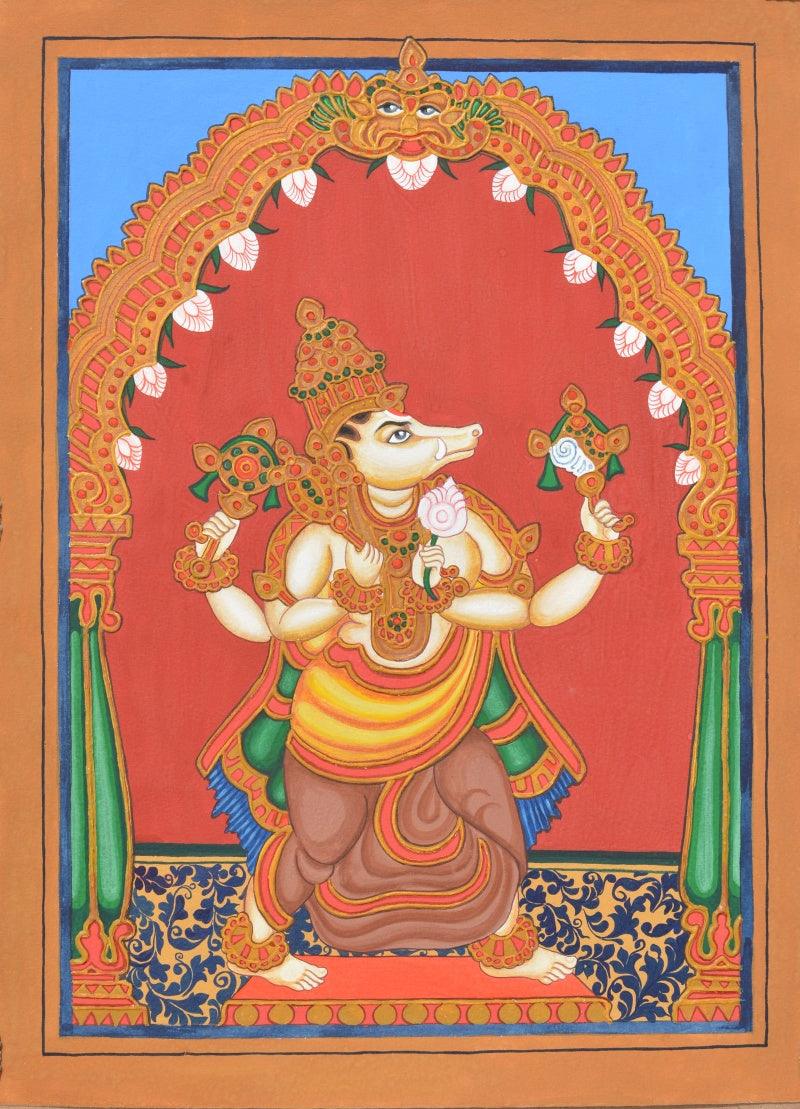
Varaha Avatara (Varaha Avatar)
Artzolo
₹7,500
out of stock
★ 4.0 (14)
Varaha Rescuing the Earth
Artisera
₹84,000
out of stock
Anantha Sayana
Artisera
₹2,000,000
out of stock
Garuda
Artisera
₹80,640
out of stock