Cahil Laghari One-OF-A-Kind-Afghan Rug
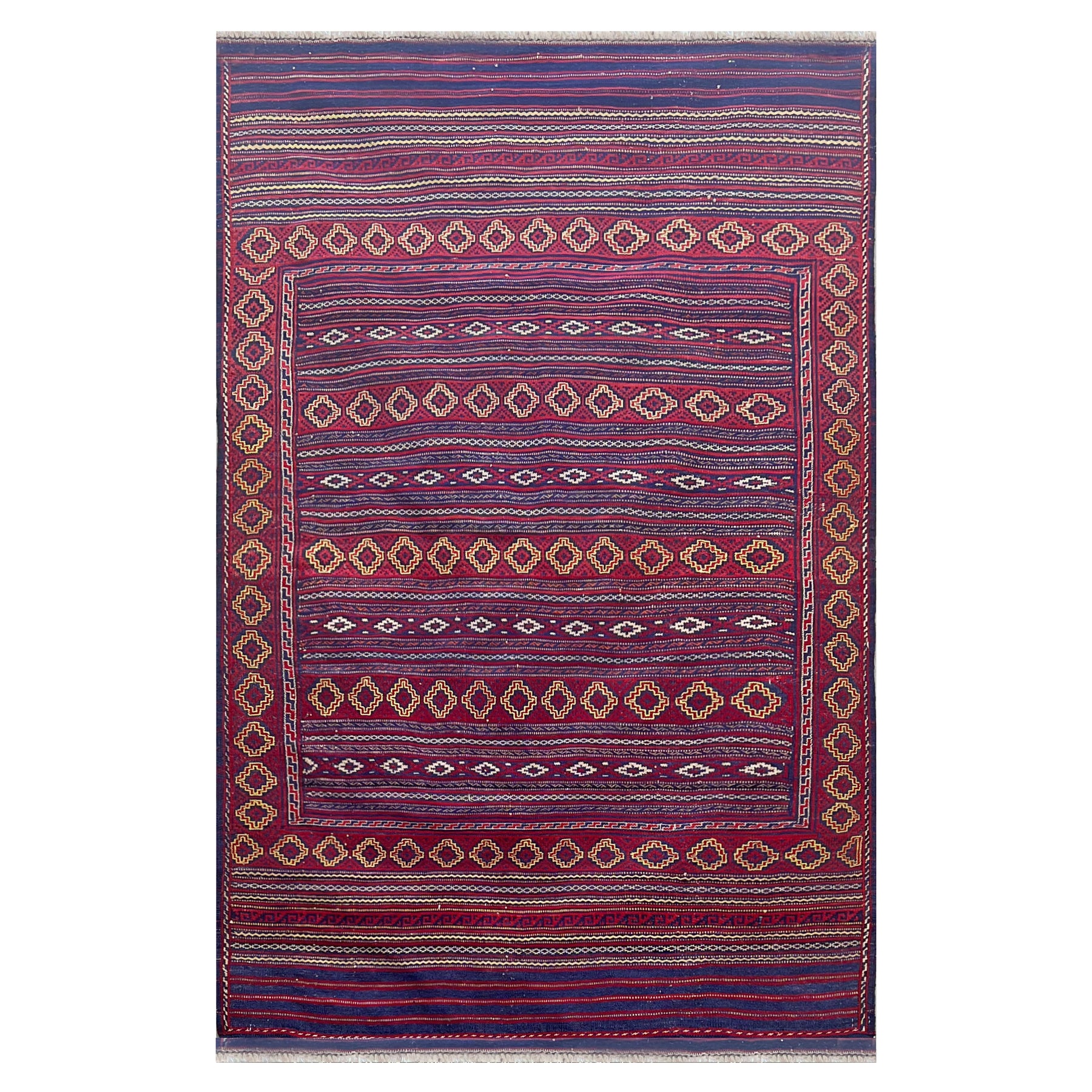
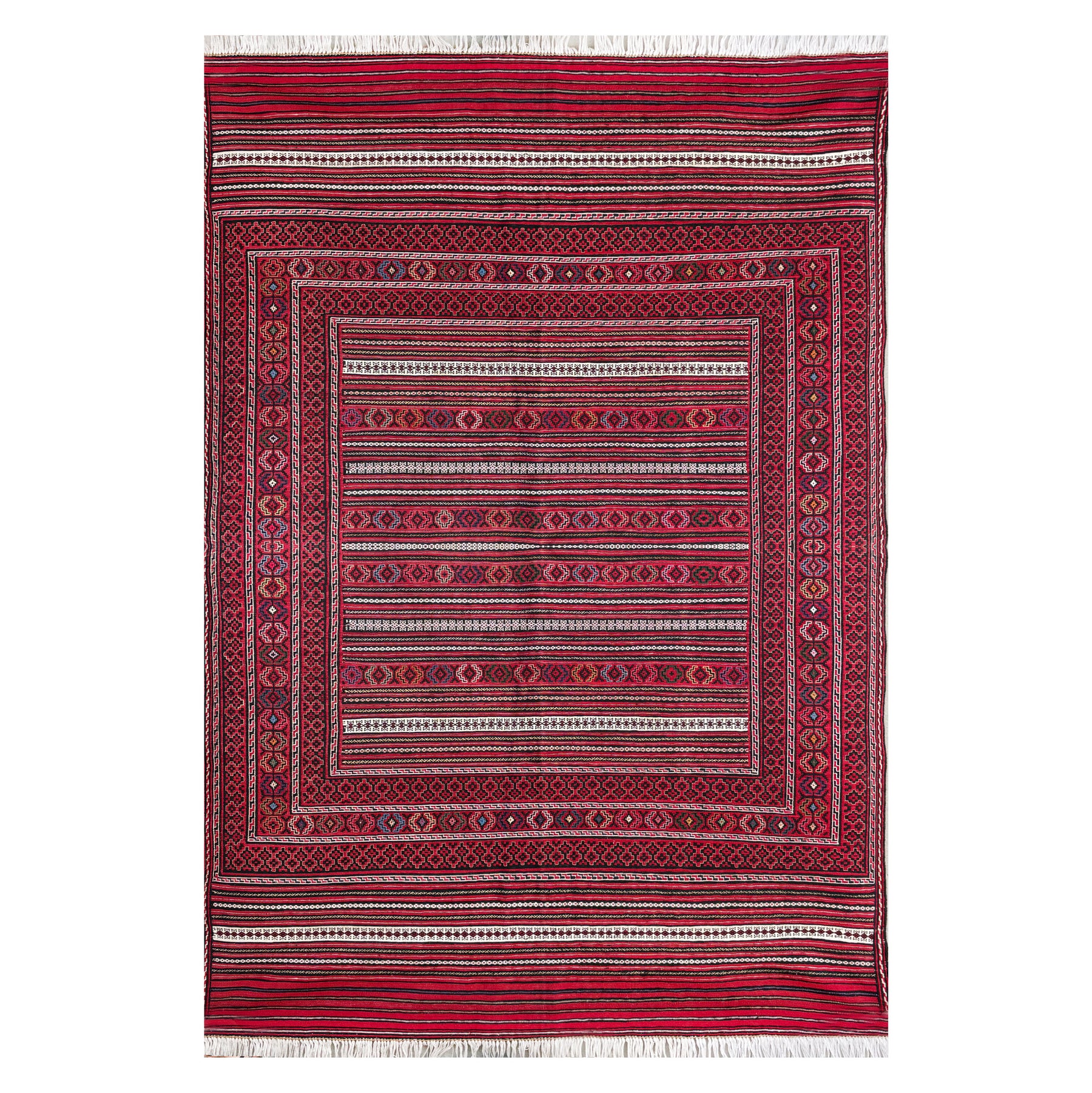
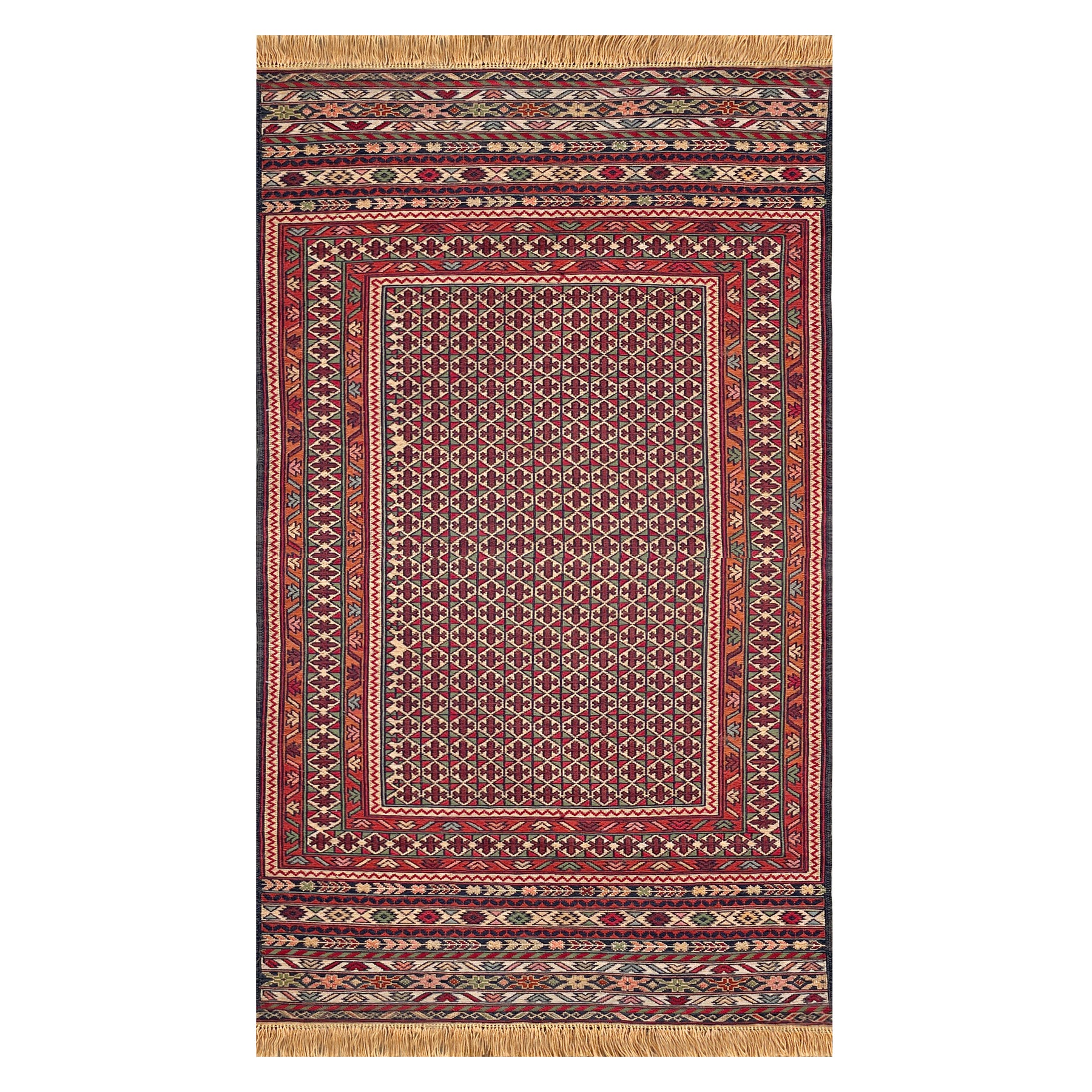
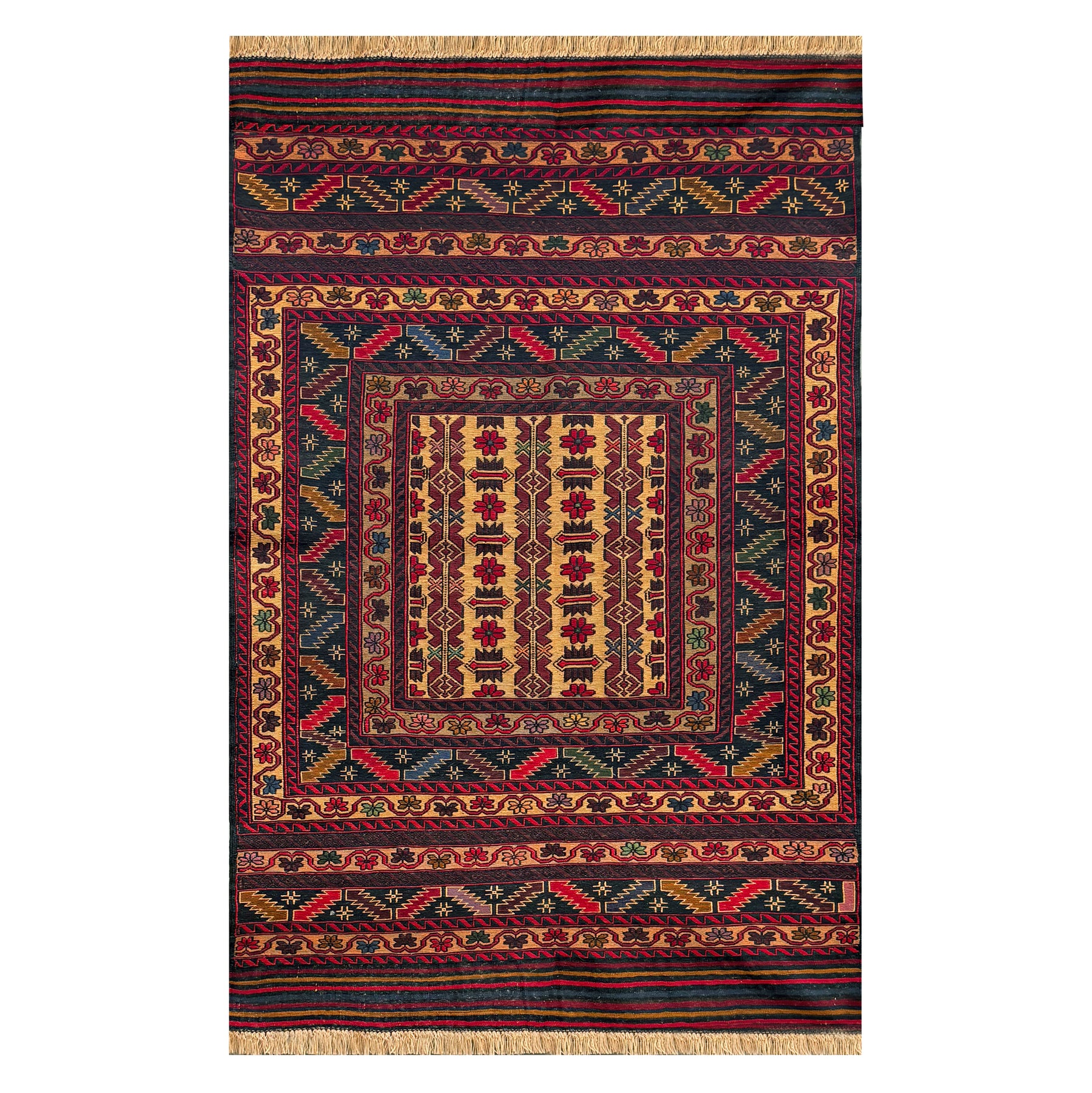
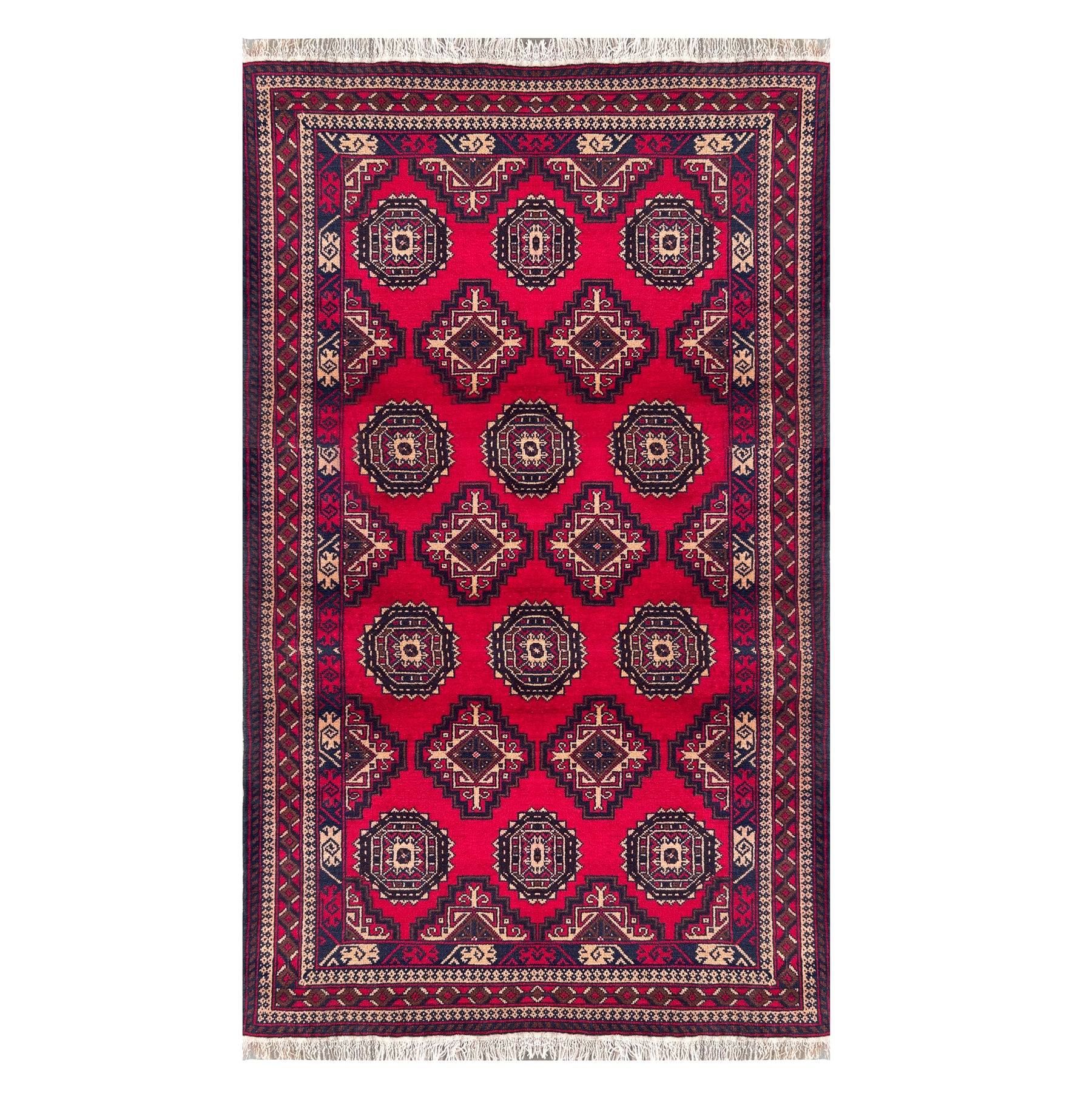
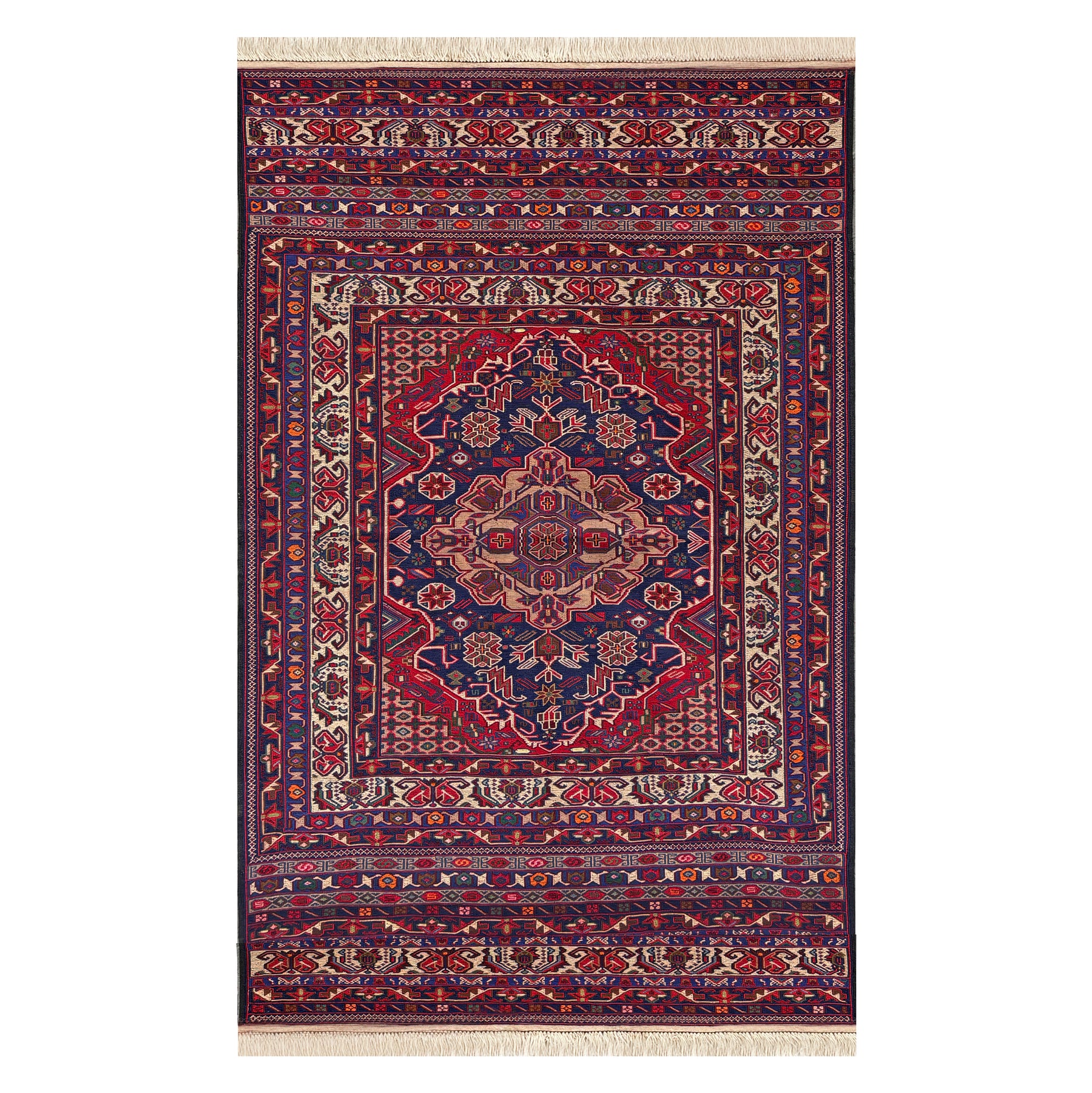
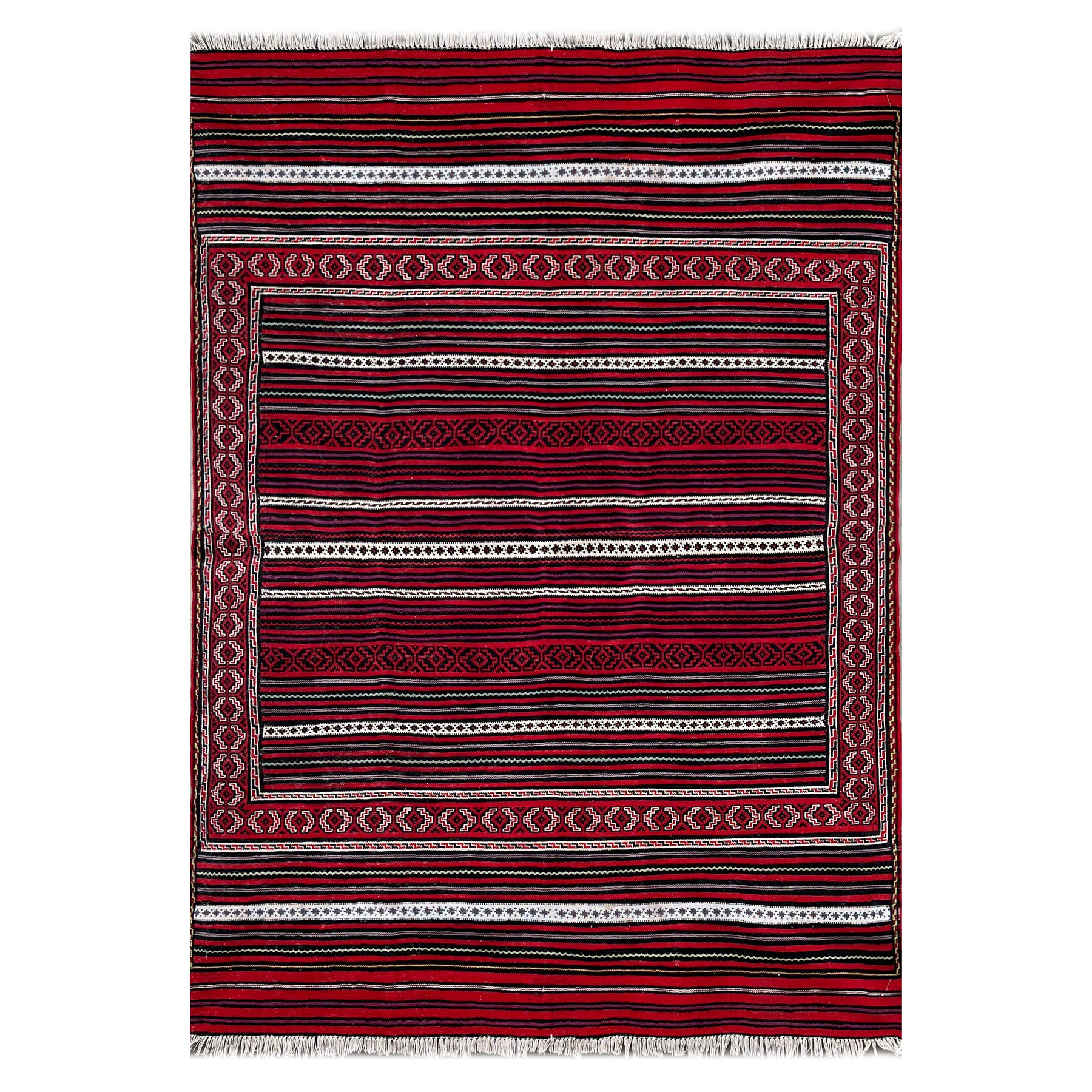
A Herat Laghari jajim of deep crimson and black — the horizontal stripe structure of the Laghari tradition resolved here in a palette of considerable restraint and dramatic force.
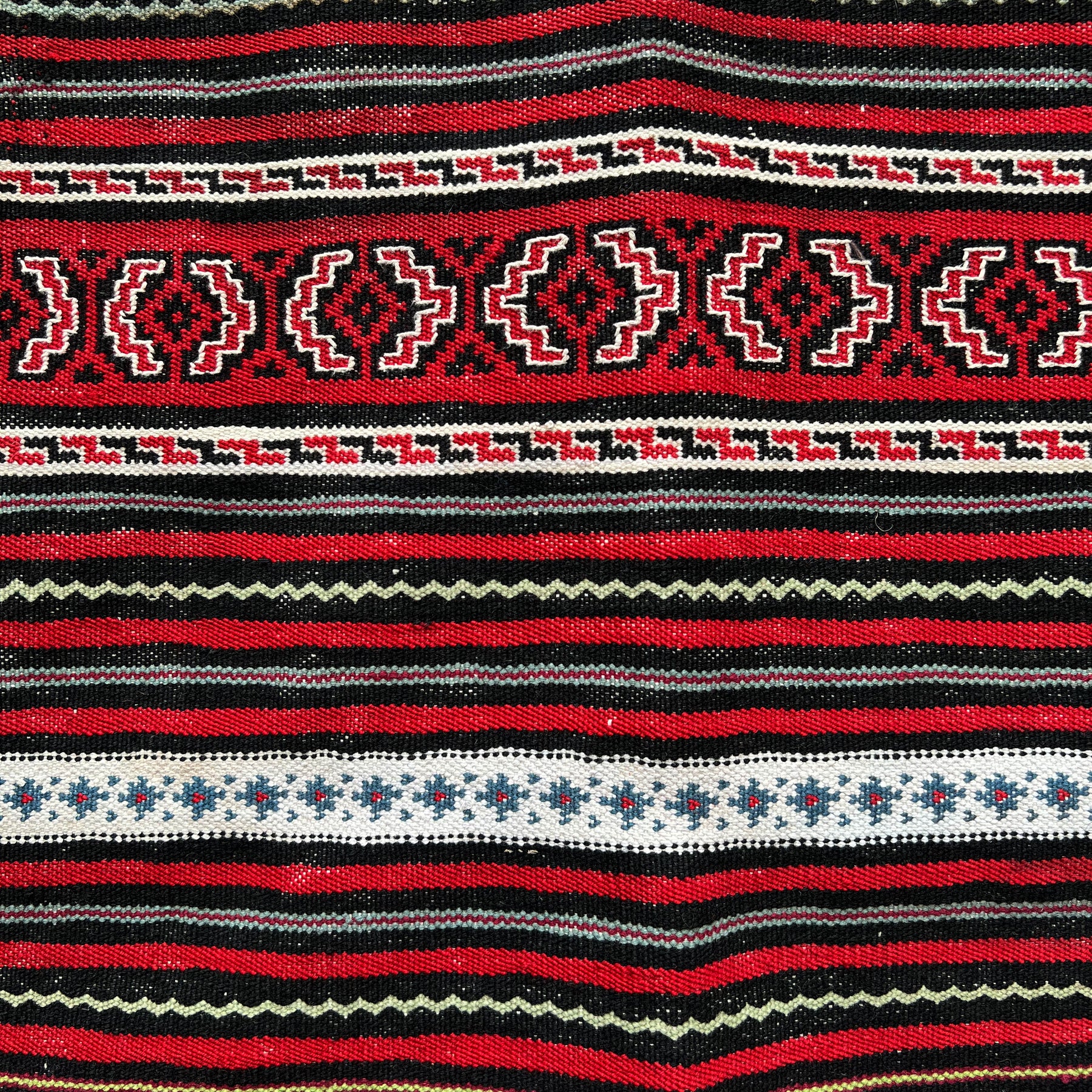
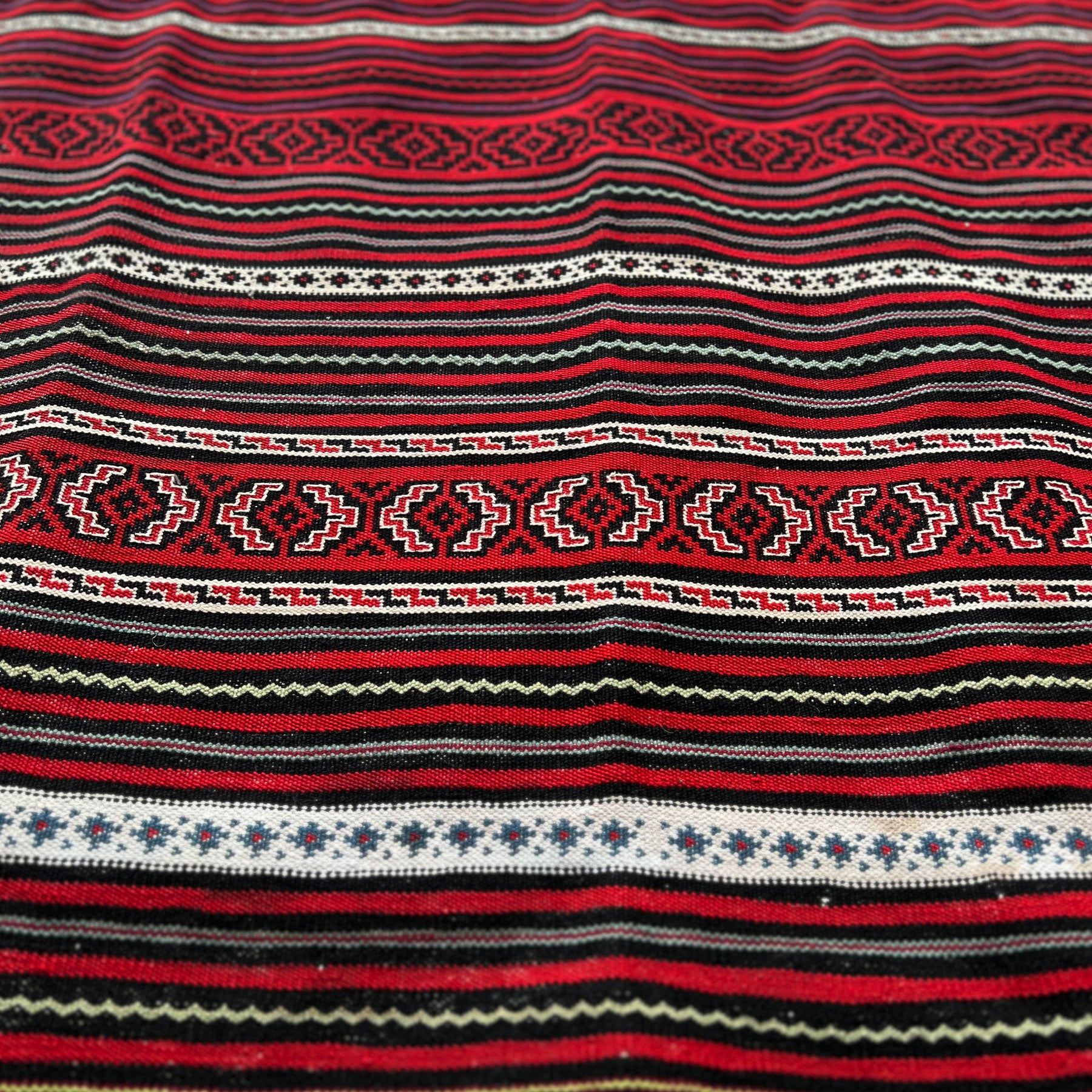
Where the sandy Laghari jajims of the Herat tradition occupy a warm neutral register, this piece works entirely in the darker vocabulary of madder red and charcoal-black. The horizontal stripe field builds its composition from the alternation of plain deep crimson bands with narrow decorative rows of small geometric devices — star forms, diamond-and-cross motifs — in black and ivory, the white accents providing the only relief from the near-monochromatic ground. The Laghari jajim tradition is built on accumulation and rhythm rather than the individual motif, and in this palette — where the ground colour itself carries the visual weight — the horizontal movement of the composition is particularly pronounced. A room built around natural materials and darker tones will find this piece immediately at home; a lighter interior will find it anchoring.
The border continues the same vocabulary: a continuous band of small hooked medallion forms in deep red on dark ground, framing the field with the same formal restraint. Woven in wool by Laghari craftspeople in Herat.
A hand-woven rug is an investment piece. With proper care it will last a lifetime and become a cherished heirloom. Each piece in this collection is made by hand, making every piece entirely one of a kind.
Variations in colour and tone — known as abrash — are a hallmark of authentic handmade rugs, particularly tribal and vintage pieces. Wear and age only add to their beauty.
| Origin | Herat, Afghanistan |
| Tribe | Laghari |
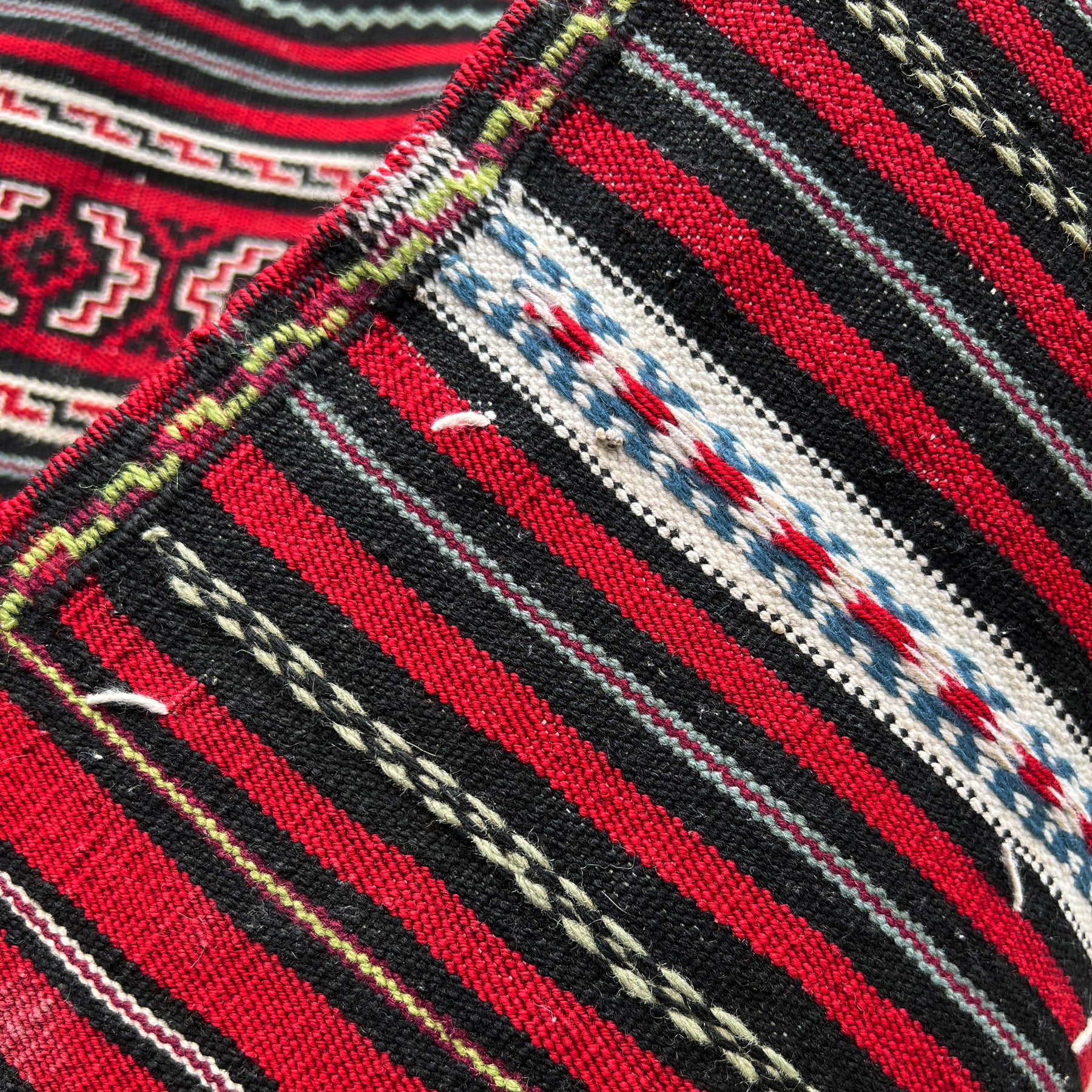
| Technique | Jajim (supplementary-weft flatweave) |
| Material | Wool |
| One of a kind | Yes |
Coupons
Delivery
You may also like