Mehfil Maliky One-OF-A-Kind-Afghan Rug
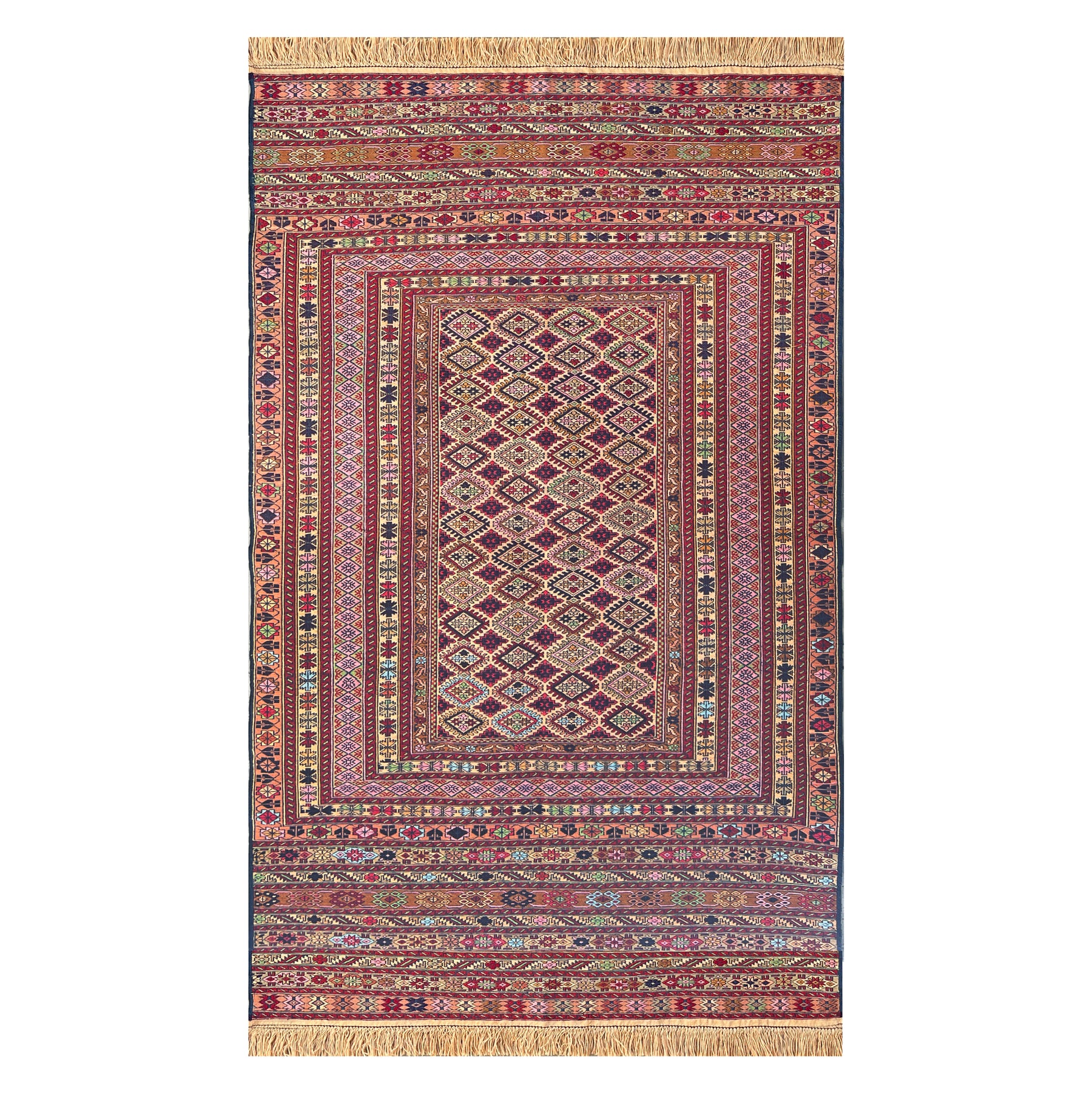
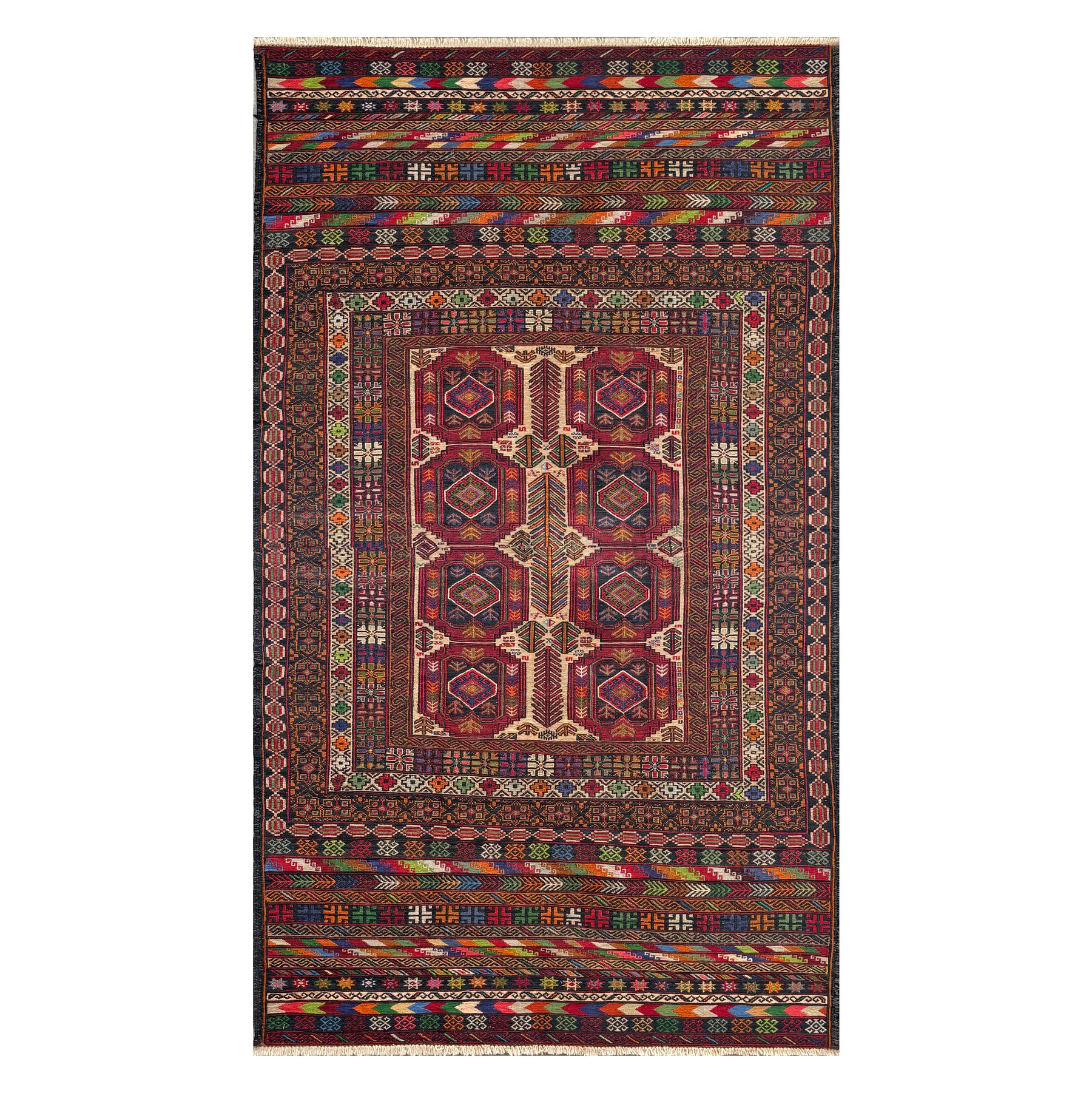
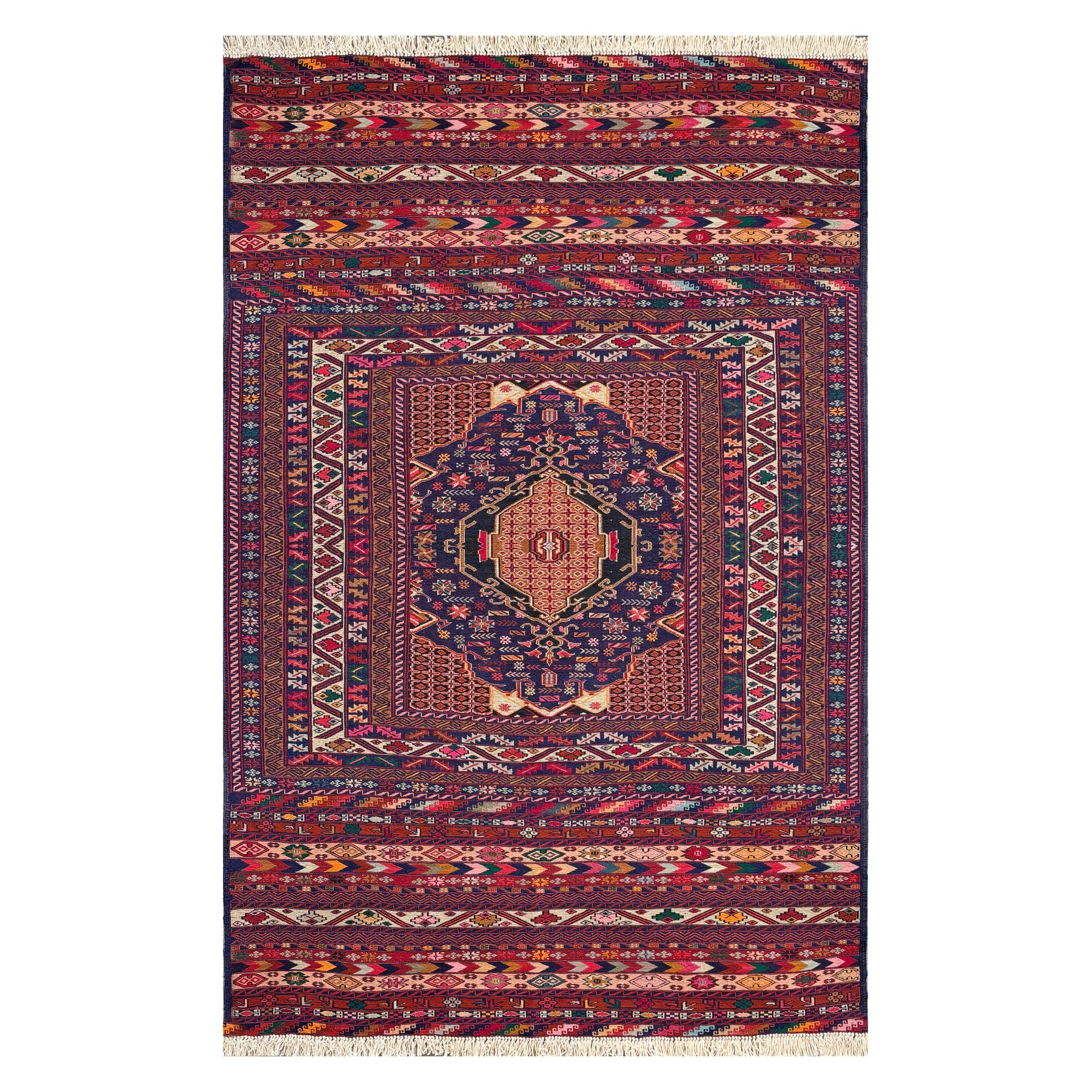
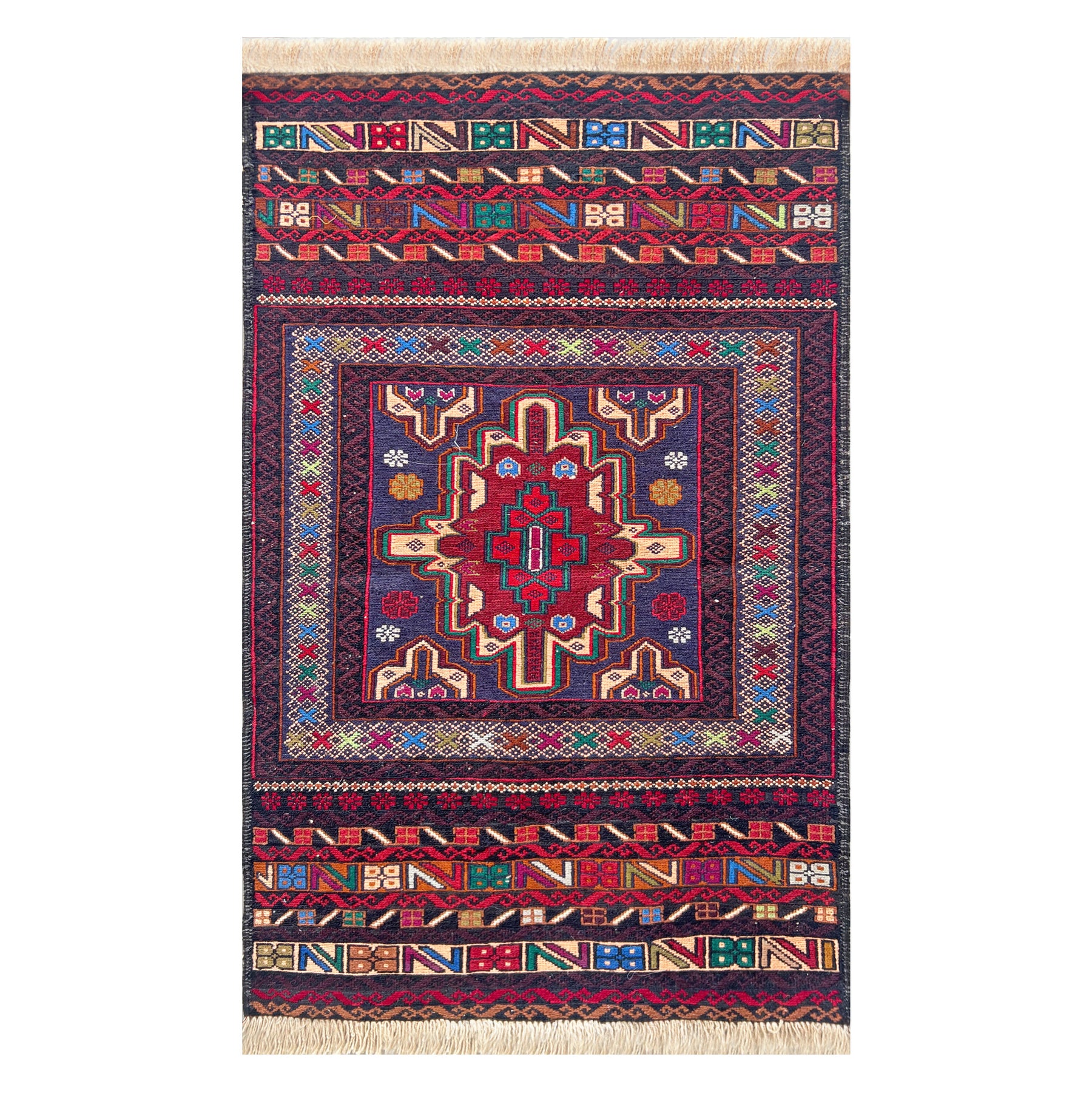
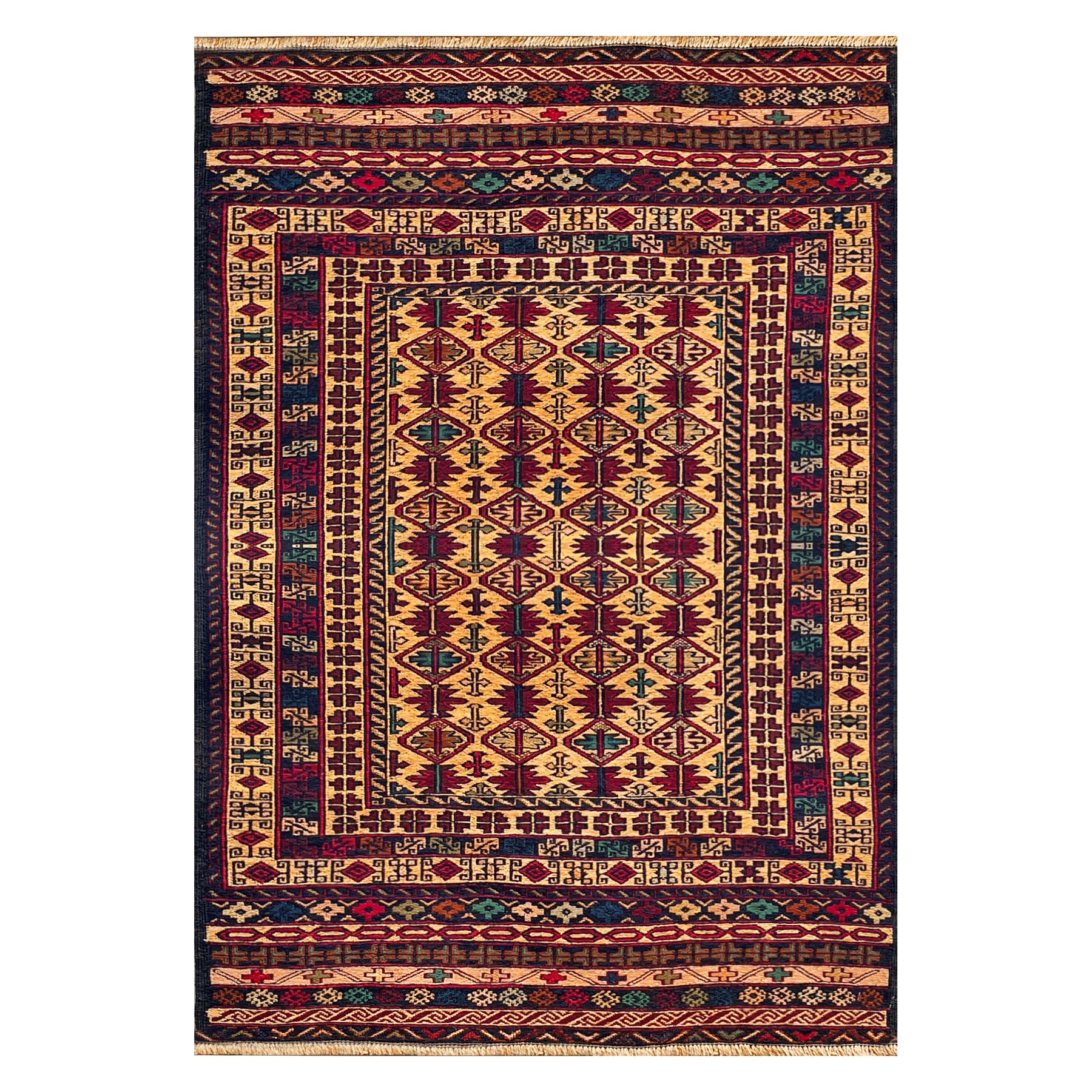
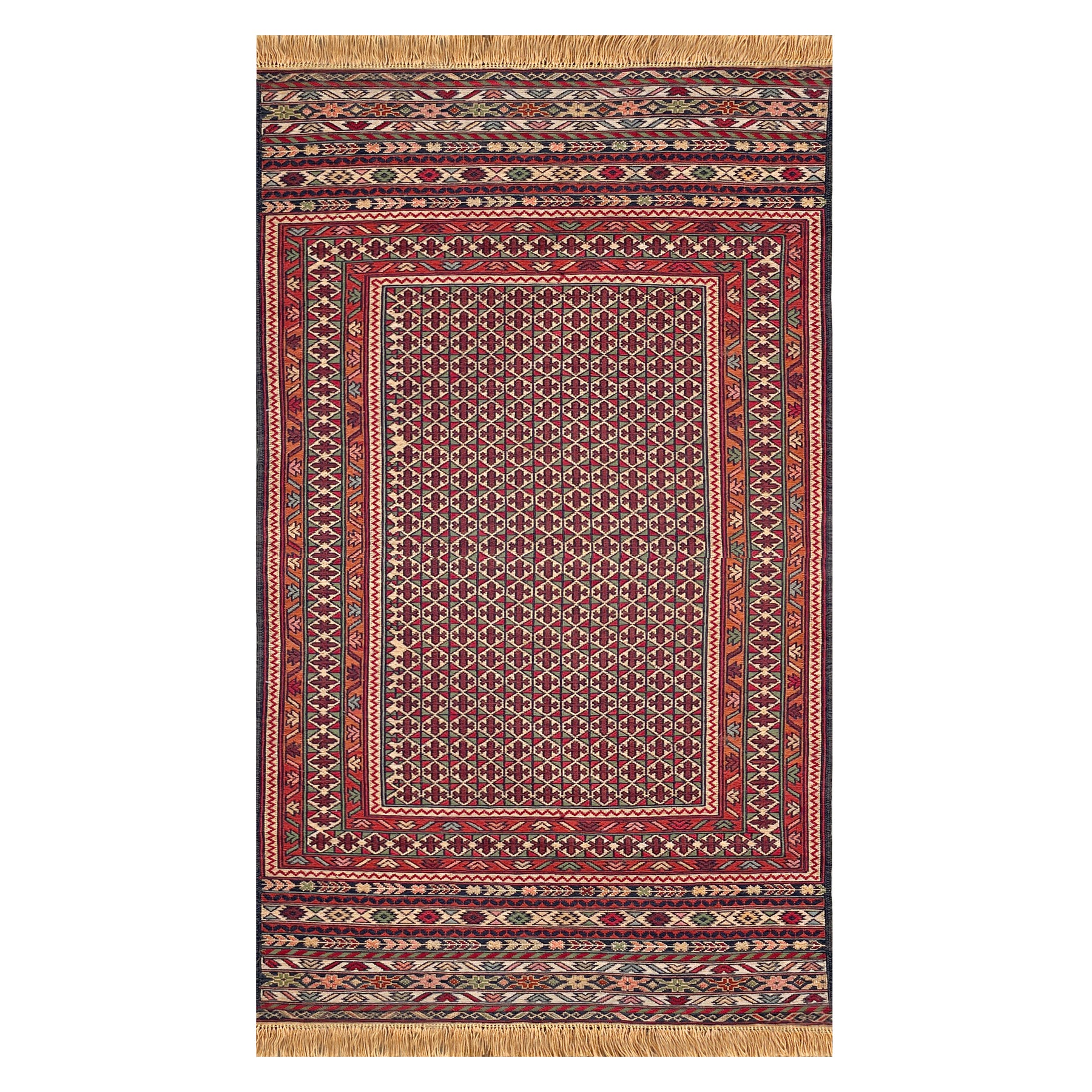
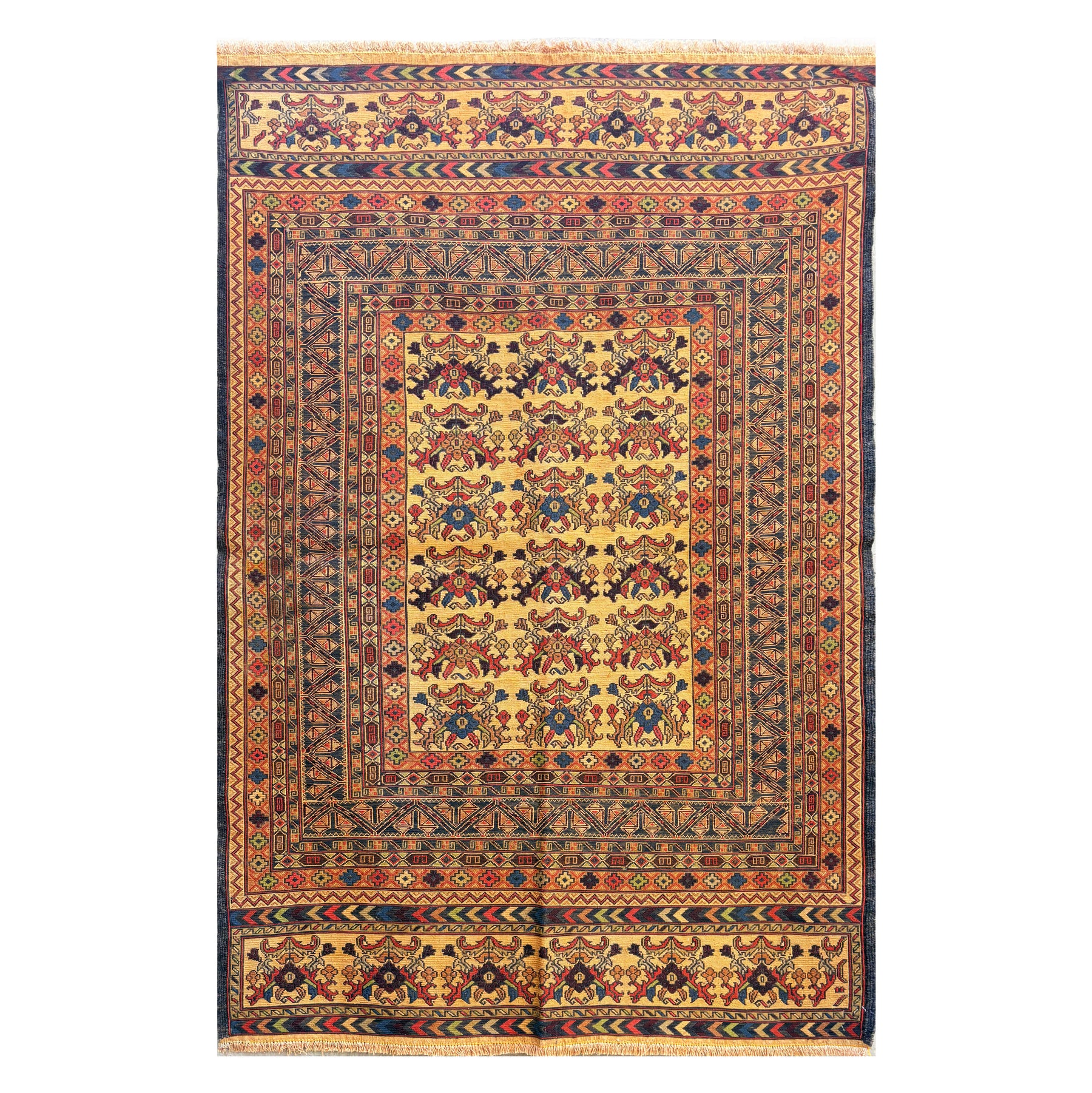
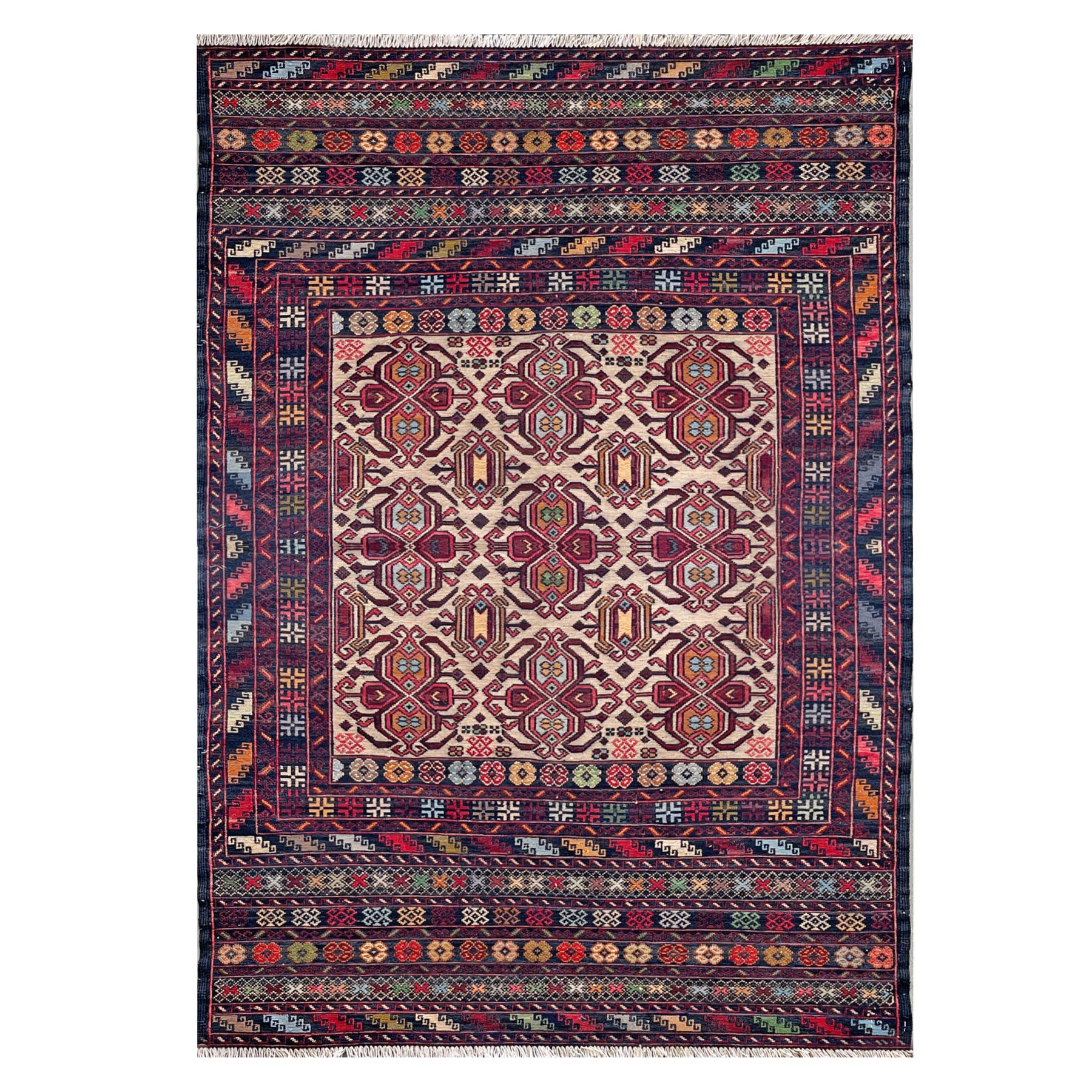
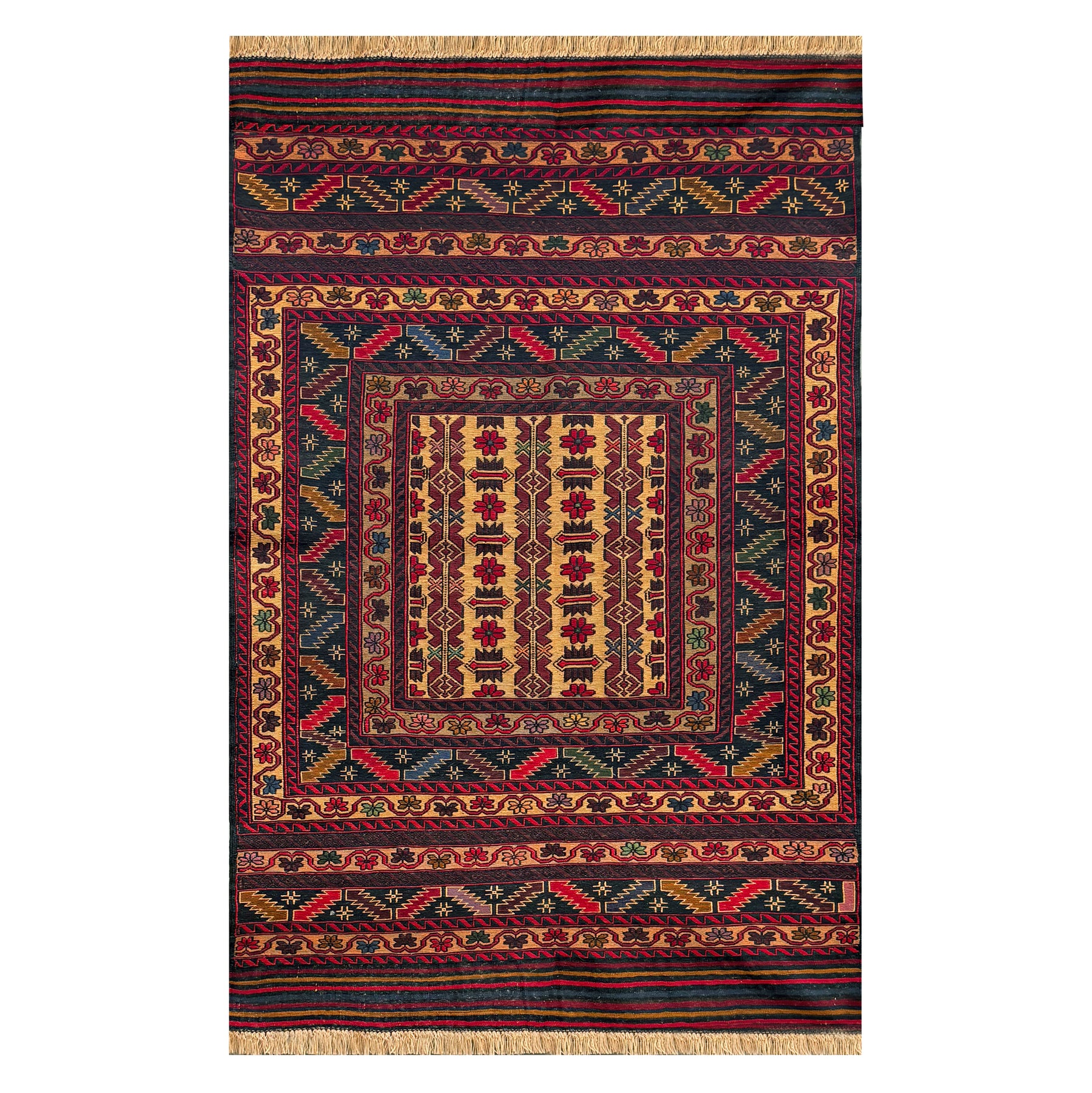
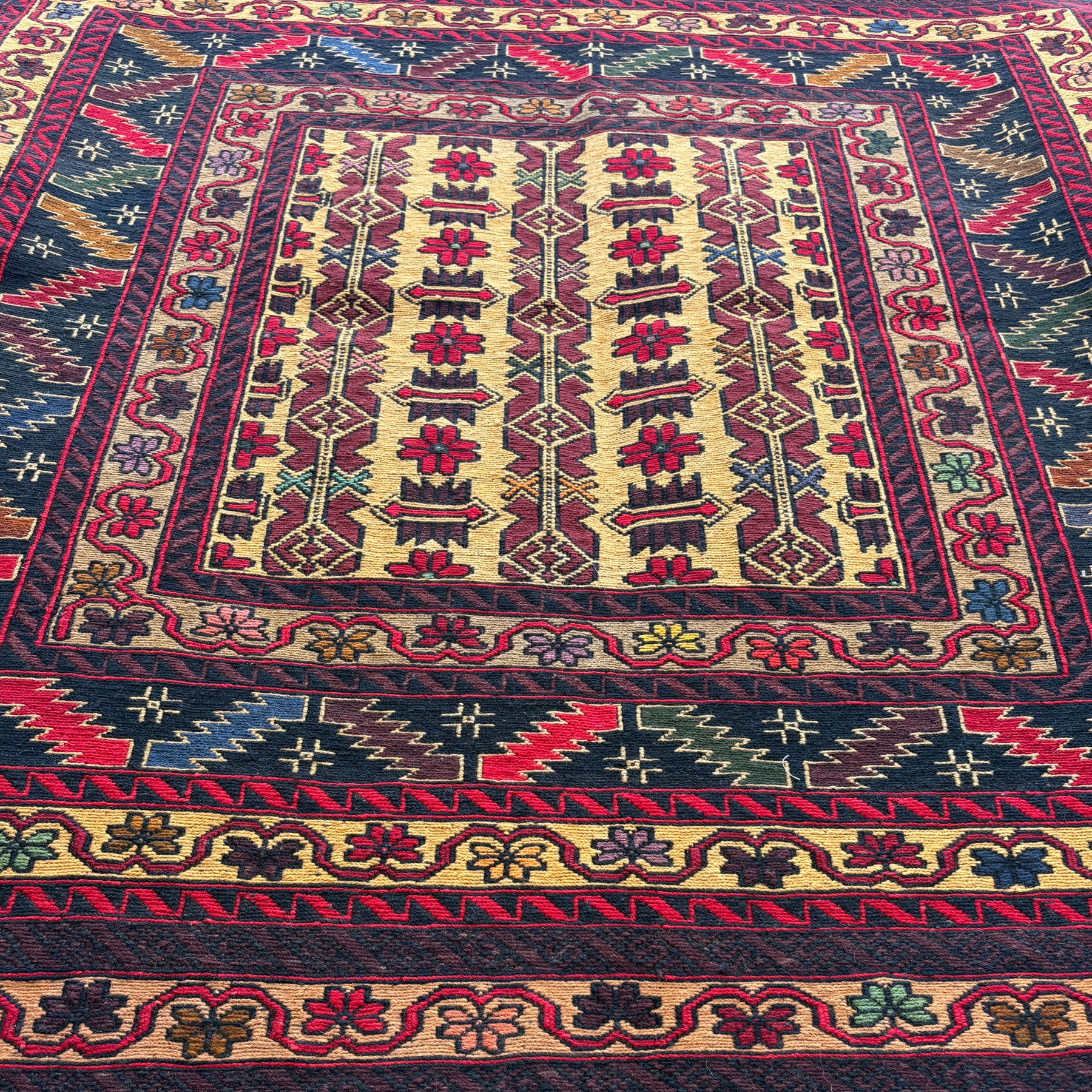
A Herat Maliky kilim of deep charcoal ground with structured horizontal geometric panel bands — a composition rooted in the woven tent furnishings of the nomadic Turkmen tradition.
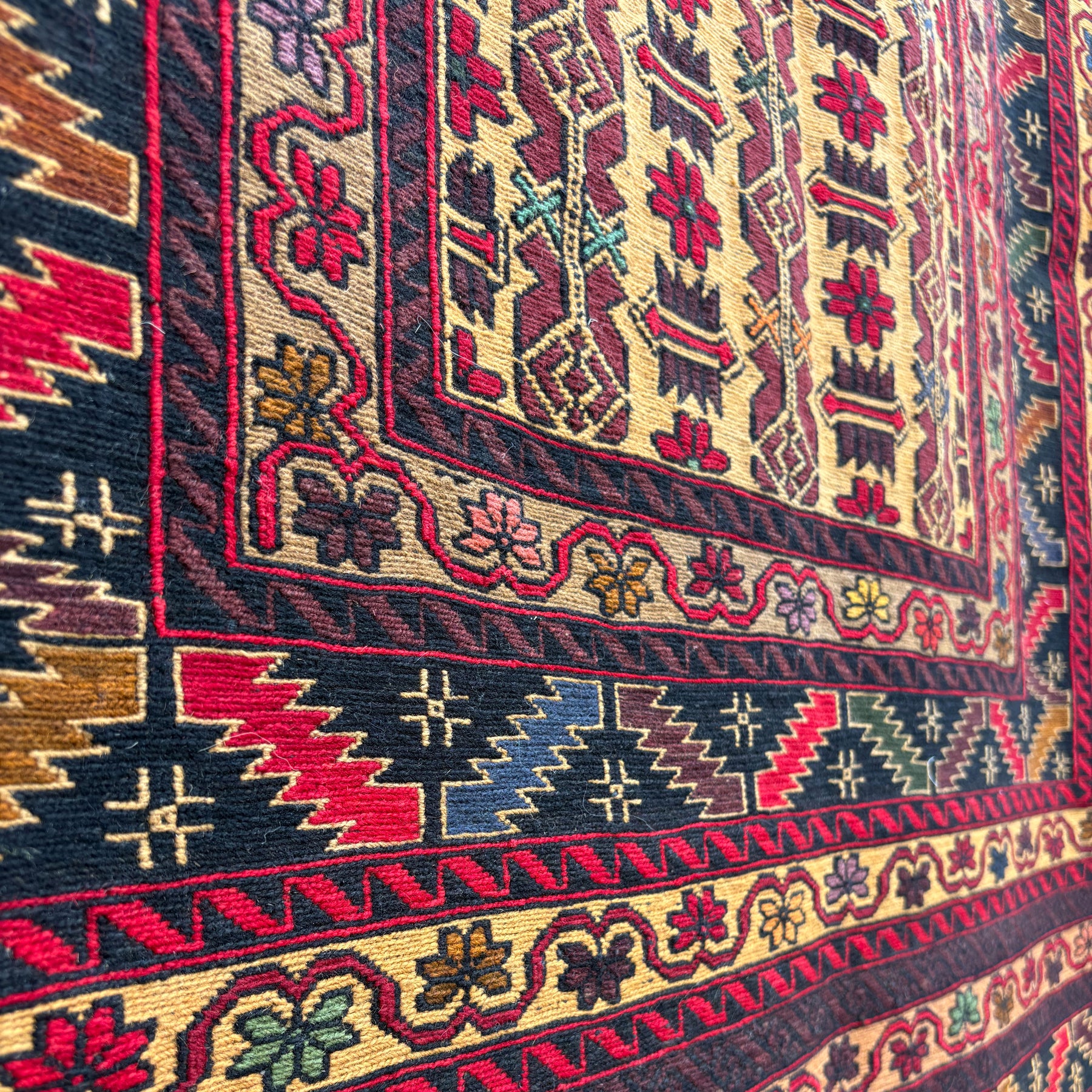
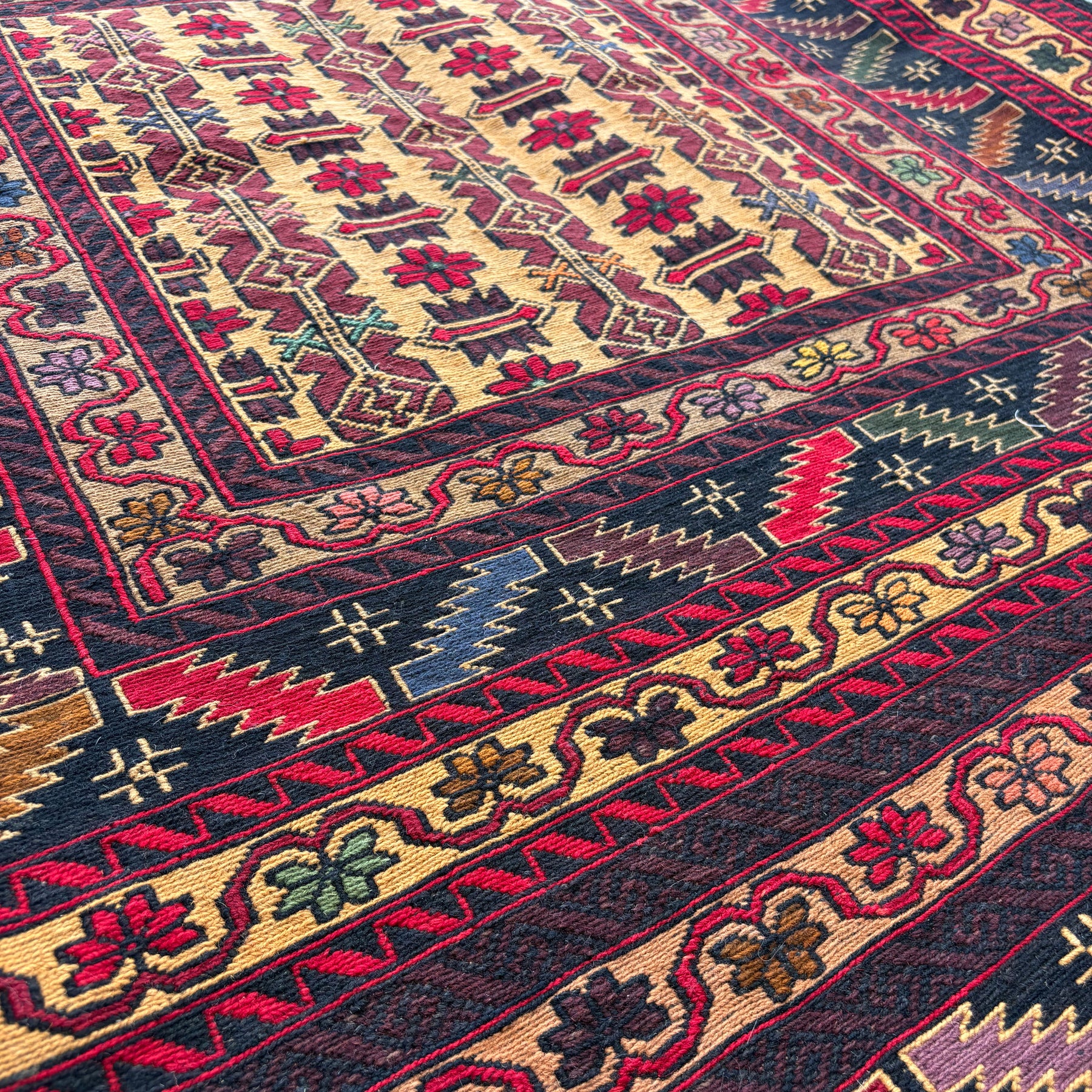
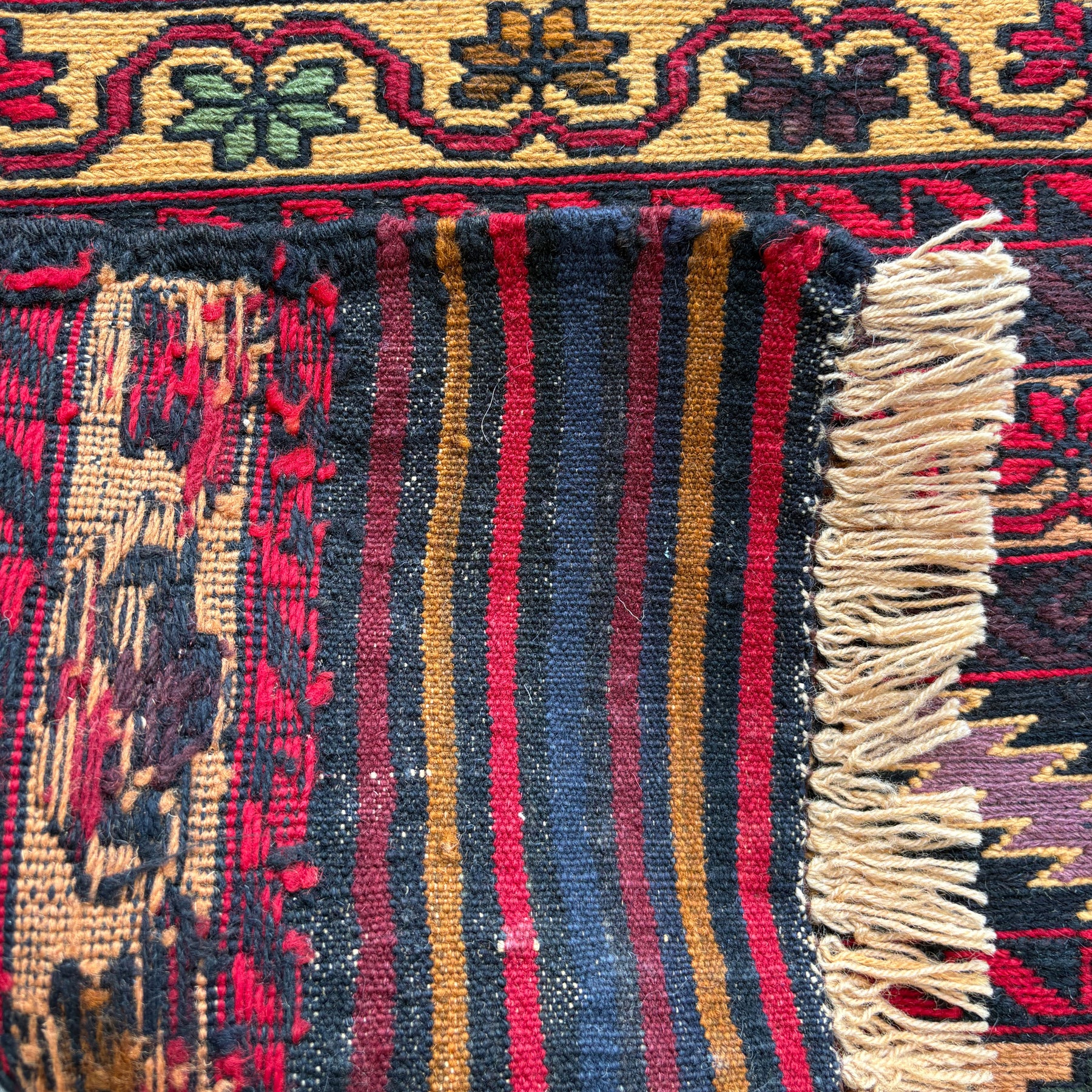
Before the Turkmen became settled weavers in Afghanistan's workshop towns, they were nomads — and the textiles they made were for living with on the move. The horizontal band composition of this kilim has its roots in that nomadic tradition: the successive panels of geometric devices in amber, red, olive, and ivory — each self-contained, each contributing to a larger horizontal rhythm — echo the woven tent bands and domestic textiles that the Turkmen produced for centuries before the market for room-scale kilims existed. On a deep charcoal ground, the warm tones of each panel take on a richness that the same palette on a lighter ground would not achieve. There is no central medallion, no single focal point — the composition accumulates rather than announces. Woven entirely in wool by Turkmen craftspeople in Herat. A piece that reveals itself gradually, and rewards the room patient enough to let it.
A hand-woven rug is an investment piece. With proper care it will last a lifetime and become a cherished heirloom. Each knot in this collection is tied by hand by nomadic tribesmen, making every piece entirely one of a kind.
Variations in colour and tone — known as abrash — are a hallmark of authentic handmade rugs, particularly tribal and vintage pieces. Wear and age only add to their beauty.
| Origin | Herat, Afghanistan |
| Tribe | Turkmen (Maliky) |
| Technique | Slit-woven tapestry (kilim) |
| Material | Wool |
| One of a kind | Yes |
Coupons
Delivery
You may also like