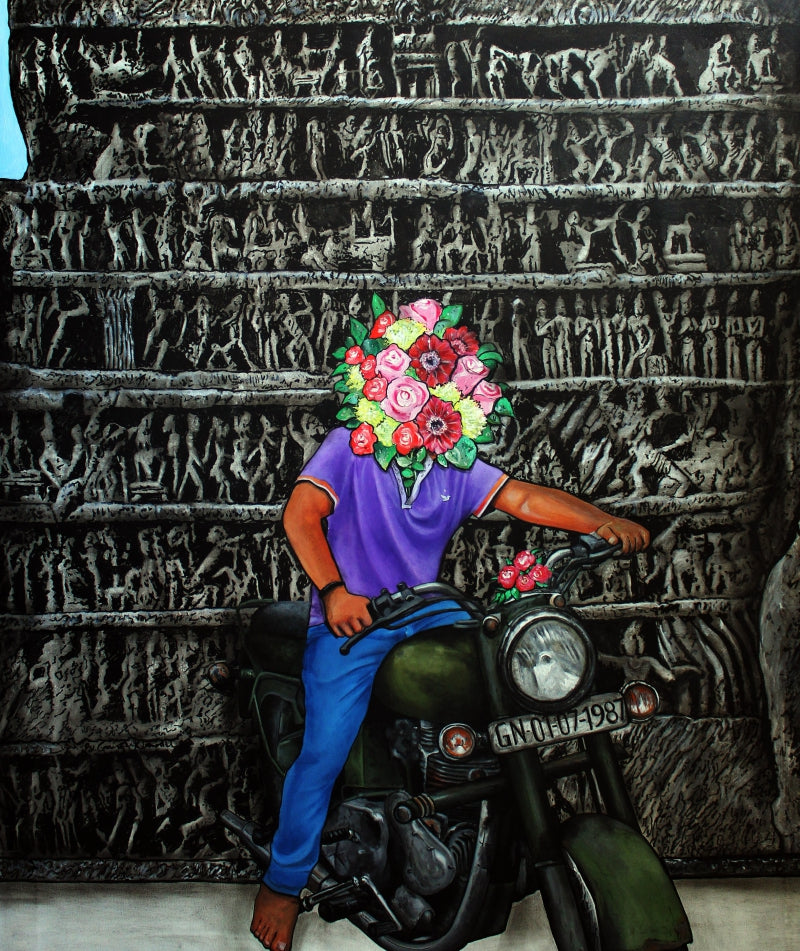
Destination To The Temple 2
₹100,000
● In stockchecking live price…
Size
44x36Type
OriginalMaterial
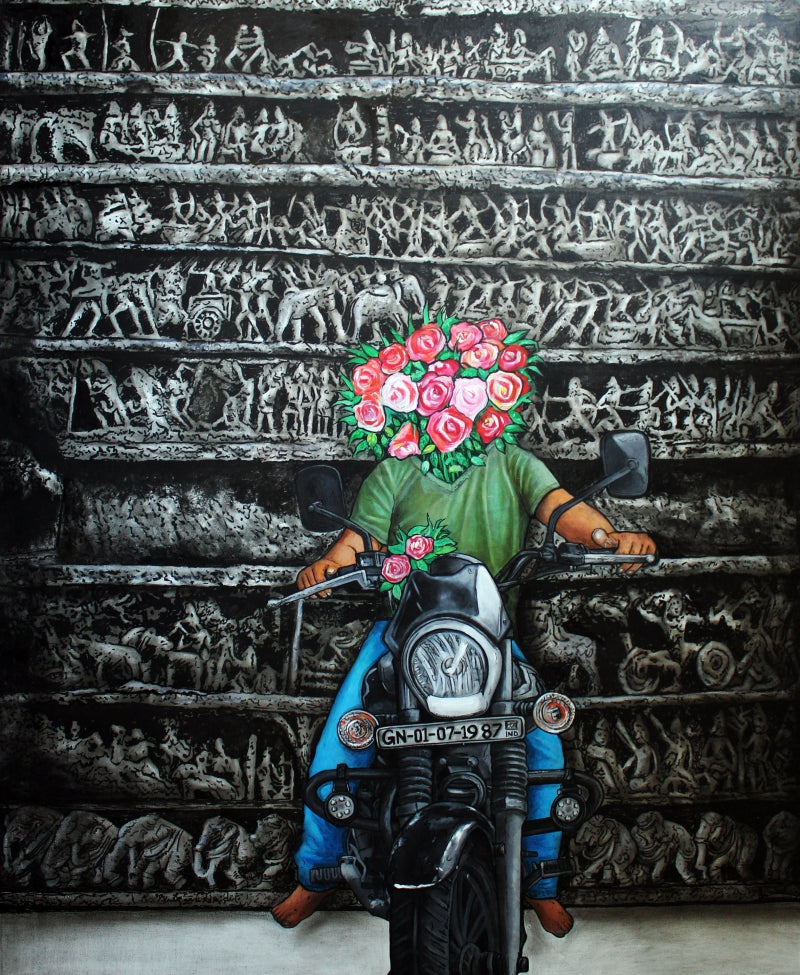
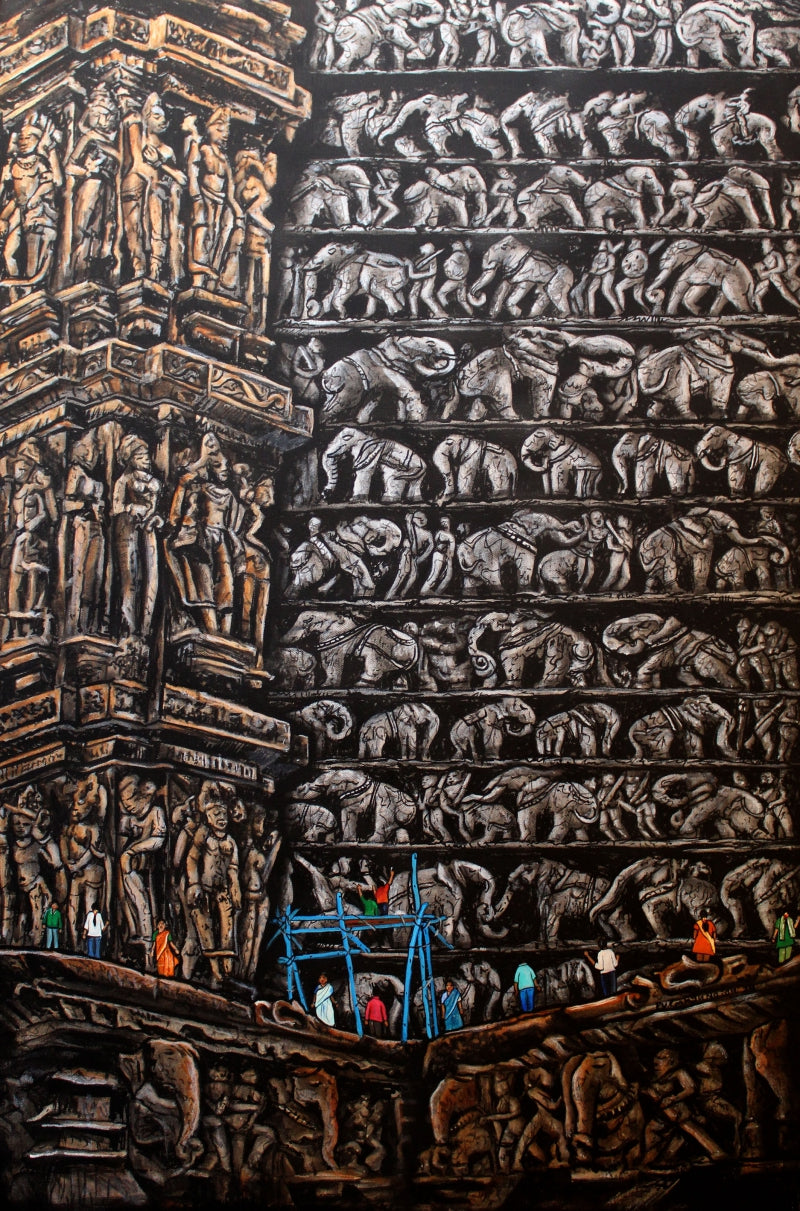
CanvasAgainst a dense wall of carved figures—an archive of collective memory rendered in soot-dark relief—the lone rider becomes a quiet interruption, his anonymity replaced by a riotous bouquet that blooms where a face should be. The painter choreographs a sharp chromatic contrast: violet shirt, cobalt trousers, and lacquered metal hold the foreground in crisp realism while the background dissolves into rhythmic, almost funerary repetition, suggesting history’s weight and the crowd’s erasure of the individual. The floral “mask” reads as both refuge and refusal, a tender insurgency that insists on beauty and inner life amid monumental narratives, as if identity can be replanted where it has been worn away.