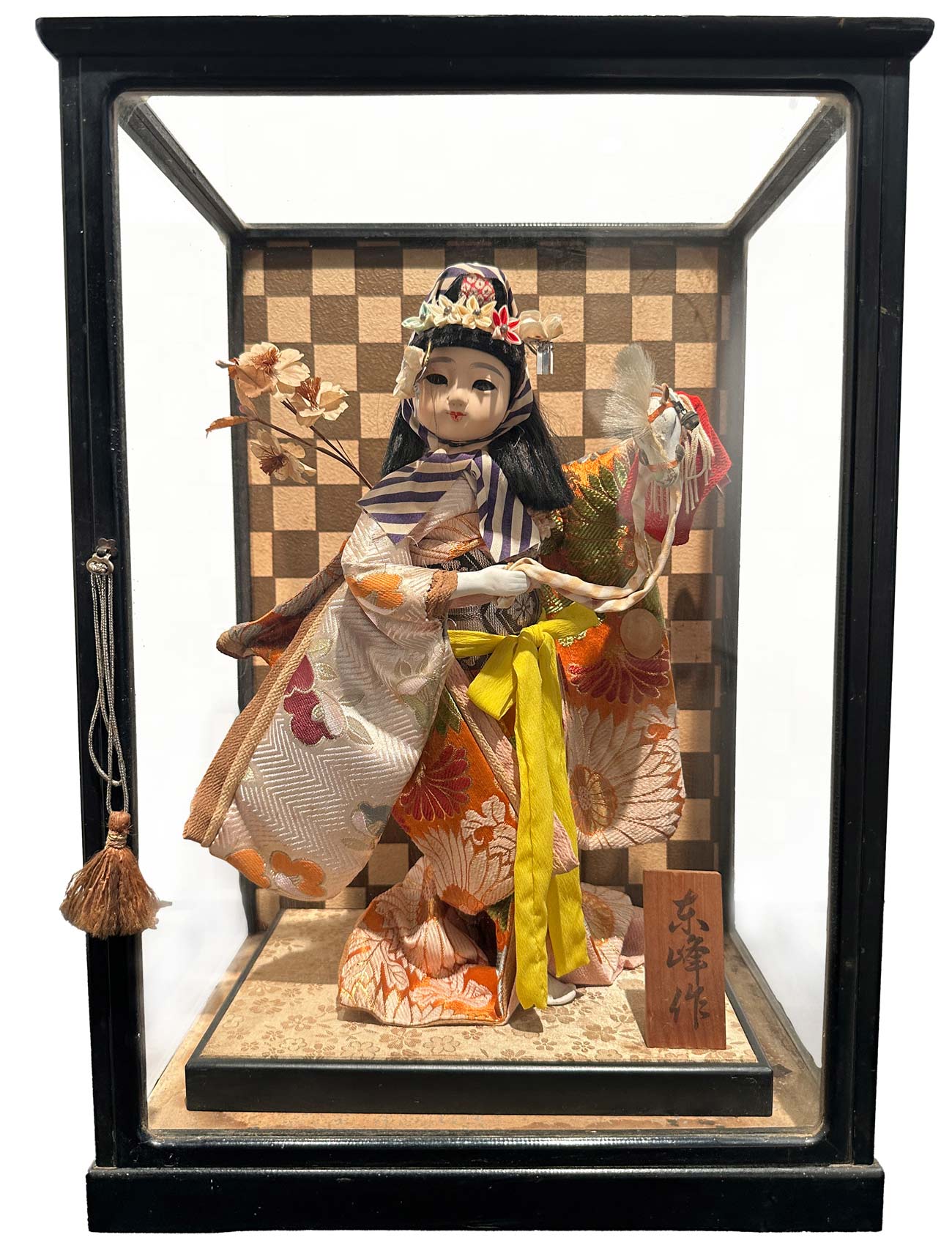
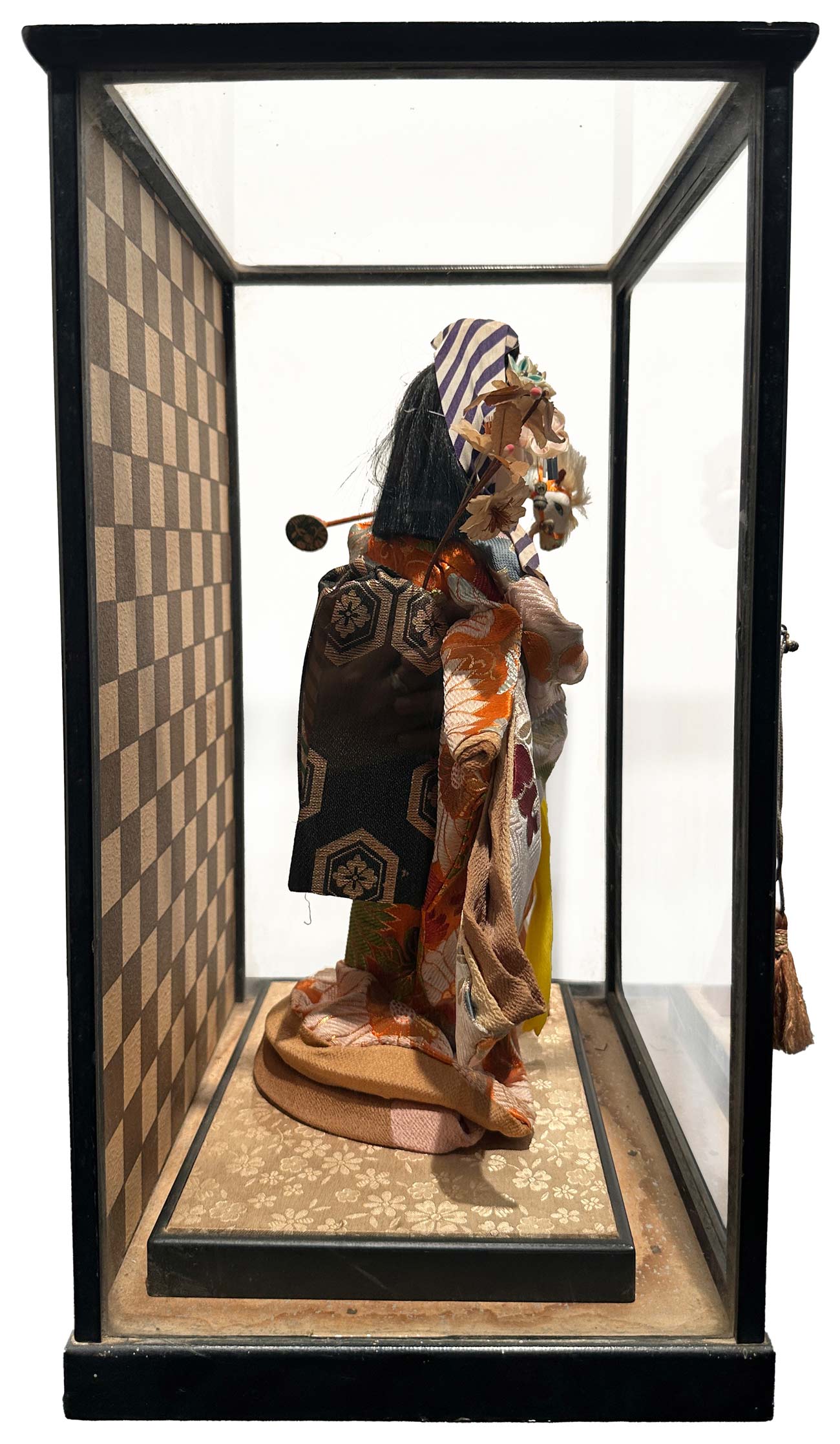
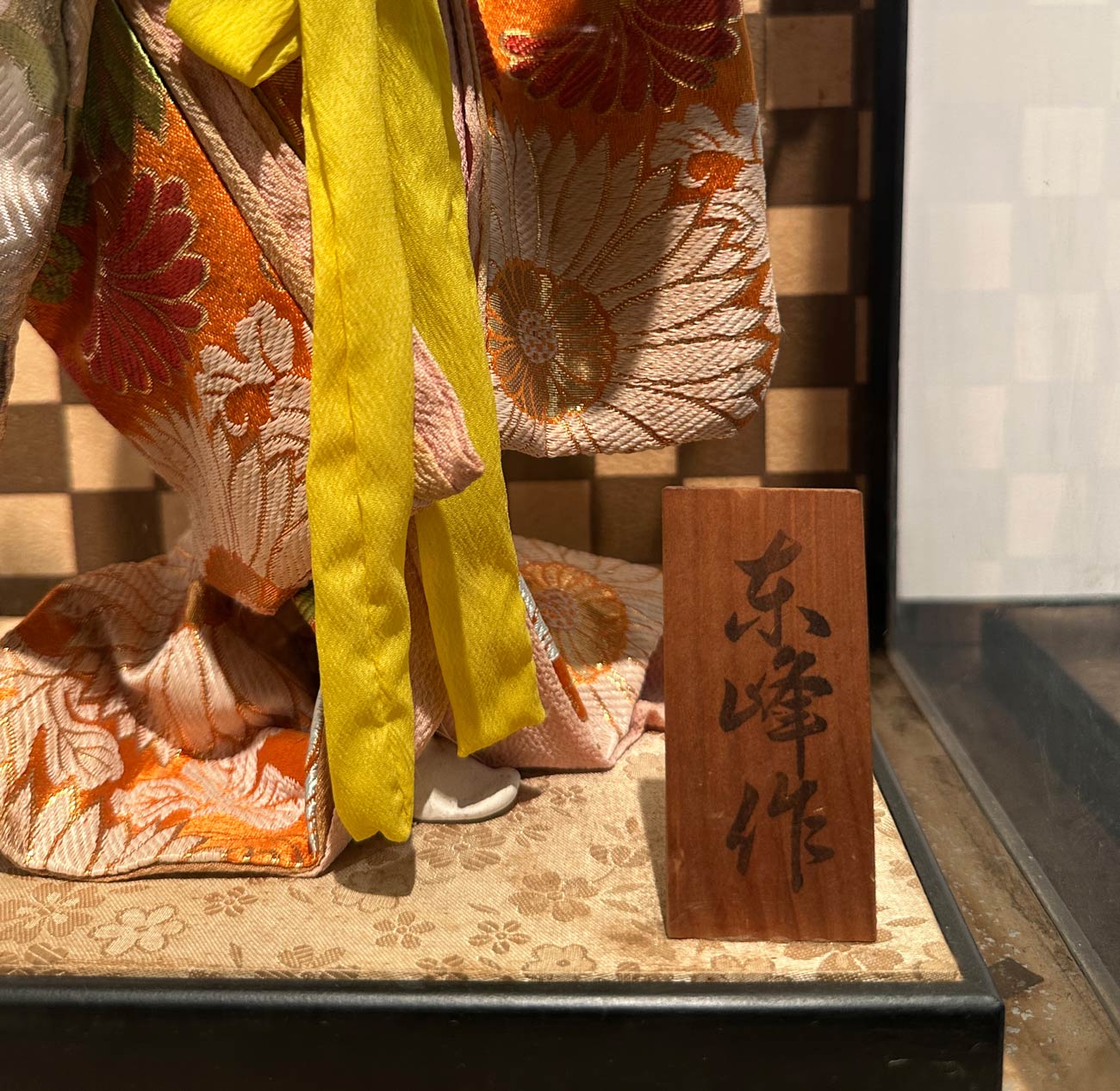
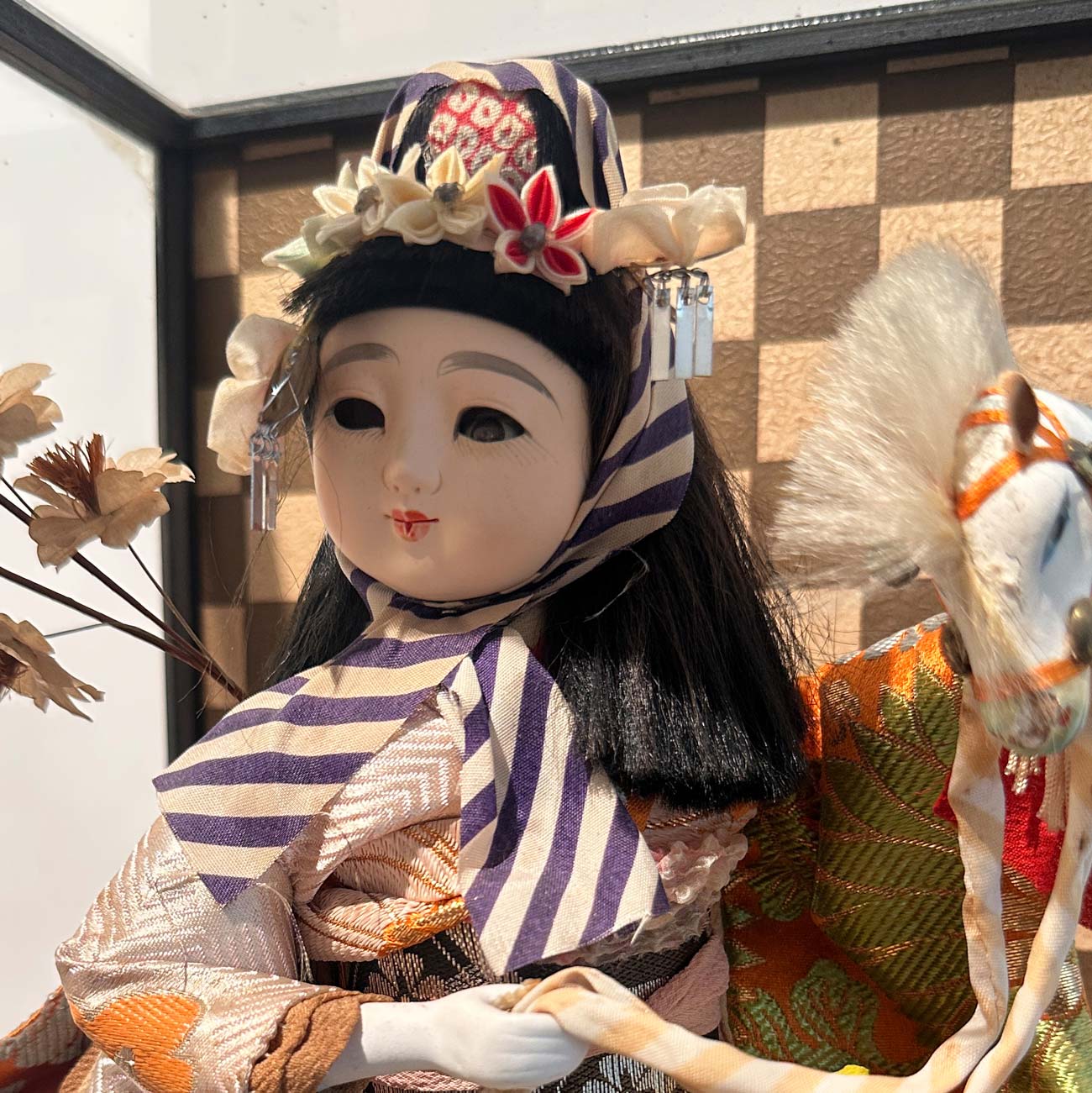
Japanese doll, likely a Harukoma doll (also spelled "haru-koma") from the 1960s. Harukoma is a traditional Japanese dance where performers use hand-held horse-head props to depict playful horses. It is a combination of theatre, music, and dance, featuring actors dressed as the Seven Lucky Gods, performing comical acts based on their legends. The dance has been performed in Ogimachi since at least the Meiji era, and was originally associated with spring and luck-bringing prayers for a prosperous year. This is likely a Gogatsu Ningyo or "May Doll," The text on the wooden tag, 东峰作 (Tōhō saku), indicates the doll was made by the artist Tōhō.
Delivery
You may also like
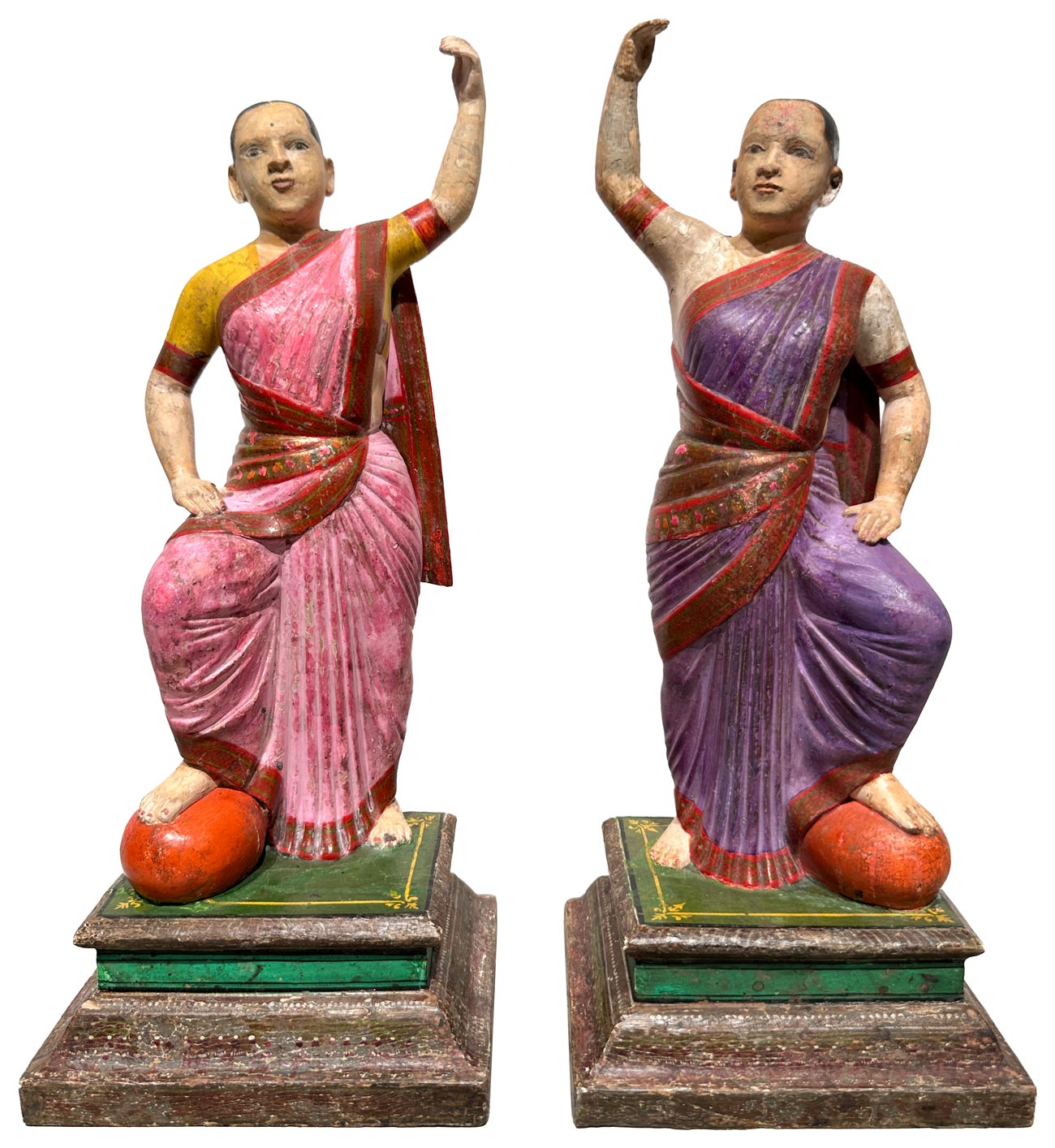
Sawantwadi Dancers (Pair)
Artisera
₹291,200
out of stock
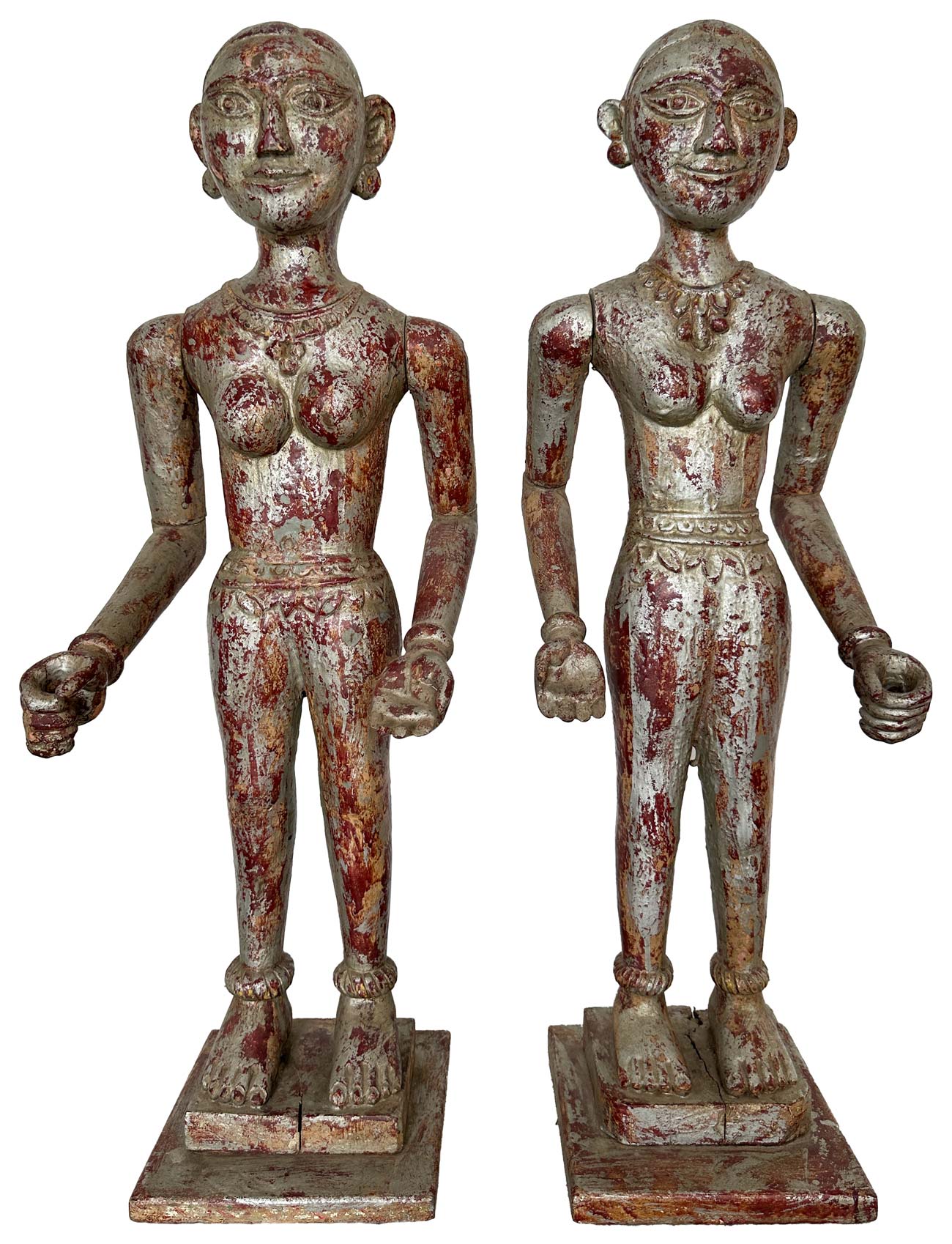
Female Figures with Articulated Arms (Pair)
Artisera
₹308,000
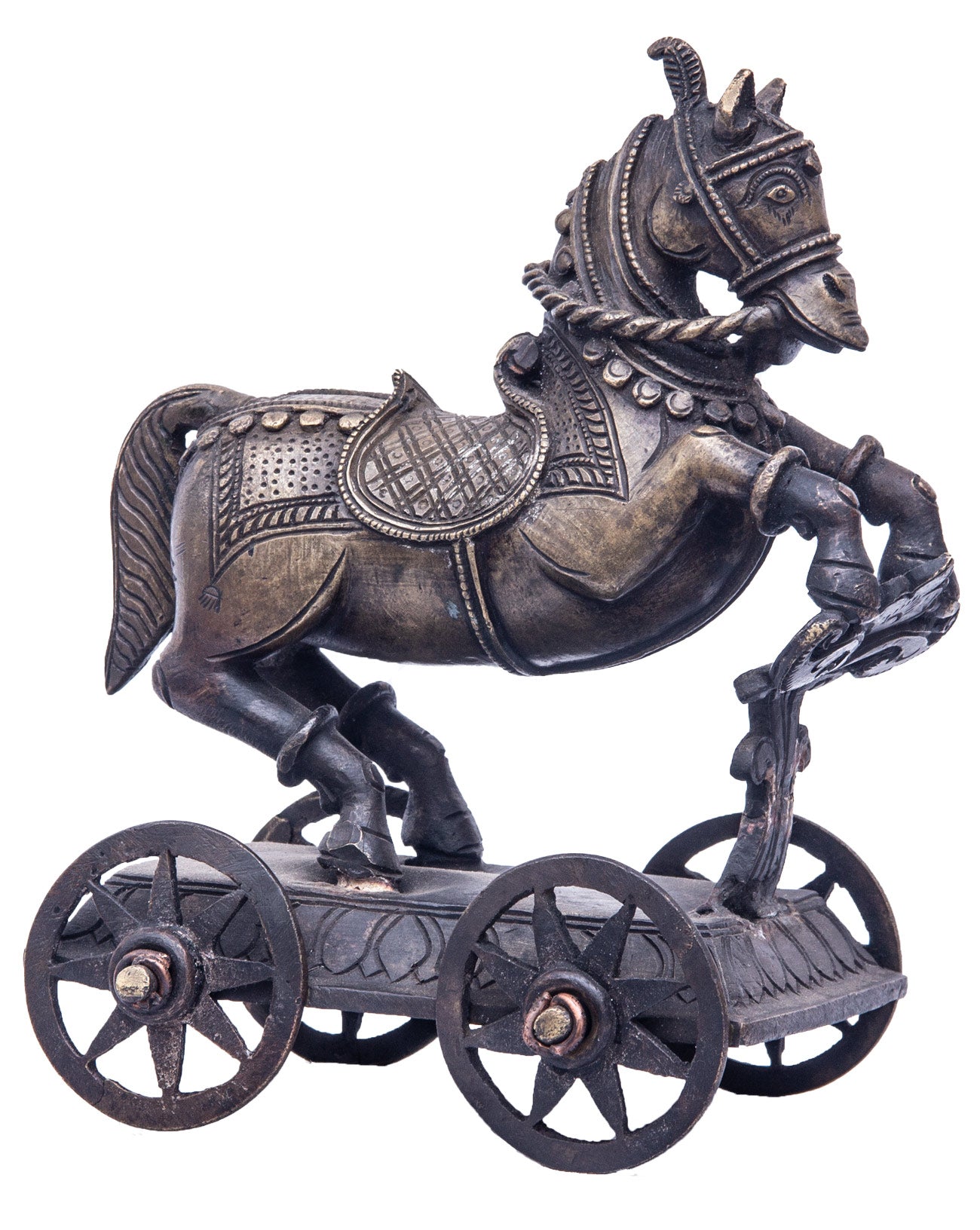
Chariot Horse Pull Toy
Artisera
₹52,000
out of stock
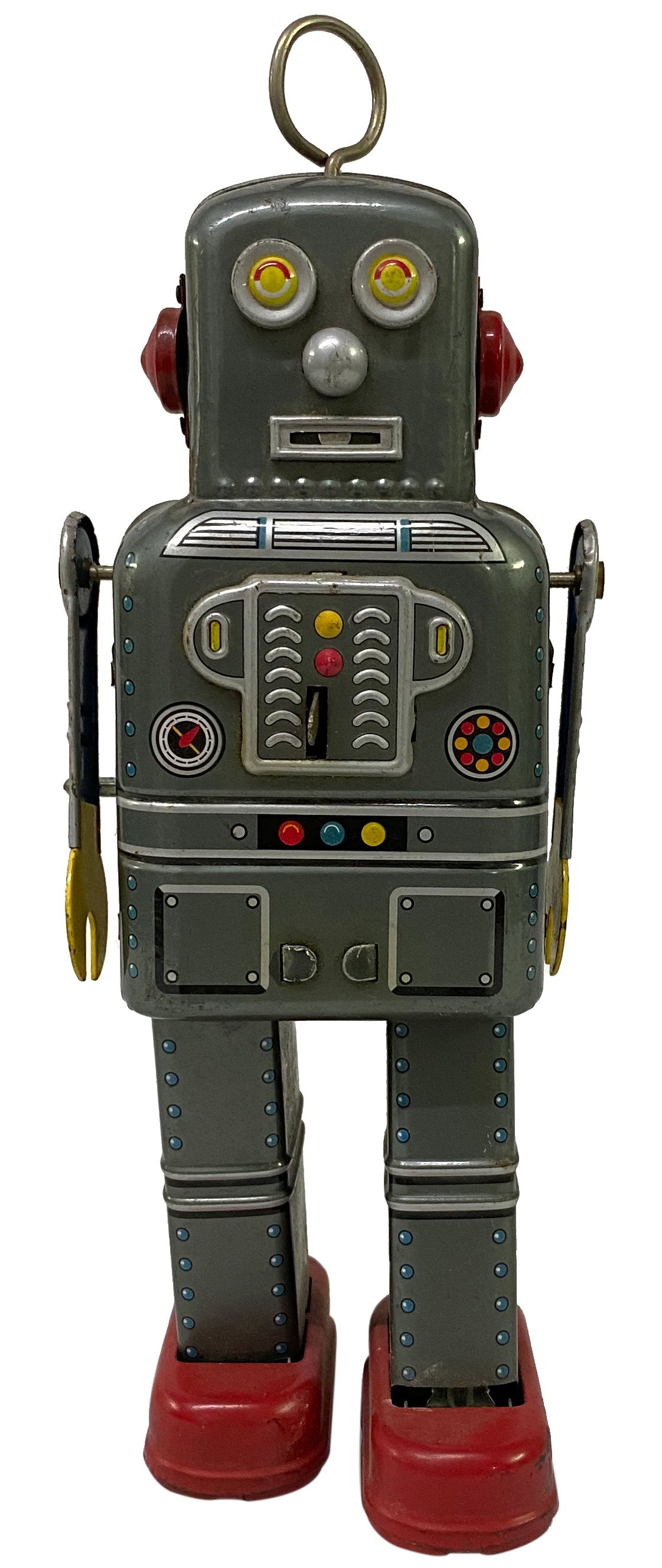
Japanese Spaceman Toy
Artisera
₹31,860
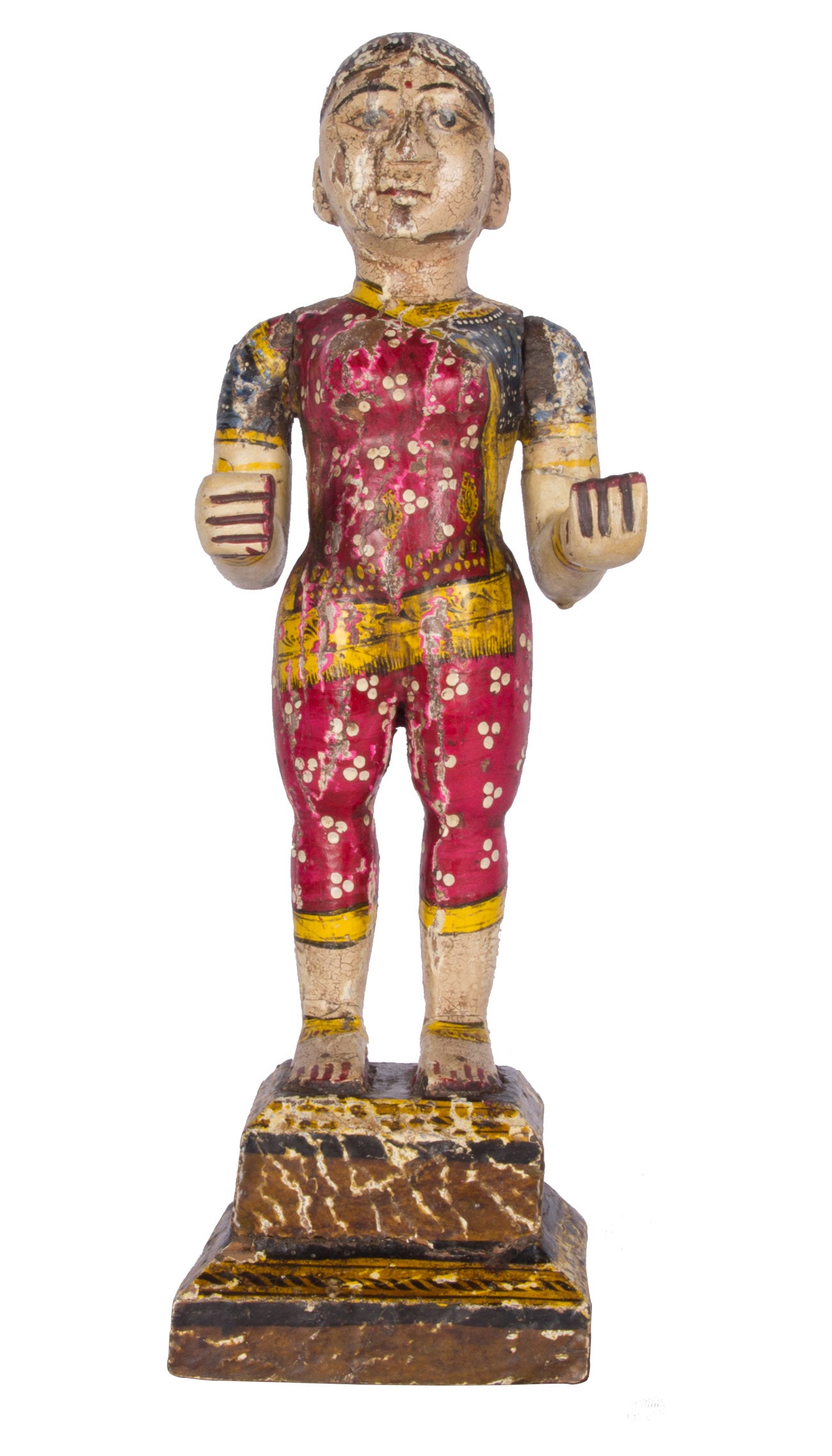
Maharashtrian Woman on Yellow Base
Artisera
₹0
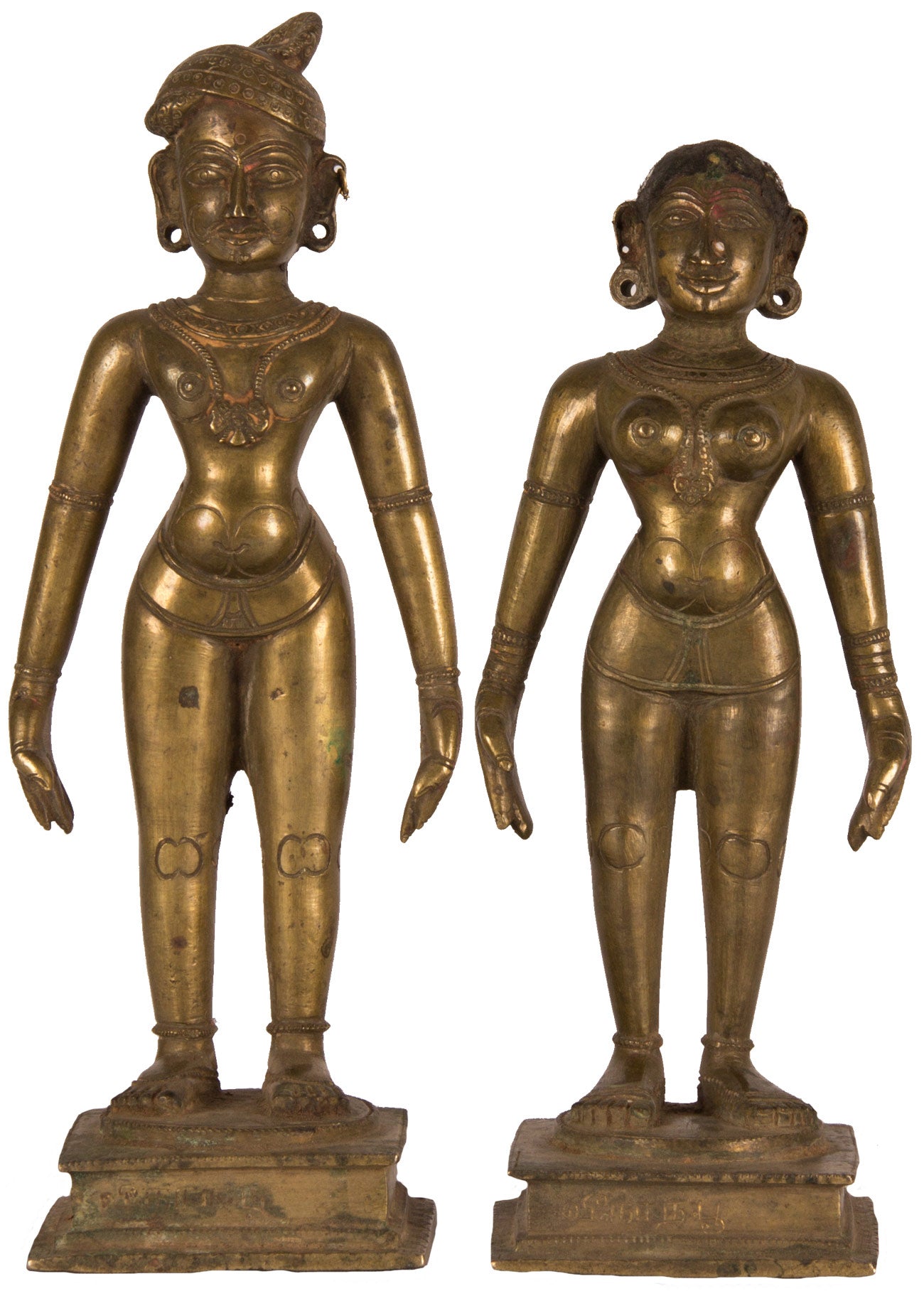
Marapachi Dolls (Pair) - 02
Artisera
₹145,600
out of stock
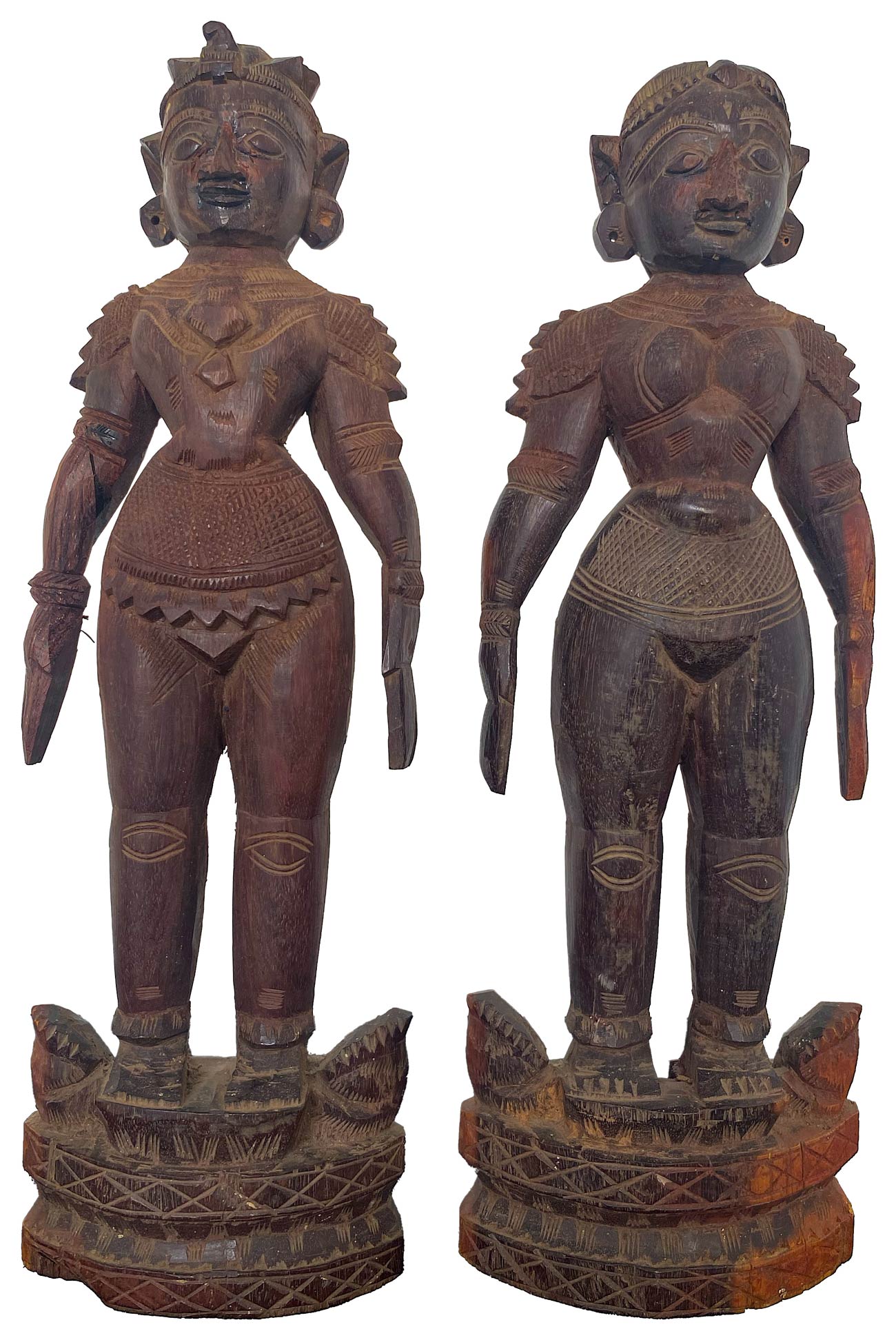
Marapachi Dolls (Pair) - 02
Artisera
₹72,800
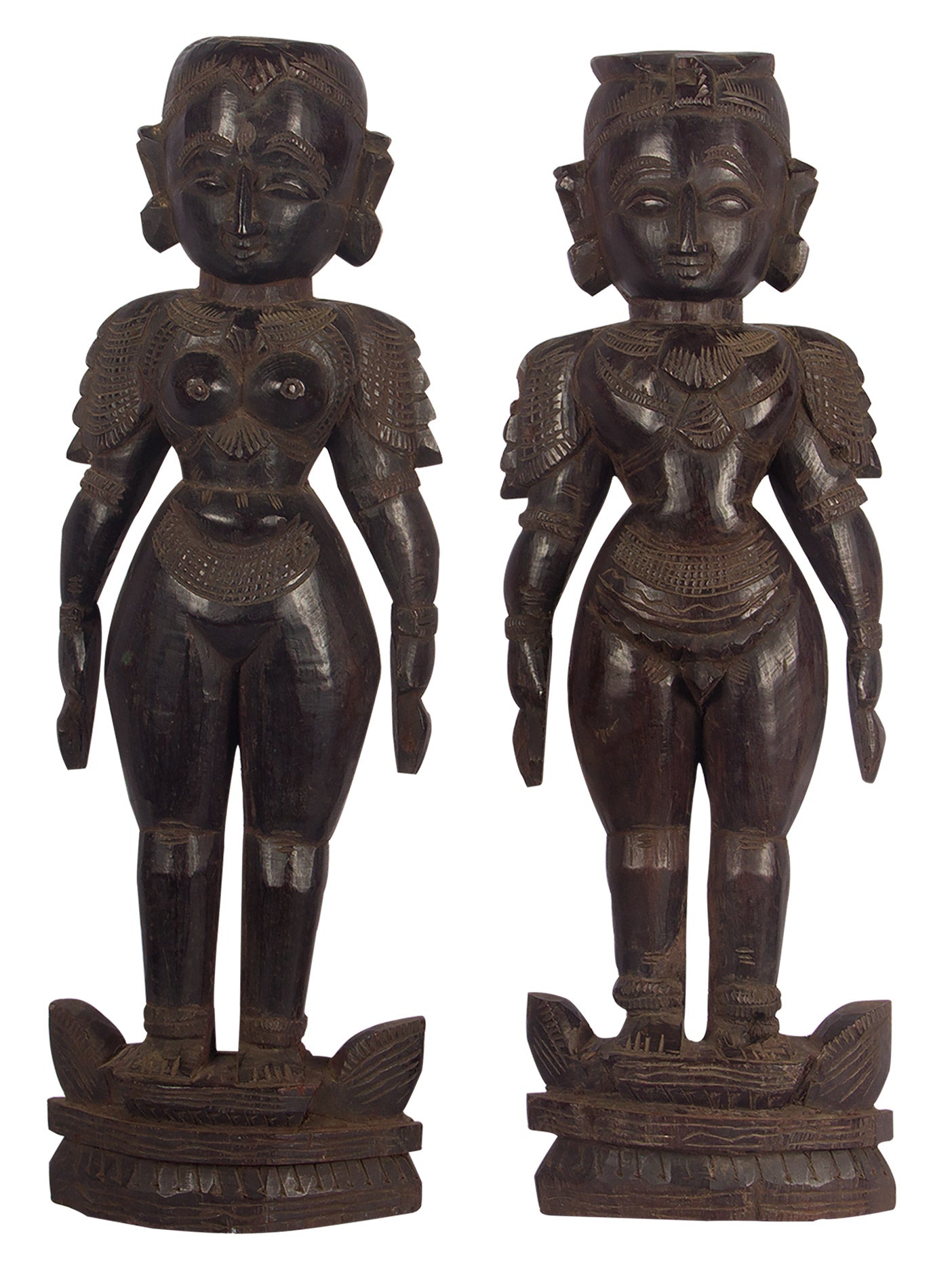
Marapachi Dolls (Pair) - 01
Artisera
₹44,800
out of stock