Rangrez Maliky One-OF-A-Kind-Afghan Rug
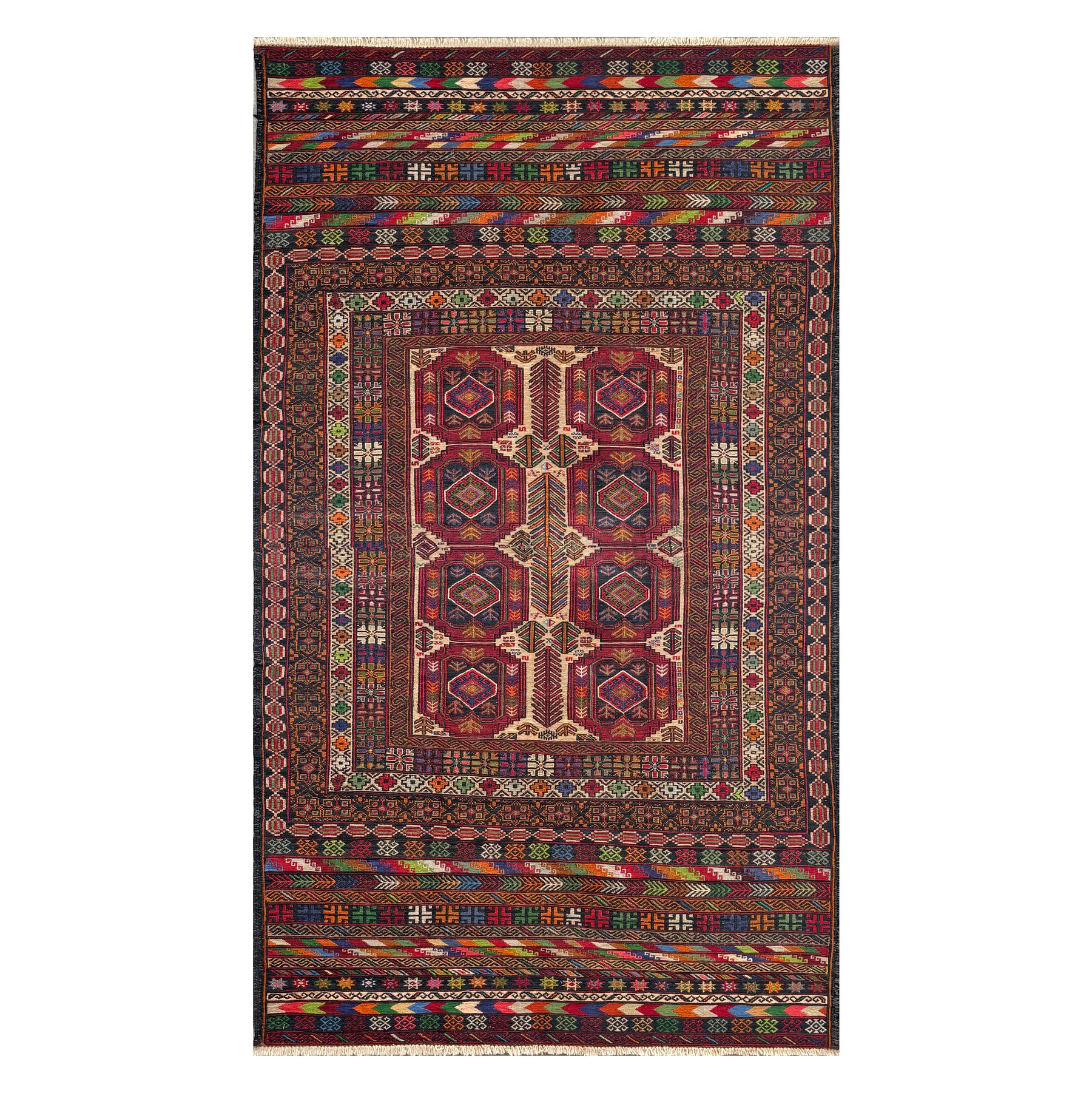
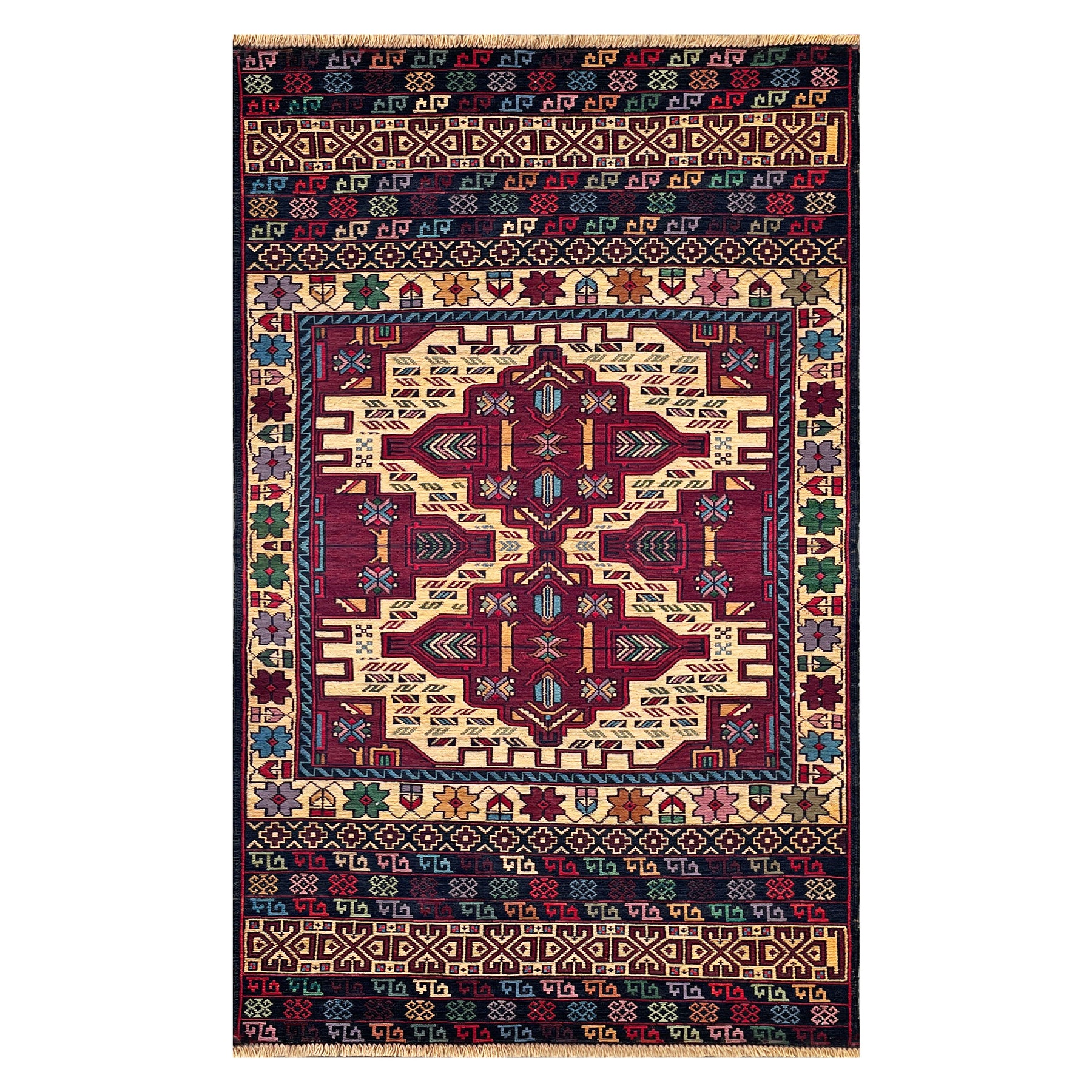
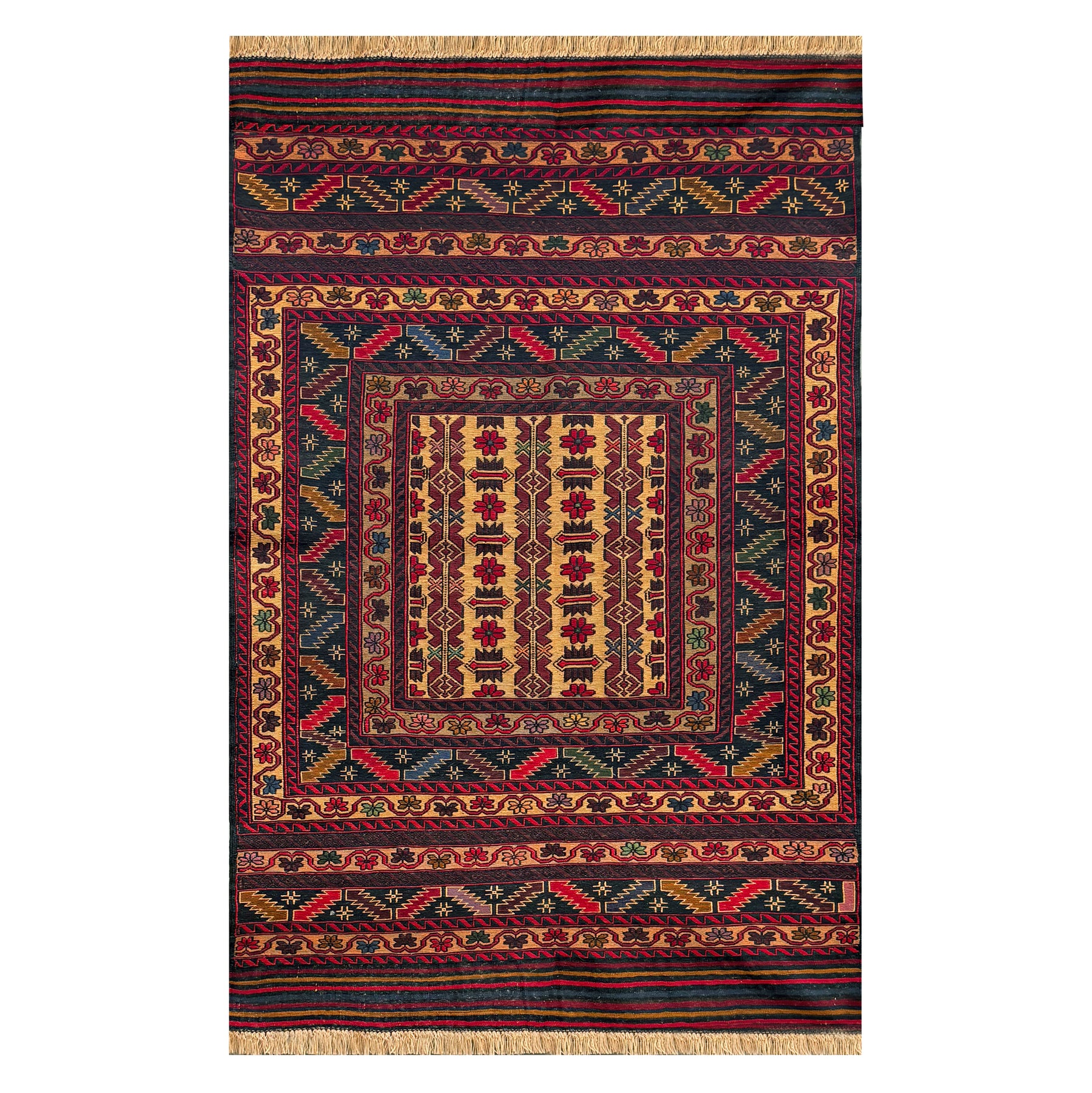
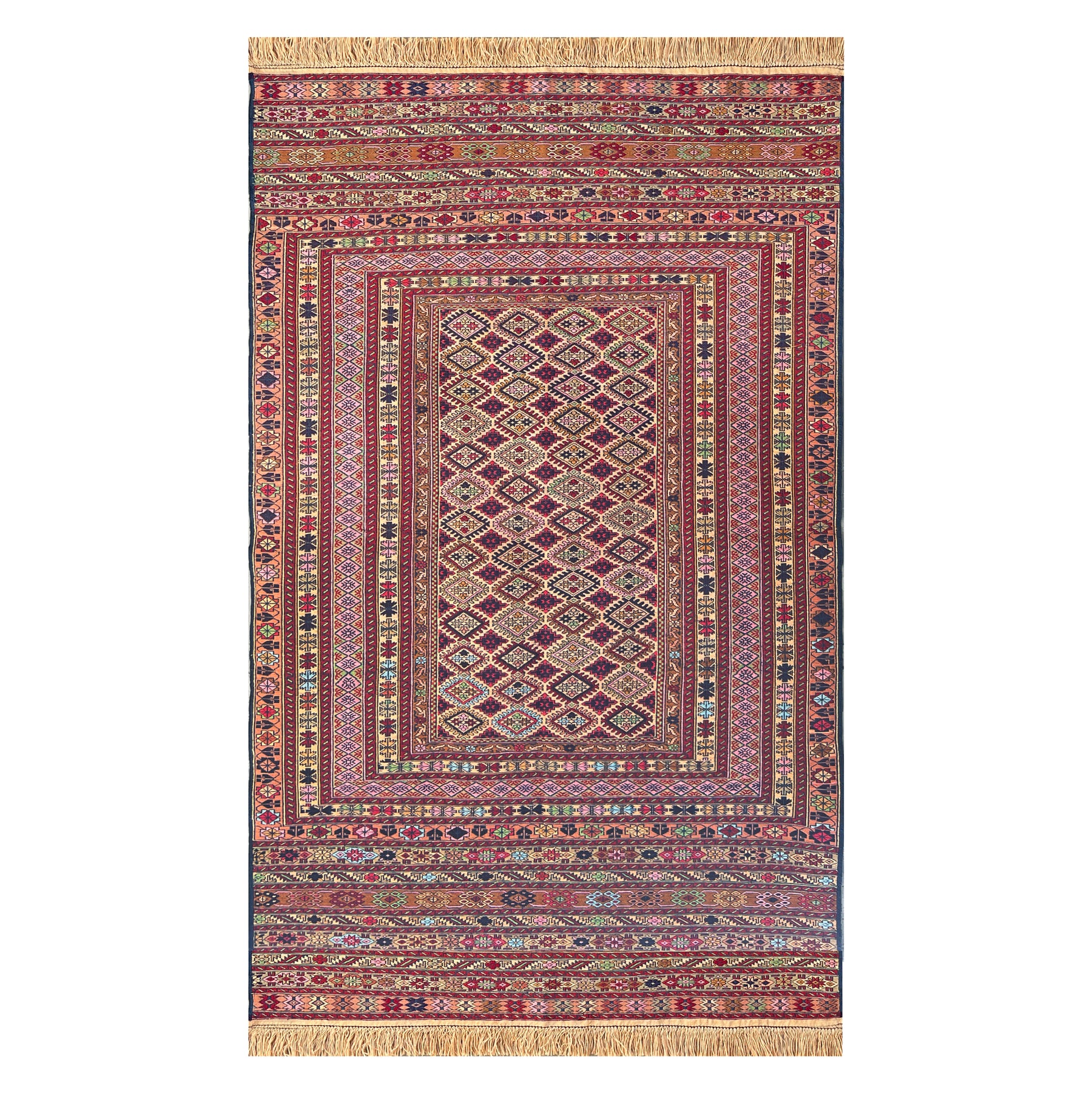
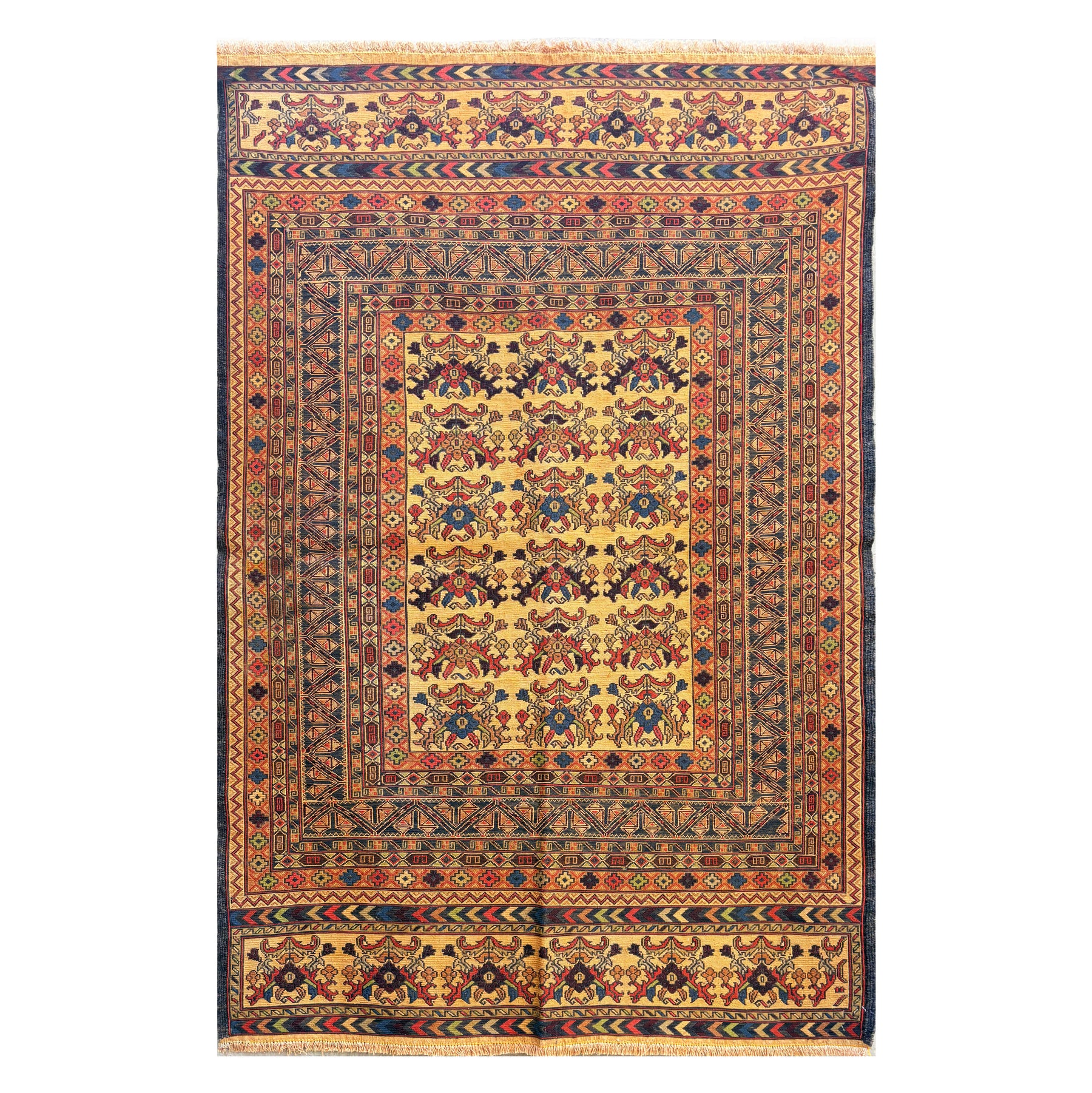
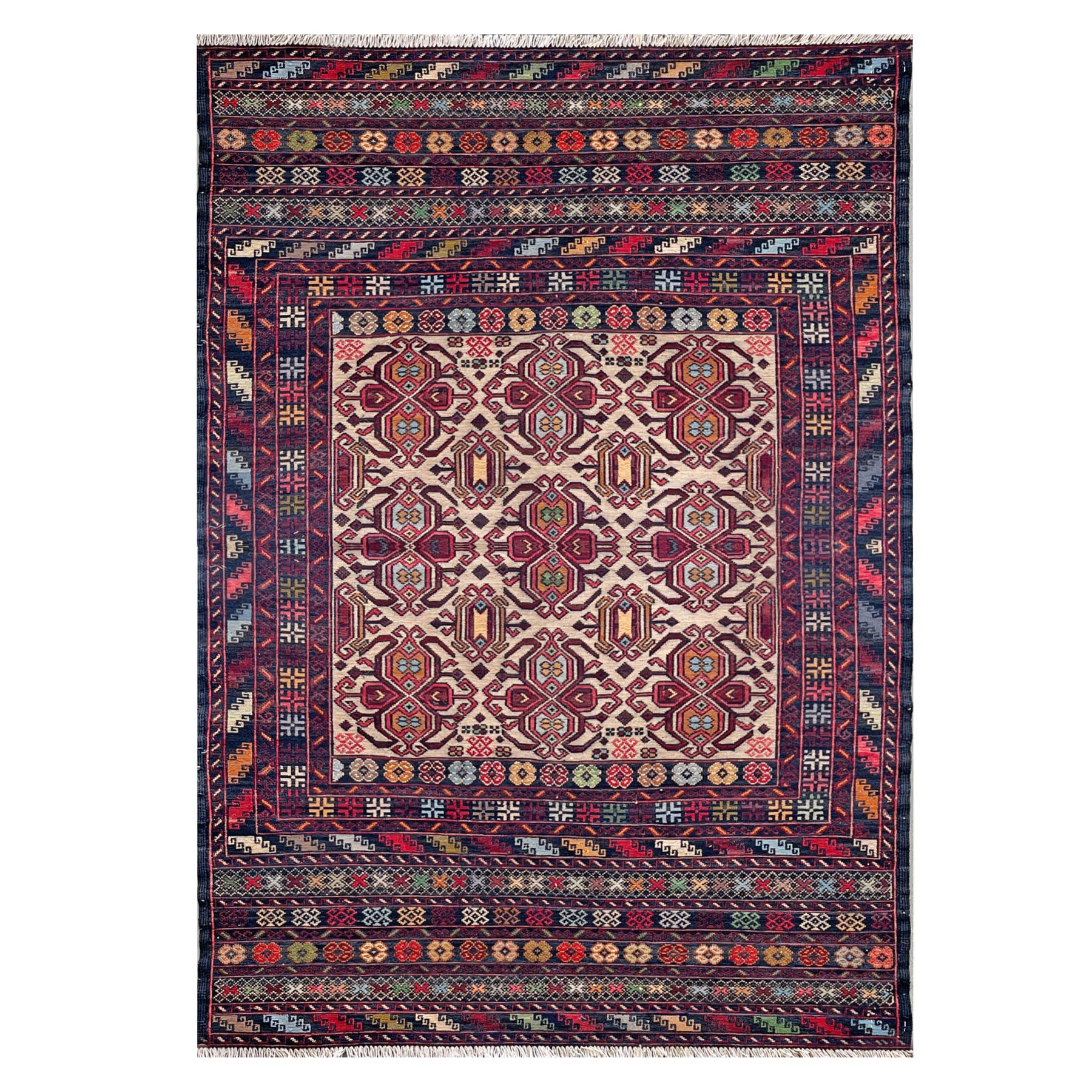
A Herat Maliky kilim of ivory field with an allover scattered botanical repeat — the ancient Persian garden carpet tradition translated into the Afghan flat-weave vocabulary.
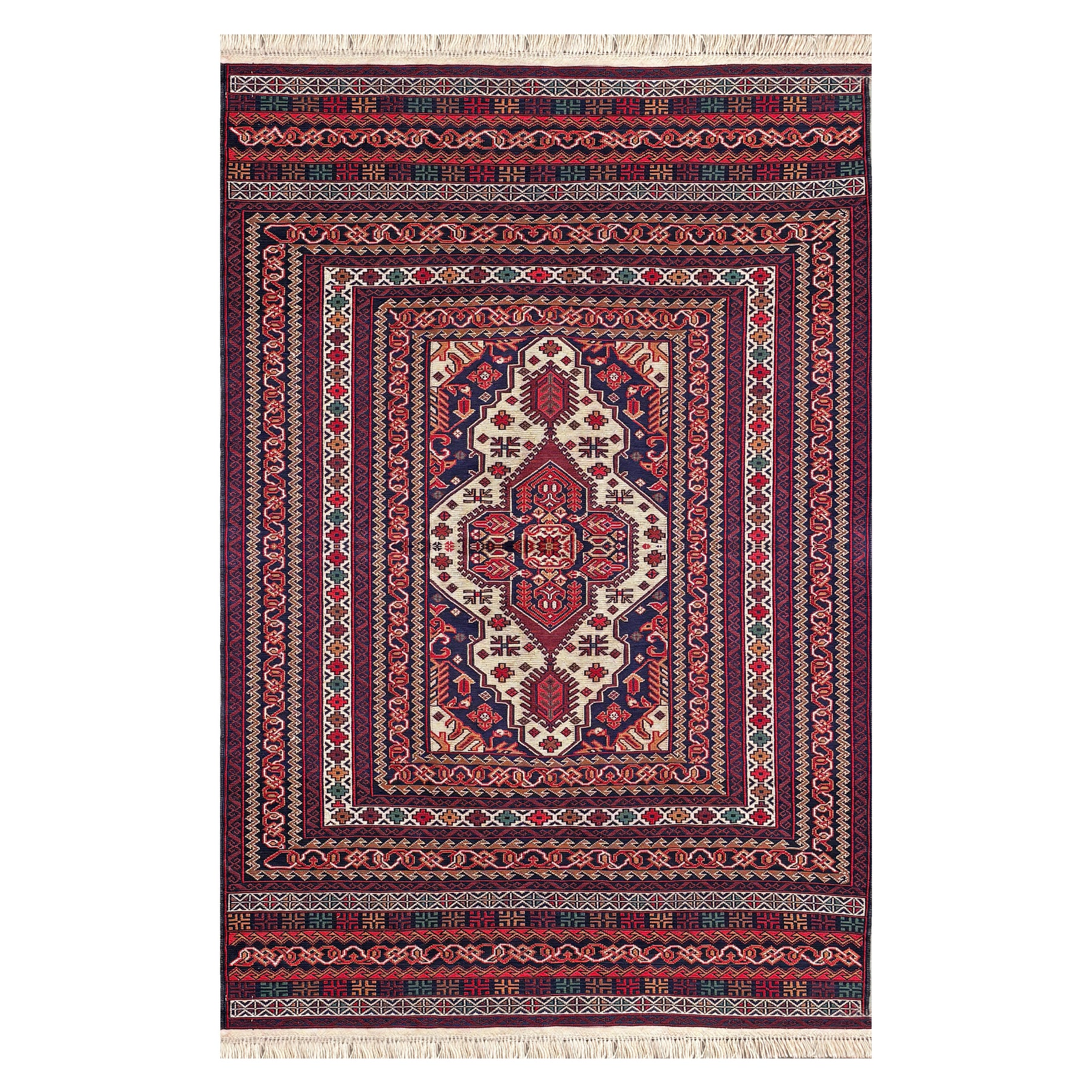
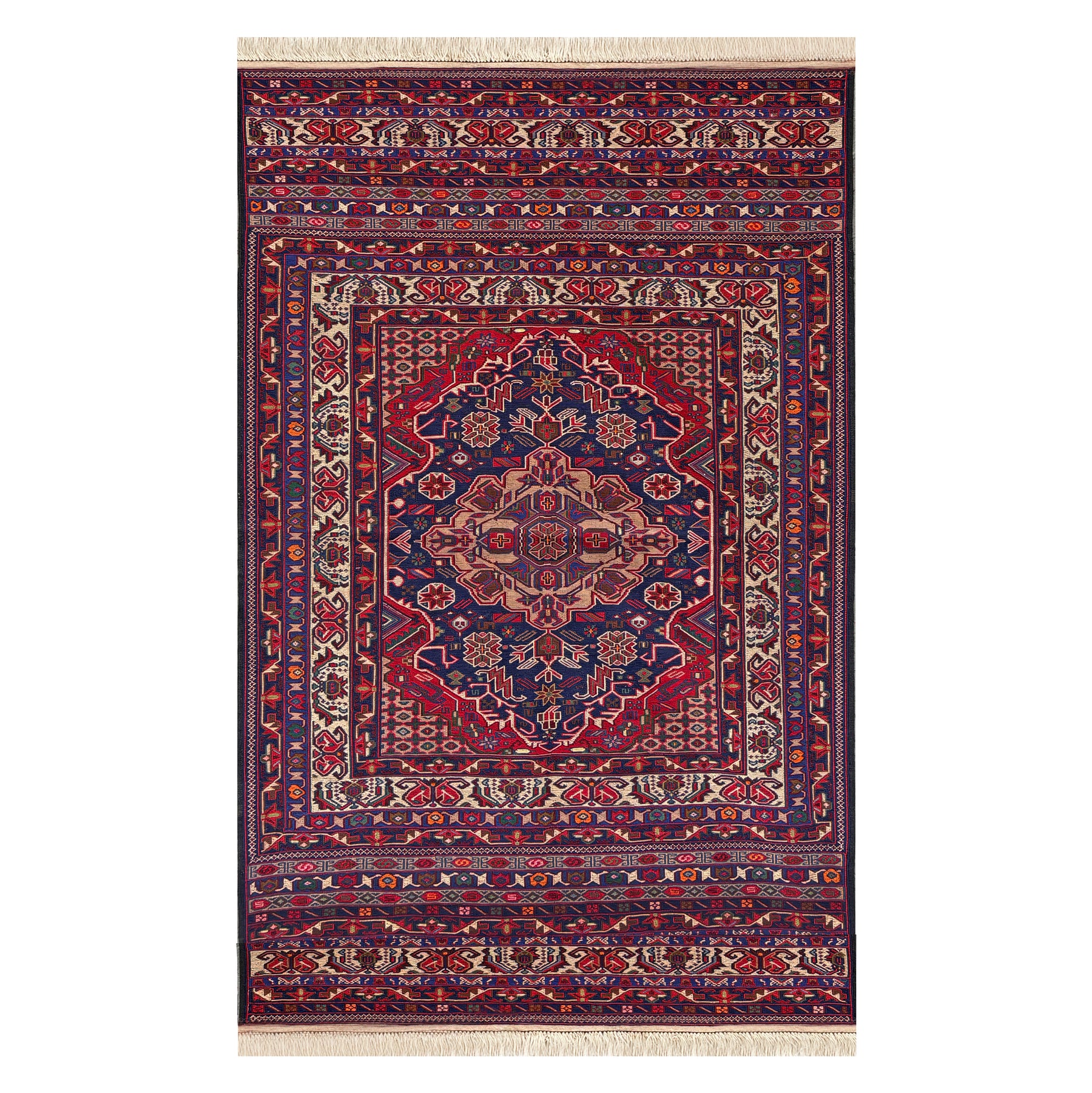
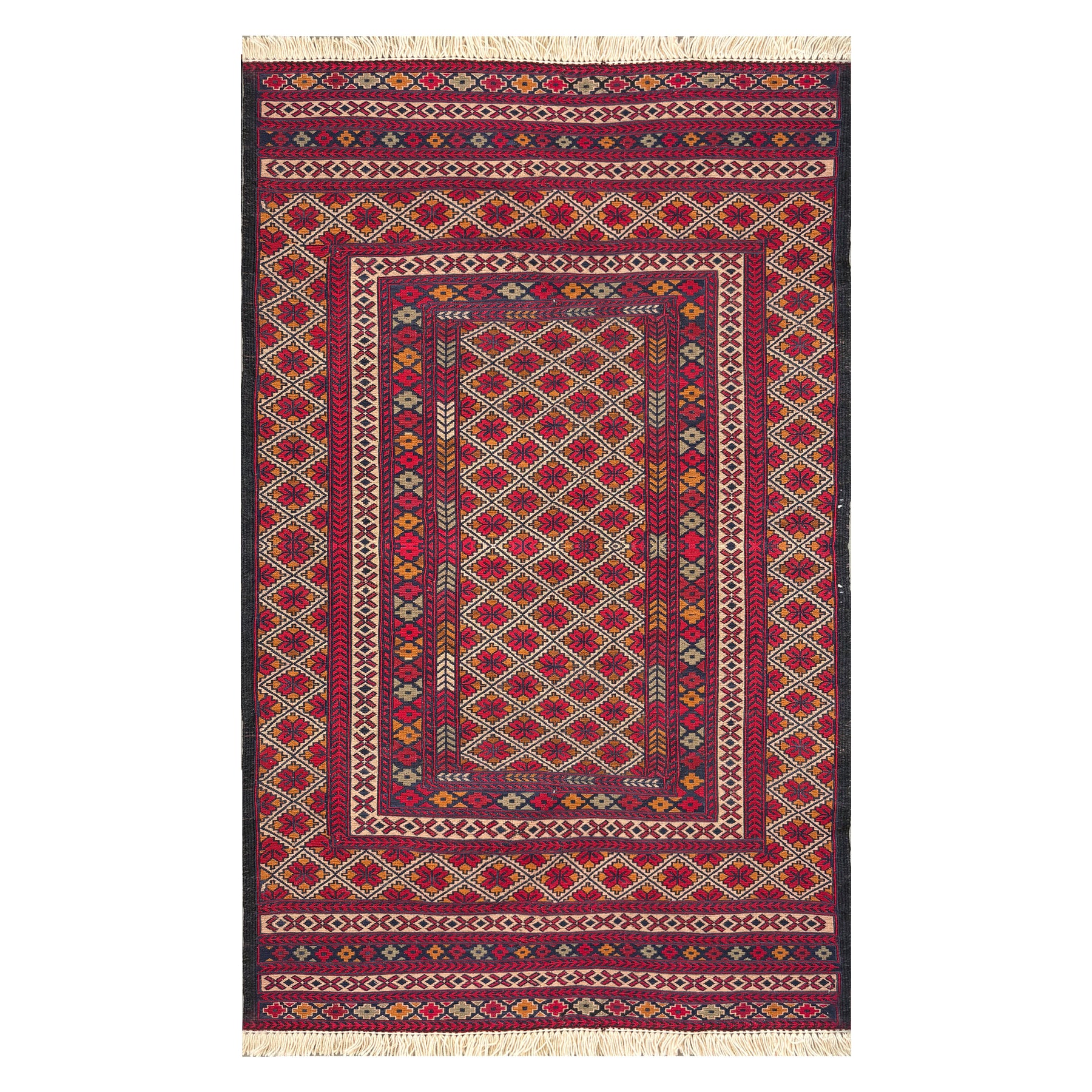
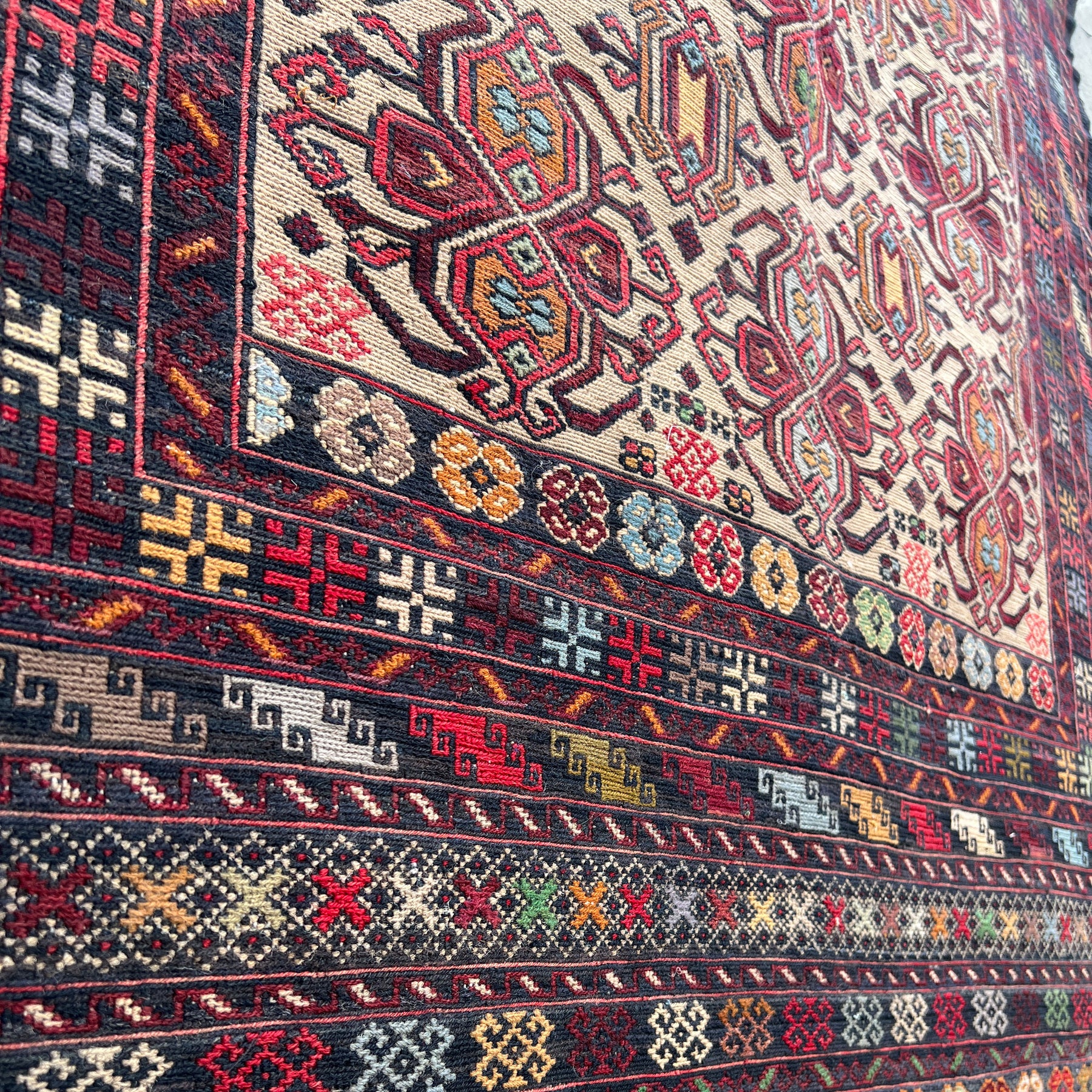
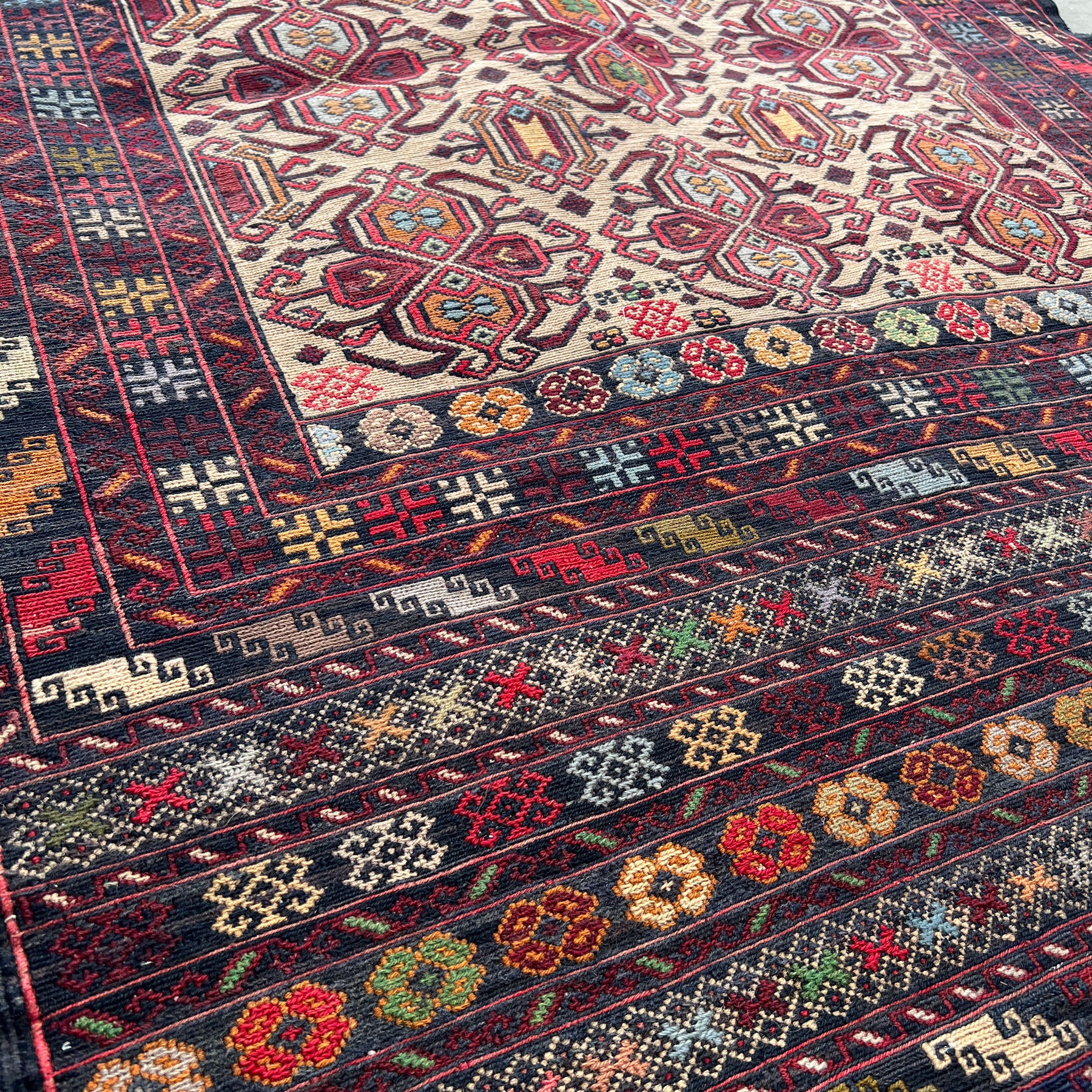
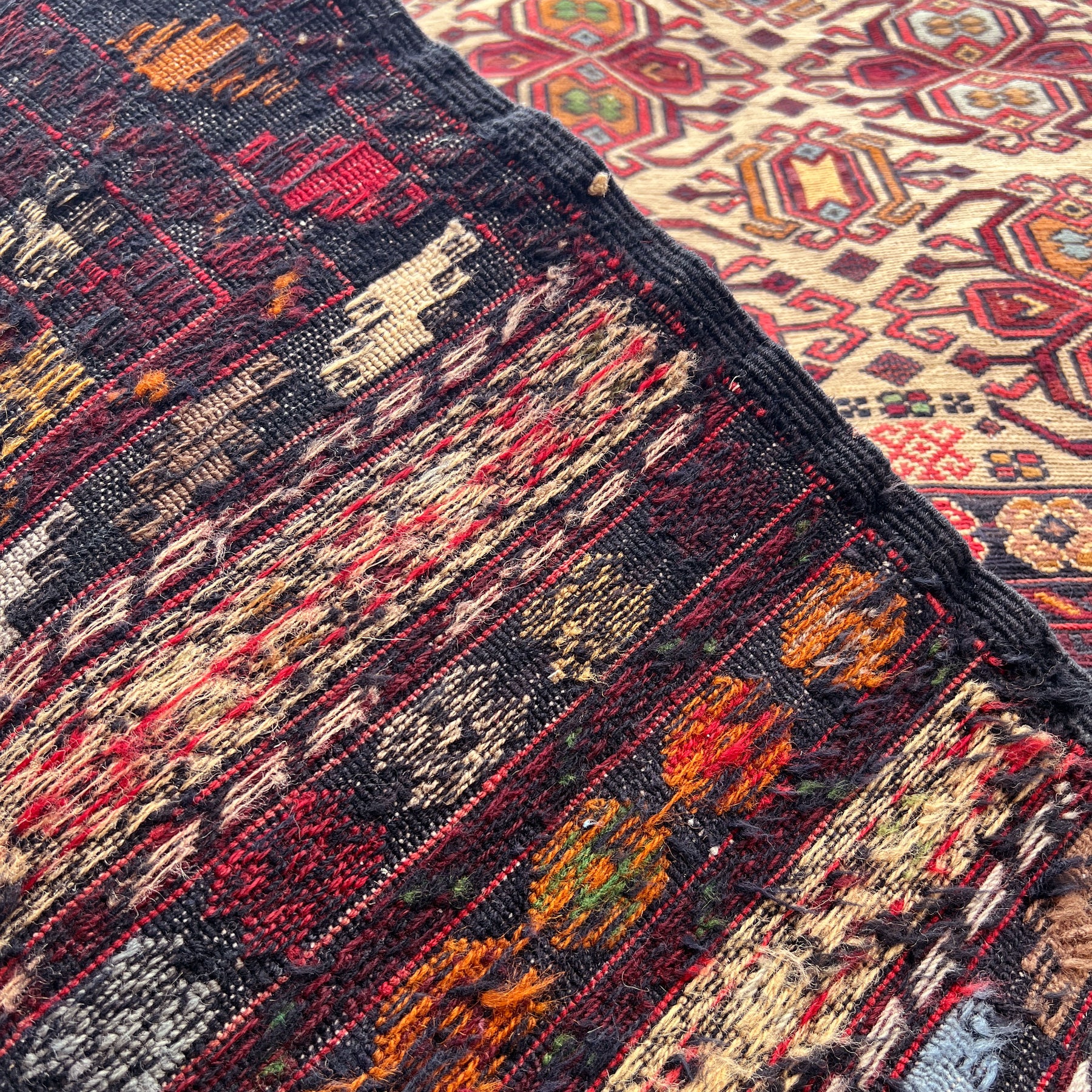
The garden carpet has one of the longest histories in Islamic textile art: the idea of the paradise garden — a walled enclosure of water, trees, and flowers — rendered in wool and dye as a portable vision of abundance. In this kilim, that idea finds expression in the flat-weave format: the ivory-cream field is scattered with stylised botanical and geometric devices in crimson, olive green, navy, and amber, each one freely distributed across the surface in a pattern that reads as spontaneous but is precisely placed within the structure of the slit-woven tapestry. The dense and highly coloured border arrangement — multiple bands of small geometric devices in a near-full spectrum of natural dye tones — frames the relatively open field with considerable decorative richness. Woven entirely in wool by Turkmen craftspeople in Herat.
A hand-woven rug is an investment piece. With proper care it will last a lifetime and become a cherished heirloom. Each knot in this collection is tied by hand by nomadic tribesmen, making every piece entirely one of a kind.
Variations in colour and tone — known as abrash — are a hallmark of authentic handmade rugs, particularly tribal and vintage pieces. Wear and age only add to their beauty.
| Origin | Herat, Afghanistan |
| Tribe | Turkmen (Maliky) |
| Technique | Slit-woven tapestry (kilim) |
| Material | Wool |
| One of a kind | Yes |
Coupons
Delivery
You may also like