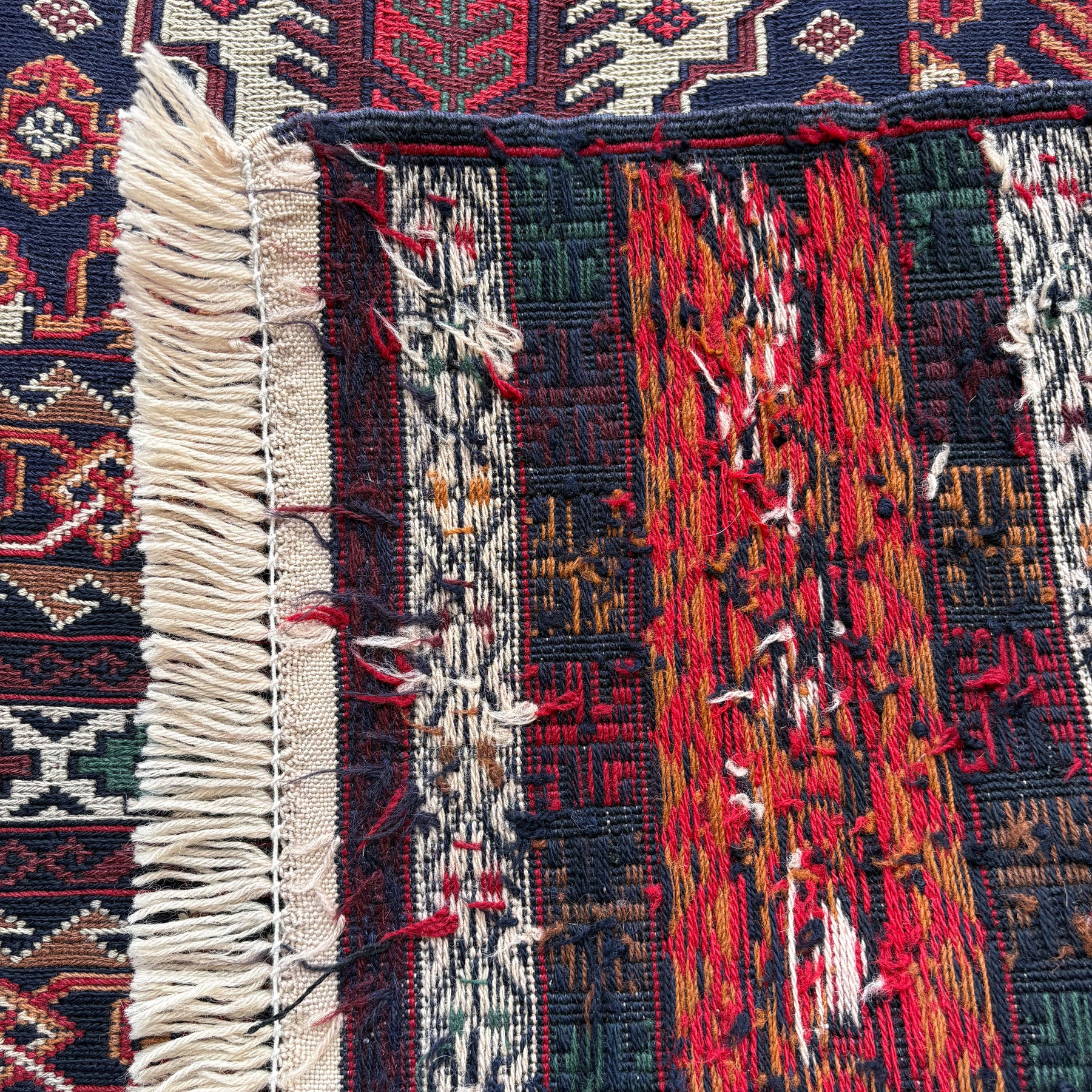
Angoor Maliky One-OF-A-Kind-Afghan Rug
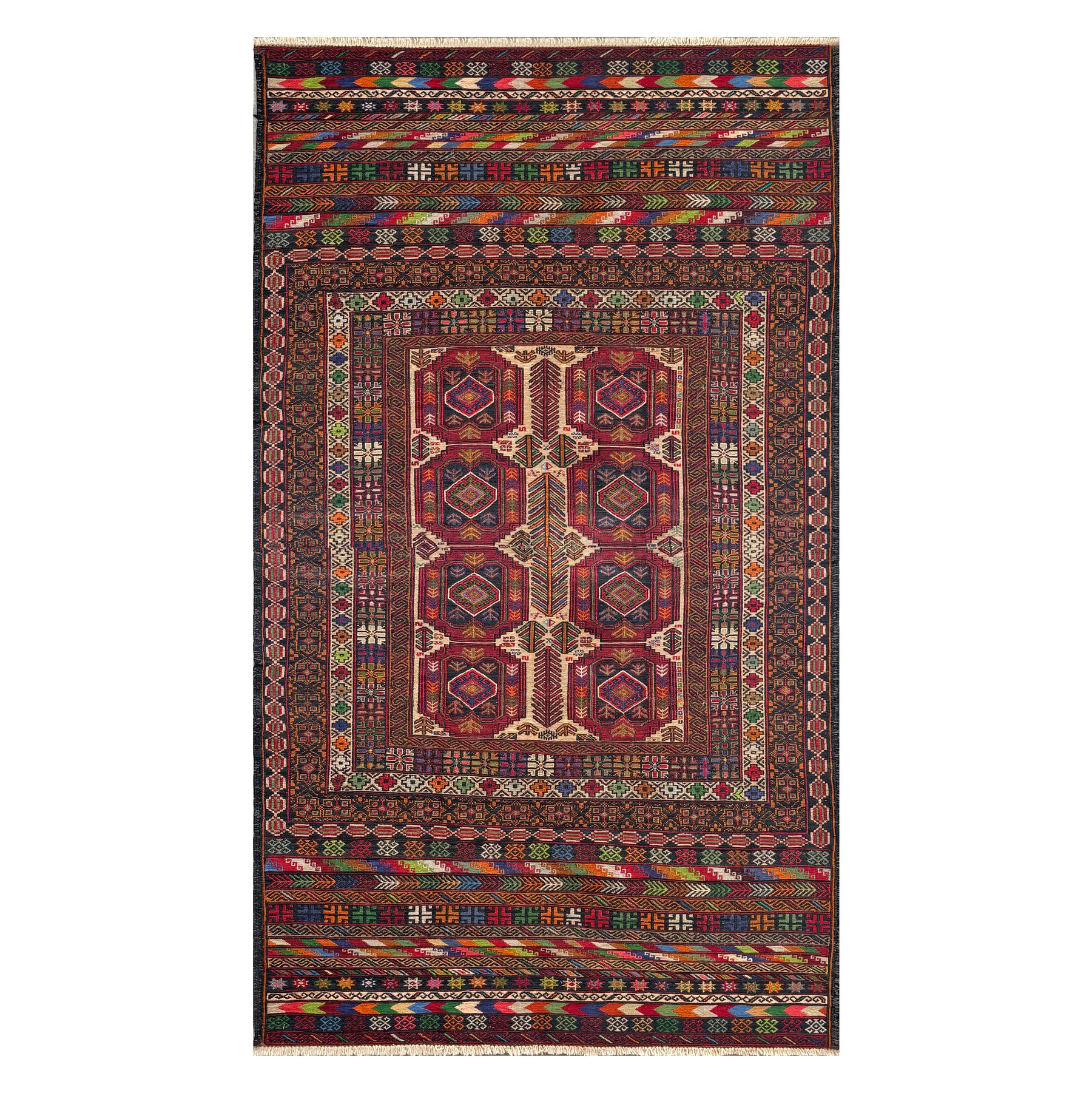
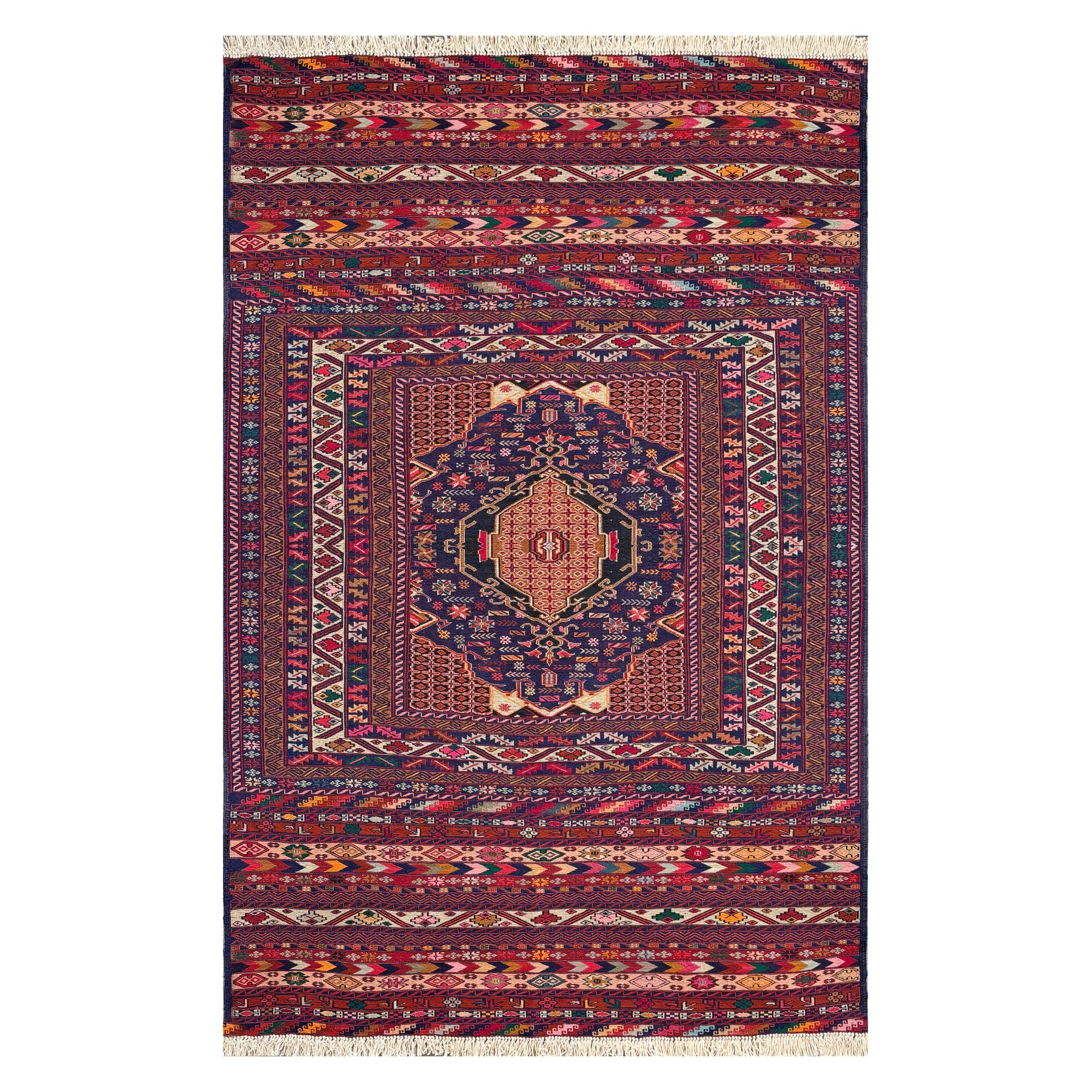
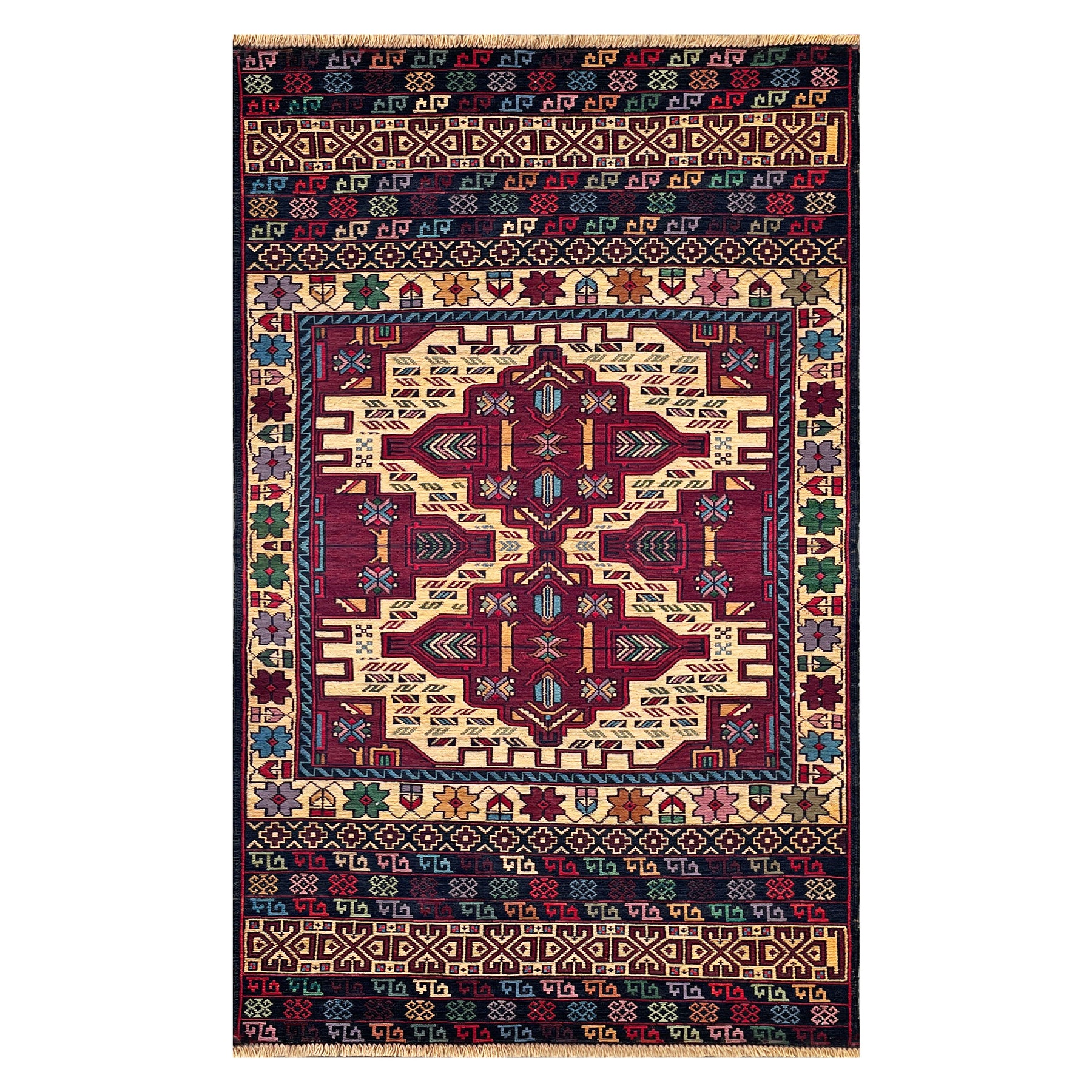
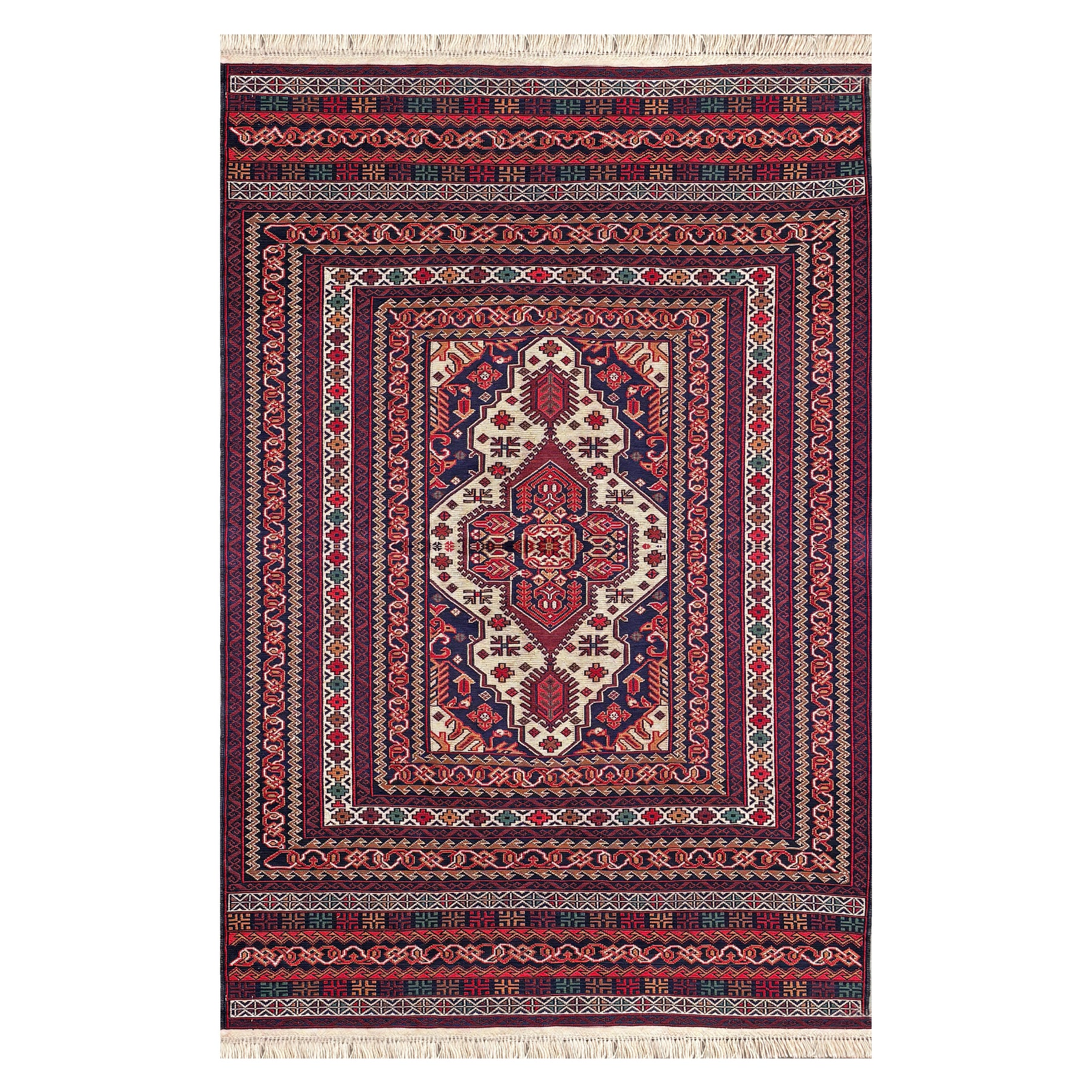
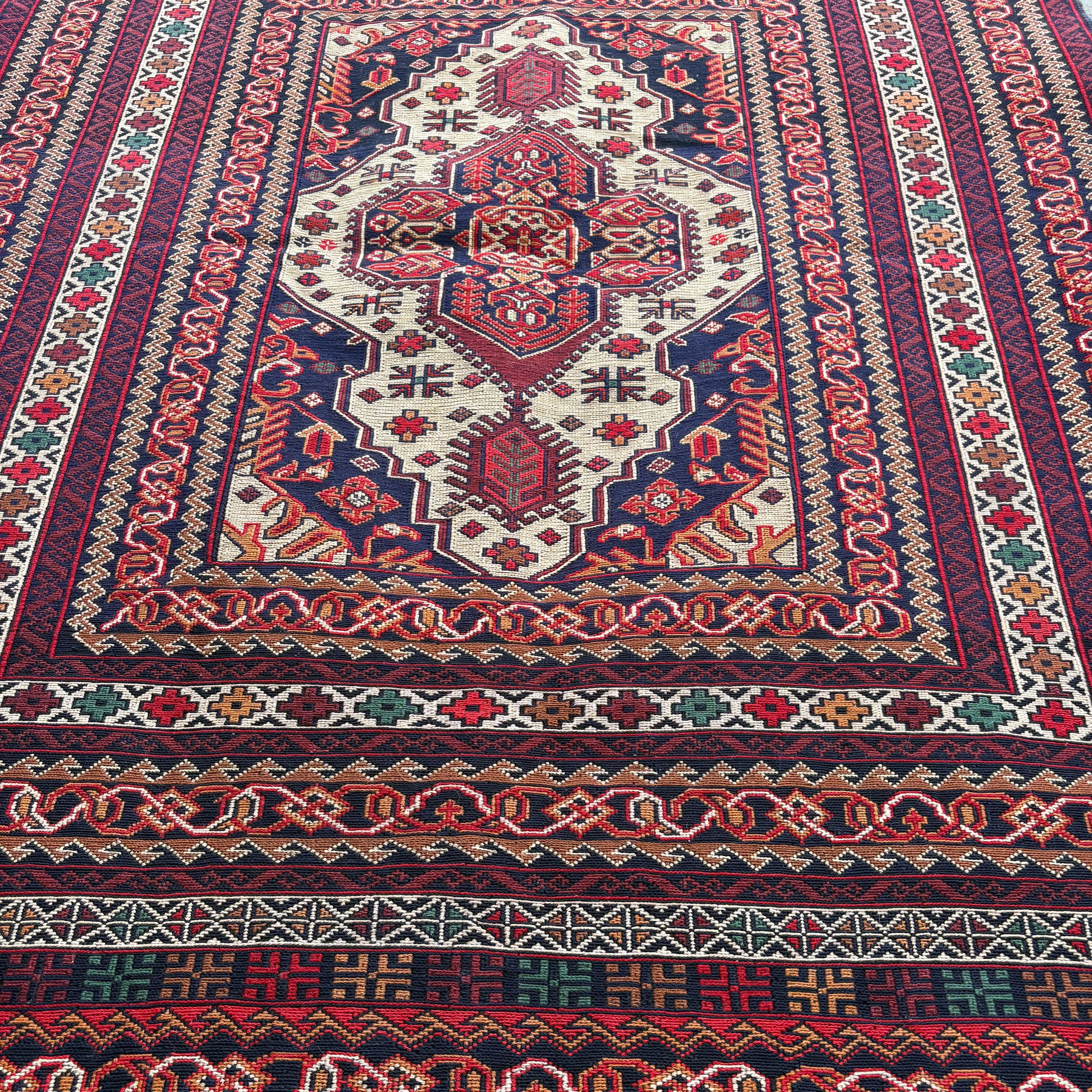
A large Herat Maliky kilim of wine-crimson with a large central ivory medallion in concentric geometric frames — a composition that draws the eye inward with the focused logic of something architectural.
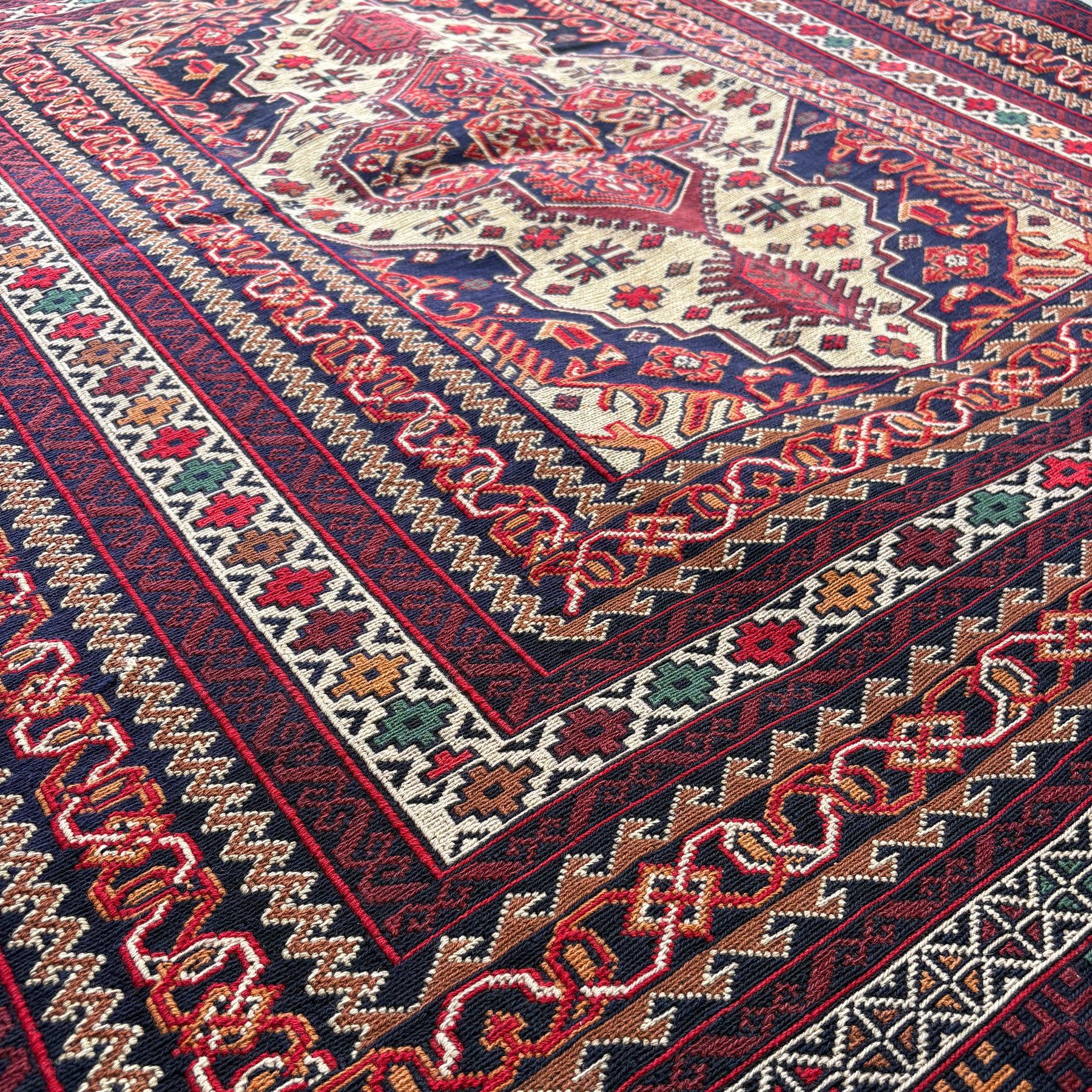
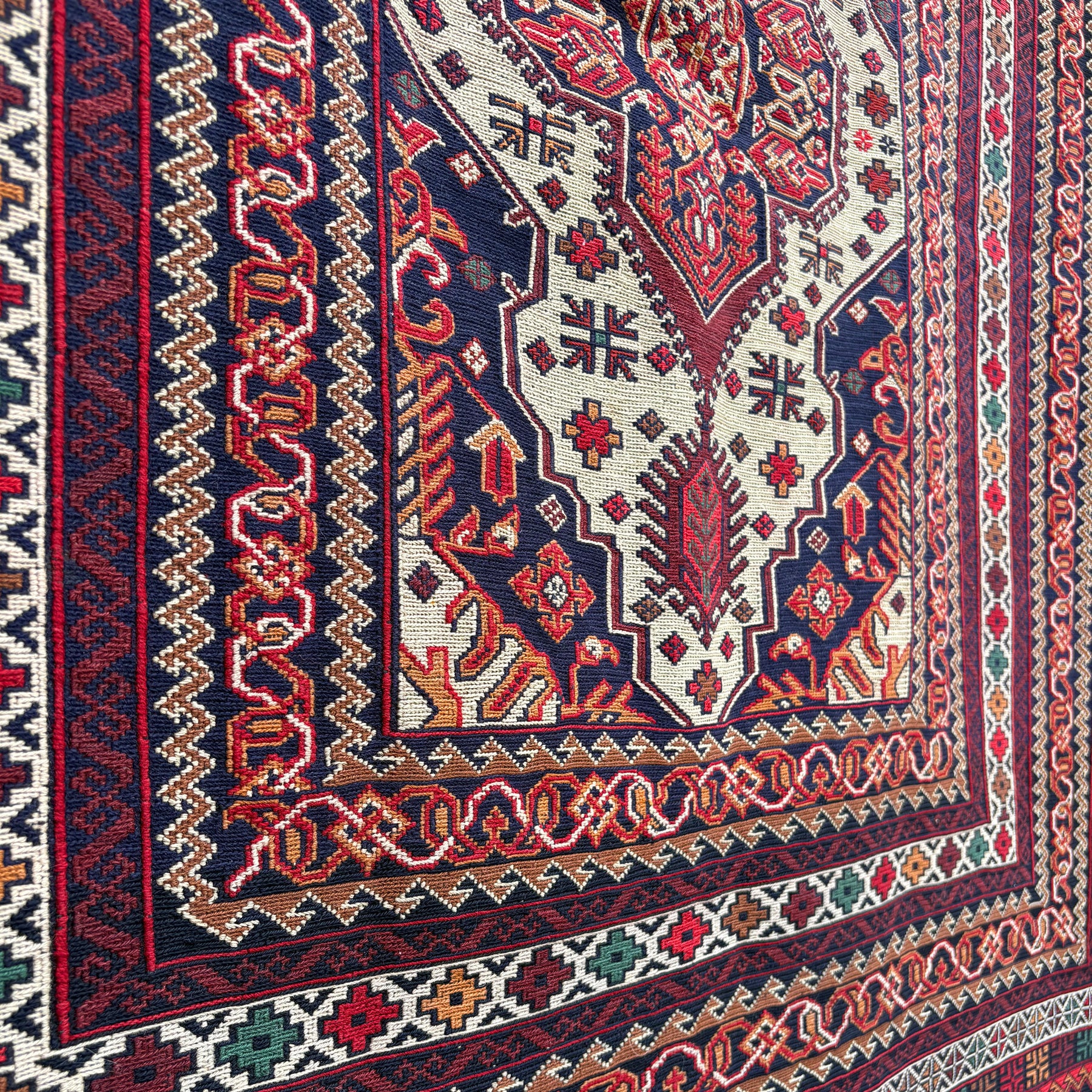
The concentric composition — frame within frame within frame, each one narrowing toward a central point — is one of the oldest organisational principles in Islamic design. It appears in the tile-work of the great mosques, in the carved plasterwork of Mughal architecture, and, with equal authority, in the kilims of Herat. This large piece organises its deep wine-crimson field around a large ivory medallion of concentric geometric construction: successive stepped frames in navy, crimson, and ivory narrowing to a central device, the logic of the inward movement extended to the outer border, which mirrors it in reverse. The palette — wine, navy, ivory — is restrained relative to the most vivid of the Herat kilim group, and that restraint gives the composition a gravity and focused authority that is entirely its own. Woven entirely in wool by Turkmen craftspeople in Herat.
A hand-woven rug is an investment piece. With proper care it will last a lifetime and become a cherished heirloom. Each knot in this collection is tied by hand by nomadic tribesmen, making every piece entirely one of a kind.
Variations in colour and tone — known as abrash — are a hallmark of authentic handmade rugs, particularly tribal and vintage pieces. Wear and age only add to their beauty.
| Origin | Herat, Afghanistan |
| Tribe | Turkmen (Maliky) |
| Technique | Slit-woven tapestry (kilim) |
| Material | Wool |
| One of a kind | Yes |
Ingredients
Coupons
Delivery
You may also like