Sibel Maliky One-OF-A-Kind-Afghan Rug
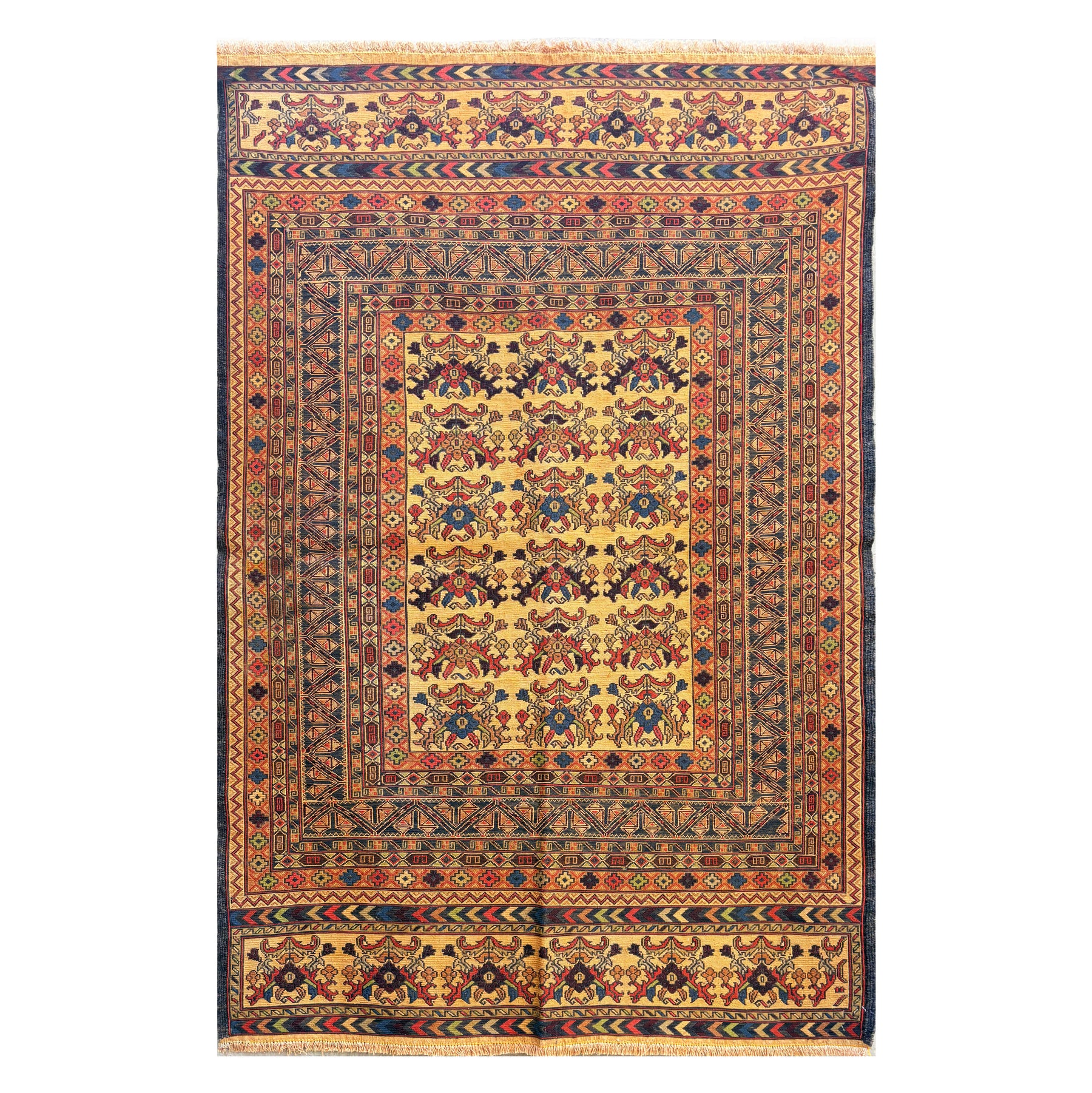
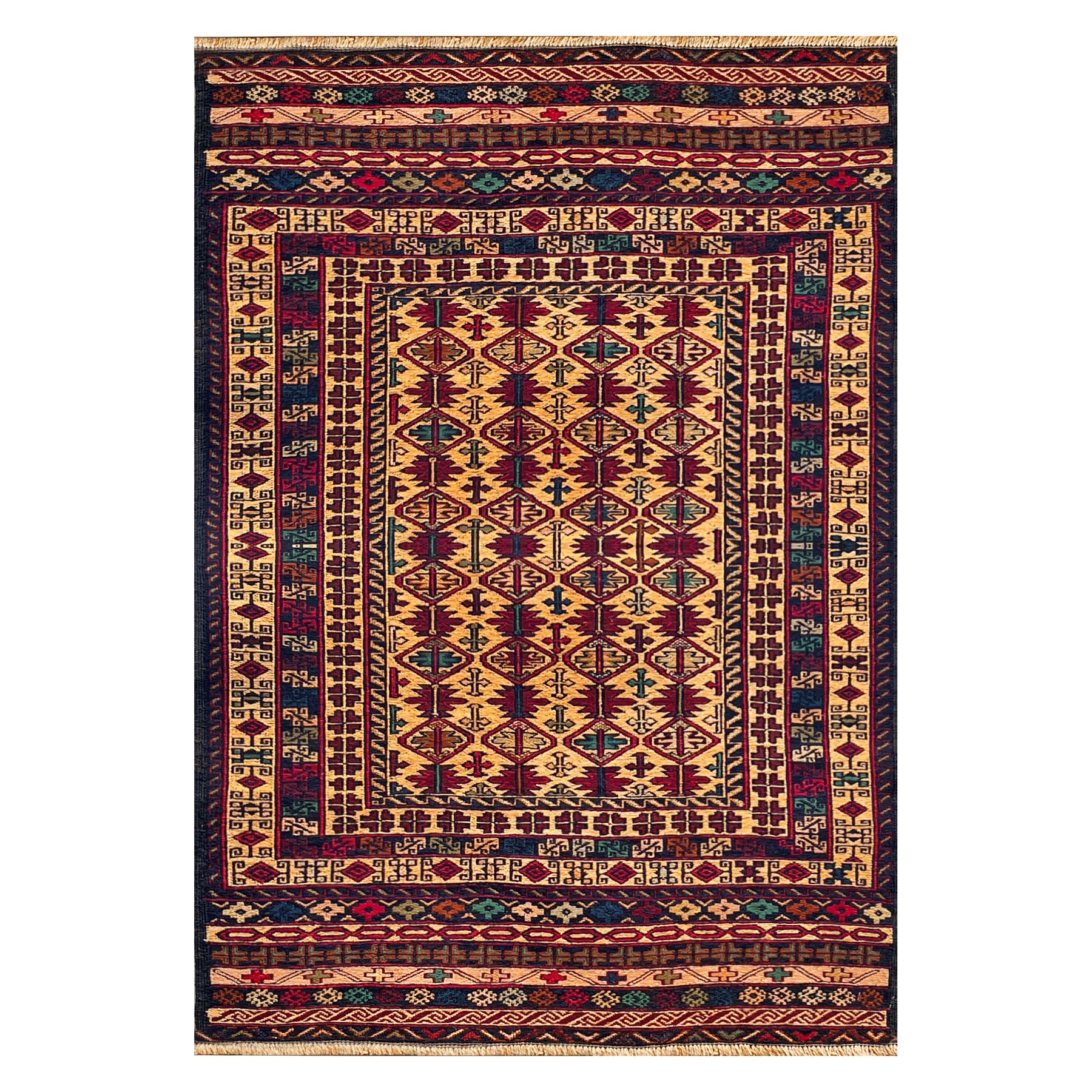
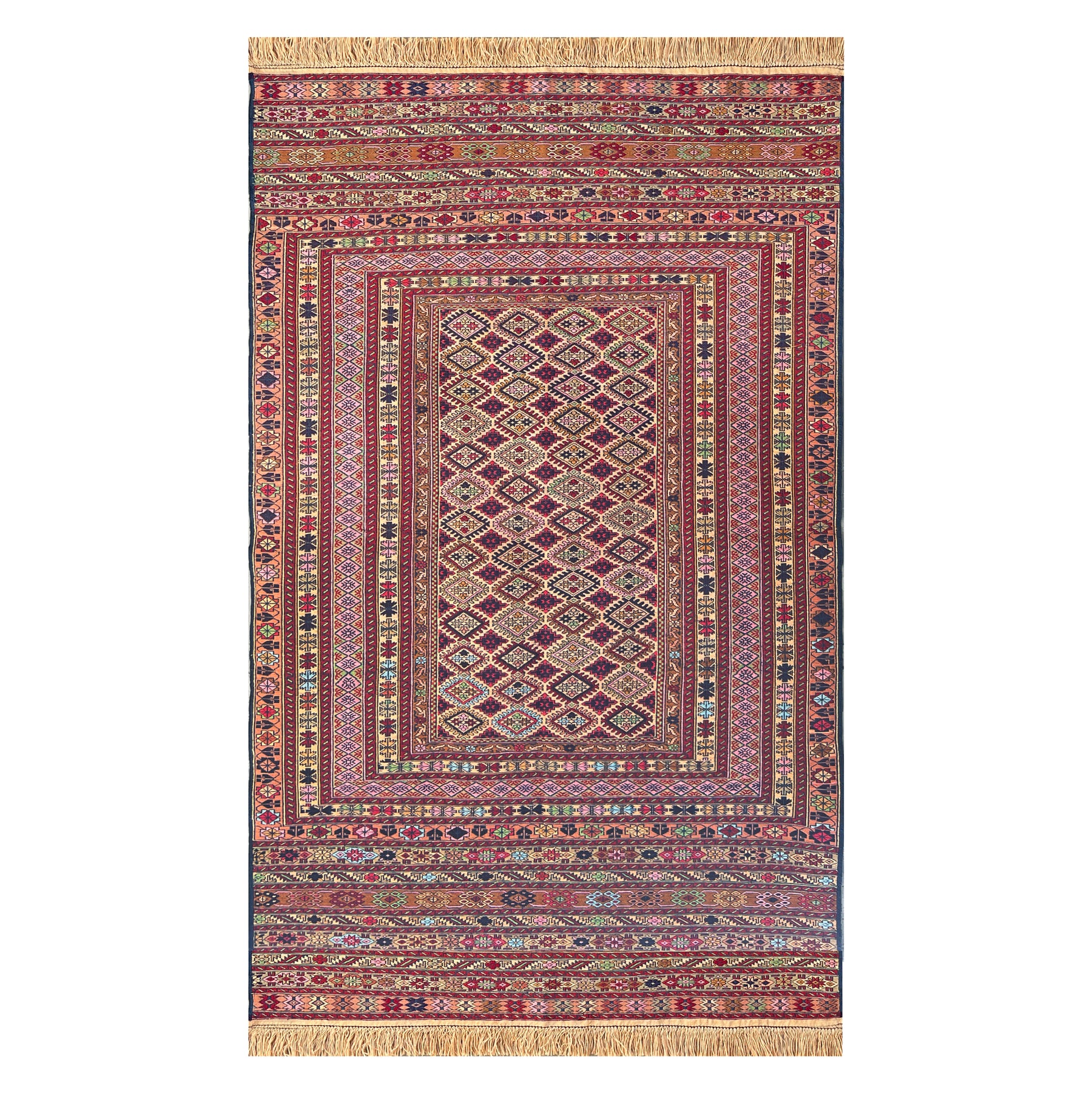
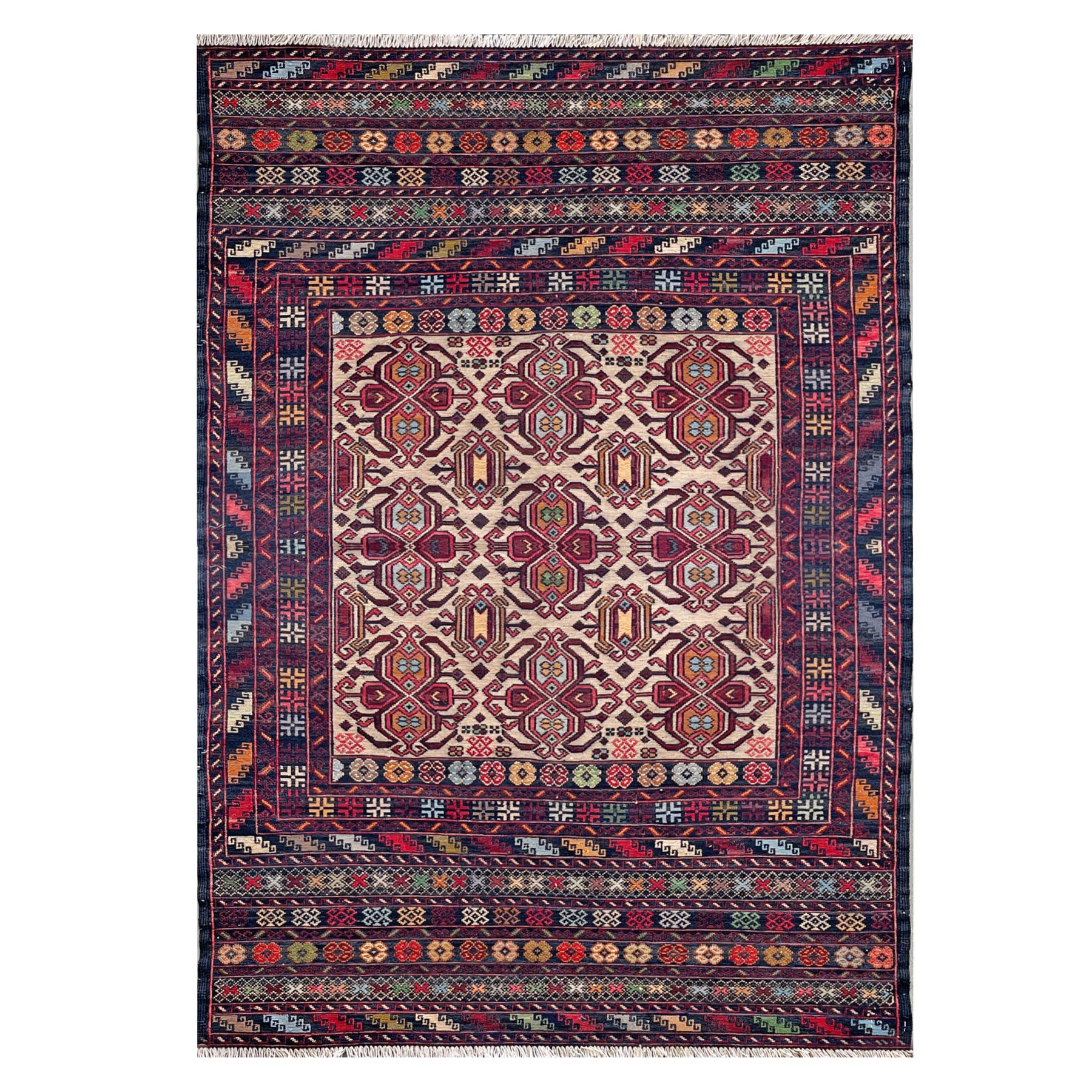
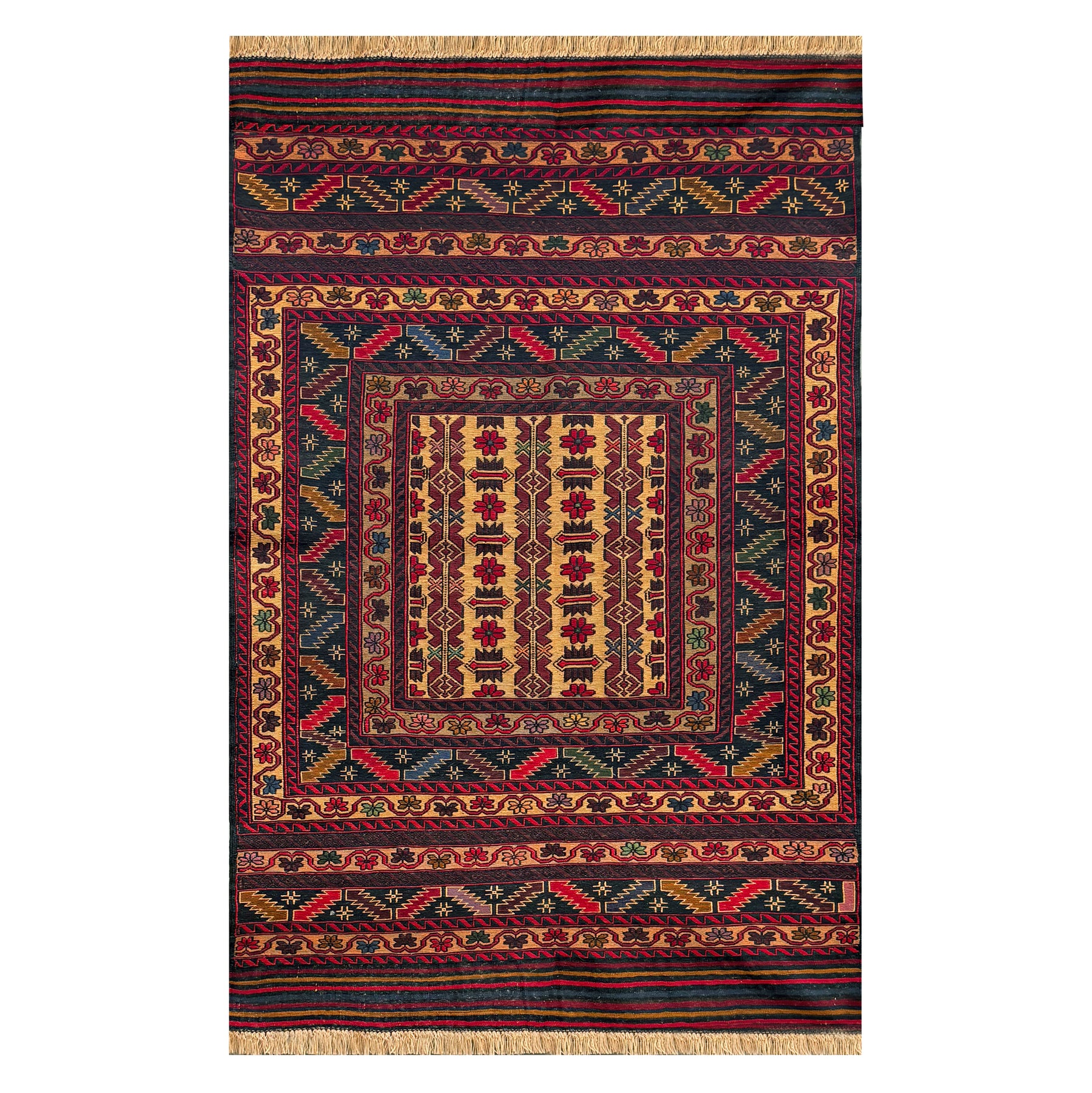
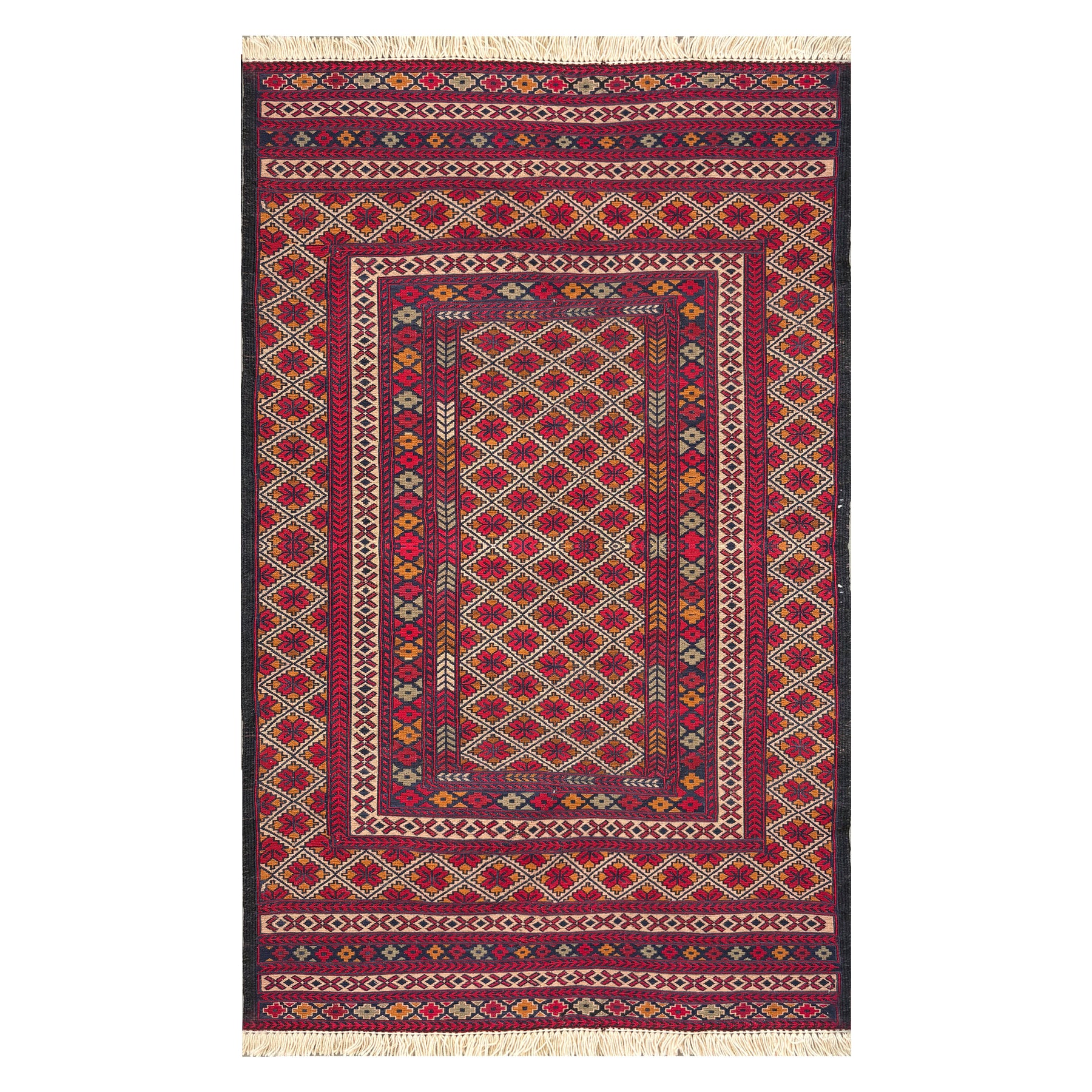
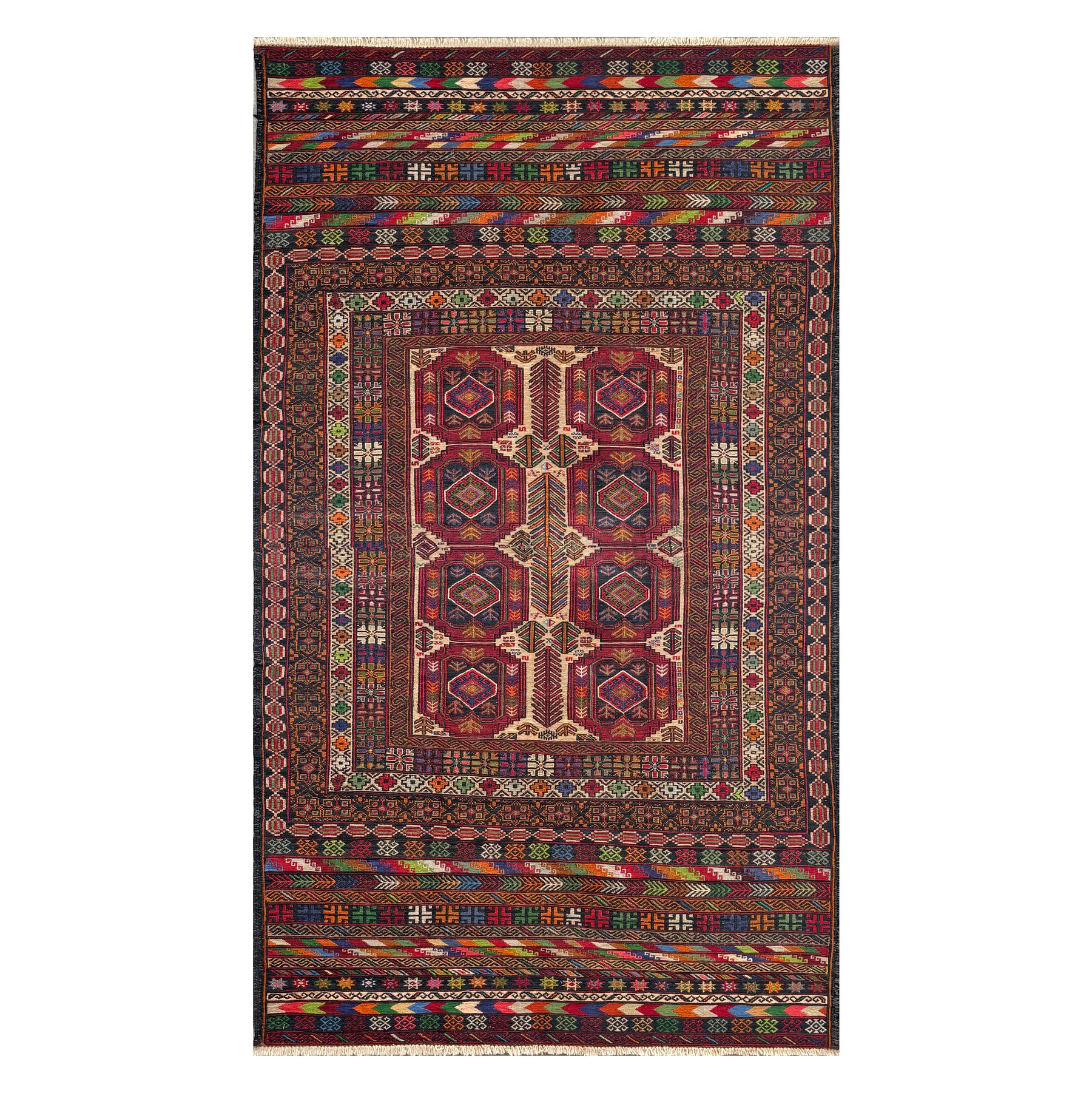
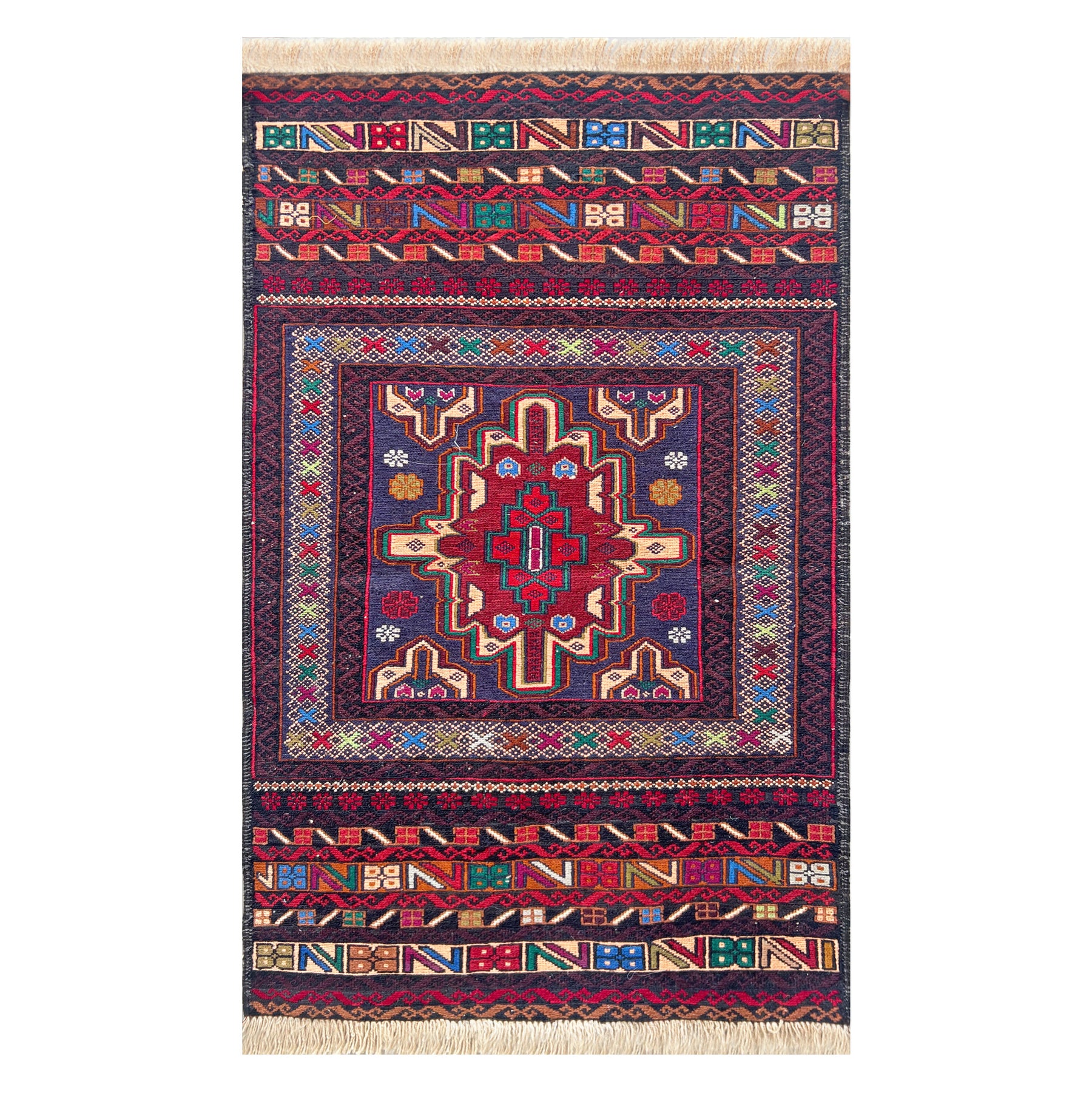
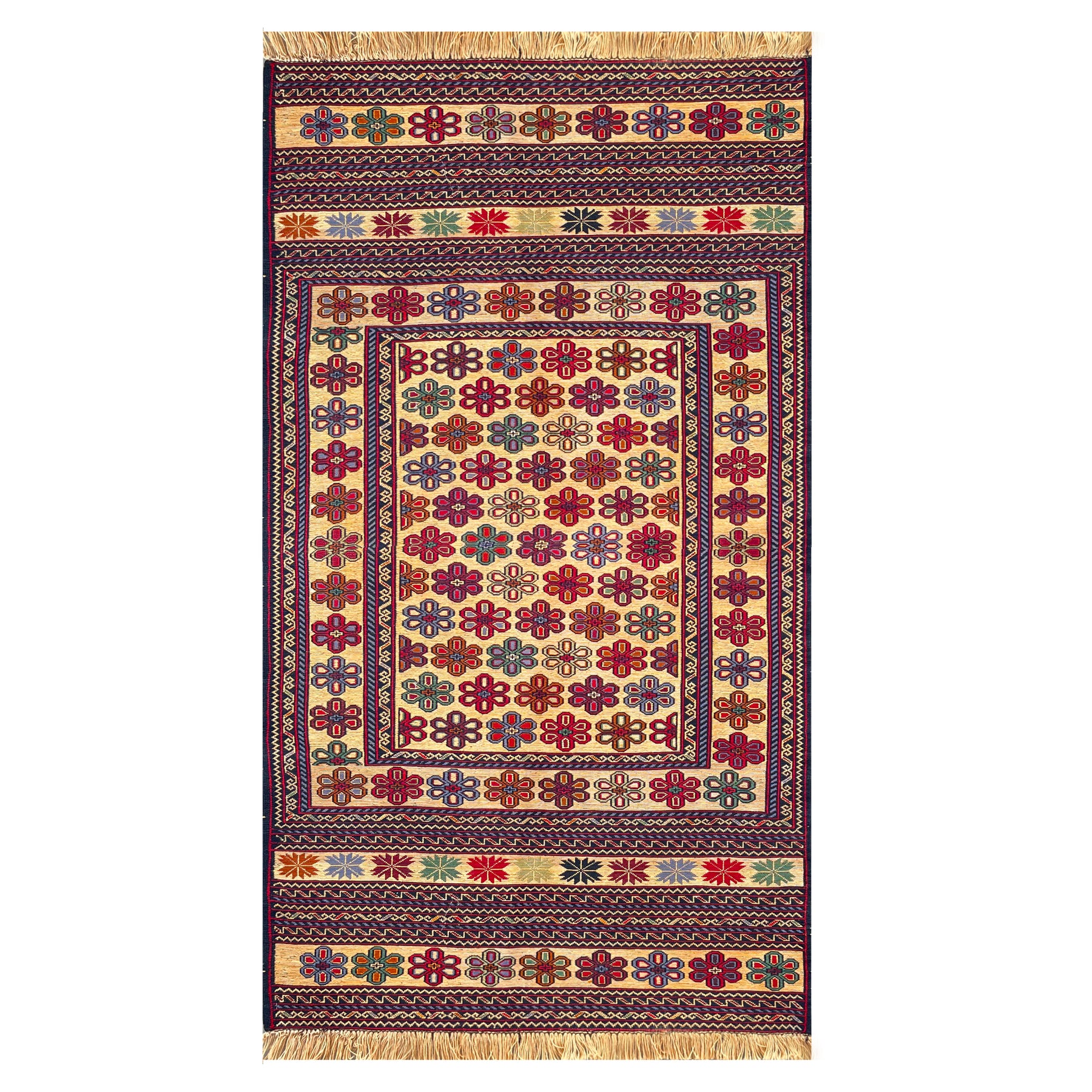
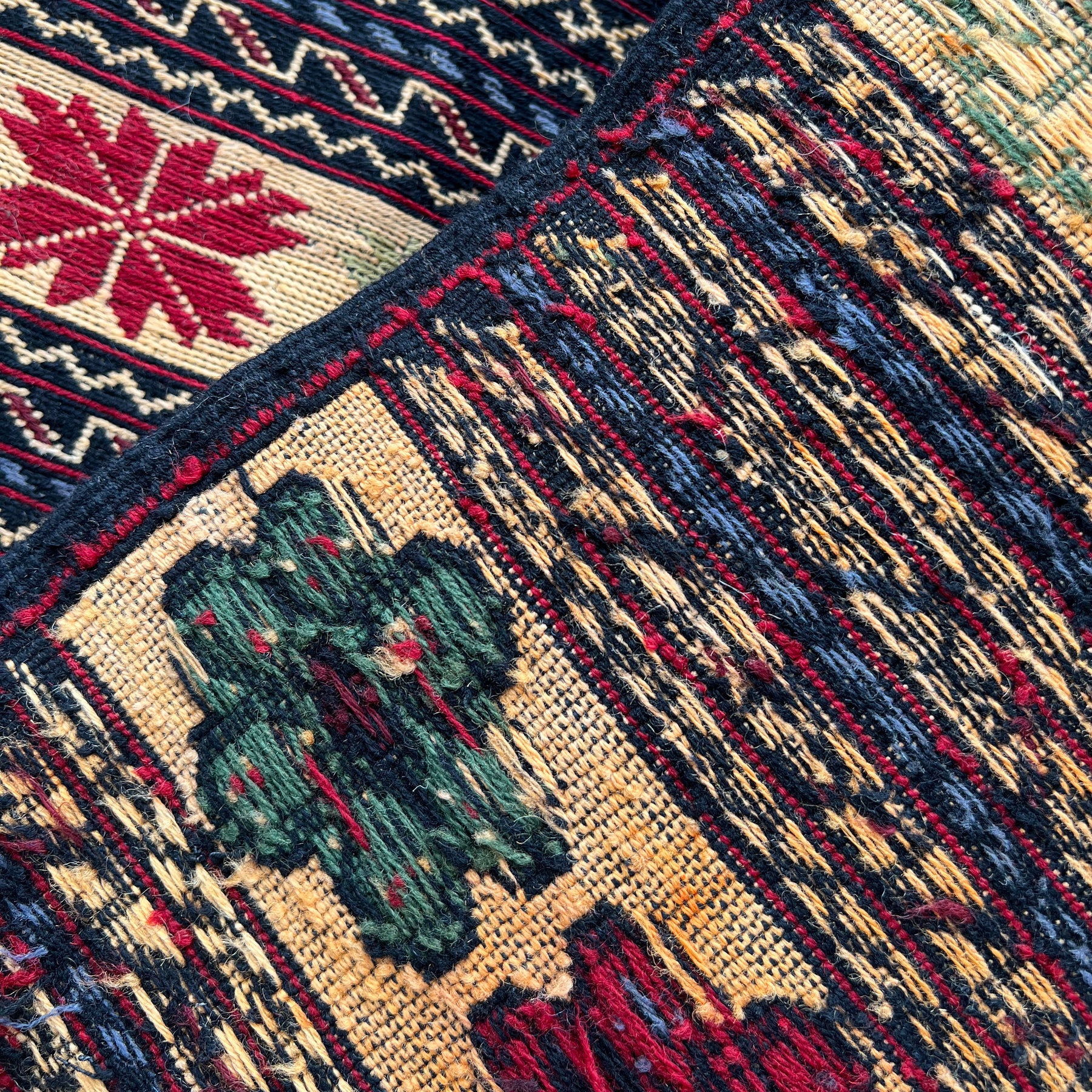
A Herat Maliky flatweave of warm golden-amber ground with a dense allover repeat of geometric rosettes — each one a multi-petalled form in crimson, navy, orange, green, and purple — the most purely botanical composition in the Maliky flatweave vocabulary.
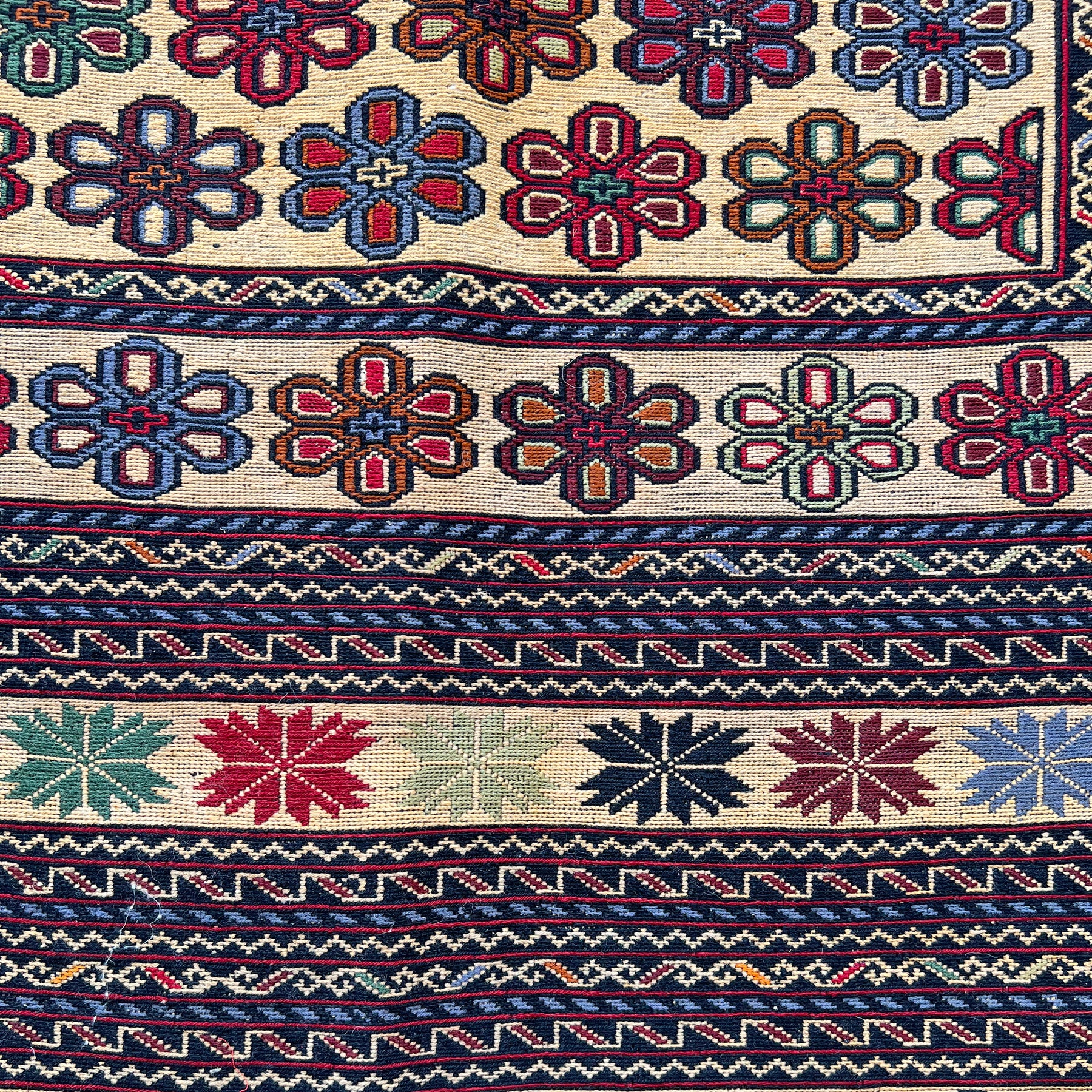
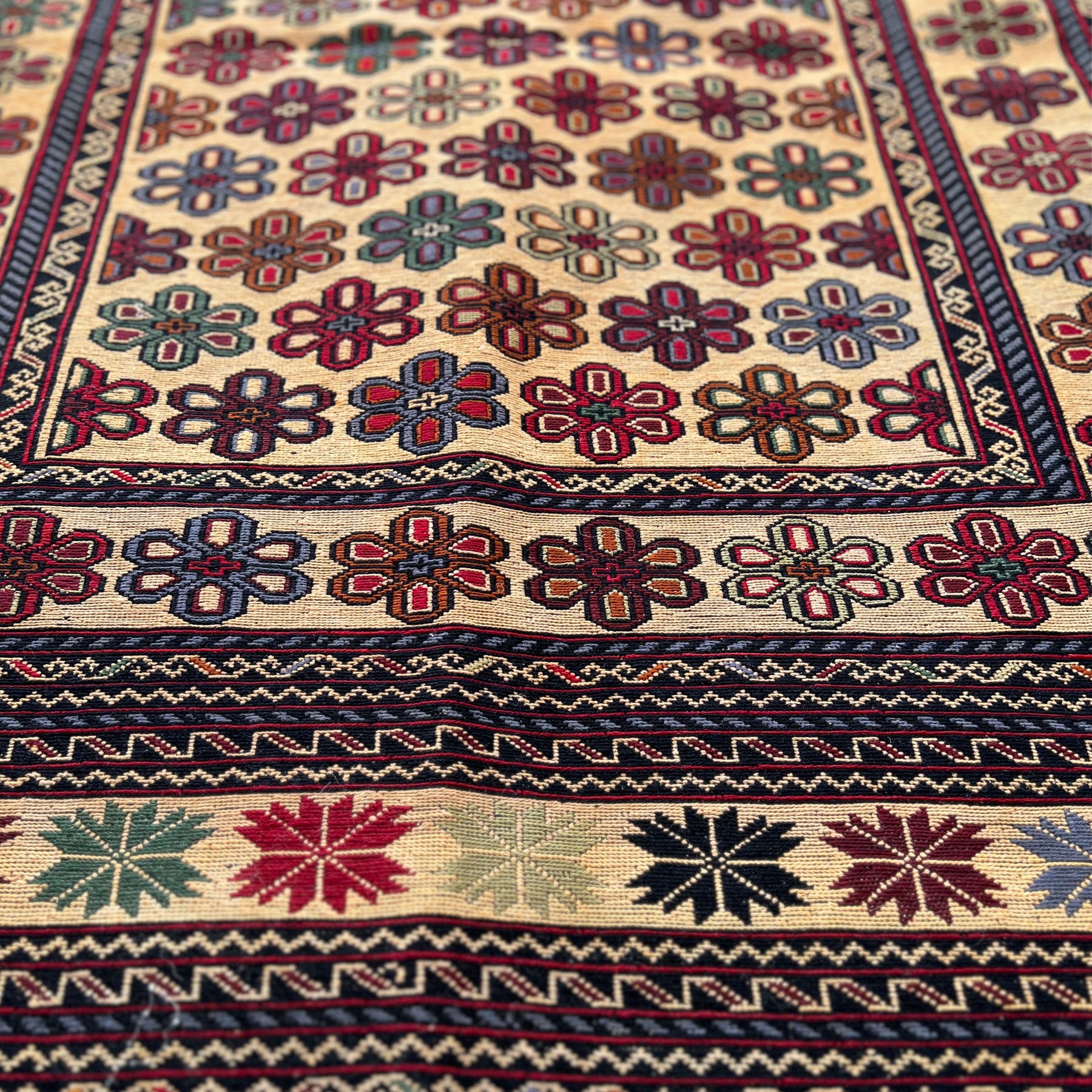
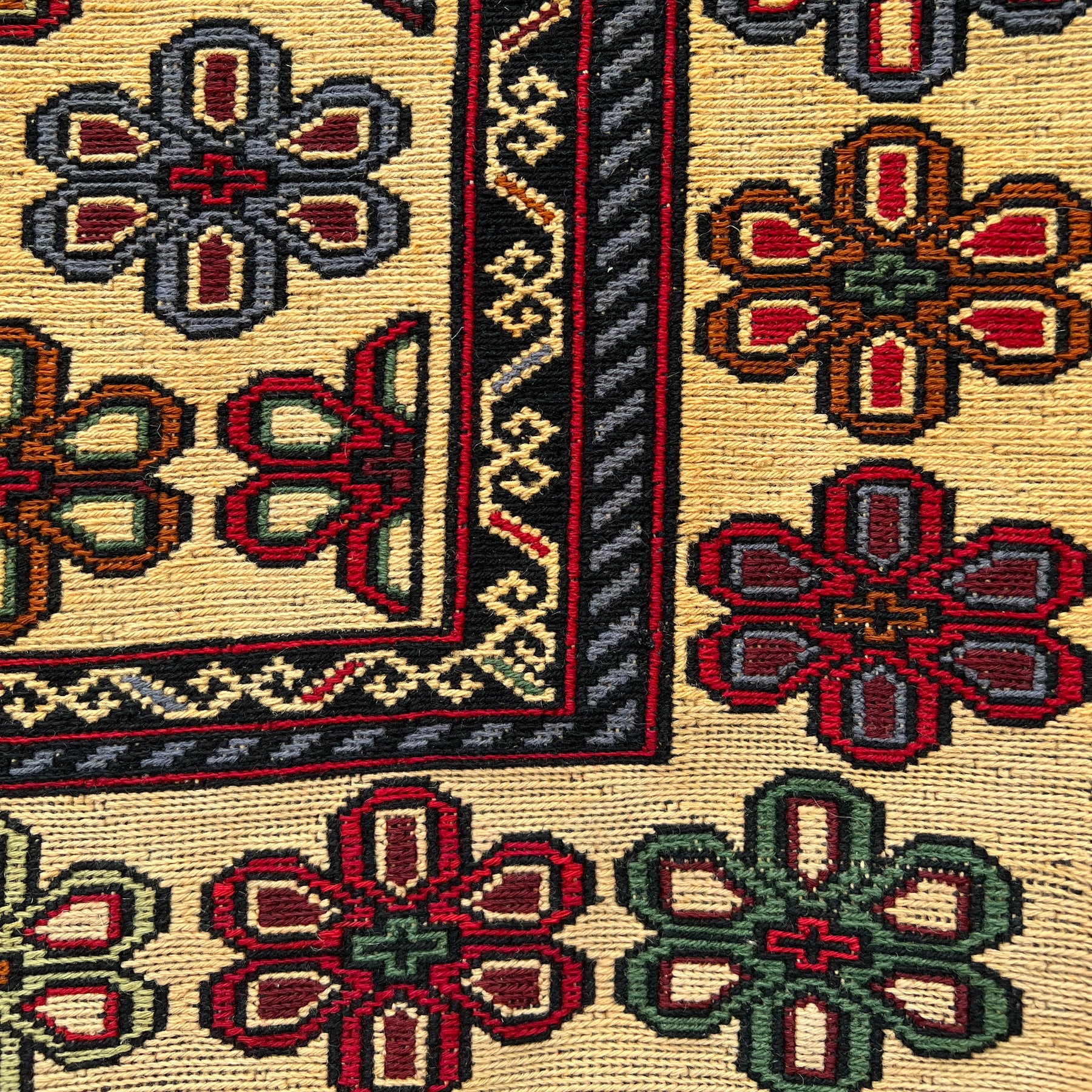
The rosette is the compositional unit here: a large geometric eight-petalled form constructed from interlocking arcs and segments, each one filled with a single saturated colour and varied across the field through a full rotation of the palette. Crimson, navy, amber-orange, bottle green, purple-mauve, dusty pink — the sequence repeats across the warm golden ground without any single colour dominating, the accumulation producing a surface of considerable chromatic richness that reads as botanical even though every line is straight and every angle is calculated. The composition covers the field completely; the amber ground shows only as the narrow channel between the rosette forms, giving the surface a density that rewards close looking and sustains it from across a room.
The surrounding border panels carry the same rosette vocabulary at a slightly varied scale, maintaining compositional unity across all zones of the piece. The wide elem panels at head and foot deploy a different but complementary register: bold, widely-spaced star and snowflake forms on the same amber ground, creating horizontal breathing space at the edges. Woven in wool by Turkmen craftspeople in Herat.
A hand-woven rug is an investment piece. With proper care it will last a lifetime and become a cherished heirloom. Each piece in this collection is made by hand, making every piece entirely one of a kind.
Variations in colour and tone — known as abrash — are a hallmark of authentic handmade rugs, particularly tribal and vintage pieces. Wear and age only add to their beauty.
| Origin | Herat, Afghanistan |
| Tribe | Turkmen (Maliky) |
| Technique | Flatweave (mixed jajim and tapestry weave) |
| Material | Wool |
| One of a kind | Yes |
Coupons
Delivery
You may also like