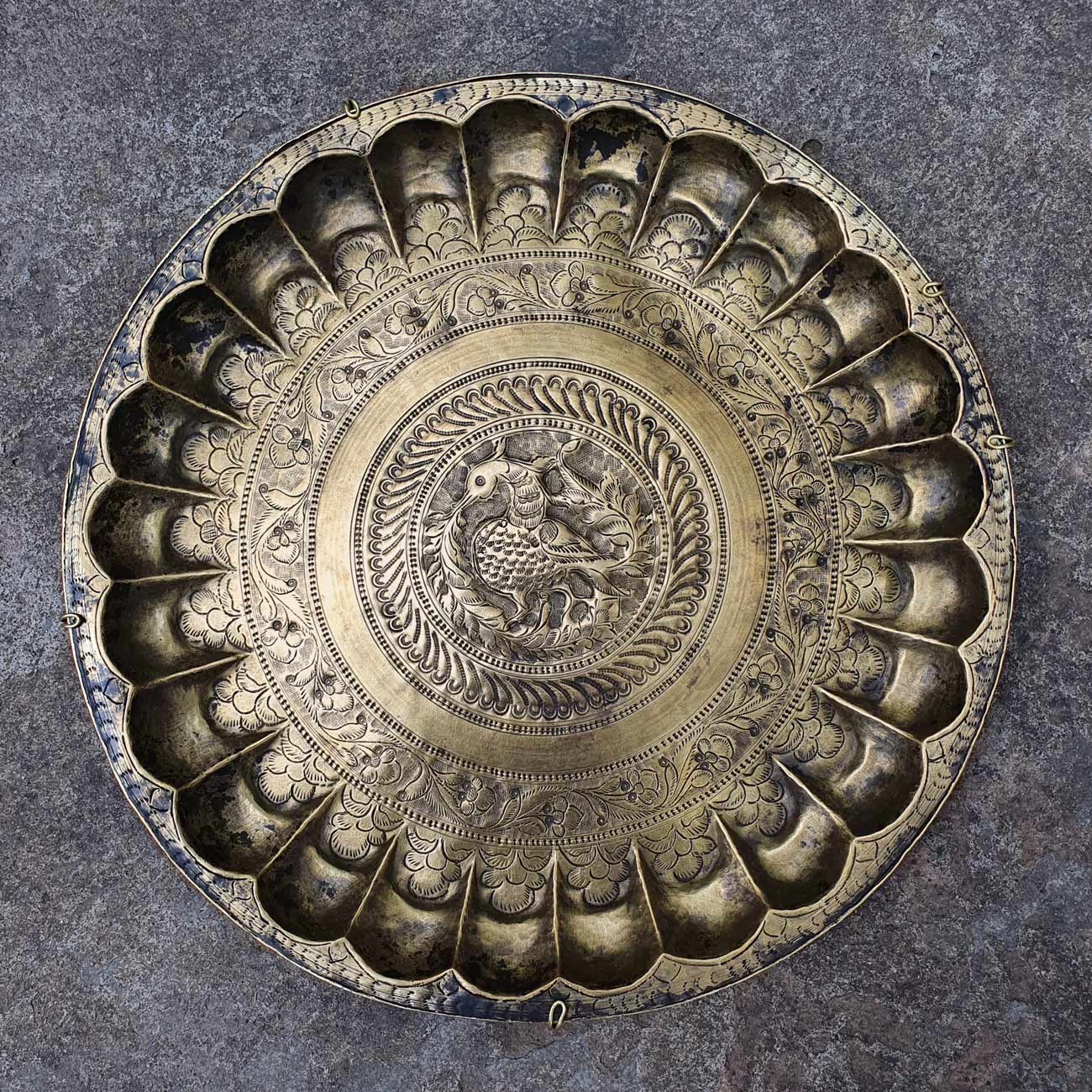
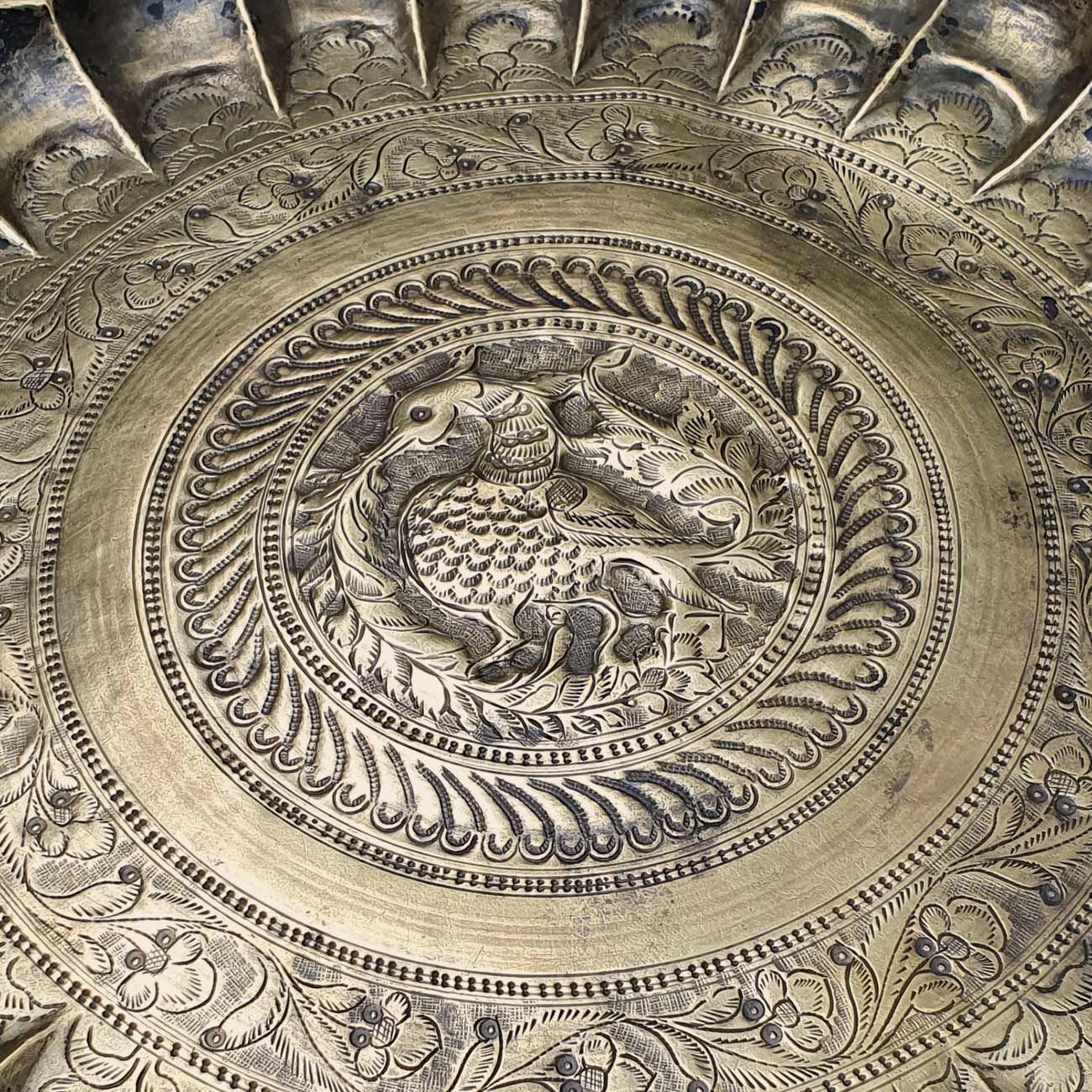
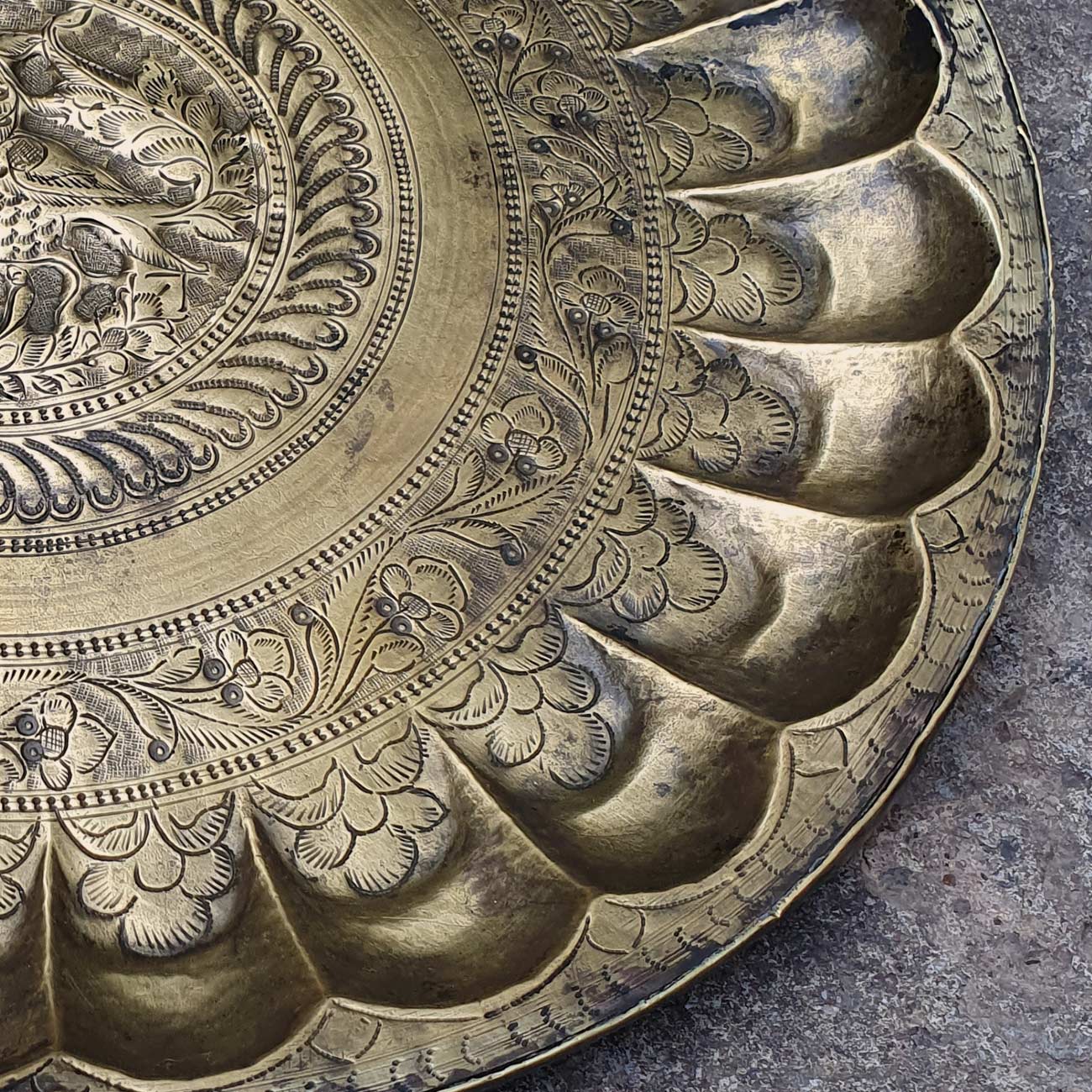
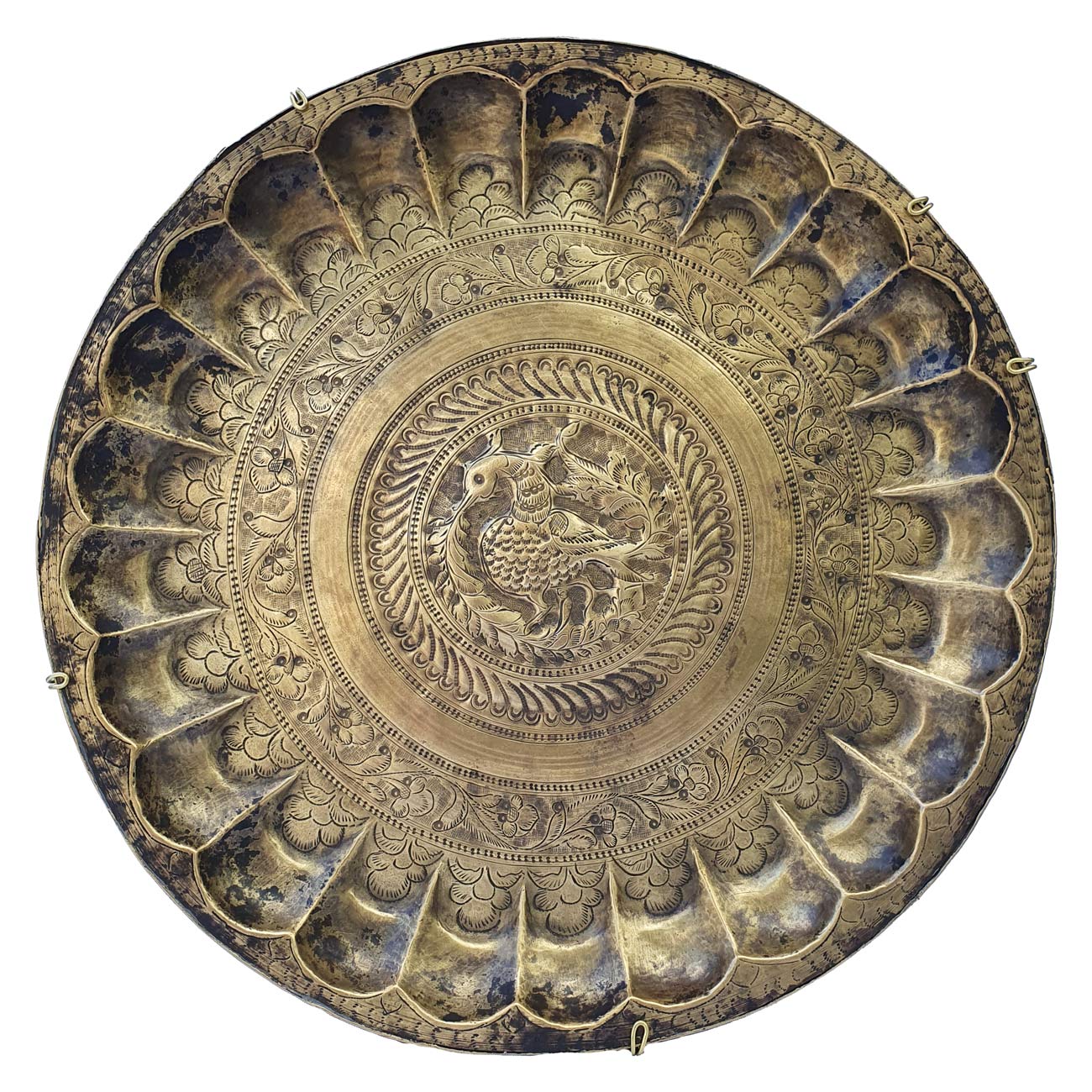
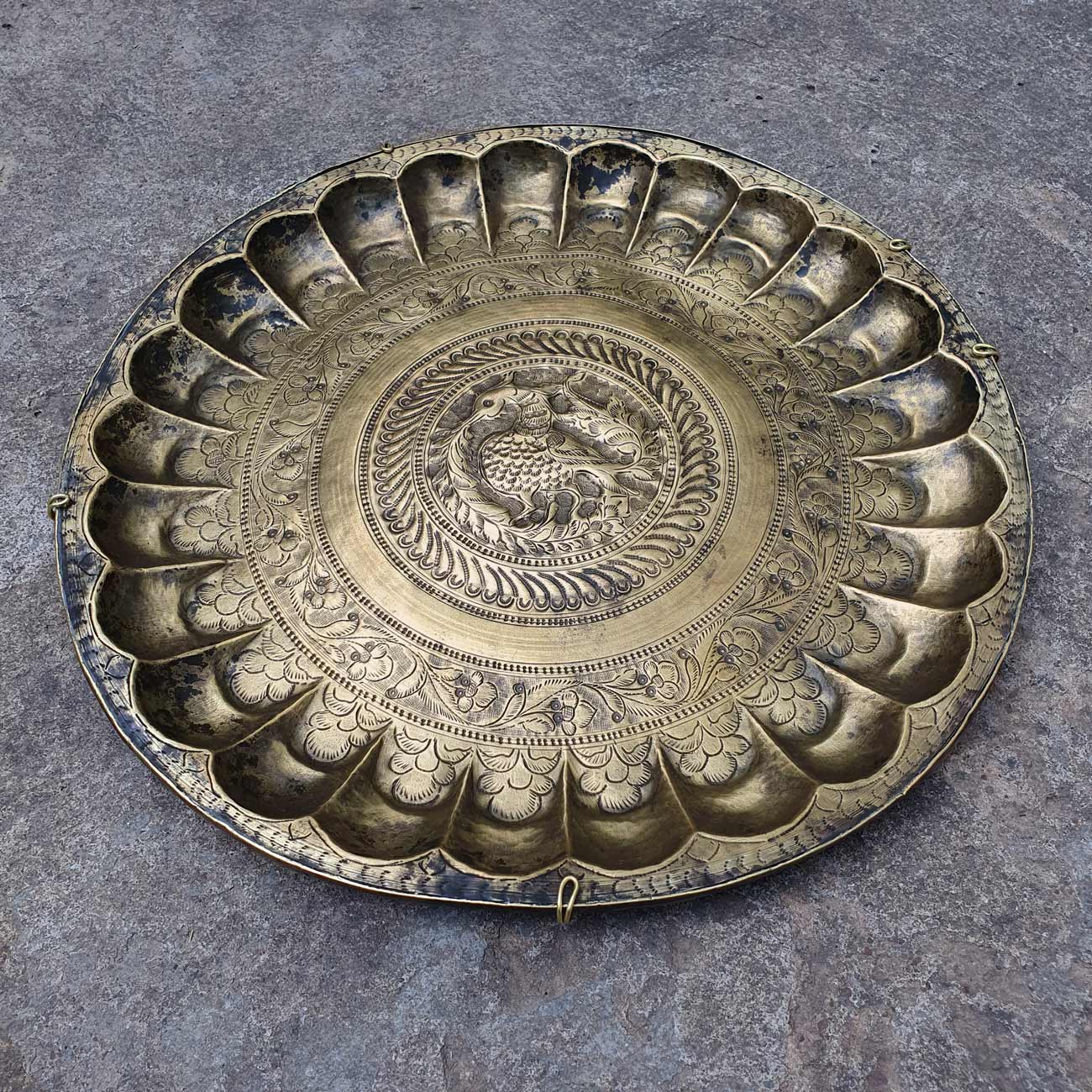
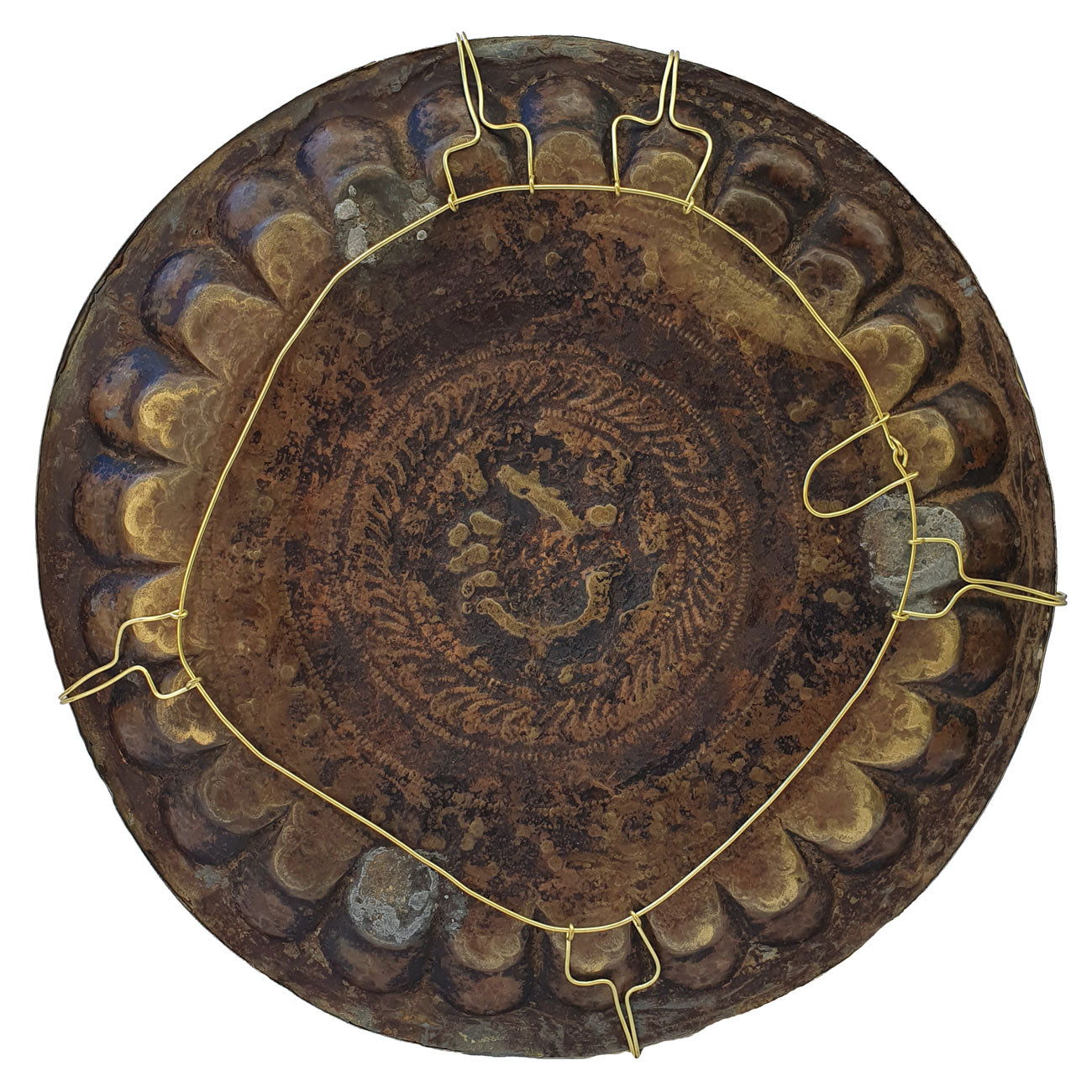
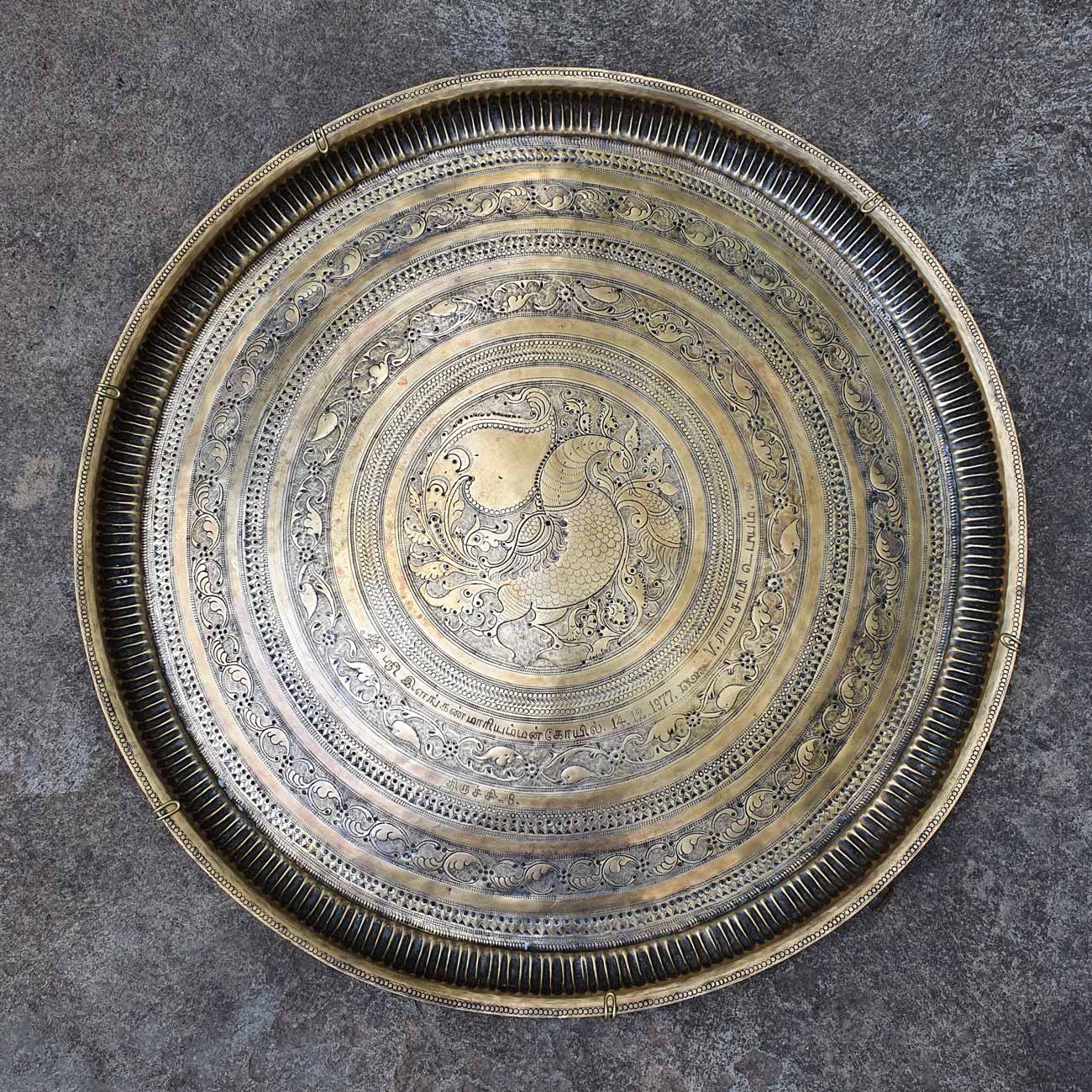
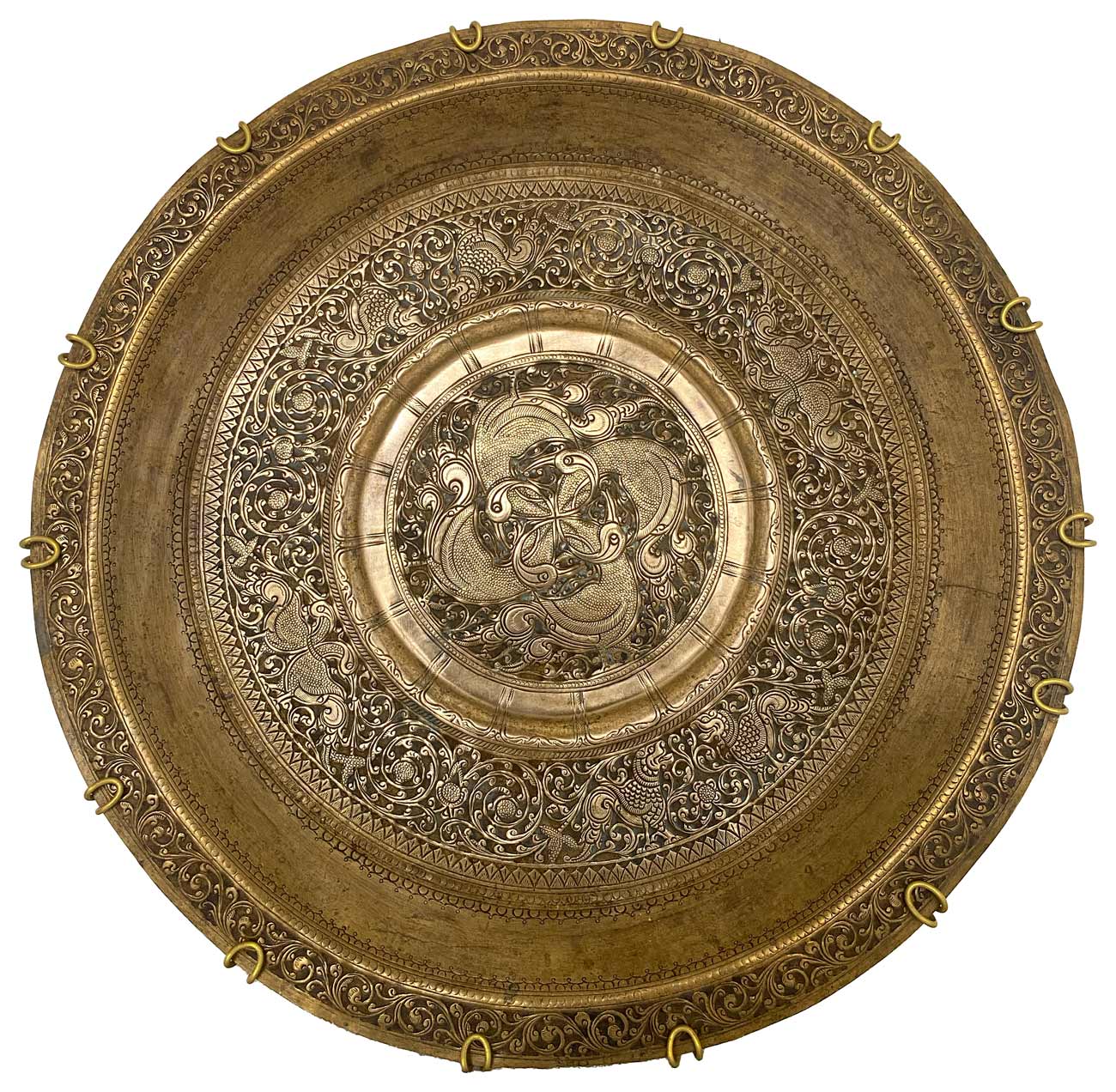
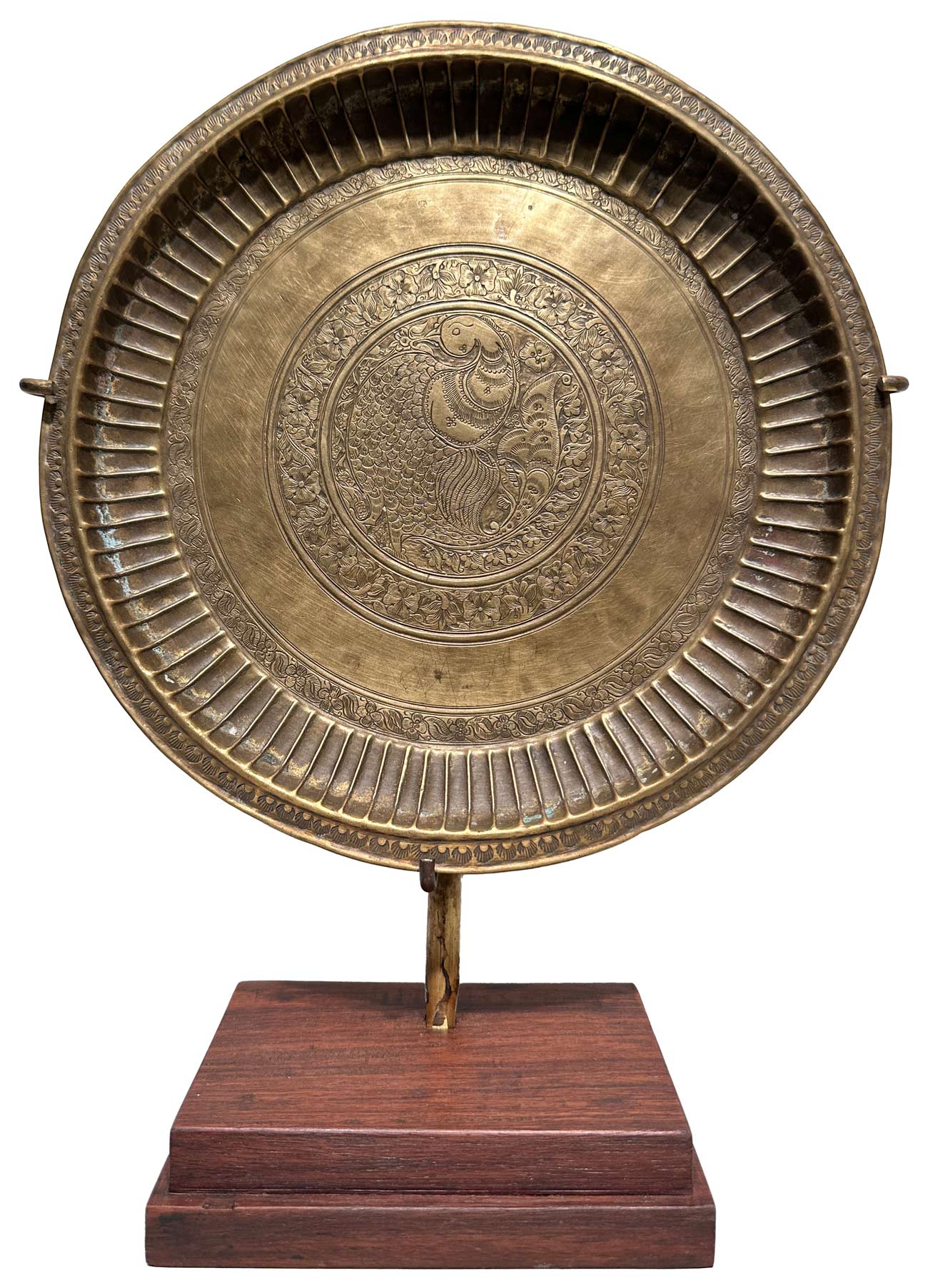
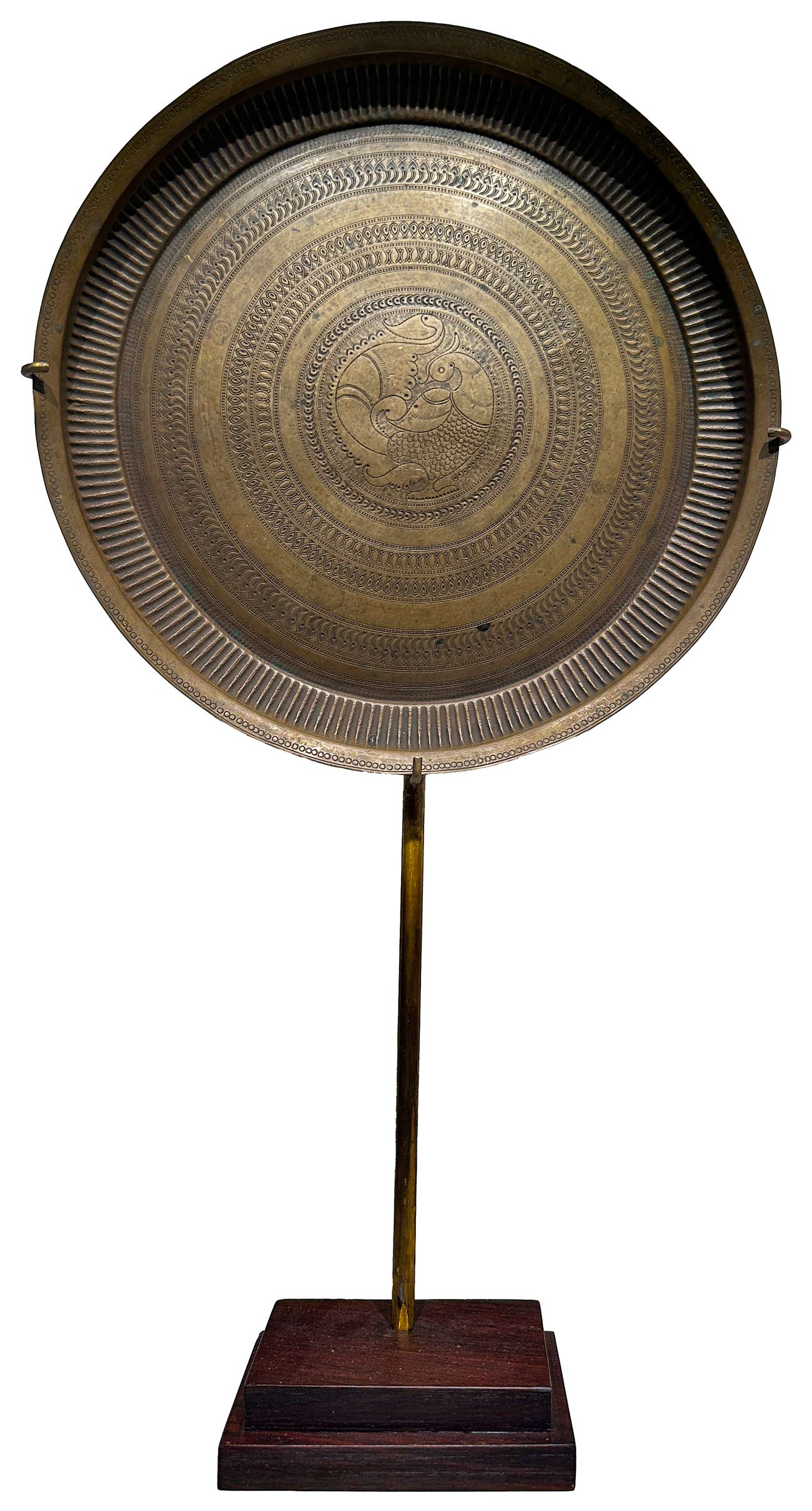
This brass thali or platter is from the Deccan region, and is made using the techniques of repousse, chasing and engraving. It features a honeycomb-like rim, reminiscent of architectural niches or a lotus. In the central medallion, is a raised stylised Hamsa carrying a branch in its beak. The honeycomb along with the central Hamsa, indicates a Indo-Saracenic (Indo-Gothic) influence. The central figure of a hamsa, which is either a swan or goose, is revered by Hindus, Buddhists, and Jains. It is seen as a symbol of purity, detachment and divine knowledge. It symbolizes the highest spiritual accomplishment as it swims in water, walks on earth and flies in the sky. The branch it holds in its beak is probably a branch of Sanjeevini, which is known to be a medicinal plant in Hindu mythology, that revives life. This platter would have been used in puja or worship rituals, or sometimes even as a prabhavali (decorative arch used as a backdrop behind deities).
Delivery
You may also like
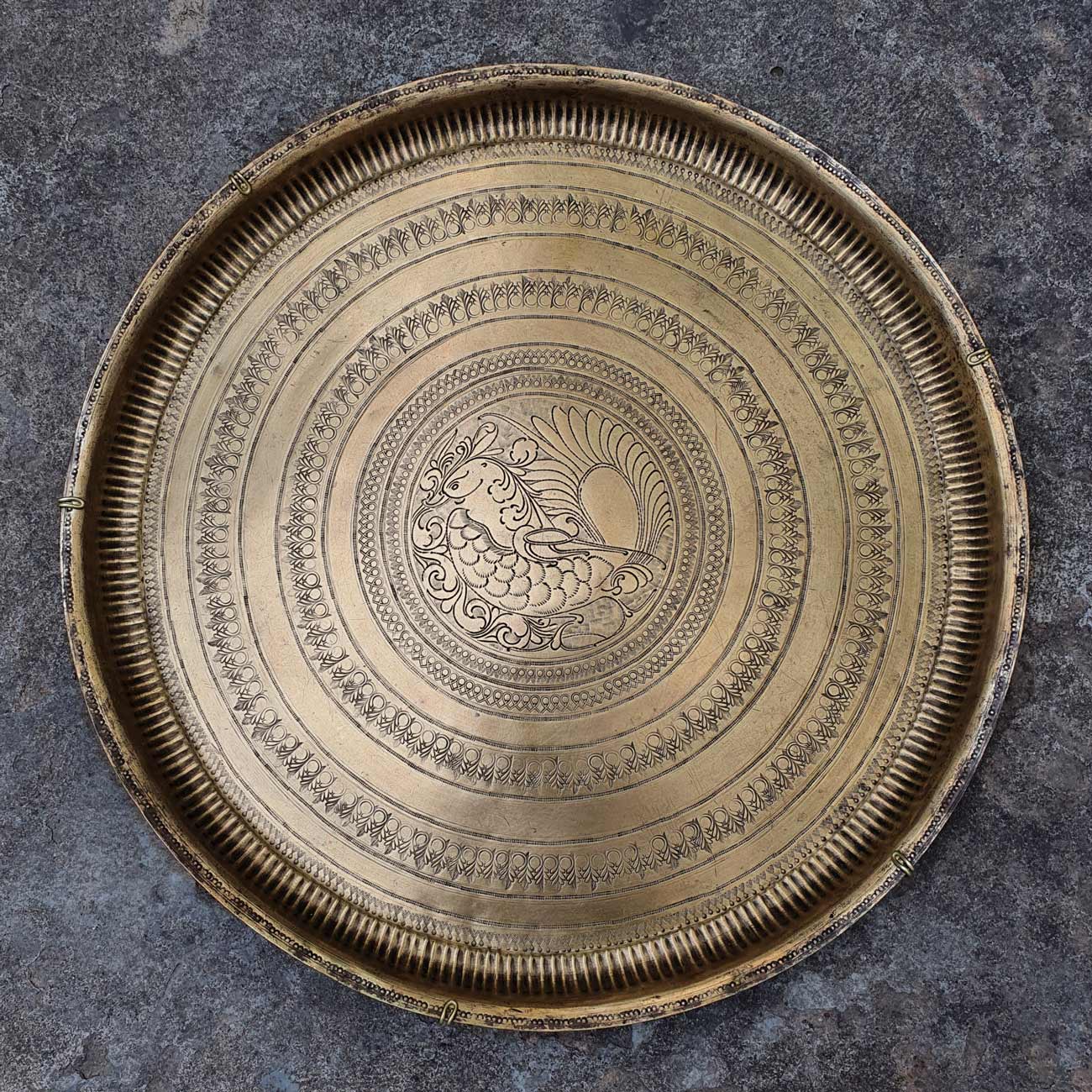
Hamsa Thali - 01
Artisera
₹96,320
out of stock
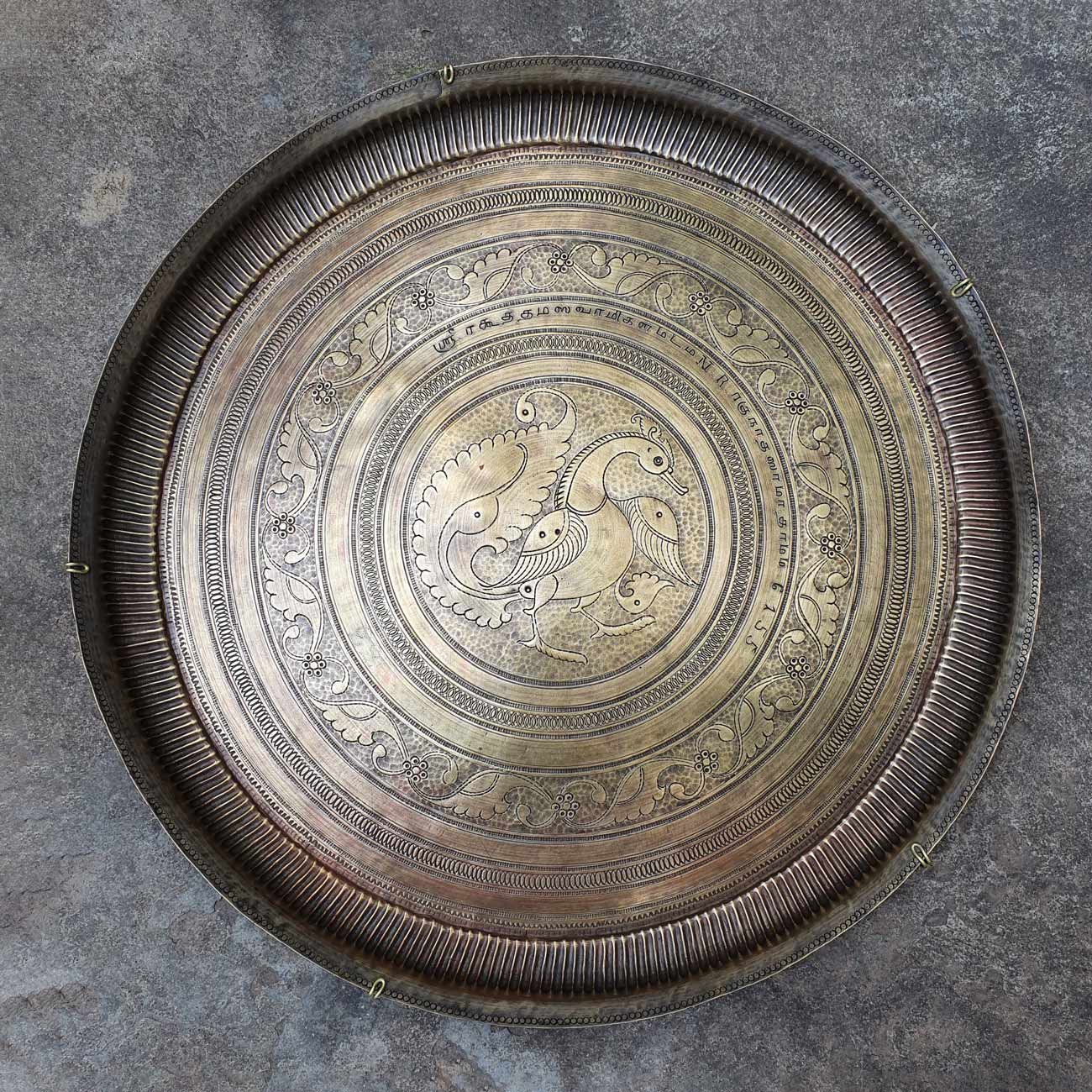
Hamsa Thali - 02
Artisera
₹47,040
out of stock
Hamsa Thali - 03
Artisera
₹57,120
out of stock
Hamsa Thali - 05
Artisera
₹84,000
Hamsa Thali - 07
Artisera
₹36,960
Hamsa Thali - 06
Artisera
₹64,960
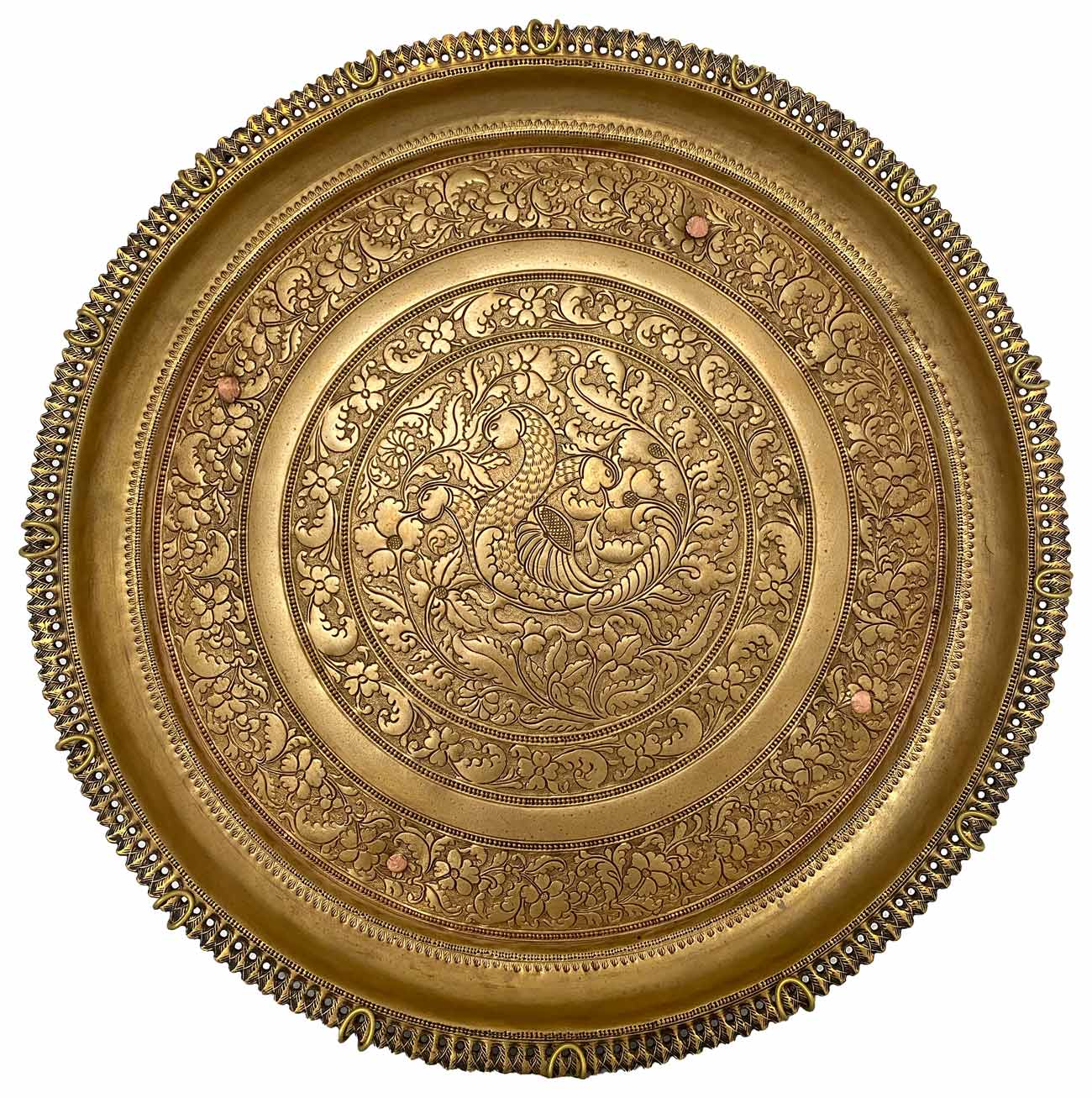
Thali with Two-Headed Hamsa
Artisera
₹61,600
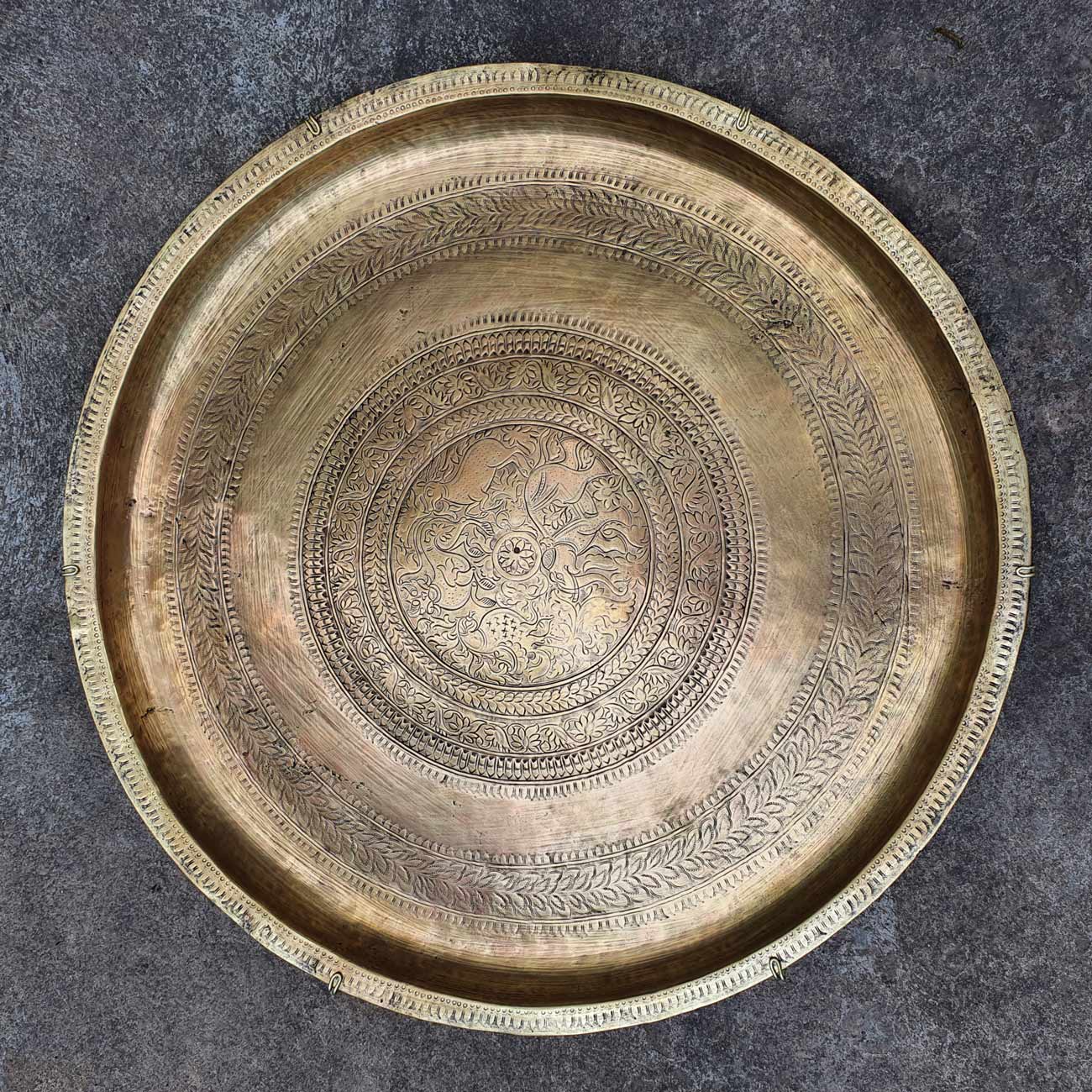
Thali with Animal Figures
Artisera
₹96,320
out of stock